
Ukraine Intelligence Warns Russia Could Open New Northern Front by February 2027 After Mobilization
Ukrainian military intelligence assesses that a renewed Russian mass mobilization this autumn could generate a strike force capable of attacking the Kyiv and Chernihiv regions by early 2027.

Share this story
The grinding war of attrition in eastern Ukraine has consumed Russian and Ukrainian reserves for months, creating a localized stalemate. Yet the most significant strategic threat to Kyiv may not be the current frontline, but a dormant axis to the north. Ukrainian military intelligence has issued a stark assessment: should Moscow initiate a new wave of mass mobilization following its September parliamentary elections, it could assemble a fresh strike force capable of opening a new northern front by February 2027.[1][2]
The warning, articulated by Major General Vadym Skibitskyi, Deputy Chief of Ukraine's Defense Intelligence Directorate (HUR), shifts the strategic horizon from immediate tactical battles to industrial-scale force generation. Skibitskyi noted that while there are currently no observable preparations or troop concentrations for an assault on the Kyiv or Chernihiv regions, the underlying infrastructure for a massive call-up remains fully intact under a 2022 presidential decree. The trigger for such an operation rests entirely on the Kremlin's political willingness to absorb the domestic cost of a renewed draft.[2][4][5]
The intelligence assessment is grounded in the logistical realities of Russia's previous mobilization cycle. During the partial mobilization that began in late October 2022, it took the Russian military apparatus approximately three to four months to process, train, and deploy new formations.
Applying that same timeline to a hypothetical post-election draft this autumn places combat-ready units on the battlefield by January or February 2027. Skibitskyi pointedly noted that the Russian command has historically favored symbolic dates, making the anniversary month of the original 2022 invasion a plausible target for a renewed northern offensive.[1][2]
This timeline emerges against a backdrop of severe manpower constraints within the current Russian force posture. According to HUR estimates, Russian personnel losses on the eastern front exceeded new contract recruitment in both June and July of this year. With a shortfall of several thousand troops per month, Moscow is currently unable to create new military formations or expand existing brigades into divisions without a systemic injection of mobilized personnel. The operational reserve is currently estimated at roughly one-tenth the size of the deployed combat force.[1][3][6]
The intelligence warnings from HUR parallel broader strategic alarms raised by Ukraine's political leadership. President Volodymyr Zelensky recently stated that Kyiv has intercepted internal Russian documents detailing preparations for a mass mobilization immediately following the autumn elections. According to these intercepts, the Kremlin aims to conscript several hundred thousand additional personnel by the end of 2026, with further waves planned for 2027, signaling a commitment to a prolonged, multi-year conflict.[6][7]
A mobilization of that scale would fundamentally alter the geometry of the war. Rather than forcing Russia into a defensive posture, an influx of hundreds of thousands of troops would enable rotational depth and the capacity to sustain simultaneous offensives across multiple axes. By threatening the northern border, Moscow would force Ukraine to divert critical air defense systems, mechanized brigades, and logistical resources away from the embattled eastern and southern fronts.[7][8]
Independent security analysts and threat intelligence monitors observe that Russia's strategy increasingly relies on outlasting Western resolve through sheer volume. A rapid call-up through 2027 would lock both nations into a protracted industrial war, carrying severe implications for European security architectures and defense supply chains. Analysts note that Russia has kept its mobilization machinery—training grounds, officer cadres, and bureaucratic systems—in a state of readiness specifically for this contingency.[7][8]
Despite the severe implications of the intelligence forecast, Ukrainian officials emphasize that the northern threat remains a contingent scenario rather than an active operation. The immediate indicator will be the Kremlin's actions in late September and October. Because modern surveillance and satellite reconnaissance make it impossible to conceal the movement and assembly of hundreds of thousands of conscripts, any shift toward a 2027 northern offensive will be telegraphed months in advance, giving Kyiv and its allies a narrow window to adjust their defensive posture.[4][5]
Perspectives explored
Ukrainian Defense Intelligence
Focuses on the logistical timeline and current manpower constraints of the Russian military.
Military intelligence officials emphasize that Russia's current offensive capabilities are capped by its reliance on contract recruitment, which is failing to outpace battlefield losses. They view a new mobilization as the only mechanism by which Moscow could generate the combat power necessary to open a second front. Their assessments are strictly timeline-driven, noting that a fall draft mathematically translates to a late-winter deployment, though they stress that no physical preparations are currently underway.
Ukrainian Political Leadership
Frames the potential mobilization as a broader geopolitical escalation intended to outlast Western support.
For the political establishment in Kyiv, the intercepted mobilization plans represent proof that the Kremlin is preparing for a multi-year, industrial-scale war. Leadership views the potential northern front not just as a tactical military threat, but as a strategic tool designed to stretch Ukrainian resources, terrorize civilian populations in the capital, and signal to Western allies that Russia is willing to absorb massive domestic costs to achieve its maximalist objectives.
Independent Security Analysts
Analyzes the structural realities and historical limitations of Russian force generation.
External military analysts observe that while Russia has maintained the bureaucratic machinery for a mass draft, executing one carries significant operational risks. Previous attempts to surge forces across multiple axes have frequently left Russian flanks vulnerable and exacerbated logistical bottlenecks. Analysts caution that while a mobilization could provide the raw manpower for a northern assault, converting hundreds of thousands of conscripts into a cohesive, mechanized strike force by February 2027 would severely strain Russia's already depleted officer corps and equipment stockpiles.
Key points
- Ukrainian military intelligence warns Russia could assemble a strike force for a northern offensive by February 2027.
- The timeline depends entirely on whether Moscow initiates a new wave of mass mobilization following its September elections.
- Current Russian battlefield losses exceed contract recruitment, leaving Moscow unable to form new units without a draft.
- President Zelensky claims intercepted documents reveal Russian plans to conscript hundreds of thousands of troops through 2027.
- Ukrainian Defense Intelligence
- Assesses the logistical timeline and troop requirements for a potential Russian escalation.
- Ukrainian Political Leadership
- Views the mobilization threat as a strategic signal of Russia's commitment to a multi-year war.
- Independent Security Analysts
- Evaluates the structural constraints and operational risks of a renewed Russian draft.
Perspectives this story doesn't cover
- Russian Ministry of Defense
- Belarusian Government Officials
Sources
Source coverage
8 outlets
3 viewpoints surfaced








- [1]Euromaidan PressUkrainian Defense Intelligence
Russia could open northern front by February if it orders new mobilization, Ukraine intel says
Read on Euromaidan Press → - [2]The New Voice of UkraineUkrainian Defense Intelligence
Russia could target northern oblasts in early 2027
Read on The New Voice of Ukraine → - [3]Kyiv PostUkrainian Defense Intelligence
In brief: HUR Deputy Chief Vadym Skibitsky said Russia does not plan to reach a peace agreement this year and may launch a new mobilization after elections.
Read on Kyiv Post → - [4]LIGA.netUkrainian Defense Intelligence
Russia's new offensive could begin in February 2027, according to the Main Intelligence Directorate
Read on LIGA.net → - [5]UkrinformUkrainian Defense Intelligence
Russia could theoretically attempt to launch an offensive in northern Ukraine this year
Read on Ukrinform → - [6]The Kyiv IndependentUkrainian Political Leadership
Putin preparing to send more Russians to war — Zelensky warns of mobilization
Read on The Kyiv Independent → - [7]Hamer IntelIndependent Security Analysts
Severity: WARNING Detected: 2026-08-11T18:04:33.541Z. Summary. Ukraine's President Volodymyr Zelensky said at about 18:02 UTC that Ukrainian intelligence has obtained internal Russian documents detailing preparations for a new mass mobilization immediately after Russia's autumn parliamentary elections.
Read on Hamer Intel → - [8]Institute for the Study of WarIndependent Security Analysts
Russian forces started their drive toward Pokrovsk in February 2024
Read on Institute for the Study of War →
More in Defense & Security
See all →Arctic Infrastructure
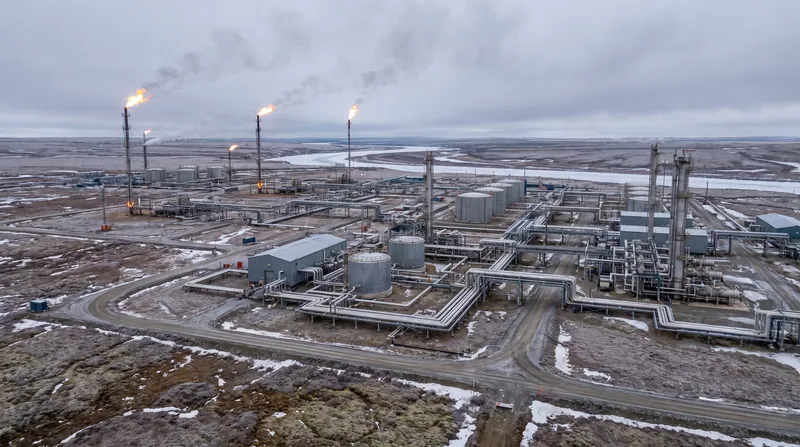
Ukraine Executes Deepest Strike of the War on Russian Arctic Gas Infrastructure
5 sources
Iran Airspace
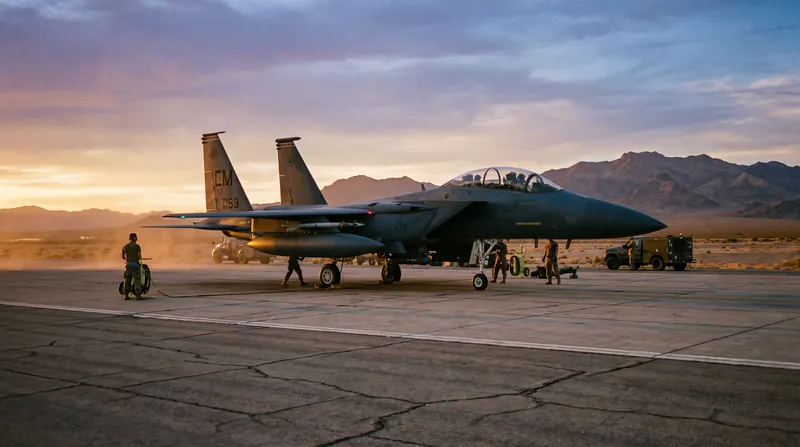
Declassified Footage Reveals Iranian MANPADS Downed U.S. F-15E in April
6 sources
Air Defense Economics
The Asymmetric Cost of Air Defense: Comparing Interceptor Prices to Loitering Munition Threats
7 sources

Defense Tech
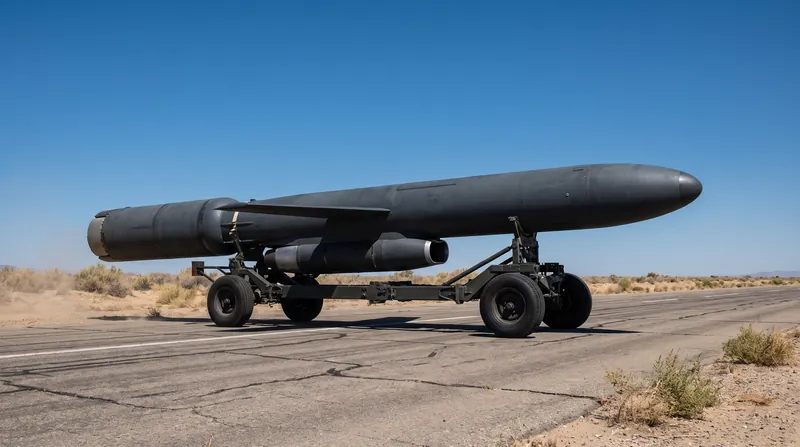
Silicon Valley-Backed Covenant Unveils $500K Mass-Producible 'Anthem' Cruise Missile
4 sources
Comments
Every angle. Every day.
Get Defense & Security stories with full source coverage and perspective breakdowns, free every day.