
UCI to Cap Cycling Computer Size in 2028 to Reduce Rider Cognitive Load
The Union Cycliste Internationale will restrict the physical dimensions of handlebar-mounted cycling computers starting in 2028, citing growing concerns over distracted riding and peloton crashes.
By Aylin Aksoy

Share this story
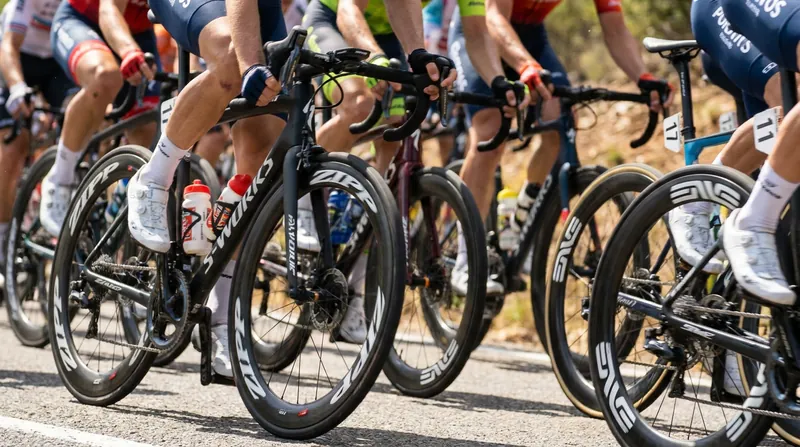
The modern professional cyclist's cockpit looks less like a bicycle and more like the dashboard of a fighter jet. With screens pushing four inches diagonally, riders are bombarded with real-time data: power output, heart rate, core temperature, aerodynamic drag, and live race telemetry. This digital arms race has transformed how athletes train and race, but it has also introduced a dangerous new variable to the peloton: distraction.
On Thursday, the Union Cycliste Internationale (UCI) announced a sweeping regulation to curb this phenomenon. Starting in the 2028 season, the governing body will strictly cap the physical dimensions of handlebar-mounted cycling computers. The move represents one of the most significant interventions in cycling technology since the UCI's aerodynamic frame regulations of the early 2000s.
Under the new mandate, head units will be restricted to a maximum diagonal screen size of 3.5 inches. Furthermore, teams will be limited in the number of active data fields they can display on a single primary screen during competition. The rule applies across all UCI-sanctioned road, track, and gravel events, forcing a fundamental rethink of how riders interact with their equipment.
The core of the UCI's argument rests on the concept of "cognitive load." As sports science has advanced, the sheer volume of information available to an athlete has skyrocketed. The human brain, however, has a finite capacity to process visual and numerical stimuli while simultaneously managing the complex motor skills required to navigate a tightly packed peloton at high speeds.[1]
Recent academic research highlights the severity of the issue. When a rider looks down to check a nutrition alert or a complex interval target, their eyes leave the road for an average of 1.2 seconds. At typical peloton speeds of 60 kilometers per hour, that brief glance equates to traveling over 16 meters completely blind. In a pack where riders are separated by mere centimeters, that distance is more than enough to cause a catastrophic pile-up.[1]
Over the past three seasons, the professional peloton has witnessed a troubling increase in high-speed, unforced crashes. While factors like wider tires, stiffer frames, and increasingly aggressive racing styles undoubtedly contribute, rider feedback consistently points to distraction as a primary culprit. Riders are simply looking down when the brakes are squeezed ahead of them, eliminating their reaction time.
The cycling technology industry, dominated by giants like Garmin, Wahoo, and Hammerhead, has spent the last decade pushing the boundaries of screen size, mapping capabilities, and battery life. The 2028 timeline provides these manufacturers a four-year runway to redesign their flagship models to comply with the new physical constraints, shifting the engineering focus from screen real estate to interface efficiency.
Rather than abandoning data entirely, tech developers are expected to pivot toward alternative feedback mechanisms. Industry analysts predict a surge in haptic feedback—vibrations delivered through the handlebars or wristbands—and auditory cues via earpieces. These technologies will likely replace visual alerts for routine reminders like nutrition pacing or upcoming turns, allowing riders to keep their eyes up.
Beyond the immediate safety benefits, the regulation touches on a long-standing philosophical debate within the sport: the art of racing versus the science of pacing. Purists have long argued that hyper-accurate live data has sterilized racing, allowing riders to calculate their exact physiological limits and ride to a prescribed wattage rather than attacking on instinct or reading their opponents' body language.
The peloton's reaction to the announcement has been mixed but largely understanding. Veteran riders, who remember an era of smaller, simpler screens—or no screens at all—have welcomed the change, noting that the current environment feels dangerously chaotic. They argue that a return to "racing by feel" will reward tactical intelligence over pure physiological output.
Conversely, younger riders who have never trained without a power meter face a steeper learning curve. For a generation raised on continuous data streams, developing an internal sense of pacing and exertion will require a significant shift in training methodology over the next four years.
While the UCI's rules only strictly apply to professional and sanctioned amateur racing, equipment mandates inevitably shape the broader consumer market. Everyday cyclists and weekend warriors will soon find the market shifting back toward sleeker, less intrusive devices, as manufacturers streamline their product lines to match the pro peloton.
This move aligns with a growing trend across the broader fitness landscape: the pushback against "data fatigue." As wearables track everything from sleep stages to blood glucose, many athletes are experiencing burnout from constant metric optimization. The UCI's mandate inadvertently champions a return to mindful, sensation-based exercise.[1]
Questions remain about how the UCI will enforce the software-level restrictions on data fields. While measuring a screen's physical diagonal is straightforward for commissaires at the start line, policing the number of active metrics displayed during a race presents a logistical challenge. Nevertheless, as the 2028 deadline approaches, the peloton will serve as a high-speed laboratory for this forced digital detox, proving that sometimes the ultimate performance advantage is simply keeping your eyes on the road.
Key points
- The UCI will cap cycling computer screens at 3.5 inches diagonally starting in 2028.
- The rule aims to reduce cognitive load and prevent high-speed crashes caused by distracted riding.
- Riders looking at screens for 1.2 seconds at 60 km/h travel over 16 meters blind.
- The mandate is expected to accelerate the development of haptic and auditory feedback devices.
Unanswered questions
- How the UCI plans to enforce software-level restrictions on the number of active data fields during a live race.
- Whether major tech brands will create separate 'pro' and 'consumer' models, or if the consumer market will universally adopt the smaller screens.
How we got here
2010s
Power meters and GPS head units become ubiquitous in the professional peloton.
2020-2024
Flagship cycling computers grow significantly, with some models exceeding 4-inch diagonal screens.
July 2026
The UCI announces the 3.5-inch screen size cap and data field limits.
January 2028
The new equipment regulations officially take effect for all UCI-sanctioned events.
- Safety Advocates
- Argue that the peloton has become too dangerous and reducing screen time is a necessary intervention.
- Traditionalists
- Welcome the change as a return to instinctual racing and the art of the sport over robotic pacing.
- Tech & Data Proponents
- Express concern that limiting data restricts physiological optimization and creates enforcement headaches.
Perspectives this story doesn't cover
- Amateur consumers who use large screens primarily for mapping and navigation
- Sponsors who use the screen real estate for brand visibility
Sources
Source coverage
1 outlets
3 viewpoints surfaced

- [1]Journal of Sports SciencesTech & Data Proponents
The impact of visual data processing on spatial awareness in elite road cycling
Read on Journal of Sports Sciences →

More in Fitness
See all →Cycling Tech
UCI Announces Major Equipment Overhaul for 2026: Limits on Gear Ratio, Rim Height, and Handlebar Width
5 sources
Cycling Tech
How V2X Communication Technology Aims to Eliminate Cyclist Blind Spots
3 sources

Training Science
Science Overturns Dogma: Heavy Lifting Is Essential for Endurance Cyclists' Efficiency and Power
3 sources

Sports Nutrition
Elite Endurance Fueling Doubles: New Science Pushes Carb Intake to 120 Grams Per Hour
1 sources

Comments
Every angle. Every day.
Get Fitness stories with full source coverage and perspective breakdowns, free every day.