
Toyota and Mitsubishi Enter Humanoid Robot Race With 'Physical AI' Trained for Heavy Industry
Japanese industrial giants Toyota and Mitsubishi have unveiled a new class of humanoid robots powered by "Physical AI," designed specifically to perform complex tasks like welding warships and assembling heavy machinery. The partnership marks a major pivot in the robotics industry from general-purpose assistants to highly specialized, AI-driven industrial labor aimed at solving severe workforce shortages.

Share this story
The race to build humanoid robots has decisively shifted from general-purpose assistants to hyper-specialized industrial laborers. In a landmark joint announcement, Japanese manufacturing giants Toyota and Mitsubishi Heavy Industries revealed a new class of humanoid robots powered by "Physical AI," designed specifically to tackle complex, heavy-duty tasks like welding warships and assembling massive maritime infrastructure.
The partnership marks a significant departure from the robotics strategies of Western tech companies, which have largely focused on building versatile, consumer-friendly robots capable of folding laundry or moving boxes. Instead, the Japanese consortium is betting that the immediate commercial value of humanoids lies in solving acute labor shortages in the world's most demanding industrial environments.[1]
The centerpiece of the initiative is a heavily modified, bipedal robotic platform deployed at Mitsubishi's Nagasaki shipyard, where it is currently being trained to weld thick steel plates for naval vessels. Unlike traditional robotic arms bolted to factory floors, these humanoids can navigate the cramped, multi-level scaffolding of a ship under construction, carrying their own welding gear and adjusting their posture to reach difficult seams.
By combining Toyota's unparalleled expertise in hardware manufacturing and automotive production scaling with Mitsubishi's deep knowledge of heavy industry and defense contracting, the two companies aim to create a robotic workforce capable of operating in unstructured, hazardous environments where human labor is becoming increasingly scarce.[2][3]
The technological breakthrough enabling this shift is the rapid advancement of "Physical AI"—a subfield of artificial intelligence that moves beyond text and image generation to focus on spatial intelligence, force feedback, and real-time physics simulation. For decades, programming a robot to weld a complex, curved ship hull required thousands of lines of hard-coded instructions, and the robot would fail if a steel plate was misaligned by even a millimeter.
Physical AI upends this paradigm by allowing the robot to learn the task dynamically, much like a human apprentice. The system relies on advanced Vision-Language-Action (VLA) models that translate high-level commands into precise motor controls, enabling the robot to "see" the weld pool, "feel" the resistance of the metal, and adjust its technique on the fly.
The training process for these industrial humanoids relies heavily on a technique known as teleoperation combined with reinforcement learning. Master human welders wear haptic feedback suits and VR headsets to remotely operate the robots, guiding their mechanical arms through the precise motions required for a perfect weld.
As the human expert performs the task, the robot's neural network records the visual data, the spatial positioning, and the exact amount of force applied. After observing hundreds of hours of human-led teleoperation, the Physical AI builds a generalized understanding of welding physics, allowing the robot to eventually execute the task autonomously, even on novel joint configurations it has never explicitly seen before.
Early evidence from Mitsubishi's pilot programs suggests the technology is already yielding significant productivity gains. In controlled trials at the Nagasaki facility, the prototype humanoids achieved a 40 percent reduction in the time required to weld complex hull joints compared to traditional manual methods, while maintaining a defect rate well within strict maritime safety standards.
Because the robots do not experience muscle fatigue, require breaks, or suffer from the ergonomic strain of holding heavy equipment in awkward positions, they can maintain a continuous, optimal welding arc for hours on end. This sustained output is particularly critical in shipbuilding, where the speed and quality of welding directly dictate the overall pace of construction.[3]
The urgency behind this technological pivot is driven by a severe demographic crisis facing the global manufacturing sector, and Japan in particular. The Japanese workforce is aging rapidly, and heavy industries are struggling to recruit younger generations willing to endure the grueling, dangerous conditions of shipyards and steel mills.
The Japan Welding Engineering Society estimates that a significant portion of the country's master welders will retire within the next decade, creating a critical knowledge gap that threatens the viability of domestic manufacturing. By capturing the expertise of these retiring masters through teleoperation and encoding it into Physical AI, Toyota and Mitsubishi are essentially digitizing and preserving a generation of industrial skill before it disappears.[2]
Beyond domestic labor concerns, the deployment of AI-powered humanoids in shipyards carries profound geopolitical and defense implications. As global naval buildups accelerate, particularly in the Asia-Pacific region, the capacity to rapidly construct and repair warships has become a critical strategic bottleneck.
Traditional shipbuilding is notoriously labor-intensive and difficult to scale quickly during times of heightened demand. By automating the most time-consuming and physically demanding aspects of maritime construction, Mitsubishi Heavy Industries—Japan's largest defense contractor—could significantly compress the production timelines for destroyers, submarines, and logistics vessels, providing a distinct strategic advantage in an era of contested supply chains.[1]
Toyota's role in the partnership is crucial for moving the technology from the laboratory to mass deployment. While Mitsubishi provides the industrial testing ground and the domain expertise in heavy manufacturing, Toyota brings its legendary production system and supply chain mastery to the table.
Building a humanoid robot capable of surviving the sparks, electromagnetic interference, and extreme temperatures of a shipyard requires specialized, highly durable hardware that is notoriously expensive to produce. Toyota is tasked with engineering the robots for manufacturability, aiming to drive down the unit cost of the humanoids through economies of scale, much as it did with hybrid vehicles two decades ago.[1][2]
Despite the promising early results, significant uncertainties remain regarding the real-world deployment of autonomous heavy machinery. Shipyards are inherently chaotic environments, filled with moving cranes, scattered tools, and unpredictable human foot traffic.
While Physical AI excels at the specific task of welding, ensuring the robot can safely navigate a cluttered, dynamic workspace without causing accidents or disrupting human workers is a massive engineering challenge. The current prototypes still require close human supervision, and the transition to fully autonomous operation will require substantial advancements in the robots' spatial awareness and fail-safe mechanisms.
Furthermore, the economic tipping point for these industrial humanoids has yet to be definitively proven. The initial capital expenditure for a single Physical AI-equipped robot is estimated to be well over $150,000, not including the ongoing costs of software updates, maintenance, and the high-performance computing infrastructure required to process the VLA models locally.
Labor economists point out that while the robots may weld faster, the total cost of ownership must be amortized over a lifespan of at least five to seven years in a highly corrosive environment to undercut the cost of human labor. The financial viability of the project hinges on Toyota's ability to dramatically reduce hardware costs in the coming years.
The announcement has sent ripples through the global robotics industry, prompting Western firms to reevaluate their own development roadmaps. For the past several years, the narrative surrounding humanoid robots has been dominated by Silicon Valley startups aiming to build general-purpose machines for logistics, warehousing, and eventually domestic chores.
The Toyota-Mitsubishi partnership challenges this paradigm, suggesting that the fastest path to commercial viability is hyper-specialization in high-value, high-margin industrial sectors. Industry analysts expect this move to trigger a wave of investments in specialized Physical AI, as companies realize that teaching a robot to do one difficult thing perfectly is more lucrative than teaching it to do ten simple things adequately.[2]
Ultimately, the integration of Physical AI into heavy industry is unlikely to result in the total displacement of human workers, but rather a fundamental restructuring of the industrial workforce. As robots take over the physically punishing and hazardous tasks like overhead welding and heavy lifting, human roles will shift toward supervision, quality control, and the complex teleoperation required to train the models on new tasks.
The shipyard of the future, as envisioned by Toyota and Mitsubishi, is a hybrid environment where human expertise is amplified by robotic endurance, ensuring that the heavy industries that built the modern world can survive the demographic challenges of the 21st century.[3]
Key points
- Toyota and Mitsubishi Heavy Industries are partnering to deploy humanoid robots for heavy industrial tasks.
- The robots use 'Physical AI' to learn complex tasks like welding through teleoperation and force feedback.
- Early trials show a 40% reduction in the time required to weld complex ship hull joints.
- The initiative aims to solve Japan's severe shortage of skilled industrial labor as master welders retire.
What we don’t know
- Whether the robots can safely navigate the chaotic, unstructured environment of an active shipyard without constant human supervision.
- How quickly Toyota can scale the manufacturing of the robotic hardware to bring down the prohibitive unit costs.
- The exact timeline for when these robots will be deployed beyond Mitsubishi's facilities to other global manufacturers.
How we got here
Early 2024
Western tech companies unveil a wave of general-purpose humanoid prototypes aimed at logistics and domestic tasks.
Late 2025
Japan Welding Engineering Society warns of an impending critical shortage of master welders due to an aging workforce.
Early 2026
Mitsubishi Heavy Industries begins quiet pilot testing of teleoperated robotic arms in its Nagasaki shipyard.
July 2026
Toyota and Mitsubishi publicly announce their partnership to scale Physical AI humanoids for heavy industry.
- Industrial Automation Advocates
- View specialized humanoids as an essential survival mechanism for manufacturing sectors facing severe demographic collapse.
- Robotics Researchers
- Focus on the technical leap of Physical AI, celebrating the shift from hard-coded kinematics to dynamic, force-feedback learning.
- Labor and Economic Analysts
- Weigh the high upfront capital costs and engineering challenges against the long-term productivity gains and workforce restructuring.
Perspectives this story doesn't cover
- Current shipyard workers facing changing job descriptions
- Smaller manufacturing firms unable to afford high-end robotics
Sources
Source coverage
3 outlets
3 viewpoints surfaced



- [1]ReutersLabor and Economic Analysts
Toyota, Mitsubishi Heavy unveil humanoid robots for shipbuilding, heavy industry
Read on Reuters → - [2]BloombergIndustrial Automation Advocates
Japan's Industrial Giants Pivot to Physical AI to Solve Labor Crisis in Shipyards
Read on Bloomberg → - [3]The Japan TimesIndustrial Automation Advocates
Mitsubishi Heavy Industries deploys first AI humanoid welders at Nagasaki shipyard
Read on The Japan Times →
More in Artificial Intelligence
See all →Physical AI
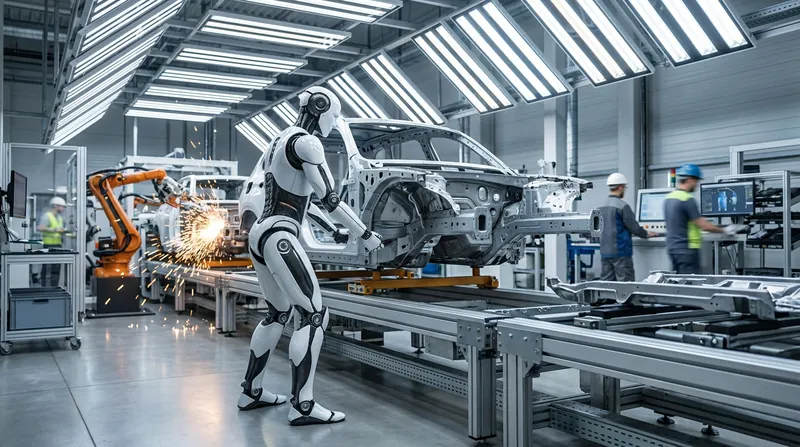
The Core Mechanics of Sim-to-Real Transfer: How AI Robots Learn in the Matrix
5 sources
Embodied AI
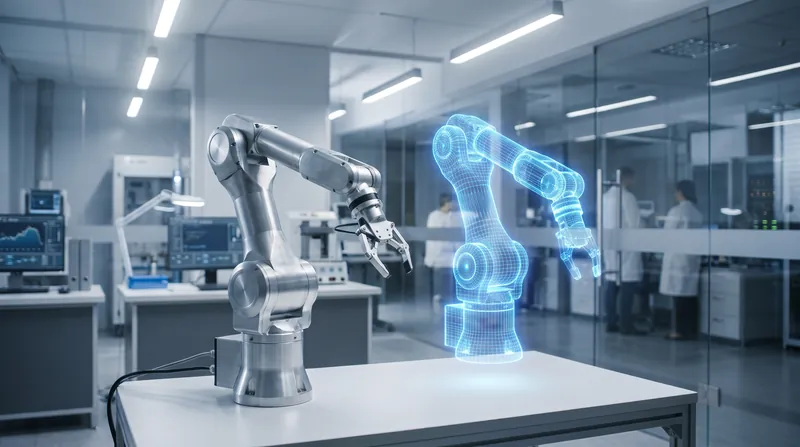
Google DeepMind Launches Gemini Robotics 2, Bringing 'Whole-Body Intelligence' to Physical AI Models
6 sources
AI Hardware
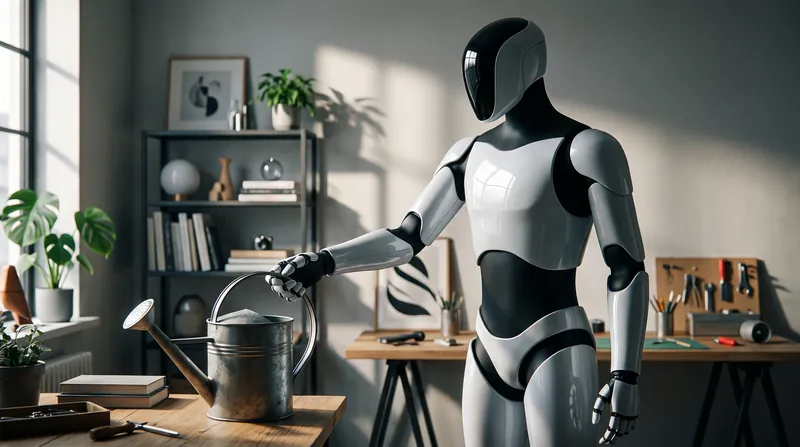
UK Startup OLIX Raises $312M to Scale Optical Interconnect AI Chips for 10-Trillion-Parameter Models
8 sources
Humanoid Robotics
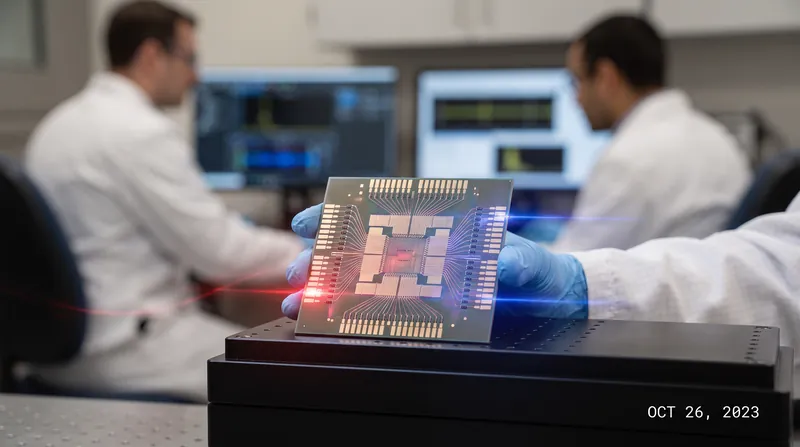
Agility Robotics Files for $2.5 Billion IPO as Nvidia Launches Dedicated Safety Platform for Humanoids
5 sources
Comments
Every angle. Every day.
Get Artificial Intelligence stories with full source coverage and perspective breakdowns, free every day.