
The Metabolic Limits of Converting Plant-Based ALA into Active EPA and DHA
While plant-based ALA is essential, the human body struggles to convert it into the active EPA and DHA molecules required for cardiovascular and brain health.

Share this story
In short
- Omega-3 is an umbrella term; the body utilizes plant-based ALA differently than marine-sourced EPA and DHA.
- The liver converts only 5-8% of ALA into EPA, and less than 1% into DHA, creating a biological bottleneck.
- Cold-water fish provide pre-formed EPA and DHA, bypassing the liver's inefficient conversion process entirely.
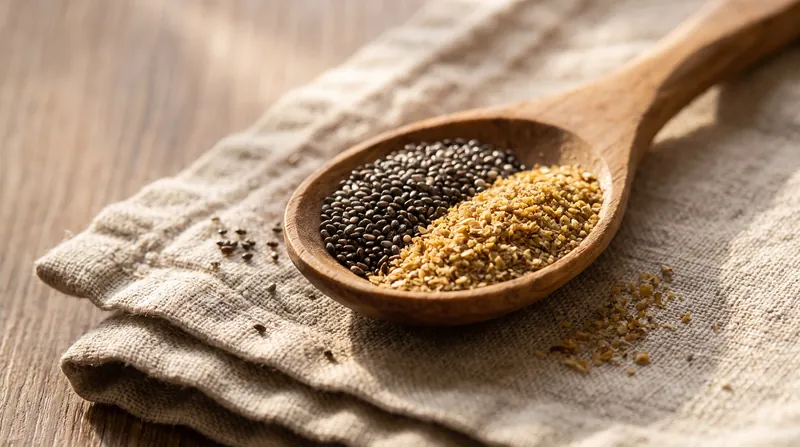
You sprinkle chia seeds on your morning oatmeal, drizzle cold-pressed flax oil over your lunchtime greens, and confidently assume your daily omega-3 needs are perfectly covered. The modern wellness world often treats all omega-3 fatty acids as a single, interchangeable nutrient, leading millions of health-conscious eaters to believe a handful of walnuts provides the exact same brain-boosting, heart-protecting benefits as a thick fillet of wild-caught Alaskan salmon.
But human metabolism tells a very different, far more complex story. When it comes to how your cells actually utilize these fats, the source material changes everything.[1][4]
The reality is that "omega-3" is merely a broad umbrella term for a family of polyunsaturated fatty acids, and your digestive system treats the plant-based versions entirely differently than the marine-sourced ones. When cardiologists and neurologists talk about the profound cardiovascular and cognitive benefits that made omega-3s famous—lowering triglycerides, reducing systemic inflammation, and supporting cellular membrane fluidity—they are specifically talking about two highly active molecules: eicosapentaenoic acid (EPA) and docosahexaenoic acid (DHA). These are the heavy lifters of the lipid world.[2][8]
The primary plant-based form, alpha-linolenic acid (ALA), is classified as an essential nutrient, meaning your body cannot synthesize it from scratch. You absolutely need to consume it through your diet to maintain basic biological functions and skin health. But to unlock the celebrated anti-inflammatory and neurological benefits associated with marine oils, your liver must first convert that raw ALA into the longer-chain EPA and DHA. This metabolic requirement is where the nutritional math begins to break down for many plant-forward eaters.[1]
This biological bottleneck is one of the most misunderstood mechanisms in human nutrition. The enzymatic conversion rate of ALA to EPA is notoriously inefficient, hovering between a mere 5% and 8% for most healthy adults. The subsequent conversion step to DHA is even more dismal, often falling well below 1%. Your body simply did not evolve to rely on terrestrial plants as its primary source of these complex, long-chain marine fats, making the liver's conversion pathway sluggish and easily overwhelmed.[3][6]
Imagine pouring a full gallon of premium fuel into your car's gas tank, but the engine's fuel line is so narrow it can only access a shot glass worth of it at a time. That is the biological reality of relying solely on flaxseeds, hemp hearts, or walnuts for your cellular health. To reach the therapeutic blood levels of EPA and DHA recommended by clinical researchers, you would need to consume an impractically massive volume of plant oils every single day, which would simultaneously overload your system with excess calories.[4][7]
This stark metabolic reality brings us to the distinct advantage of marine sources. Cold-water fatty fish like salmon, mackerel, sardines, and anchovies bypass the liver's conversion bottleneck entirely. Because these fish have already done the metabolic work, they deliver pre-formed, ready-to-use EPA and DHA directly to your digestive tract. Once consumed, these active molecules are rapidly absorbed and immediately incorporated into your cell membranes, where they can begin modulating inflammation and supporting neurological function without any enzymatic delay.[1][5]
The American Heart Association has long recognized this critical distinction in bioavailability. Their clinical science advisories consistently point specifically to marine-sourced EPA and DHA for the prevention of clinical cardiovascular disease. The data shows that these specific pre-formed molecules actively lower circulating triglyceride levels, reduce the risk of ischemic events, and help maintain healthy cardiac rhythms in ways that high doses of unconverted ALA simply cannot replicate in controlled trials. For secondary prevention in patients with existing heart conditions, the medical consensus relies entirely on the marine forms.[2][5]
But maximizing your omega-3 intake is not just about choosing marine sources over plant sources; it is also about the specific molecular structure of the fat itself. When you consume a piece of grilled salmon or a tin of high-quality sardines, the omega-3 fatty acids are naturally packaged as triglycerides. This is the native, evolutionary fat structure that your digestive enzymes, specifically pancreatic lipase, are perfectly designed to recognize, cleave, and absorb into your bloodstream. Whole foods deliver these fats in a matrix that maximizes their uptake.[3][4]
Many over-the-counter fish oil supplements, however, chemically process these natural fats into ethyl esters in order to artificially concentrate the EPA and DHA levels per capsule. While this manufacturing technique packs more total milligrams onto the nutrition label, ethyl esters are significantly less bioavailable to the human body. Your digestive enzymes have to work much harder to break these synthetic bonds down, meaning you absorb a fraction of the active ingredient unless you specifically take the supplement alongside a heavy, high-fat meal to stimulate bile production.[3][7]
For those who follow a strict vegan or vegetarian lifestyle, or those concerned about the environmental impact of commercial fishing, this biological reality can feel incredibly frustrating. If the ALA conversion rate is terribly inefficient and marine fish are strictly off the menu, how can a plant-based eater adequately protect their long-term heart and brain health without compromising their dietary ethics? The traditional advice to simply eat more chia pudding falls short of clinical requirements.[6]
The elegant solution lies at the very bottom of the marine food chain: microalgae. It is a little-known fact that fish do not actually synthesize their own EPA and DHA from scratch; they accumulate these vital nutrients by consuming vast quantities of algae. Modern algal oil supplements offer a direct, plant-based source of pre-formed DHA and EPA, providing the exact same high bioavailability as premium fish oil, but without the environmental degradation, oceanic heavy metal contamination, or dietary compromises.[4][8]
Ultimately, optimizing your omega-3 intake requires looking past the front label of your food and understanding the underlying chemistry of what you are eating. Whether you are searing a fresh piece of steelhead trout, blending a high-quality algae supplement into your morning smoothie, or enjoying toasted walnuts for their distinct, whole-food nutritional profile, understanding the specific fatty acids you are consuming allows you to actually reap the precise health benefits you are eating for.[1][9]
Competing readings
Marine-Sourced EPA & DHA (Fish & Fish Oil)
The traditional gold standard for cardiovascular and cognitive support.
The Case For: Delivers pre-formed, highly bioavailable EPA and DHA directly to the body, bypassing the liver's inefficient conversion process. Backed by decades of clinical trials showing reduced triglycerides and lower cardiovascular risk. The Case Against: Susceptible to oxidation (rancidity) if poorly processed, potential heavy metal accumulation in larger predatory fish, and environmental concerns regarding overfishing. The Evidence: The American Heart Association explicitly recommends marine sources for secondary prevention of heart disease. The Verdict: Fits well when you eat a flexible diet and want the most thoroughly researched, cost-effective source of active omega-3s. Does not fit when you follow a strict vegan diet or have severe seafood allergies.
Plant-Sourced ALA (Flax, Chia, Walnuts)
The accessible, whole-food botanical source of essential fatty acids.
The Case For: Highly accessible, shelf-stable, and comes packaged with fiber, lignans, and other beneficial phytonutrients. Essential for basic cellular function and skin health. The Case Against: The biological bottleneck. With an ALA-to-EPA conversion rate of roughly 5-8% and a DHA conversion rate below 1%, it is nearly impossible to reach therapeutic levels of active omega-3s through ALA alone. The Evidence: Lipid research consistently demonstrates that high ALA intake does not significantly raise blood levels of DHA. The Verdict: Fits well when used as a general nutritional booster and source of healthy fats in a balanced diet. Does not fit when you are specifically trying to lower triglycerides, reduce systemic inflammation, or support fetal brain development.
Microalgae-Sourced EPA & DHA (Algal Oil)
The direct, plant-based bypass to the marine food chain.
The Case For: Provides the exact same pre-formed EPA and DHA as fish oil, but derived from the original source (algae). Completely vegan, free from oceanic heavy metal contamination, and highly sustainable. The Case Against: Generally more expensive per milligram than standard fish oil, and less widely available in whole-food forms, requiring daily supplementation. The Evidence: Nutritional studies confirm that algal oil raises blood erythrocyte DHA and EPA levels just as effectively as cooked salmon or premium fish oil capsules. The Verdict: Fits well when you want the clinical benefits of pre-formed omega-3s but maintain a strict plant-based diet or have sustainability concerns. Does not fit when you prefer to get all your nutrients exclusively from whole, unprocessed foods rather than supplements.
- Clinical Cardiologists
- Focus on the proven cardiovascular benefits of pre-formed marine EPA and DHA for lowering triglycerides and reducing ischemic risk.
- Lipid Researchers
- Emphasize the molecular mechanisms of bioavailability, specifically the conversion bottlenecks of ALA and the superiority of triglyceride structures.
- Plant-Based Nutritionists
- Advocate for ALA as a crucial component of a whole-food diet, while recommending algal oil to bridge the EPA/DHA conversion gap.
Perspectives this story doesn't cover
- Sustainable Fisheries Advocates
- Supplement Industry Formulators
Sources
Source coverage
9 outlets
3 viewpoints surfaced







- [1]NIH Office of Dietary Supplements (ODS)Lipid Researchers
Omega-3 Fatty Acids - Health Professional Fact Sheet
Read on NIH Office of Dietary Supplements (ODS) → - [2]Circulation - American Heart Association JournalsClinical Cardiologists
Omega-3 Polyunsaturated Fatty Acid (Fish Oil) Supplementation and the Prevention of Clinical Cardiovascular Disease: A Science Advisory From the American Heart Association
Read on Circulation - American Heart Association Journals → - [3]Progress in Lipid ResearchLipid Researchers
Bioavailability of EPA and DHA in humans - A comprehensive review
Read on Progress in Lipid Research → - [4]NutrientsLipid Researchers
A Comprehensive Review of Chemistry, Sources and Bioavailability of Omega-3 Fatty Acids
Read on Nutrients → - [5]American Heart AssociationClinical Cardiologists
Are you getting enough omega-3 fatty acids?
Read on American Heart Association → - [6]Nutrition Research and PracticeLipid Researchers
Role of n-3 long-chain polyunsaturated fatty acids in human nutrition and health: review of recent studies and recommendations
Read on Nutrition Research and Practice → - [7]Lipids in Health and DiseaseLipid Researchers
Are all n-3 polyunsaturated fatty acids created equal?
Read on Lipids in Health and Disease → - [8]Advances in NutritionPlant-Based Nutritionists
Omega-3 Fatty Acids EPA and DHA: Health Benefits Throughout Life
Read on Advances in Nutrition → - [9]Factlen Editorial TeamLipid Researchers
Synthesis by Factlen editorial team
Read on Factlen Editorial Team →
More in Food & Drink
See all →Nutrition Science
The 2.5-Gram Threshold: How Leucine Activates the mTOR Pathway to Trigger Muscle Protein Synthesis
9 sources

Electrolyte Balance
The 1.5:1 Ratio: How Potassium Intake Modulates the Cellular Pump to Regulate Blood Pressure
8 sources

Protein Quality
The 1.0 PDCAAS Threshold: How Digestibility Scores Separate Complete Proteins from Incomplete Amino Acid Profiles
8 sources

Dietary Science
Evaluating 16:8 Time-Restricted Eating Against Continuous Caloric Restriction for Fat Loss
6 sources

Comments
Every angle. Every day.
Get Food & Drink stories with full source coverage and perspective breakdowns, free every day.