
Why the IOC Is Replacing Testosterone Rules With SRY Gene Screening for 2028
Starting at the 2028 Los Angeles Olympics, the IOC will require a one-time SRY gene test for all competitors in the female category, replacing testosterone thresholds with a binary genetic standard.

Share this story
On March 26, 2026, the International Olympic Committee fundamentally rewrote the rules of elite athletic eligibility, replacing a decade of shifting, sport-by-sport hormone regulations with a single, binary genetic standard. Starting with the 2028 Los Angeles Olympic Games, eligibility for the female category in all IOC events will be determined by a mandatory, one-time screening for the SRY gene.
The sweeping policy effectively bans transgender women and athletes with certain differences in sex development (DSD) from competing in the female category, marking a definitive end to the era of testosterone-suppression frameworks.
IOC President Kirsty Coventry described the decision as a necessary step to protect the integrity of the female category, citing a strong consensus among athletes that clear, science-based boundaries are required. The announcement has sent shockwaves through the international sporting community, drawing praise from sports scientists focused on biomechanical fairness and fierce condemnation from human rights organizations who view the mandate as an invasive violation of privacy.[1][3][4]
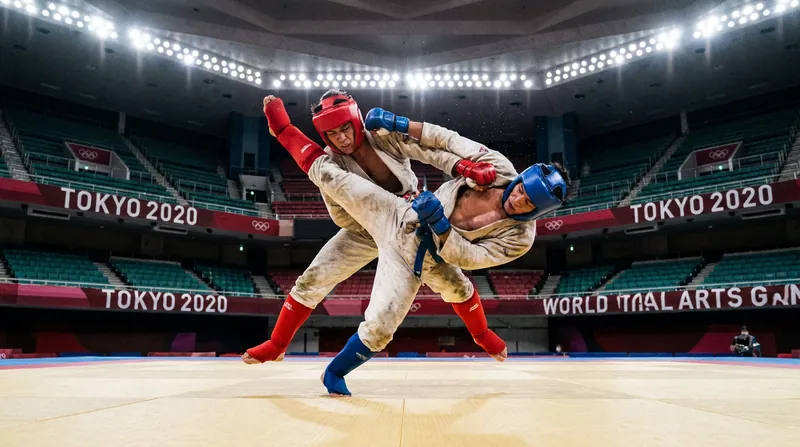
The catalyst for this unified approach stems largely from the complexities of combat sports and martial arts, where the theoretical debates over athletic advantage translate directly into physical risk. During the Paris 2024 Olympics, high-profile controversies in women's boxing highlighted the friction between inclusive policies and the biological realities of striking sports. Unlike precision events such as archery or shooting, martial arts like boxing, judo, taekwondo, and wrestling rely heavily on skeletal mass, fast-twitch muscle fiber, and explosive power.
For the IOC, the patchwork of regulations that allowed individual federations to set their own testosterone thresholds was no longer tenable when athlete safety was on the line. The new policy explicitly prioritizes safety and fairness over inclusion in the female category, establishing a rigid biological boundary that applies universally across all Olympic disciplines.[3][6]
At the center of the new policy is the SRY gene, or the Sex-determining Region Y. In typical human development, this specific segment of DNA is located on the Y chromosome and acts as the master switch for male sex development in utero. When the SRY gene is present, it triggers the formation of testes, which subsequently produce the testosterone that drives male puberty and the development of male biological characteristics.
If the SRY gene is absent—as it is in the vast majority of biological females with XX chromosomes—the body typically develops ovaries and follows a female developmental pathway. By isolating this single genetic marker, the IOC aims to bypass the complexities of fluctuating hormone levels and focus entirely on whether an athlete has undergone male sex development.[1][2]
The testing protocol designed by the IOC is intended to be as minimally invasive as possible, a stark contrast to the physical examinations and blood draws of previous decades. Athletes seeking to compete in the female category will be required to submit a saliva sample or a simple cheek swab. Because an individual's genetic makeup does not change, the IOC has designated this as a once-in-a-lifetime screening.
Once an athlete tests negative for the SRY gene, they permanently satisfy the eligibility criteria for the female category, barring any evidence of testing errors. The IOC Medical Commission argues that this approach is significantly less intrusive than the routine, highly monitored anti-doping procedures that all Olympians already endure, which often require athletes to provide urine samples under direct observation.[1][3]
This genetic mandate officially closes the door on the testosterone era of sports regulation, which governed the last two Olympic cycles. Previously, many international federations required transgender women and athletes with XY-DSD to suppress their endogenous testosterone below a specific threshold—often 5 nanomoles per liter—for a period of 12 to 24 months prior to competition.
However, sports biomechanists and physiologists increasingly argued that testosterone suppression does not meaningfully reverse the structural advantages gained during male puberty. In combat sports, male pubertal development results in broader shoulders, narrower pelvises, greater bone density, and larger lung capacity. These anatomical realities create a permanent biomechanical advantage in generating punching power and leverage in grappling, advantages that remain intact even if circulating testosterone is reduced to female typical ranges.[2][6]
Researchers studying the intersection of sports science and gender have frequently utilized a "decision-making triangle" that balances three competing priorities: safety, inclusion, and fairness. In endurance sports like marathon running, fairness is the primary concern when evaluating biological advantages. But in combat sports and rugby, safety takes precedence.
The sheer force generated by an athlete who has undergone male puberty poses a statistically higher risk of injury to a biologically female opponent. By adopting the SRY screening, the IOC has formally declared that in the female category, the safety and fairness corners of the triangle must outweigh the inclusion of transgender women and XY-DSD athletes, ensuring that the physical well-being of female combatants is not compromised by biological disparities.[6]
The policy's impact extends beyond transgender athletes, profoundly affecting cisgender women with Differences in Sex Development (DSD). Athletes with XY-DSD are typically assigned female at birth and raised as girls, but they possess XY chromosomes and the SRY gene. Because they have internal testes, they naturally produce testosterone in the male range, which their bodies utilize during puberty.
Under the new IOC framework, the presence of the SRY gene means these athletes will no longer be eligible for the female category, regardless of their legal sex or gender identity. This effectively bars high-profile DSD athletes who previously competed under testosterone-suppression rules, redirecting them to male or open categories where they face insurmountable biological disadvantages against typical male competitors.[2][4]
The IOC has carved out one highly specific medical exception to the SRY mandate: Complete Androgen Insensitivity Syndrome (CAIS). Individuals with CAIS possess the SRY gene and produce male-typical levels of testosterone, but a genetic mutation renders their androgen receptors completely non-functional.
Because their bodies cannot process testosterone, they do not experience male puberty, do not develop male skeletal or muscular advantages, and develop physically as females. The IOC's medical experts concluded that excluding athletes with CAIS would be scientifically unjustified, as the presence of the SRY gene in these rare cases does not confer any of the anabolic or performance-enhancing effects that the policy is designed to regulate.[1][3]
The reintroduction of genetic testing has triggered fierce backlash from legal scholars and human rights organizations. Experts from Yale University's Global Health Justice Partnership and the Canadian Civil Liberties Association have condemned the policy, arguing that it violates the Olympic Charter's assertion that the practice of sport is a human right.
Critics argue that reducing womanhood to a single genetic marker ignores the natural biological diversity of the human species and subjects female athletes to degrading scrutiny. Furthermore, legal analysts warn that mandatory genetic screening likely violates the European Union's General Data Protection Regulation (GDPR), which strictly governs the collection and processing of biometric and genetic data, setting up a potential legal collision between the IOC and European courts.[5]
Beyond the legal frameworks, advocacy groups warn of the psychological toll this policy will exact on young athletes. The requirement applies to all competitors in the female category, meaning teenage girls qualifying for their first Olympics will be subjected to genetic verification.
Opponents argue that discovering an undiagnosed DSD condition through a mandatory sports screening can be deeply traumatizing, echoing the dark history of Olympic sex testing in the 20th century. Between 1968 and 1999, the IOC utilized the Barr Body chromosome test, a practice that was eventually abandoned precisely because it resulted in the public humiliation and psychological devastation of female athletes who unknowingly possessed genetic variations.[3][5]
Despite the institutional pushback, the IOC maintains that the policy is broadly supported by the athletes it is designed to protect. According to the committee, extensive consultations and surveys involving thousands of female competitors revealed a strong consensus demanding clear, science-based eligibility rules to protect the female category.
Proponents point to historical data, such as a post-1996 Atlanta Games survey where 82 percent of female athletes expressed support for continued sex screening to ensure a level playing field. For many female martial artists, the assurance that they are stepping onto the judo mat or into the boxing ring against an opponent with a matching biological baseline is viewed as a fundamental right of occupational safety.[1][3]
As international federations prepare for the LA28 Games, the IOC has been careful to define the boundaries of this new mandate. The SRY screening policy applies exclusively to elite, Olympic-level competition and other official IOC events. The committee explicitly stated that this framework is not intended to govern grassroots, recreational, or youth sports programs, urging local organizations to prioritize inclusion and community participation over rigid biological categorization.
However, sports sociologists warn that IOC policies inevitably create a trickle-down effect, raising concerns that local martial arts tournaments and regional leagues may attempt to adopt similar genetic standards, fundamentally altering the landscape of women's sports at every level.[1][2][4]
Key points
- The IOC will mandate a one-time SRY gene screening for all female athletes starting at the LA28 Olympics.
- The policy replaces previous sport-by-sport testosterone thresholds with a single genetic standard.
- Safety in combat sports like boxing and judo was a primary catalyst for the biological boundary.
- Athletes with Complete Androgen Insensitivity Syndrome (CAIS) are exempt from the ban.
What we don’t know
- How the IOC will securely manage and store the genetic data of thousands of athletes in compliance with international privacy laws.
- Whether athletes who are disqualified under the new rule will mount successful legal challenges in the Court of Arbitration for Sport.
- If regional and amateur martial arts federations will attempt to adopt similar genetic testing protocols, despite the IOC's guidance to the contrary.
How we got here
1968
The IOC introduces mandatory sex testing using the Barr Body chromosome test.
1999
The IOC abandons universal genetic sex testing following scientific and ethical pushback.
2015
The IOC shifts to a testosterone-based framework, requiring transgender women to maintain levels below 10 nmol/L.
2021
The IOC drops uniform testosterone rules, asking individual sports federations to create their own eligibility frameworks.
March 2026
The IOC announces a return to a universal standard, mandating one-time SRY gene screening for the female category starting at LA28.
- IOC & Sports Scientists
- Argue that male puberty confers permanent biomechanical advantages that necessitate a strict genetic boundary to ensure safety in combat sports.
- Human Rights & Privacy Advocates
- View mandatory genetic testing as an invasive violation of bodily autonomy and international data privacy laws that unfairly excludes marginalized athletes.
- Female Combat Athletes
- Broadly support biological categorization, viewing it as a necessary occupational safeguard against the physical risks of facing biologically male opponents.
Perspectives this story doesn't cover
- Grassroots Martial Arts Instructors
- Transgender Youth Athletes
Sources
Source coverage
6 outlets
3 viewpoints surfaced






- [1]Olympics.comIOC & Sports Scientists
IOC Executive Board approves new policy on the protection of the female category
Read on Olympics.com → - [2]ForbesIOC & Sports Scientists
What Makes An Olympic Athlete Female? The Rules Just Changed Again
Read on Forbes → - [3]The GuardianFemale Combat Athletes
US supreme court upholds laws excluding trans women from competing in female sports
Read on The Guardian → - [4]CBCFemale Combat Athletes
The IOC's new eligibility policy for female athletes, explained
Read on CBC → - [5]Canadian Civil Liberties AssociationHuman Rights & Privacy Advocates
Olympic Committee's New Eligibility Rules Exclude Transgender Athletes and Expands Policing of Women's Bodies
Read on Canadian Civil Liberties Association → - [6]National Institutes of HealthIOC & Sports Scientists
Fairness, inclusion, and safety in sports: A biomechanical review of testosterone and combat sports
Read on National Institutes of Health →

More in Fitness
See all →Neuroscience
New Integrative Theory Proposes Martial Arts Induce 'Quasicritical Brain States' to Optimize Brain Function
4 sources

Exercise Physiology
New Science Overturns Hypertrophy Dogma: Muscle Growth Achieved Without Continually Increasing Weight
6 sources

Amateur MMA
New Billionaire-Backed Federation Launches to Unify MMA Governance and Push for Olympic Inclusion
5 sources
Metabolic Health
Ketogenic Diet Unlocks Exercise's Full Aerobic Benefit in Subjects With High Blood Sugar, Study Finds
3 sources

Comments
Every angle. Every day.
Get Fitness stories with full source coverage and perspective breakdowns, free every day.