
The Rise of the Faceless Creator: How Anonymity and AI are Rewriting the Creator Economy
Driven by privacy concerns, burnout, and new AI tools, "faceless" channels and VTubers now account for nearly 40% of new creator businesses, democratizing content creation for those who prefer to stay off-camera.
By Jana Rami

Share this story
In short
- Faceless channels now represent 38% of all new creator monetization ventures in 2026.
- The format offers 58% lower production costs compared to traditional face-to-camera videos.
- VTubing, which uses animated avatars, is projected to become a $1.8 billion market by 2030.
For the past decade, the blueprint for internet fame has remained largely unchanged: buy a ring light, point a camera at yourself, and trade your personality for algorithmic reach. But by 2026, the creator economy has reached a breaking point.
With an estimated 62% to 90% of active influencers reporting severe burnout, the pressure of maintaining a parasocial relationship with millions of strangers is taking a visible toll. In response, a quiet revolution is reshaping the $500 billion industry. A growing class of digital entrepreneurs is building massive audiences and lucrative businesses without ever revealing their identities.[4]
Known broadly as "faceless creators," this cohort relies on voiceovers, text overlays, stock footage, and animated avatars to deliver value without delivering themselves. The shift is not a fringe movement; industry data reveals that faceless channels now account for 38% of all new creator monetization ventures in 2026, a staggering 217% increase since 2022. From personal finance explainers to true crime storytelling and ambient "cozy gaming" streams, the anonymity model is democratizing content creation for those who prefer to stay off-camera.[1][4]
The driving force behind this transition is twofold: psychological preservation and raw economic efficiency. Traditional content creation demands that the creator be the product. When an audience attacks a video, they are attacking the person. When the algorithm demands daily uploads, the person must perform daily.
This dynamic has led to a mental health crisis, with over half of creators reporting anxiety tied to their work and the relentless pace of the content treadmill. Faceless creation severs this link, allowing individuals to treat their channels as media properties rather than personal diaries.[4]
Economically, the faceless model fundamentally alters the math of digital production. Traditional face-to-camera formats are bottlenecked by human limits—a creator can only film for so many hours a day. Faceless formats, however, operate with 58% lower production costs. By utilizing scene-based editors, automated asset sourcing, and AI-assisted scripting, a single operator can compress what used to be a four-hour editing grind into an 80-minute batch process.[1]
This efficiency allows solo creators to scale horizontally. Instead of burning out trying to feed one massive personal brand, faceless operators often run multiple niche channels simultaneously. A single script can be translated into dozens of languages using AI voice dubbing, allowing a creator to launch regional variants of the same content with minimal extra effort. The result is a highly profitable, scalable business model that operates more like a digital publishing house than a traditional influencer brand.[4]
At the more interactive end of the faceless spectrum is the booming VTuber (Virtual YouTuber) industry. Rather than relying on pre-recorded voiceovers and stock footage, VTubers use motion-capture technology to pilot animated 2D or 3D avatars in real-time. What began as a niche subculture in Japan has exploded into a global phenomenon, with the VTuber market projected to reach $1.8 billion by 2030.[3]
VTubing offers a unique hybrid: it provides the live, parasocial connection that audiences crave, while maintaining the protective barrier of anonymity for the creator behind the screen. This format has proven incredibly sticky. Recent performance metrics show that VTuber content often achieves engagement rates 2.3 times higher than traditional channels in the same niche. Brands have taken notice, with 40% of surveyed marketers now using VTubers for product launches rather than just broad awareness campaigns.[3]
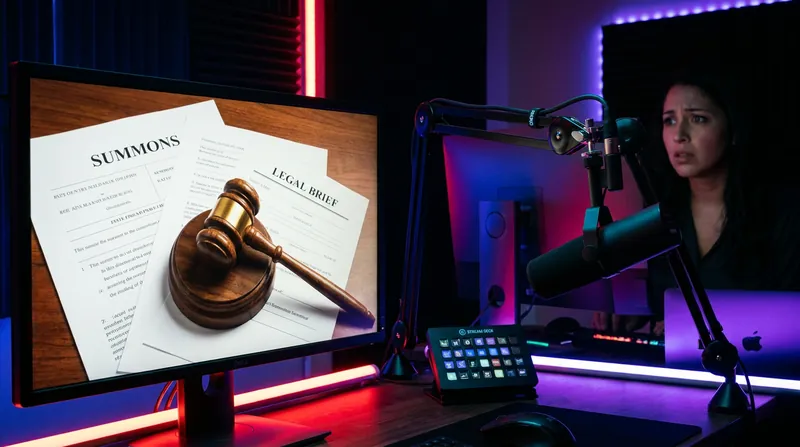
However, the rise of the faceless creator has not been without friction. The very tools that empowered this movement—generative AI, automated voiceovers, and rapid video assembly—have also been weaponized by spammers to flood platforms with low-effort "AI slop." In early 2026, YouTube initiated a massive crackdown on mass-generated content, terminating dozens of massive channels under its "inauthentic content" policy.
In its attempt to clean up the platform, YouTube's algorithm has increasingly been tuned to favor videos featuring a real human face on camera. This blunt-force approach has caught many legitimate faceless creators in the crossfire. Channels that spend hours meticulously researching and editing voiceover-driven documentaries are finding their reach throttled simply because they lack a human host, leading to sudden and devastating drops in revenue.[2]
To survive this algorithmic shift, some faceless operators are resorting to a bizarre workaround: the "hired hand" creator. Rather than abandoning their lucrative channels, operators are paying actors to serve as the on-camera face for scripts they didn't write and channels they don't own. It is a stark illustration of the tension between platforms demanding human authenticity and creators demanding scalable, private business models.[2][4]
Despite the turbulence on YouTube, other platforms are actively rewarding the faceless format. On TikTok, the algorithm has recently shifted to heavily favor text-overlay videos and rapid-fire educational content over personality-driven vlogs. Because TikTok's recommendation engine prioritizes watch time and completion rate above creator recognition, a faceless video with a strong hook can go viral overnight, regardless of follower count.[1]
Ultimately, the surge in faceless creation represents a maturation of the creator economy. The first generation of influencers proved that anyone could build an audience from their bedroom. The current generation is proving that you don't have to sacrifice your privacy, your mental health, or your face to do it. By treating content as a product rather than an identity, the faceless movement is offering a sustainable, burnout-resistant path forward in an industry famous for chewing people up.[4]
Key terms
- Faceless Creator
- A content creator who builds an audience using voiceovers, text, or avatars without revealing their real identity.
- VTuber
- Short for Virtual YouTuber; an online entertainer who uses a computer-generated avatar driven by motion capture software.
- Parasocial Relationship
- A one-sided psychological bond where an audience member feels a close connection to a media personality.
- AI Slop
- A colloquial term for low-effort, mass-produced content generated entirely by AI to game platform algorithms.
- Scene-Based Editor
- Video editing software that allows creators to modify individual segments of a video without re-rendering the entire project.
Frequently asked
Can you still make money without showing your face?
Yes. Faceless channels now account for nearly 40% of new creator businesses, often utilizing lower production costs to achieve high profit margins.
Why is YouTube cracking down on faceless content?
YouTube is attempting to combat a flood of low-effort, mass-produced 'AI slop,' but its algorithmic preference for human faces has inadvertently penalized legitimate faceless creators.
What is the difference between a faceless creator and a VTuber?
While both maintain anonymity, VTubers use animated avatars and motion capture to interact live with their audience, whereas traditional faceless creators typically rely on pre-recorded voiceovers and stock footage.
Viewpoints in depth
Privacy-First Creators
Advocates for separating personal identity from digital labor to protect mental health.
For this camp, the faceless movement is primarily a psychological safeguard. They argue that the traditional influencer model—where a creator's face, personality, and daily life are commodified—inevitably leads to burnout and toxic parasocial dynamics. By removing their physical identity from the equation, these creators can log off at the end of the day without the anxiety of being recognized in public or having their personal lives scrutinized by millions of strangers.
Efficiency Maximizers
Operators who view content creation as a scalable business system rather than a personal brand.
This group treats digital content like a traditional media publishing business. They leverage AI tools, automated editors, and outsourced talent to produce high volumes of content across multiple niches simultaneously. For efficiency maximizers, the faceless model is appealing because it removes the human bottleneck; a channel's output is no longer limited by how many hours the host can spend in front of a camera, allowing for rapid scaling and higher profit margins.
Platform Regulators
Tech platforms attempting to balance algorithmic curation with the fight against automated spam.
Platforms like YouTube find themselves in a difficult position. While they benefit from the massive engagement that faceless and VTuber content brings, they are also battling a deluge of low-effort, AI-generated spam designed to game their monetization systems. Their current solution—tuning algorithms to favor human faces as a proxy for authenticity—is a blunt instrument that often penalizes legitimate, high-effort faceless creators in the crossfire.
- Efficiency Maximizers
- Operators who view content creation as a scalable business system rather than a personal brand.
- Privacy-First Creators
- Advocates for separating personal identity from digital labor to protect mental health.
- Platform Regulators
- Tech platforms attempting to balance algorithmic curation with the fight against automated spam.
Perspectives this story doesn't cover
- Traditional Face-to-Camera Influencers
- Audiences who prefer parasocial connections
Sources
Source coverage
4 outlets
3 viewpoints surfaced




- [1]AutoFacelessPrivacy-First Creators
Faceless Content Creator Statistics 2026: Earnings, Growth Rates & Platform Preferences
Read on AutoFaceless → - [2]VizardPlatform Regulators
Faceless Channels Are Losing Money
Read on Vizard → - [3]WifiTalentsEfficiency Maximizers
VTuber Industry Statistics 2026
Read on WifiTalents → - [4]Factlen Editorial TeamEfficiency Maximizers
Synthesis by Factlen editorial team
Read on Factlen Editorial Team →
More in Entertainment
See all →Creator Economy
TikTok Live Overtakes Twitch in Watch Hours, Reshaping Creator Payouts
2 sources
Creator Economy
The Post-Algorithm Era: Why Internet Creators Are Building Their Own Streaming Platforms
3 sources

Creator Economy
The Rise of 'Slow Content': How Creators Are Escaping the Algorithm Treadmill
3 sources
Creator Economy
The 11 Categories and the Four Risk Levels: How the GARM Framework Actually Dictates Creator Ad Revenue
6 sources
Comments
Every angle. Every day.
Get Entertainment stories with full source coverage and perspective breakdowns, free every day.