
The Race for Supremacy: USA and Japan Command the Top 10 in the ISU Women's World Standings
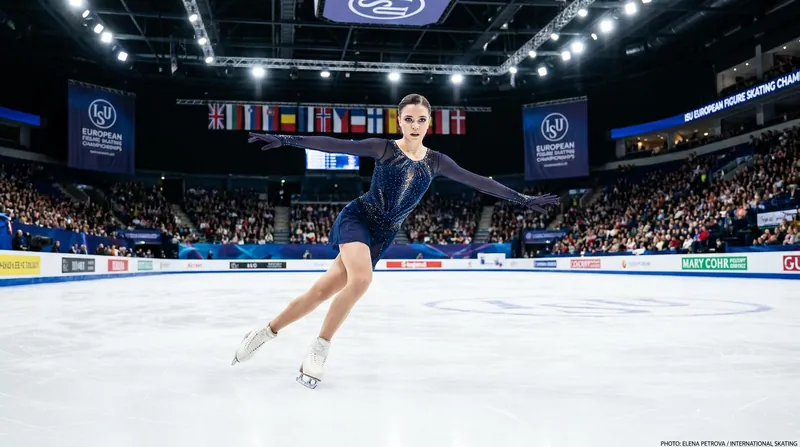
As the 2026-2027 figure skating season approaches, the United States and Japan have established a historic stranglehold on the women's singles rankings, capturing eight of the top ten spots globally.

Share this story
The release of the 2026/2027 ISU World Standings has confirmed what many in the figure skating community suspected: the women's singles discipline is currently ruled by a historic duopoly. As the International Skating Union finalized the rolling rankings heading into the new Olympic cycle, the United States and Japan have effectively locked out the rest of the world, capturing an astonishing eight of the top ten global spots.
This unprecedented concentration of talent at the very top of the sport sets the stage for a thrilling, high-stakes battle as the federations prepare for the upcoming Grand Prix season.[1][5]
At the pinnacle of the standings sits American Olympic champion Alysa Liu, who amassed 4,248 points across the rolling three-season qualification period. Liu's return to the top of the sport has been nothing short of meteoric, culminating in her current status as the World No. 1.
However, her lead is razor-thin, and the target on her back is massive. With the points from the previous seasons beginning to age out, Liu will need to maintain her elite technical execution to fend off a surging international field that is eager to claim the top spot.[1]
Breathing down Liu's neck are two Japanese powerhouses who represent the gold standard of foundational skating skills. Kaori Sakamoto, despite swirling retirement rumors following the previous Olympic cycle, remains firmly entrenched at No. 2 with 4,178 points. Right behind her is Mone Chiba at No. 3 with 4,164 points. The margins separating the top three women are so minuscule—just 14 points between Sakamoto and Chiba—that a single podium finish at an early-season Challenger event could completely reshuffle the podium before the major television broadcasts even begin.[1]
The American depth continues immediately after the Japanese duo, showcasing a roster that is deeper than it has been in decades. Reigning U.S. champion Amber Glenn occupies the No. 4 position with 3,671 points, while Isabeau Levito sits at No. 5 with 3,245 points.
This concentration of talent means that half of the top ten skaters in the world hail from the United States. For the American program, this density provides a massive strategic advantage for team events and ensures that domestic competitions will be nearly as fiercely contested as international ones.[1]
Japan's Ami Nakai (2,992 points) and America's Bradie Tennell (2,934 points) hold the sixth and seventh spots, respectively. The sheer density of skaters from these two federations has become a major talking point among analysts and fans. Observers analyzing the data have noted that together, Japan and the U.S. hold 11 out of the top 24 spots globally, creating a formidable wall for skaters from other nations to climb. This duopoly has fundamentally altered the strategic landscape of the sport, forcing smaller federations to rethink how they farm points.[1][2]
Breaking the duopoly in the top ten are just two skaters: Italy's Lara Naki Gutmann at No. 8 (2,923 points) and Georgia's Anastasiia Gubanova at No. 10 (2,627 points). Sandwiched between them is yet another American, Sarah Everhardt, who surged into the No. 9 spot after a stellar 2025-2026 campaign. For skaters like Gutmann and Gubanova, maintaining their top-ten status requires near-perfect execution against the overwhelming depth of the American and Japanese rosters, making their achievements all the more remarkable in the current competitive climate.[1]
These standings are far more than just a leaderboard; they are the currency of the sport. A skater's World Standing dictates their seeding for the prestigious ISU Grand Prix Series and determines their placement in the crucial final warm-up groups at the World Championships and Olympic Games.
The points are aggregated from eligible international competitions over three seasons, with the current and immediately preceding seasons weighted at 100%, and the season two years prior at 70%. Being in the top 24 guarantees a skater at least one Grand Prix assignment, a critical lifeline for funding and international exposure.[3]
The newly announced 2026 Grand Prix assignments, released by the ISU in mid-June, reflect this standings reality. The six-event circuit, which kicks off in Angers, France, on October 23, will feature heavy concentrations of U.S. and Japanese talent. Skate America, scheduled for November 13-15 in Everett, Washington, will be a particular focal point. There, Liu and Glenn are slated to defend home ice against a stacked international field, providing an early litmus test for how the World Standings might shift as the season progresses.
The battle for points will actually begin much earlier than the October Grand Prix kickoff. The ISU Challenger Series, an expanded 13-event circuit starting in August with the Cranberry Cup in Massachusetts, will serve as the immediate battleground. Because the points gap between skaters like Glenn, Levito, and Liu is relatively small, a gold or silver medal at a Challenger event could easily vault a skater up the global ladder. These late-summer competitions have transformed from warm-up events into high-stakes point grabs.[5]
For skaters sitting just outside the top ten—such as Belgium's Nina Pinzarrone at No. 11 and Estonia's Niina Petrokina at No. 12—the Challenger Series offers a vital opportunity to farm points and break into the elite upper echelon. The global prize money and ranking points available at these events have never been more critical. As the duopoly tightens its grip on the top spots, skaters from smaller federations must perfectly optimize their competition schedules to ensure they don't fall out of the crucial top 24.[1][4]
As the 2026-2027 season dawns, the narrative is clear: the women's field is experiencing a golden era of technical and artistic depth, driven by the fierce rivalry between the United States and Japan. With the Grand Prix Final in Chongqing, China, looming in December, every jump, spin, and component score will carry massive weight in the race for World No. 1. The sheer volume of talent concentrated at the top guarantees that fans will be treated to some of the highest-quality skating in the history of the sport.
With the Grand Prix Final in Chongqing, China, looming in December, every jump, spin, and component score will carry massive weight in the race for World No.
Athletes and coaches alike are bracing for a season where the margins for error are virtually nonexistent. The historic stranglehold on the standings by two nations has elevated the competitive baseline, ensuring that the upcoming season will be a thrilling showcase of athletic excellence. Whether the U.S. and Japan maintain their iron grip or a dark horse from a smaller federation breaks through, the race for the top of the ISU World Standings promises to be the defining storyline of the year.[5]
Key points
- The United States and Japan hold eight of the top ten spots in the latest ISU Women's World Standings.
- American Alysa Liu is currently World No. 1 with 4,248 points, narrowly leading Japan's Kaori Sakamoto and Mone Chiba.
- Being in the top 24 of the World Standings guarantees a skater at least one assignment in the upcoming Grand Prix Series.
- The 2026 Grand Prix Series begins October 23 in France, with Skate America following in November.
- Skaters will use the 13-event Challenger Series starting in August to farm crucial ranking points.
How we got here
May 2026
The ISU finalizes the rolling World Standings following the conclusion of the 2025-2026 season.
June 16, 2026
The ISU announces the official Grand Prix assignments for the 2026-2027 season based on the standings.
August 2026
The Challenger Series begins, offering the first opportunity for skaters to earn new ranking points.
October 23, 2026
The Grand Prix Series officially kicks off with the Grand Prix de France in Angers.
- American Federation Supporters
- Celebrating the historic depth of the US women's field and their return to global dominance.
- Japanese Federation Supporters
- Highlighting the consistent excellence of Chiba, Nakai, and Sakamoto, viewing Japan as the true technical powerhouse.
- Global Field Advocates
- Rooting for European and smaller federation skaters to break the duopoly and diversify the top rankings.
- Neutral Analysts
- Focusing on the mathematical realities of the standings and how they dictate Grand Prix assignments.
Perspectives this story doesn't cover
- Skaters from smaller federations struggling to secure Grand Prix assignments due to the standings lockout.
- Junior skaters transitioning to the senior ranks who must build points from scratch.
Sources
Source coverage
5 outlets
4 viewpoints surfaced





- [1]ISUNeutral Analysts
ISU World Standings 2026/2027 Women
Read on ISU → - [2]Reddit Figure SkatingGlobal Field Advocates
ISU World Standings Top 24 updated for start of 2026/27
Read on Reddit Figure Skating → - [3]WikipediaNeutral Analysts
ISU World Standings and Season's World Ranking
Read on Wikipedia → - [4]AnythingGoeJapanese Federation Supporters
Grand Prix Assignments for the upcoming season
Read on AnythingGoe → - [5]Factlen Editorial TeamNeutral Analysts
Synthesis by Factlen editorial team
Read on Factlen Editorial Team →
More in Sports
See all →Standings
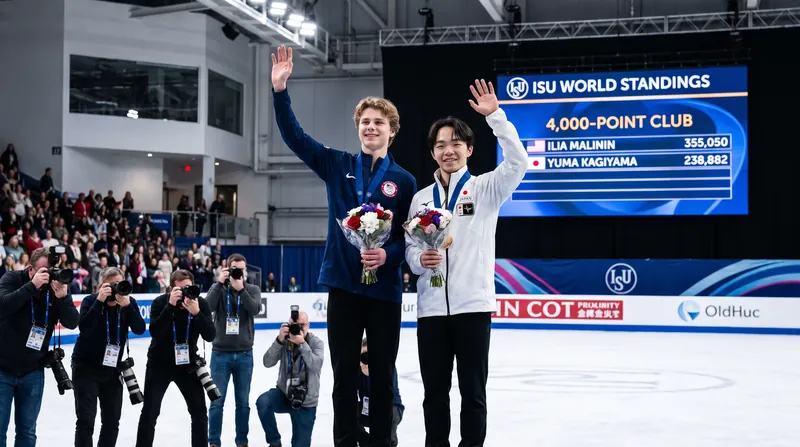
The 4,000-Point Club: Ilia Malinin and Yuma Kagiyama Separate Themselves Atop the ISU Men's World Standings
3 sources
Standings
The Race for Representation: Emerging Federations Surge in the ISU World Standings
4 sources
Standings
Alysa Liu Edges Kaori Sakamoto for World Number One as ISU Overhauls Figure Skating Standings Rules
4 sources

Injury
Figure Skating Injury Report: Gogolev and Petrokina Enter Grand Prix Season Fully Healthy After Career-Threatening Setbacks
7 sources
Comments
Every angle. Every day.
Get Sports stories with full source coverage and perspective breakdowns, free every day.