
Figure Skating Injury Report: Gogolev and Petrokina Enter Grand Prix Season Fully Healthy After Career-Threatening Setbacks
Following a grueling Olympic cycle defined by severe injuries, former prodigy Stephen Gogolev and European champion Niina Petrokina are entering the 2026–2027 Grand Prix season fully cleared and pain-free.
By Omar Haddad
Share this story
The post-Olympic figure skating offseason is typically a period of rest, reflection, and occasional retirement. But for a select group of elite competitors, the summer of 2026 represents a hard-won return to baseline health. After battling career-threatening injuries during the Milano Cortina Olympic cycle, Canada's Stephen Gogolev, Estonia's Niina Petrokina, and Japan's Kao Miura are entering the upcoming Grand Prix season fully cleared and pain-free. Their journeys back to the ice highlight a growing shift in the sport: prioritizing long-term biomechanical health over immediate, short-term results.[1][2][7]
For Gogolev, the 2026–2027 season marks the end of a grueling multi-year rehabilitation. Once heralded as the next great Canadian prodigy after landing triple Axels at age 10, Gogolev's trajectory was severely derailed by a massive growth spurt. The rapid physical changes altered his center of gravity and triggered chronic, debilitating back injuries that kept him off the international podiums he once seemed destined to dominate.[1][3]
The pain became so severe that Gogolev seriously contemplated retiring in December 2024, when his season was cut short for a second consecutive year. "I definitely had those thoughts," Gogolev admitted during his recovery. "It was really frustrating… I wasn't really sure whether these issues were going to keep continuing." The psychological weight of unfulfilled potential, coupled with constant physical discomfort, pushed the young skater to the brink of walking away from the sport entirely.[1]
Instead of stepping away, Gogolev chose to give his career one last, calculated try. He relocated his training base back to Toronto and began working closely with his coaching team to manage his training load. By carefully monitoring the stress placed on his back and allowing his body to adapt to its new biomechanics, Gogolev slowly rebuilt his jump arsenal. The cautious, health-first approach paid massive dividends when he returned to the ice entirely pain-free.[1][6]
Gogolev's resurgence was spectacular. He captured his first senior international gold medal at the Nebelhorn Trophy in Oberstdorf, Germany, posting a personal-best total of 255.06 points. That momentum carried him to a Canadian national title and a phenomenal fifth-place finish at the 2026 Milano Cortina Olympics, making him the top North American male skater at the Games. Now 20, he enters the summer training period fully healthy, focusing on refining his quadruple jumps rather than managing chronic pain.[1][3]
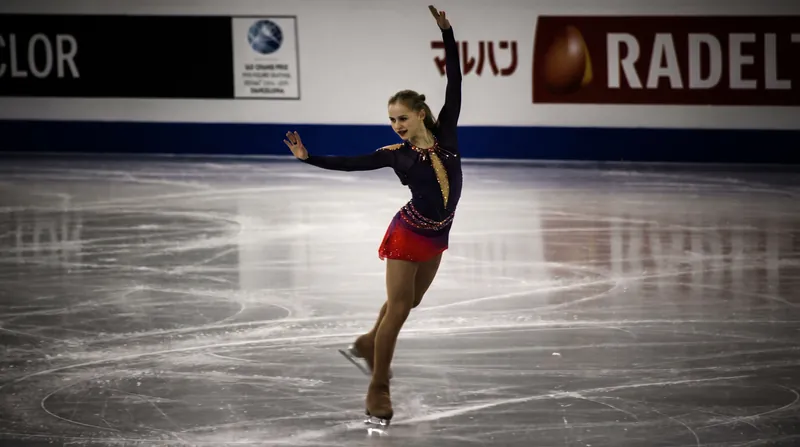
In the women's field, Estonia's Niina Petrokina is utilizing the summer to build on one of the most remarkable medical comebacks in recent figure skating history. In October 2025, Petrokina underwent surgery to repair her Achilles tendon—a devastating injury for a figure skater, as the tendon is crucial for the explosive power required in triple jumps. Such procedures typically demand six to nine months of intensive, carefully monitored rehabilitation.[2]
Defying all medical expectations, Petrokina returned to elite competition just three months later at the 2026 European Championships in Sheffield, England. Skating to the cinematic soundtrack of Dune, she landed seven triple jumps in a flawless, personal-best free skate to score 216.14 points. The performance secured her the gold medal and successfully defended her European title against a deeply competitive field.[2][7]
Petrokina's victory made her the first woman to win back-to-back European championships since Evgenia Medvedeva achieved the feat in 2017. "I don't know how I do it," Petrokina said following her emotional victory. "I needed everything that happened for this moment." With her Achilles tendon now fully healed and tested under the immense pressure of championship ice, she is preparing for a full Grand Prix slate this autumn with renewed confidence.[2]
Meanwhile, Japan's Kao Miura is also entering the new season with a clean bill of health after a nagging left thigh injury hampered his pre-Olympic campaign. The injury forced Miura to rely heavily on painkillers during the 2024–2025 season, culminating in a disappointing eighth-place finish at the Japanese National Championships. Recognizing the unsustainable nature of his physical condition, Miura made the difficult decision to take a temporary break from the sport.[4]
In a heartfelt message to his supporters, Miura explained that he needed time away to heal his body and ensure he didn't "come to hate" the sport he loved. This strategic rest period proved highly effective. Miura returned to the ice rejuvenated, capturing the 2026 Four Continents Championship and securing a bronze medal at the subsequent Japanese National Championships to punch his ticket to the Milano Cortina Games.[4]
With the 2026–2027 ISU Grand Prix assignments officially locked in, the focus for Gogolev, Petrokina, and Miura shifts entirely from rehabilitation to technical escalation. For the first time in years, these athletes are entering the grueling autumn circuit without the shadow of injury looming over their daily practice sessions. Their successful comebacks serve as a powerful testament to the resilience required to survive modern figure skating, proving that stepping back to heal is often the ultimate key to moving forward.[5][7]
The essentials
- Canada's Stephen Gogolev has fully recovered from chronic back injuries to become a top contender for the 2026–2027 Grand Prix season.
- Gogolev recently captured a Canadian national title and finished fifth at the 2026 Milano Cortina Olympics.
- Estonia's Niina Petrokina is entering the season fully healthy after winning the 2026 European Championships just three months post-Achilles surgery.
- Japan's Kao Miura successfully rehabilitated a nagging thigh injury following a strategic hiatus from the sport.
- Coaches and analysts are increasingly emphasizing load management and strategic rest to combat the sport's high technical demands.
Timeline
Dec 2024
Stephen Gogolev contemplates retirement after his season is cut short by chronic back injuries.
Sept 2025
Gogolev returns to win his first senior gold medal at the Nebelhorn Trophy with a personal-best score.
Oct 2025
Niina Petrokina undergoes surgery to repair her Achilles tendon.
Jan 2026
Petrokina defends her European Championship title just three months post-surgery.
Feb 2026
Gogolev finishes fifth at the Milano Cortina Winter Olympics, the top result for a North American male.
July 2026
Gogolev, Petrokina, and Kao Miura enter summer training fully cleared for the upcoming Grand Prix season.
- Athlete Support Teams
- Medical and coaching staffs prioritizing long-term biomechanical health and load management over immediate competition results.
- Figure Skating Analysts
- Commentators emphasizing how the sport's rising technical demands necessitate strategic hiatuses.
- The Skaters
- Athletes highlighting the psychological toll of chronic injuries and the mental resilience required to return.
Perspectives this story doesn't cover
- Sports psychologists treating the mental toll of long-term athletic rehabilitation
- Physical therapists specializing in figure skating biomechanics
Sources
Source coverage
7 outlets
3 viewpoints surfaced







- [1]CBC SportsAthlete Support Teams
Stephen Gogolev contemplated hanging up his skates before remarkable comeback
Read on CBC Sports → - [2]AP NewsThe Skaters
Petrokina retains European figure skating title after Achilles tendon surgery
Read on AP News → - [3]University AffairsAthlete Support Teams
Figure skater and University of Toronto student Stephen Gogolev ends in fifth place
- [4]Wikipedia
Kao Miura: Struggles with injury and Olympic comeback
Read on Wikipedia → - [5]ISU Skating
ISU Grand Prix of Figure Skating 2026-2027 Assignments Announced
- [6]Golden SkateFigure Skating Analysts
2025-2026 Canadian Figure Skating Discussions
- [7]Olympics.comThe Skaters
Figure Skating Injury Updates and Olympic Preparations
Read on Olympics.com →
More in Sports
See all →Injury
Gabrielle Daleman Returns to the Grand Prix Circuit After Three-Year Injury Battle
6 sources

Injury
Figure Skating Injury Report: Nina Pinzarrone and Wesley Chiu Target Grand Prix Returns as Yuma Kagiyama Sits Out
6 sources
Injury
Figure Skating Injury Report: Junhwan Cha Suspends Season to Heal, While Loena Hendrickx Targets Grand Prix Return
5 sources
Standings
The Top 10 Bubble: Egadze, Grassl, and Aymoz Face a High-Stakes Grand Prix Season Under New ISU Standings Rules
7 sources
Comments
Every angle. Every day.
Get Sports stories with full source coverage and perspective breakdowns, free every day.