
Dow Tumbles 652 Points as Rising Oil and Bond Yields Spook Markets Ahead of Fed
The Dow Jones Industrial Average dropped 652 points on Friday as surging crude prices and climbing Treasury yields triggered a broad selloff. Investors are increasingly rotating out of equities ahead of the Federal Reserve's upcoming interest rate decision.

Share this story
When the Dow Jones Industrial Average shed 600 points last spring, the retreat was largely confined to heavily weighted technology shares reacting to earnings misses. Friday’s 652-point collapse diverged sharply from that pattern, as the selling pressure rotated aggressively out of virtually every sector to seek shelter in cash and short-term debt.[1][4]
The blue-chip index closed down roughly 1.5 percent, erasing nearly 14 days of October gains in a single session. Broader market gauges followed suit, reflecting a sudden evaporation of the risk appetite that had sustained equities through the early autumn.[1]
The catalyst for the broad retreat was a dual shock from the commodity and bond markets that caught institutional trading desks off guard. Brent crude prices surged past $85 a barrel to a five-month high, driven by escalating geopolitical tensions and renewed Houthi attacks on shipping lanes.[3]
"Energy markets are pricing in a tangible risk of supply disruption that we haven't seen since the spring," noted a market strategist quoted by Walletinvestor. That sudden spike in fuel costs immediately translates into higher operating expenses for transport and manufacturing sectors.[3]
Simultaneously, the yield on the benchmark 10-year U.S. Treasury note climbed steadily throughout the morning, crossing the critical 4.25 percent threshold. Rising yields mechanically lower the present value of future corporate earnings, making high-multiple stocks particularly vulnerable to repricing.[1][2]
Energy Shocks and Yield Spikes
The bond market's move reflects growing anxiety that the Federal Reserve will be forced to maintain its restrictive monetary policy longer than previously anticipated. If energy prices continue to drive headline inflation upward, central bankers lose the flexibility to offer rate cuts.[6]
Analysts at Seeking Alpha highlight that the runway for the Fed's current tightening cycle is rapidly shrinking before it begins to bite into structural economic growth. The central bank now faces the difficult task of balancing persistent price pressures against early signs of consumer exhaustion.[6]
The rotation out of equities was not limited to the speculative fringes of the market, as defensive staples and industrial conglomerates also took heavy losses. The Edge reported that the selling rotated well beyond the technology sector, indicating a fundamental reassessment of equity risk premiums.[4]
Financial institutions, which typically benefit from higher interest rates through expanded net interest margins, saw sector-wide declines of 2.1 percent. Investors appear increasingly concerned that prolonged high rates will trigger a wave of corporate defaults and suppress commercial loan demand.[2][6]
The Connect Money highlighted that the Iran-driven oil shock added a layer of unpredictable geopolitical risk to an already fragile market psychology. When geopolitical risk premiums spike alongside borrowing costs, portfolio managers are mandated by internal risk models to reduce their overall equity exposure.[5]
Reassessing Corporate Earnings
Corporate earnings reports released earlier in the week had largely met expectations, with 74 percent of S&P 500 companies beating estimates, but forward guidance has grown increasingly cautious. Executives are citing the rising cost of capital and unpredictable supply chain logistics as primary headwinds.[2]
"Wall Street is losing ground under the combined weight of these macro pressures," reported The Business Journal, noting that the sheer velocity of the selloff caught many retail investors by surprise. The speed of the decline suggests that algorithmic trading models accelerated the downward momentum.[2]
The energy sector was the sole bright spot in an otherwise sea of red, with major exploration and production companies posting modest gains. However, those isolated advances were entirely insufficient to offset the heavy drag from consumer discretionary and industrial components.[1][4]
Kiplinger observed that the Dow's drop was exacerbated by thin trading volumes typical of a Friday session preceding a major macroeconomic event. When liquidity dries up, even moderate institutional selling can result in outsized price swings across major indices.[1]
The upcoming Federal Open Market Committee meeting now looms as a critical juncture for global financial markets. Traders are pricing in a near certainty that rates will remain unchanged, but the accompanying press conference will be heavily scrutinized for any shift in tone.[6]
Global Contagion Risks
The ripple effects of the U.S. market contraction are already being felt across international exchanges, with European and Asian futures pointing to a lower open. A stronger U.S. dollar, driven by those higher Treasury yields, is placing immense pressure on emerging market currencies.[3][5]
Foreign institutional investors have been steadily reducing their exposure to riskier assets over the past 10 weeks, a trend that Friday's price action will likely accelerate. Capital is flowing back into the perceived safety of U.S. government debt, despite the rising yields.[2]
For the average retail investor, the immediate consequence is a sharp contraction in portfolio values just as the holiday spending season approaches. Financial advisors are broadly recommending that clients maintain their long-term asset allocations rather than attempting to time a volatile market.[1]
Key points
- The Dow Jones Industrial Average plunged 652 points as a broad market selloff erased significant October gains.
- Brent crude prices reached a five-month high following renewed geopolitical tensions and shipping disruptions.
- Rising 10-year Treasury yields pressured equity valuations by making safe-haven government debt more attractive.
- Investors are aggressively reducing their risk exposure ahead of the Federal Reserve's upcoming interest rate decision.
Unanswered questions
- Whether the Federal Reserve will adjust its forward guidance in response to the sudden tightening of financial conditions.
- How long the geopolitical risk premium will keep Brent crude prices elevated at their current five-month highs.
- If the rotation out of the technology sector represents a temporary rebalancing or a permanent shift in market leadership.
How we got here
Early Oct 2026
Equities rally on optimism surrounding resilient corporate earnings and stable consumer spending.
Oct 20, 2026
Houthi attacks in the Red Sea escalate, prompting a sharp upward revision in global oil price forecasts.
Oct 22, 2026
The 10-year U.S. Treasury yield crosses critical technical thresholds, signaling bond market anxiety.
Oct 23, 2026
The Dow drops 652 points in a broad-based selloff driven by the dual commodity and rate shocks.
- Institutional Bears
- Analysts arguing that the equity market is finally pricing in the reality of higher-for-longer interest rates.
- Energy Market Analysts
- Commodities experts focused on the geopolitical premium currently inflating crude oil prices.
- Bullish Contrarians
- Investors who view the sudden selloff as an overreaction and a buying opportunity.
Perspectives this story doesn't cover
- Retail investors facing margin calls
- Corporate treasurers managing debt issuance
Sources
Source coverage
6 outlets
3 viewpoints surfaced






- [1]KiplingerBullish Contrarians
Dow Drops 652 Points as Oil, Treasury Yields Rise: Stock Market Today
Read on Kiplinger → - [2]The Business JournalEnergy Market Analysts
Wall Street loses ground under pressure from rising oil prices
Read on The Business Journal → - [3]WalletinvestorInstitutional Bears
Oil climbs to five-month high on Houthi attacks as Dow falls 652 points
Read on Walletinvestor → - [4]The EdgeInstitutional Bears
US Market Wrap 23 October: Dow Falls 652 Points as the Selling Rotates Beyond Technology
Read on The Edge → - [5]The Connect MoneyEnergy Market Analysts
Dow Falls 652 Points as Iran-Driven Oil Shock Adds to AI Selloff, Oil and Rate Pressures
Read on The Connect Money → - [6]Seeking AlphaBullish Contrarians
Fed Over-Tightening: How Much Runway Is Left Before It Bites?
Read on Seeking Alpha →

More in Finance
See all →Risk-Free Rate
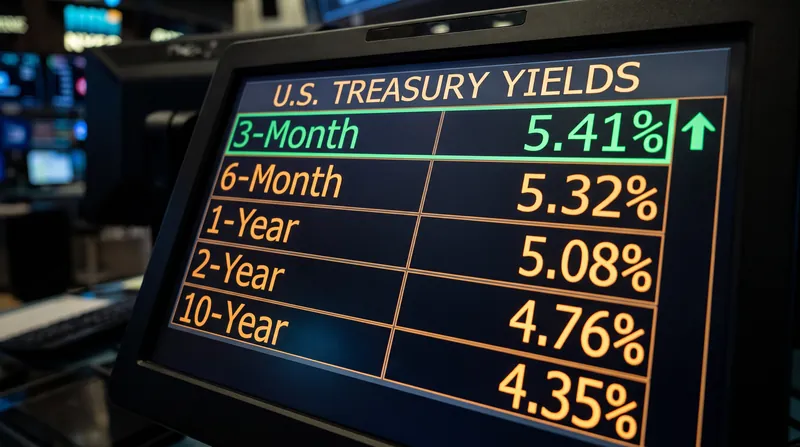
The Near-Zero Duration and Minimal Default Risk That Make the 3-Month Treasury Bill the Standard Risk-Free Rate Proxy
7 sources
Clinical Trial Integrity
Moderna Plunges 25% and Sheds $24 Billion in Market Value Following Cancer Vaccine Data Leak
6 sources

Asian Markets
China's CSI 300 Enters Bear Market as $2.4 Trillion Tech Rout Deepens
6 sources

Corporate Governance
Meta Authorizes Non-Voting Share Class to Finance Surging AI Capital Spending
6 sources
Comments
Every angle. Every day.
Get Finance stories with full source coverage and perspective breakdowns, free every day.