
The Next Xbox Shift: Comparing Project Helix's PC-Hybrid Architecture Against Traditional Consoles
Microsoft's upcoming 'Project Helix' abandons the traditional closed-console model for a Windows 11 hybrid that plays both Xbox and PC games. We break down the trade-offs of bringing open PC architecture to the living room.
By Nabil Faris

Share this story
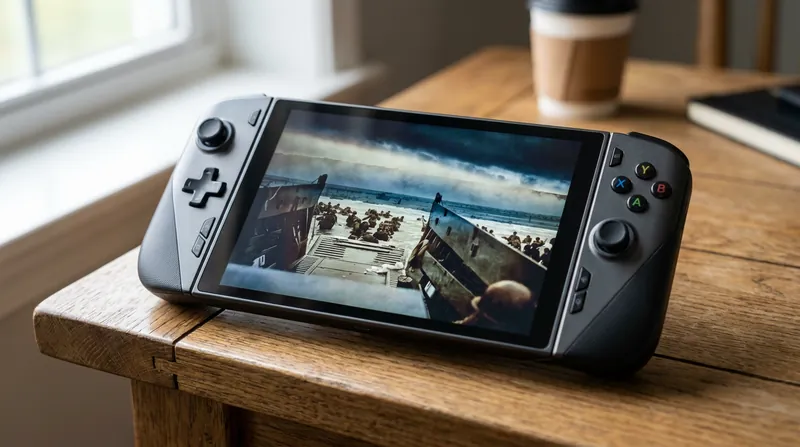
At the 2026 Game Developers Conference, Microsoft formally dismantled the wall separating the living room from the desktop. Unveiling new details about its next-generation hardware, codenamed Project Helix, Xbox leadership confirmed that the upcoming system will not be a traditional closed-box console. Instead, it is being engineered as a hybrid device: a custom-built gaming PC that runs a specialized version of Windows 11 while maintaining the form factor and accessibility of a living room appliance.
By allowing users to play both native Xbox titles and standard PC games, Microsoft is fundamentally redefining what a console can be. The announcement signals a departure from the walled-garden approach that has defined the industry for decades, opting instead to leverage Microsoft’s dominance in PC operating systems to outflank traditional console rivals.[1]
The hardware powering this shift relies on a deepening partnership with AMD. Project Helix is built around a custom system-on-chip that reportedly integrates AMD’s upcoming Zen 6 CPU architecture with a massive RDNA 5 graphics processor. Microsoft has also confirmed the inclusion of a dedicated Neural Processing Unit designed specifically to handle machine learning tasks.
This silicon is co-engineered with the next generation of DirectX and AMD’s new FSR Diamond upscaling technology, which handles multi-frame generation and ray regeneration. By integrating artificial intelligence directly into the rendering pipeline, the hardware aims to deliver an order-of-magnitude leap in ray tracing performance while keeping thermal output manageable for a console chassis. Alpha developer kits are scheduled to begin shipping to studios in 2027.[2]
While the silicon is formidable, the software architecture represents the true paradigm shift. Rather than running a heavily locked-down proprietary operating system, Project Helix will run a customized version of Windows 11. The system will boot directly into a controller-first interface dubbed 'Xbox Mode,' which mimics the traditional console dashboard.
However, because the underlying architecture is Windows, users will theoretically have the ability to exit the dashboard and access the broader PC ecosystem. This means the hardware could support competing digital storefronts like Steam, the Epic Games Store, and GOG, alongside standard productivity applications. It is an unprecedented level of openness for a major first-party gaming console.[2]
This architectural pivot forces a direct trade-off analysis between the emerging hybrid PC-console model and the traditional closed-ecosystem console. For decades, the console value proposition has been built on absolute simplicity: you buy the box, insert a game, and it simply works.
The hardware is a known quantity, allowing developers to extract every ounce of performance without worrying about background operating system bloat or driver conflicts. The traditional model guarantees a frictionless, plug-and-play experience that appeals to mainstream consumers who have zero interest in troubleshooting frame rates or managing software launchers.
The case against the traditional closed console, however, has grown louder as game libraries become increasingly digital. Closed ecosystems lock players into a single storefront, eliminating price competition and forcing users to pay monthly subscription fees simply to access online multiplayer. Furthermore, when a console generation ends, backward compatibility is often treated as a premium feature rather than a given right. Traditional consoles also strictly limit user-generated content and game modifications, which have become central to the longevity of modern blockbuster titles.
Conversely, the case for the Project Helix hybrid model centers on ultimate consumer freedom and library preservation. By opening the hardware to PC storefronts, players are no longer beholden to Microsoft’s pricing. A user could purchase a game on a Steam summer sale and play it on their living room television with console-level optimization.
Furthermore, a Windows-based architecture ensures native, indefinite backward compatibility. The 1,500 titles currently in the Xbox Play Anywhere catalog demonstrate the viability of this cross-platform approach, allowing players to buy a game once and access it across both their desktop PC and their living room console with synchronized cloud saves.
The primary argument against the hybrid model is the inherent friction of PC gaming. Windows is a complex, multi-purpose operating system, and exposing that complexity in a living room environment risks alienating casual players. Critics point out that PC gaming frequently involves driver updates, launcher conflicts, and tweaking graphical settings to achieve stable performance.
If Project Helix requires users to navigate a desktop environment with a controller just to launch a third-party game, it will fail the basic couch-usability test. Additionally, rumors suggest that this PC-centric approach will result in the complete removal of the physical disc drive, alienating game collectors and those reliant on the used game market.[2]
The evidence surrounding this trade-off suggests Microsoft is acutely aware of the usability risks and is engineering software solutions to mitigate them. The company has been using handheld devices like the ASUS ROG Ally as a dress rehearsal for this exact interface.
Data from the current Xbox Full Screen Experience mode shows that when Windows is stripped down to its gaming essentials, it yields a 9.3 percent reduction in RAM usage and an 8.6 percent increase in frame rates due to lower system overhead. By aggressively suspending background Windows processes while in Xbox Mode, Microsoft aims to deliver PC-level openness with console-level stability.[2]
From a development perspective, the hybrid approach offers massive efficiency gains. Microsoft is introducing a Unified Game Development Kit that allows studios to compile a single build that scales seamlessly across both standard Windows PCs and the Project Helix hardware.
In an era where blockbuster game budgets routinely exceed two hundred million dollars, reducing the overhead required to port games between distinct platforms is a massive financial incentive for publishers. Developers can leverage PC-centric tools like DirectX work graphs, allowing the GPU to manage its own rendering workloads autonomously without waiting on the CPU.
Ultimately, this architectural shift redefines the target audience for living room hardware. The Project Helix hybrid approach fits perfectly when a player wants the vast, mod-friendly libraries and competitive pricing of PC gaming, but prefers the ergonomics and simplicity of a console form factor. It is the ideal solution for users who already own extensive Steam libraries and want to bring those games to the biggest screen in their house without building a bulky, expensive custom desktop rig.[2]
Conversely, the hybrid model does not fit when a player demands the absolute, insulated simplicity of a traditional console. Consumers who value physical media ownership, who want zero exposure to operating system updates, and who prefer the curated, tightly controlled walled garden of platforms like Sony's PlayStation may find the blurring of PC and console boundaries unnecessary.
As Microsoft prepares to ship its first alpha kits, the success of Project Helix will hinge entirely on whether its software can hide the complexity of Windows while delivering the freedom of a PC.
Key points
- Microsoft's 'Project Helix' is a next-generation hybrid console running a customized version of Windows 11.
- The hardware is co-designed with AMD, featuring an RDNA 5 GPU and a dedicated Neural Processing Unit.
- The system will boot into a controller-first 'Xbox Mode' but can access broader PC storefronts like Steam.
- The hybrid approach offers PC-level freedom but risks introducing Windows-level complexity to the living room.
What we don’t know
- Whether Microsoft will completely remove the physical disc drive from all Project Helix models.
- The exact retail pricing of the hybrid hardware, given the rising costs of PC-level memory and storage.
- How seamlessly third-party PC launchers like Steam and Epic will integrate into the controller-first Xbox Mode interface.
How we got here
June 2025
Microsoft publicly announces a strategic, multi-year agreement with AMD to co-engineer silicon for future Xbox devices.
December 2025
Reports emerge detailing Microsoft's plan to merge PC and console gaming into a hybridized device for Xbox's 25th anniversary.
March 2026
At GDC, Microsoft officially details Project Helix, confirming its PC-like architecture and the rollout of Xbox Mode for Windows 11.
April 2026
Xbox Mode begins rolling out to Windows 11 PCs in select markets, serving as a dress rehearsal for the hybrid interface.
2027
Alpha developer kits for Project Helix are scheduled to begin shipping to game studios.
- Hybrid Ecosystem Advocates
- Supporters of merging PC and console environments.
- Traditional Console Purists
- Advocates for closed, plug-and-play gaming systems.
- Hardware & Performance Analysts
- Experts focused on silicon efficiency and rendering technology.
Perspectives this story doesn't cover
- Independent Game Developers
- Physical Media Collectors
Sources
Source coverage
2 outlets
3 viewpoints surfaced


- [1]GosuGamersTraditional Console Purists
Microsoft reveals new details on Project Helix, the 'next generation Xbox' at GDC 2026
Read on GosuGamers → - [2]TechPowerUpHardware & Performance Analysts
Microsoft's next-generation Xbox console is reportedly taking an unconventional route
Read on TechPowerUp →
More in Shopping & Reviews
See all →Display Tech
The 18 Gbps vs. 48 Gbps Difference: How HDMI 2.1 Bandwidth Dictates 4K/120Hz and Variable Refresh Rate Support
10 sources
Camera Tech
The Crop Factor and Light Gathering: How Sensor Size Dictates Depth of Field and Low-Light Performance
6 sources

Monitor Tech
Gaming Monitor Speed Metrics: Distinguishing Between GtG, MPRT, and Input Lag
3 sources

Toy Safety
Goody King Recalls 213,500 Magnetic Building Cubes Over Ingestion Hazard: Comparing Your Replacement Options
7 sources

Comments
Every angle. Every day.
Get Shopping & Reviews stories with full source coverage and perspective breakdowns, free every day.