
UEFA Champions League's 36-Team Swiss Model: League Phase and Knockout Playoff Rules
The traditional group stage is gone, replaced by a 36-team single-league phase where every match directly impacts the knockout bracket. Here is exactly how UEFA's radical 'Swiss model' reshapes the path to European football's biggest prize.
By Xia Wu

Share this story
In short
- The Champions League now features a 36-team single league table instead of eight groups of four.
- Teams play eight matches against eight different opponents during the league phase.
- The top eight teams automatically advance to the Round of 16.
The Champions League as you knew it is dead. In its place is a 36-team single-table gauntlet where every club plays eight different opponents, and every goal matters for knockout seeding. No more dead-rubber matches in December; no more dropping down to the Europa League. The 32-team, eight-group era that defined European football for decades has been completely dismantled.
Now, 36 teams compete in a single massive league table, fundamentally altering the geometry of the tournament. Each team plays eight matches against eight different opponents—four at home and four away—replacing the traditional format of playing three opponents twice. This sweeping overhaul, dubbed the 'Swiss model,' is designed to inject jeopardy into every single matchday and prevent the world's wealthiest clubs from coasting through the autumn schedule on autopilot.[1][7]
The stakes are significantly higher from the opening whistle. Under the new mechanics, the top eight teams in the 36-team league phase automatically advance to the Round of 16, earning a crucial bye that saves them two grueling fixtures in an already congested calendar. Teams finishing 9th through 24th are thrown into a high-stakes, two-legged playoff round just to survive the winter.
Finish 25th or lower, and your European campaign is instantly over. Crucially, the long-standing safety net of dropping down into the UEFA Europa League has been abolished. If you fail in the Champions League league phase, you are eliminated from European competition entirely, raising the financial and sporting stakes for every club involved.[2][4]
UEFA engineered this radical change specifically to eliminate the dead-rubber matches that plagued the old group stage. Under the previous system, elite clubs often secured qualification by matchday four, turning their final two group games into glorified training exercises that dragged down broadcast ratings and matchday intensity.
The single-table Swiss model ensures that even on the final day of the league phase in late January, almost every team is still fighting for something—whether it is a top-eight bye, a seeded spot in the playoff round, or desperate survival above the 24th-place cutline. Every point and every goal matters until the final whistle of the eighth match.[3][7]
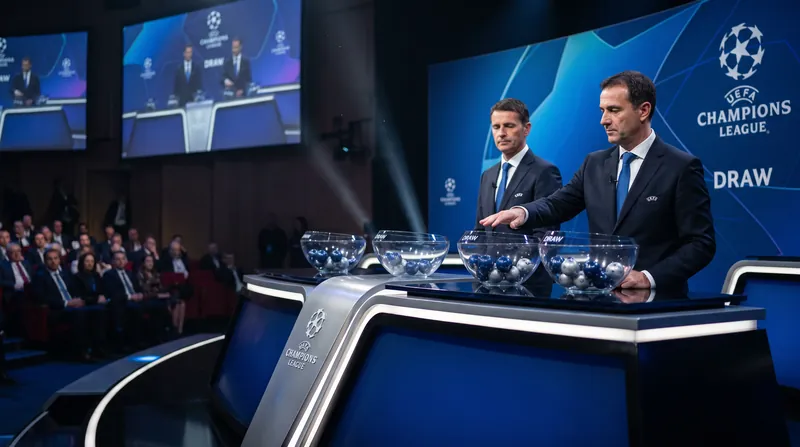
The draw mechanism itself required a complete overhaul to accommodate the complex mathematics of a 36-team single league. Clubs are divided into four seeding pots of nine teams each, based strictly on their UEFA club coefficient—a metric that tracks their performance in European competitions over the previous five seasons.
The reigning Champions League titleholder is automatically placed in Pot 1, alongside the eight clubs with the highest coefficients. This ensures that the historical heavyweights are distributed evenly, but the way they are matched up has changed entirely, guaranteeing that the biggest clubs can no longer avoid each other until the spring knockout rounds.[1][4][5]
Instead of drawing three group opponents from the lower pots, a team now draws two opponents from each of the four pots. This means a Pot 1 heavyweight will face two other Pot 1 giants in the league phase, guaranteeing blockbuster matchups months before the knockout bracket even begins.
A team like Real Madrid or Manchester City will have to navigate fixtures against their direct peers in the autumn, rather than simply dispatching lower-tier champions. Every team, regardless of which pot they are drawn from, faces an identical distribution of difficulty: two teams from Pot 1, two from Pot 2, two from Pot 3, and two from Pot 4.[5][7]
The schedule has been stretched into a marathon that tests squad depth like never before. The league phase now begins in September and extends deep into late January, culminating in a massive, synchronized final matchday where all 18 games kick off at the exact same time.
This synchronized finale is explicitly designed to maximize drama for broadcasters and fans. Because all 36 teams are in the same table, a single goal in one stadium can violently shuffle the standings across the entire continent, moving a team from the automatic qualification spots down into the playoff zone in a matter of seconds.[2][6]
With 36 teams crammed into one table playing only eight matches, tiebreakers have taken on terrifying new importance. Multiple clubs will inevitably finish the league phase tied on points. Goal difference is now the primary tiebreaker, replacing the old head-to-head metric.
Head-to-head tiebreakers are mathematically impossible to apply fairly in a Swiss system because tied teams will likely not have played against each other, nor will they have faced the same strength of schedule. This shift to goal difference fundamentally changes the tactical approach to every match, rewarding relentless attacking football and punishing teams that try to protect narrow leads.[1][6][7]
This structural reliance on goal difference means elite teams can no longer afford to take their foot off the gas when leading 2-0 against a lower-seeded opponent. Running up the score is now a mathematical necessity for securing a top-eight finish and the invaluable bye that comes with it.
Managers must weigh the risk of resting star players in the second half of a comfortable win against the very real possibility that missing out on a crucial goal could cost them a top-eight seed in January. The format demands ruthlessness from the first minute of matchday one to the final whistle of matchday eight.[3][4]
Once the league phase concludes, the knockout phase introduces a tennis-style seeded bracket, a radical departure from the randomized, unseeded draws of the past. Your final position in the 36-team league table dictates your exact path to the final.
The days of a dominant group winner randomly drawing a dangerous runner-up in the Round of 16 are over; the bracket is now mathematically structured to protect the top seeds, ensuring that the teams who performed best in the league phase are rewarded with the most favorable matchups available. This system heavily rewards sustained excellence across the autumn schedule.[1][6][7]
The teams that finish first and second in the league phase are placed on opposite extremes of the knockout bracket, meaning they cannot possibly meet until the final. Furthermore, the top four teams are guaranteed not to face each other until the semi-finals. This creates a massive incentive to finish as high up the table as possible, rather than simply settling for a top-eight spot.
The difference between finishing fourth and fifth could be the difference between facing a Cinderella story in the quarter-finals or colliding with a tournament favorite. Every position on the table carries distinct bracket implications, ensuring that the intensity of the league phase translates directly into the geometry of the spring knockouts.[2][4][6]
For the playoff round—contested by the teams finishing 9th through 24th—seeding is equally ruthless. Teams finishing 9th to 16th are seeded and are guaranteed to host the decisive second leg at home against a team finishing 17th to 24th. Surviving this tense playoff merely earns the victor a two-legged tie against one of the rested top-eight teams in the Round of 16.
The playoff round is essentially a punishment for failing to secure a top-eight finish, forcing teams to navigate an extra 180 minutes of high-stakes European football in February while the top seeds rest and prepare. This creates a distinct two-tier system within the knockouts, where the rested elite hold a significant physical and tactical advantage over the playoff survivors.[5][6][7]
The physical toll of the new format remains its most controversial element. Reaching the final now requires a minimum of 15 matches if a team qualifies in the top eight, or 17 matches if they are forced to navigate the playoff round. This is a significant increase from the 13 matches required to win the trophy under the old format.
In an era where elite players are already stretched to their physical limits by expanded domestic calendars, international breaks, and the new FIFA Club World Cup, adding up to four extra high-intensity Champions League fixtures has sparked intense debate across the sport. Squad depth is no longer a luxury; it is an absolute prerequisite for competing on multiple fronts under the Swiss model.[3][4]
Managers and player unions have repeatedly raised alarms about the expanding calendar, warning that the added fixtures will inevitably lead to a spike in soft-tissue injuries and player burnout. However, UEFA and its broadcast partners argue that the format delivers exactly what the global fanbase demands: more matches between the world's best teams, with higher stakes attached to every minute of action.
The Swiss model represents a massive financial and structural bet that the sheer entertainment value of a unified 36-team table will outweigh the physical costs, fundamentally redefining what it takes to be crowned the champions of Europe. As the season unfolds, the true impact of this grueling, high-stakes format will be measured not just in broadcast revenue and dramatic late goals, but in the physical resilience of the squads attempting to survive it.[4][7]
Key terms
- Swiss Model
- A tournament format where teams compete in a single league table but do not play every other team, instead playing a set number of fixtures based on seeding.
- UEFA Club Coefficient
- A ranking system based on a club's performance in European competitions over the previous five seasons, used to determine seeding pots.
- Playoff Round
- A two-legged knockout tie for teams finishing 9th through 24th in the league phase to determine who advances to the Round of 16.
Frequently asked
Do teams play each other home and away in the league phase?
No. Each team plays eight different opponents, with four matches at home and four matches away.
Do eliminated teams drop down to the Europa League?
No. The safety net has been removed. Teams finishing 25th to 36th in the league phase are eliminated from all European competition for the season.
How are ties in the standings broken?
Goal difference is the primary tiebreaker in the single-table format, replacing the old head-to-head metric.
Viewpoints in depth
UEFA and Broadcasters
The governing body and its media partners view the format as a massive commercial and entertainment upgrade.
For UEFA and its broadcast partners, the Swiss model solves the biggest commercial problem of the old group stage: dead-rubber matches. By guaranteeing that elite teams face each other in the autumn and keeping the qualification math alive until the final synchronized matchday in January, the format ensures that television ratings and matchday revenues remain high throughout the entire league phase. The single table creates a constant, continent-wide narrative that is easier to sell to global audiences.
Player Unions and Managers
Those on the pitch warn that the physical demands of the expanded format are pushing players past their breaking points.
Managers of elite clubs and player advocacy groups like FIFPRO have been fiercely critical of the expanded calendar. Adding two guaranteed matches—and potentially four, if a team falls into the playoff round—forces players to compete in high-intensity fixtures during January, a month traditionally used for winter breaks or domestic cup rotations. Critics argue this relentless schedule prioritizes broadcast revenue over player welfare, inevitably leading to a higher rate of soft-tissue injuries and shortening the careers of top athletes.
Mid-Market and Smaller Clubs
Clubs outside the traditional elite view the format as a financial boon but a competitive hurdle.
For clubs from smaller European leagues, the Swiss model is a double-edged sword. On one hand, the guarantee of eight matches instead of six provides a significant boost in matchday and broadcast revenue, offering crucial financial stability. On the other hand, the shift to a seeded knockout bracket and the elimination of the Europa League safety net makes it mathematically much harder for a Cinderella team to make a deep run. Surviving the league phase only to face a rested super-club in the Round of 16 highlights the growing resource gap in modern football.
- UEFA & Broadcasters
- Argues the format maximizes revenue and fan engagement by guaranteeing blockbuster matches early and keeping stakes high through January.
- Player Unions & Managers
- Warns about the physical toll of adding 2-4 high-intensity matches to an already saturated calendar.
- Mid-Market & Smaller Clubs
- Views the format as a double-edged sword—more guaranteed revenue from eight matches, but a harder path to the knockouts against deeper squads.
Perspectives this story doesn't cover
- Domestic League Schedulers
- Match-Going Fans Facing Increased Travel Costs
Sources
Source coverage
7 outlets
3 viewpoints surfaced




- [1]UEFAUEFA & Broadcasters
2026/27 Champions League: Teams, dates, draws, format, final
Read on UEFA → - [2]OlympicsUEFA & Broadcasters
UEFA Champions League's new format for 2024-25 season explained
Read on Olympics → - [3]NDTV SportsMid-Market & Smaller Clubs
UEFA Champions League: New Format Explained
Read on NDTV Sports → - [4]Soccer.comMid-Market & Smaller Clubs
Understanding the New UEFA Champions League Format for 2024/25
Read on Soccer.com → - [5]Wikipedia
2024–25 UEFA Champions League league phase
Read on Wikipedia → - [6]Wikipedia
2025–26 UEFA Champions League knockout phase
Read on Wikipedia → - [7]Factlen Editorial Team
Synthesis by Factlen editorial team
Read on Factlen Editorial Team →
More in Sports
See all →Football Finance
The 10% National TV Rights Split and the Two Proportionality Factors: How the Champions League Market Pool is Calculated
5 sources
Champions League Records
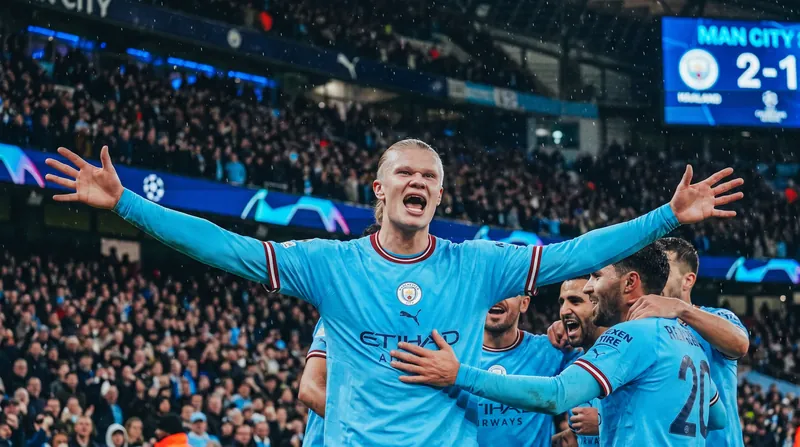
Erling Haaland Reaches 59 Champions League Goals in 59 Games, Closing in on Lionel Messi's Age Record
6 sources
Coefficient Rules
The 20% Association Floor and the Five-Year Rolling Average: How the UEFA Club Coefficient Actually Works
7 sources
Como 1907
The Relational Engine: How Cesc Fàbregas Engineered Como 1907's Historic Champions League Debut
6 sources
Comments
Every angle. Every day.
Get Sports stories with full source coverage and perspective breakdowns, free every day.