
Southwest Airlines Shifts to Assigned Seating, Tiered Cabins, and Eight Boarding Zones
Southwest Airlines has officially ended its 54-year open seating tradition, introducing assigned seats, new boarding groups, and a stricter refund framework for passengers requiring a second seat.

Share this story
Southwest Airlines has officially closed the book on a 54-year aviation tradition, transitioning its entire network to assigned seating and overhauling its boarding protocols. The Dallas-based carrier operated its final unassigned flight in late January 2026, a red-eye from Honolulu to Los Angeles that marked the end of the famous "cattle call" boarding process.
For decades, Southwest’s open seating model was a defining cultural hallmark, allowing passengers to pick any available seat based on their check-in time. It cultivated fierce loyalty among frequent flyers but increasingly alienated modern travelers accustomed to the predictability of legacy carriers.
Shifting consumer preferences and intense financial pressure ultimately forced executive management to abandon the heritage system. Internal metrics revealed that 80 percent of current passengers preferred pre-assigned seats, citing the anxiety of the open boarding scramble as the primary reason for booking with competitors.
The transition introduces a conventional legacy-carrier model, dividing the cabin into three distinct tiers: Standard, Preferred, and Extra Legroom. The physical aircraft remain the same, but the real estate is now strictly monetized.
Standard seats occupy the rear of the cabin, while Preferred seats offer standard pitch but are located closer to the front for quicker exits. Extra Legroom seats, located in the bulkhead and exit rows, provide up to five additional inches of space and come with premium pricing and earlier boarding privileges.
The boarding process itself has been entirely restructured. The iconic A, B, and C boarding posts have been replaced with eight numbered zones that factor in fare type, loyalty status, and co-branded credit card benefits.
Beyond the cabin layout, the most significant operational shift involves Southwest’s "Customer of Size" policy, which has historically been considered the most accommodating in the U.S. aviation industry.
Under the previous framework, plus-size passengers who required additional space could secure an extra seat without upfront costs, or easily request a complimentary adjacent seat at the gate if the flight was not completely full.
The new policy mandates that passengers who cannot comfortably fit within the boundaries of a single armrest must proactively purchase a second seat in advance to guarantee the necessary space.
Southwest will still offer refunds for the second seat, but the financial reimbursement is now strictly contingent on the flight departing with at least one empty seat. If the flight is completely sold out, the passenger absorbs the cost of both tickets.
To qualify for the refund, both seats must be booked in the exact same fare class, and the passenger must submit a formal request to customer service within 90 days of completing their travel.
This dynamic introduces new financial uncertainty for travelers who rely on the accommodation, shifting the risk of a sold-out flight entirely onto the passenger rather than the airline.[1]
Following pushback from advocacy groups, Southwest implemented a slight amendment in late May 2026, empowering gate agents to provide a free adjacent seat at the airport if the flight is visibly underbooked.[1]
However, relying on gate availability carries substantial risk, particularly for itineraries with connecting flights where a layover leg might be fully booked, leaving the passenger stranded or squeezed into a single seat.[1]
The National Association to Advance Fat Acceptance has noted that while the gate-agent amendment is a helpful adjustment, the upfront cost of pre-purchasing remains a prohibitively high barrier for many travelers.[1]
Despite the stricter parameters, Southwest’s policy remains an outlier in an industry where most major carriers strictly charge for additional space regardless of flight capacity.[1]
Alaska Airlines is currently the only other major U.S. operator that offers a retroactive refund for a second seat when a flight departs with open inventory.[1]
Ultimately, Southwest’s sweeping changes reflect the hyper-competitive reality of modern aviation. Unassigned cabins left the airline structurally incapable of capturing the billions in high-margin seat selection fees that its rivals rely on for profitability.
Key points
- Southwest Airlines has officially ended its 54-year open seating policy.
- The cabin now features Standard, Preferred, and Extra Legroom assigned seats.
- The boarding process has shifted from three groups to eight numbered zones.
- Plus-size passengers must now pre-purchase a second seat to guarantee space.
Open questions
- It remains unclear exactly how much revenue Southwest will generate from the new Preferred and Extra Legroom seat tiers.
- We do not yet know how strictly gate agents will enforce the armrest boundary rule during the boarding process under the new assigned seating model.
Timeline
July 2025
Southwest announces the impending end of its 54-year open seating policy to capture new revenue streams.
January 26, 2026
The airline operates its final unassigned flight, a red-eye from Honolulu to Los Angeles.
January 27, 2026
Assigned seating and the new eight-group boarding process officially take effect network-wide.
May 2026
Following pushback, Southwest amends its extra-seat policy to allow gate agents to issue free adjacent seats on underbooked flights.
- Airline Management
- Focused on capturing ancillary revenue and aligning with the 80% of passengers who prefer assigned seats.
- Plus-Size Advocates
- Focused on the financial burden of pre-purchasing tickets and the uncertainty of sold-out flights.
- Frequent Flyers & Analysts
- Focused on the loss of the unique boarding culture and the standardization of the U.S. aviation market.
Perspectives this story doesn't cover
- Frontline Gate Agents
- Budget Travelers
Sources
Source coverage
1 outlets
3 viewpoints surfaced

- [1]The Washington PostPlus-Size Advocates
Southwest Airlines loosens extra-seat policy for plus-size passengers
Read on The Washington Post →

More in Travel
See all →Aviation Economics
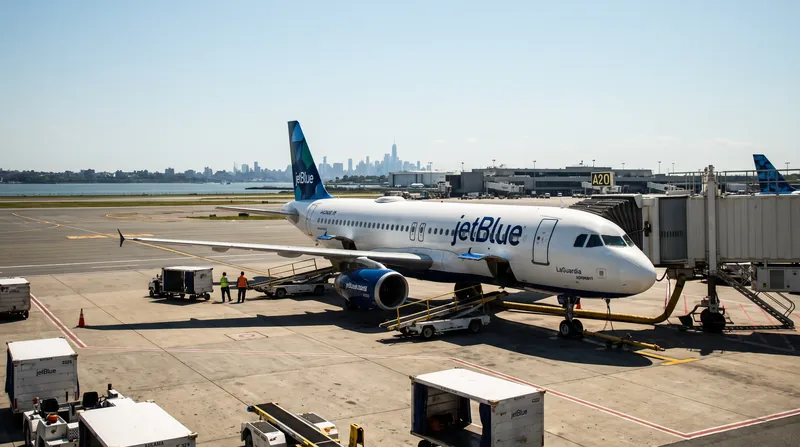
Why JetBlue Paid $58.5 Million for Spirit's Slots as FAA Caps Reshape Budget Air Travel
7 sources
River Cruising
European River Cruises Turn to Ship Swaps as Danube and Rhine Water Levels Plummet
2 sources

Cruise Ship Design
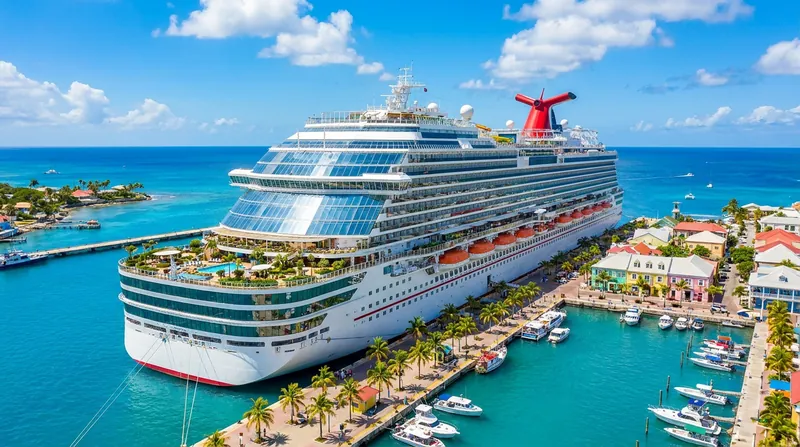
Carnival's 230,000-Ton Ace Class Pivots to an Outward-Facing Megaship Design
8 sources
Airline Pricing
The Economics of Falling Oil: How Major Airlines Are Finally Dropping International Fuel Surcharges
4 sources
Comments
Every angle. Every day.
Get Travel stories with full source coverage and perspective breakdowns, free every day.