
Why the Digital Archive Is Collapsing the 20-Year Nostalgia Cycle
For decades, cultural trends operated on a reliable 20-to-30-year pendulum, waiting for a generation to come of age before reviving its youth. Today, the digital archive has collapsed that timeline, triggering a phenomenon where we are nostalgic for eras we never lived through and trends that barely ended.

Share this story
In short
- For decades, cultural trends operated on a reliable 20-to-30-year cycle, driven by generations coming of age and reviving their youth.
- The digital age has compressed this cycle to 5 or 10 years, as the internet's permanent archive prevents trends from truly fading away.
- Young people increasingly experience "anemoia," a genuine psychological longing for eras they never personally lived through.
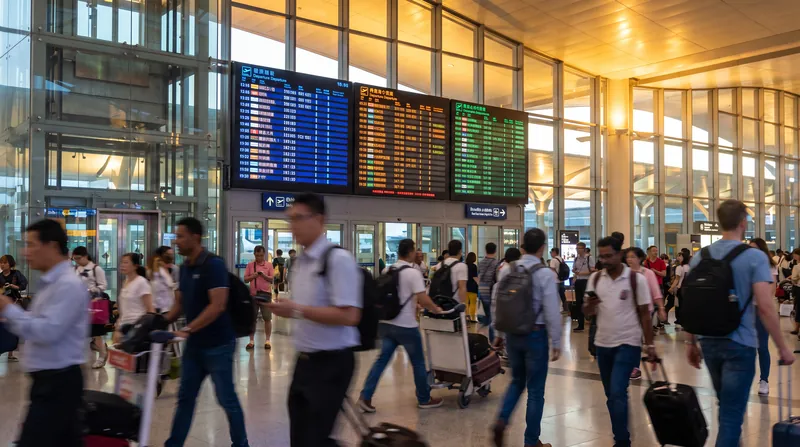
You are sprinting through an airport or walking down a street in 2026, and you see a teenager wearing the exact wide-leg baggy jeans and wired headphones you wore in 2004. The immediate reaction is a bracing reminder of age, but underneath that is a deeper disorientation. We used to wait 20 or 30 years to miss a decade. Today, the internet has decided that 2016 is already vintage. Are we running out of past, or has the digital age fundamentally broken the clock of cultural memory?[3]
For most of the 20th century, cultural trends operated on a reliable, almost biological rhythm. Sociologists and trend forecasters often referred to this as the "20-Year Rule" or the "Nostalgia Pendulum." The logic was straightforward: it takes roughly two to three decades for the consumers of culture to grow up, gain purchasing power, and become the creators of culture.[2]
When that generation takes the reins of media, fashion, and art, they naturally reach back to the aesthetics of their own youth. This is why the 1970s saw a massive 1950s revival, why the 1990s were obsessed with the 1970s, and why the 2010s brought back the neon windbreakers of the 1980s. The cycle required a period of obsolescence—a trend had to become passé, then forgotten, before it could be rediscovered and deemed cool again.[1]
But that pendulum is now swinging at a dizzying, accelerated speed. Cultural critics and sociologists note that the gap between a trend's peak and its revival has shrunk dramatically. What was once a 20-year cycle has compressed into a 10-year, or even five-year, gap. We are now seeing revivals of aesthetics that barely had time to fade from the cultural rearview mirror.[2]
The primary driver of this compression is the architecture of the internet itself. In the digital age, the past never actually goes away. Because everything is archived, indexed, and instantly accessible on platforms like YouTube, Spotify, and TikTok, we no longer have to rely on hazy memories or physical media to revisit a bygone era.[5]
Music critic Simon Reynolds famously coined the term "Retromania" to describe this phenomenon. He argued that contemporary pop culture is dominated by the "re-" prefix: revivals, reissues, remakes, and re-enactments. Instead of stepping into the future, we are constantly pulling vintages off the shelf, living in a state of "atemporality" where multiple decades exist simultaneously on the same screen.[1][2]
This constant access to the past prevents trends from truly dying. A style cannot undergo the necessary hibernation period to become genuinely nostalgic if it is perpetually circulating in algorithmic feeds. As a result, the culture industry repackages the recent past before we have even had a chance to miss it, leading to a sense of cultural exhaustion where everything feels slightly familiar.[1][6]
Yet, this acceleration has birthed a fascinating psychological byproduct: "anemoia." Coined by writer John Koenig in The Dictionary of Obscure Sorrows, anemoia describes a profound, aching nostalgia for a time or place you never actually lived through. It is the feeling a 19-year-old gets when longing for the "simpler times" of the 1990s, an era they only know through curated digital artifacts.[3]
For a long time, psychologists believed nostalgia was strictly tethered to personal recollection. You could only long for a past you had physically inhabited. However, recent cognitive research has upended this assumption. Memory is not a static recording; it is a highly creative, reconstructive process.[4]
Philosopher Felipe De Brigard at Duke University has proposed that because memory relies heavily on imagination, nostalgia can also be imagination-based. When young people consume rose-tinted, highly curated media from the 1990s or early 2000s, their brains construct vivid simulations of those eras. The resulting emotional resonance is entirely real, even if the memory itself is vicarious.[3][4]
This vicarious nostalgia is amplified by the sheer volume of information we process daily. Gen Z and younger millennials are the first generations to grow up entirely immersed in the digital stream, leading to what some sociologists call "infoxication" or Information Fatigue Syndrome. The constant barrage of news, notifications, and global crises creates a profound sense of overwhelm.[6]
In response to this digital fatigue, anemoia acts as a psychological refuge. Longing for a pre-smartphone era—even one they never experienced—offers a simulated escape to a time perceived as slower, more authentic, and less demanding. Buying a vintage film camera or romanticizing wired headphones isn't just a fashion statement; it is a coping mechanism for the relentless pace of the present.[3]
Social media platforms themselves play a paradoxical role in this dynamic. While they are the source of digital fatigue, they are also the primary engines of "digital nostalgia." Features like Facebook's "On This Day" or Instagram's throwback prompts transform personal reminiscence into communal, interactive experiences.[5]
Digital nostalgia turns the act of remembering into a shared cultural event. When a specific aesthetic or memory is posted online, it is immediately validated and amplified by the community. This collective reinforcement accelerates the trend cycle even further, as micro-communities form around highly specific, hyper-accelerated nostalgic niches.[5][6]
The result is a cultural landscape where the past is no longer a fixed point behind us, but a massive, searchable database we constantly sample from to construct our present identities. We are no longer waiting for the pendulum to swing back; we are manually spinning the hands of the clock, curating our own timelines from the fragments of decades past.[2][6]
Ultimately, the compression of the nostalgia cycle forces us to redefine what it means to be contemporary. If every era is available on demand, and if we can feel genuine longing for times we never knew, then culture is no longer a linear progression. It is a mosaic, where the most innovative act might not be inventing something entirely new, but finding a way to live meaningfully in the present.[1][6]
How we did this
- Method
- Comparing historical trend recurrence intervals against digital-era trend cycles to quantify the acceleration of cultural memory.
- What we found
- The internet's permanent archive has decoupled nostalgia from generational aging, replacing the biological clock of creators coming of age with an algorithmic clock that compresses the revival cycle by at least 50%.
- What we worked from
- Limits of this analysis
- This analysis relies on qualitative cultural observation and fashion/media trends, which are subjective and may vary across different subcultures and demographics.
Definitions
- Anemoia
- A feeling of nostalgia or longing for a time period or experience that you never personally lived through.
- Nostalgia Pendulum
- The historical sociological theory that cultural trends swing back into fashion every 20 to 30 years.
- Retromania
- A cultural state dominated by revivals and reissues, where society becomes obsessed with the artifacts of its own immediate past.
- Digital Nostalgia
- The process through which past experiences are recalled, shared, and reinterpreted collectively within digital media environments.
- Infoxication
- Information fatigue syndrome caused by the overwhelming volume of data and stimuli encountered in the digital age.
Questions & answers
What is the 20-year nostalgia cycle?
Historically, cultural trends took roughly 20 to 30 years to resurface. This timeline aligned with the period it took for consumers of a specific culture to grow up and become the creators of culture, naturally reviving the aesthetics of their youth.
What does the term 'anemoia' mean?
Coined by writer John Koenig, anemoia describes a profound sense of nostalgia for a time or place you never actually lived through, often triggered by curated media or vintage aesthetics.
Why is the nostalgia cycle getting shorter?
The internet's permanent archive makes all past eras instantly accessible, preventing trends from truly fading away. This constant circulation, combined with social media's rapid trend turnover, has compressed the cycle from 20 years down to 5 or 10 years.
What is 'Retromania'?
A concept popularized by music critic Simon Reynolds, Retromania refers to contemporary pop culture's obsession with its own immediate past, characterized by endless revivals, remakes, and re-enactments rather than forward-looking innovation.
Analysis by camp
Cultural Critics
Argue that the digital compression of nostalgia leads to cultural stagnation and an obsession with the past.
For critics aligned with Simon Reynolds' concept of 'Retromania,' the acceleration of the nostalgia cycle is a symptom of cultural exhaustion. They argue that because the digital archive makes every past era instantly accessible, contemporary culture has lost the ability to invent truly new aesthetics. Instead of looking forward, society is trapped in an inescapable feedback loop of revivals, reissues, and remakes. This constant repackaging of the past, they warn, prevents the necessary incubation of bold, transformative movements, leaving us in a perpetual state of 'atemporality' where nothing ever truly ends or begins.
Cognitive Psychologists
View vicarious nostalgia as a natural, creative function of the brain's memory network adapting to modern stress.
From a cognitive perspective, phenomena like 'anemoia'—nostalgia for a time you never lived through—are not signs of cultural decay, but evidence of the brain's remarkable adaptability. Researchers point out that memory is inherently reconstructive, relying on the same neural networks used for imagination. When individuals experience information fatigue from the relentless pace of the digital age, the brain creatively simulates a slower, idealized past as a psychological refuge. This imagination-based nostalgia serves a healthy emotional function, providing comfort, continuity, and a sense of grounding in an otherwise overwhelming present.
Digital Sociologists
Focus on how digital archives and social media platforms actively engineer and accelerate collective memory.
Sociologists studying digital environments emphasize that the compression of the nostalgia cycle is a direct result of platform architecture. Social media networks are designed to function as massive, interactive memory spaces where personal reminiscence is immediately transformed into collective culture. Features that prompt users to look back at past posts, combined with algorithmic feeds that surface vintage aesthetics, actively engineer a state of 'digital nostalgia.' In this view, the past is no longer a chronological era to be remembered, but a modular database of identities that users can endlessly sample, share, and remix to navigate the complexities of modern life.
- Cultural Critics
- Argue that the digital compression of nostalgia leads to cultural stagnation and an obsession with the past.
- Cognitive Psychologists
- View vicarious nostalgia as a natural, creative function of the brain's memory network adapting to modern stress.
- Digital Sociologists
- Focus on how digital archives and social media platforms actively engineer and accelerate collective memory.
Perspectives this story doesn't cover
- Trend Forecasters
- Fashion Industry Executives
Sources
Source coverage
6 outlets
3 viewpoints surfaced






- [1]Literary HubCultural Critics
Retromania and the History of Retro
Read on Literary Hub → - [2]ViceCultural Critics
Why Are We So Obsessed With Nostalgia?
Read on Vice → - [3]Psychology TodayCognitive Psychologists
Anemoia: Nostalgia for An Era You Never Knew
Read on Psychology Today → - [4]BBC Science FocusCognitive Psychologists
Do you find yourself longing for the magic of yesteryear, even when you've not been there yourself?
Read on BBC Science Focus → - [5]Kure AnsiklopediDigital Sociologists
Digital Nostalgia
Read on Kure Ansiklopedi → - [6]Factlen Editorial TeamDigital Sociologists
Synthesis by Factlen editorial team
Read on Factlen Editorial Team →
More in Culture
See all →Conspicuous Consumption
The Veblen Good: Why Higher Prices Drive Higher Demand in Luxury Culture
6 sources
Fourth Plinth
Tschabalala Self's 'Lady in Blue' Takes the Fourth Plinth, Redefining the Public Monument
3 sources

Uncanny Valley
The 60-80% Realism Threshold: Why Humanoid Figures Trigger the Uncanny Valley
6 sources
Cultural Transmission
How Ideas Cross Borders: The Four Pathways of Cultural Diffusion
5 sources
Comments
Every angle. Every day.
Get Culture stories with full source coverage and perspective breakdowns, free every day.