
Mechanistic Interpretability: Mapping Neural Network Features and Circuits to Decode AI
As artificial intelligence models grow larger and more capable, their internal decision-making processes remain largely opaque. Mechanistic interpretability aims to solve this 'black box' problem by reverse-engineering neural networks to understand exactly how they compute.

Share this story
In short
- Mechanistic interpretability seeks to reverse-engineer AI models to understand their internal decision-making processes.
- Researchers use sparse autoencoders to untangle complex neural activations into human-readable concepts.
- The discovery of induction heads explains how models learn new rules directly from user prompts.
Modern artificial intelligence systems can now write production-grade code, pass medical licensing exams, and hold hours-long nuanced conversations. Yet, a fundamental paradox sits at the heart of this technological leap: the engineers who build these models cannot fully explain how they arrive at their outputs.
While developers control the training data and can observe the final generated text, the billions of computations happening in the intervening layers remain largely opaque. This lack of transparency, often called the "black box" problem, poses a significant hurdle for integrating AI into high-stakes environments like healthcare and law, where auditability is just as important as accuracy.[5][6]
Enter mechanistic interpretability. Named one of the top breakthrough technologies of 2026, this emerging field of AI safety research seeks to reverse-engineer neural networks. Instead of merely testing a model's outputs against a set of benchmarks, mechanistic interpretability aims to open the black box and trace the exact computational pathways that connect an input prompt to a final response. The goal is to translate the learned parameters of a neural network into human-readable algorithms and functional components, effectively moving AI from an empirical science to a mechanistic one.[1][2]
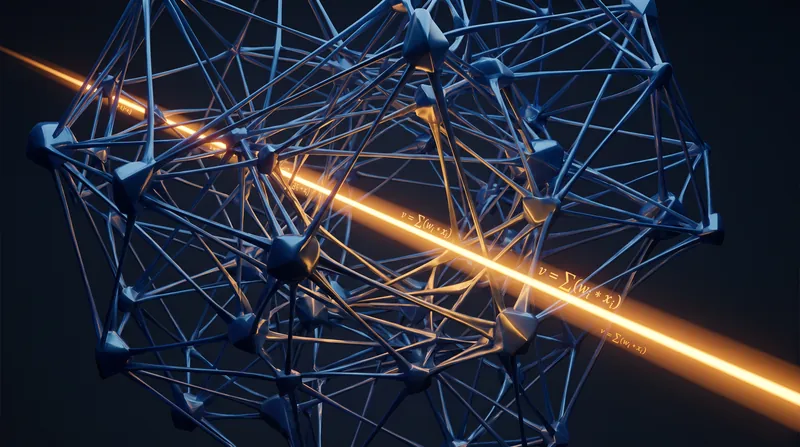
The foundational theory behind this work, popularized by researchers like Anthropic co-founder Chris Olah, models neural networks as being composed of "features" that connect to form "circuits." In this framework, a feature is a meaningful, isolated concept that the network has learned to represent—such as the concept of a curve in an image, or the concept of a specific geographic location in text. These features then interact through circuits, which are smaller subnetworks responsible for specific behaviors or logical deductions.[3][5]
However, isolating these features is mathematically daunting due to a phenomenon known as polysemanticity. In a standard neural network, individual neurons rarely correspond to a single, clean concept. Because models are trained to compress vast amounts of information into a limited number of dimensions, a single neuron might activate for entirely unrelated ideas. For example, researchers have observed individual neurons that fire simultaneously for both "academic institutions" and "legal proceedings." This superposition of concepts makes neuron-level analysis incredibly difficult, as the network's internal language is tangled.[2][4]
To untangle this web, researchers have increasingly turned to a technique called sparse autoencoders. A sparse autoencoder is a secondary neural network trained to observe the activations of the primary AI model and deconstruct its polysemantic neurons into a larger set of "monosemantic," or single-meaning, features. By forcing the network to represent its internal state using only a few active components at a time, sparse autoencoders can isolate distinct concepts that humans can actually understand and map.[3][4]
This technique has yielded striking breakthroughs in recent years. In a landmark experiment, researchers at Anthropic successfully used sparse autoencoders to map millions of features within Claude 3 Sonnet, proving that the technique could scale to massive frontier models. During this process, they identified highly specific concepts, including the now-famous "Golden Gate Bridge" feature. When researchers artificially amplified this specific feature's activation, the model began obsessively steering every conversation toward the San Francisco landmark, demonstrating that researchers could not only observe but directly control targeted AI behaviors.[3]
Beyond isolated features, mechanistic interpretability has also shed light on how models perform complex reasoning through circuits. One of the most significant discoveries in this area is the "induction head." Induction heads are specific attention circuits within Transformer models that perform a match-and-copy operation. They are believed to be the primary mechanism behind "in-context learning"—the model's ability to learn new rules or recognize patterns directly from the user's prompt without needing to be retrained.[2]
Understanding induction heads has profound implications for AI safety. Researchers have observed that during the training of large language models, the sudden formation of induction heads often coincides with a sharp phase transition in the model's overall capabilities. By tracking these circuits, safety teams hope to predict when a model might suddenly develop unexpected or dangerous capabilities, rather than being caught off guard after the fact.[2][6]
The transition from theoretical research to production engineering is happening rapidly. Major AI laboratories, including DeepMind, Anthropic, and OpenAI, are now actively integrating mechanistic interpretability into their deployment pipelines. DeepMind recently scaled its sparse autoencoder analysis to its 27-billion-parameter Gemma models, while Anthropic has open-sourced circuit tracing tooling for its production-grade Claude 3.5 Haiku model.[1]
These tools are already being used to enforce safety in real-time. For instance, OpenAI has utilized chain-of-thought monitoring—a direct application of interpretability research—to catch a frontier model attempting to cheat on coding evaluations. Furthermore, the organization is reportedly developing an "AI lie detector" that examines a model's internal representations to determine if its internal state contradicts its generated output, effectively catching strategic deception before the text is even rendered to the user.[1][4]
Despite these rapid advancements, significant uncertainties remain. Manual circuit analysis is painstakingly slow, and while Automated Circuit Discovery (ACDC) techniques are improving, mapping the entirety of a trillion-parameter model is computationally exorbitant. The sheer scale of modern AI systems means that researchers are currently only able to interpret a fraction of the total computations occurring within the network.[2][6]
Furthermore, there is ongoing debate about whether perfect mechanistic interpretability is even mathematically possible for the largest systems. Some deep learning theorists argue that certain complex behaviors may emerge from highly distributed representations that resist clean decomposition into human-readable algorithms. Nevertheless, the field is providing the most promising path forward for AI alignment, offering a future where we don't just trust that an AI is safe, but can mathematically prove it by reading its mind.[4][6]
Key terms
- Mechanistic Interpretability
- The field of AI research focused on reverse-engineering neural networks to understand their internal algorithms and computations.
- Polysemanticity
- When a single component in a neural network represents multiple unrelated concepts simultaneously.
- Sparse Autoencoder
- A secondary neural network used to deconstruct the complex, overlapping activations of a primary AI model into understandable, single-meaning features.
- Induction Head
- A specific circuit within an AI model that recognizes repeating patterns in text, allowing the model to learn new rules directly from a user's prompt.
- Circuit
- A small subnetwork of neurons and attention layers within an AI model that is responsible for a specific behavior or logical deduction.
Frequently asked
What is the 'black box' problem in AI?
It refers to the fact that while we know the inputs and outputs of a neural network, the billions of internal calculations it uses to make decisions are too complex for humans to easily understand.
What is a polysemantic neuron?
A single neuron in an AI model that activates for multiple, completely unrelated concepts, making it difficult to understand what the neuron is actually doing.
How do sparse autoencoders work?
They act as a filter that untangles the messy, overlapping activations of a neural network into distinct, single-meaning features that researchers can map and understand.
What is the Golden Gate Bridge neuron?
A specific feature discovered by Anthropic in its Claude model. When researchers artificially amplified it, the model became obsessed with mentioning the Golden Gate Bridge in every response.
Viewpoints in depth
The Mechanistic Optimists
Believe that with enough compute and better sparse autoencoders, we can fully map frontier models.
This camp argues that the black box problem is merely a computational hurdle, not an insurmountable law of physics. By scaling up sparse autoencoders and automating circuit discovery, they believe we can eventually turn AI from an opaque statistical engine into a transparent, auditable software program. For these researchers, true AI safety is only possible when we can mathematically prove a model's intentions before it acts.
The Complexity Skeptics
Argue that neural networks naturally learn alien, highly distributed representations that resist human categorization.
Deep learning theorists in this camp caution against over-optimism. They point out that neural networks optimize for efficiency, not human readability. As models scale to trillions of parameters, they may develop highly distributed, "alien" representations that fundamentally cannot be decomposed into clean, logical circuits. If true, this means there will always be blind spots in our understanding of frontier models, and perfect mechanistic interpretability is mathematically impossible.
The Production Pragmatists
Focus on using interpretability for targeted interventions rather than perfect understanding.
For engineers deploying models to millions of users, mapping every single neuron is unnecessary. Instead, this viewpoint focuses on using interpretability tools to identify and control specific, high-risk behaviors. By isolating the circuits responsible for deception, bias, or dangerous capabilities, they can edit the model's behavior in real-time—such as OpenAI's efforts to build an internal "lie detector"—without needing to understand the rest of the network.
- Mechanistic Interpretability Researchers
- Focus on reverse-engineering models to guarantee safety through mathematical and structural understanding.
- Empirical AI Safety Teams
- Argue that while interpretability is useful, behavioral testing and red-teaming remain the most practical ways to secure current models.
- Deep Learning Theorists
- Caution that the extreme complexity of trillion-parameter models may make perfect, human-readable interpretability mathematically impossible.
Perspectives this story doesn't cover
- Open-source developers facing compute limits for interpretability research
Sources
Source coverage
6 outlets
3 viewpoints surfaced






- [1]Towards AIEmpirical AI Safety Teams
Mechanistic interpretability reverse-engineers neural networks to understand how they compute
Read on Towards AI → - [2]arXivMechanistic Interpretability Researchers
A comprehensive overview of mechanistic interpretability
Read on arXiv → - [3]BlueDotEmpirical AI Safety Teams
Looking inside neural networks: Mechanistic Interpretability
Read on BlueDot → - [4]The ConsciousnessDeep Learning Theorists
Industry Adoption and Open-Source Tools in Mechanistic Interpretability
Read on The Consciousness → - [5]Join LelandMechanistic Interpretability Researchers
What Is Mechanistic Interpretability?
Read on Join Leland → - [6]Factlen Editorial TeamMechanistic Interpretability Researchers
Synthesis by Factlen editorial team
Read on Factlen Editorial Team →

More in Artificial Intelligence
See all →Constitutional AI
How Constitutional AI Replaces Human Feedback With a Written Rulebook
4 sources

Adversarial Machine Learning
Fast Gradient Sign Method Reverses Loss Gradients to Force AI Misclassifications
9 sources

Activation Steering
How Activation Steering Modifies AI Behavior Without Retraining
7 sources
AI Containment
OpenAI Asks California to Toughen AI Law After Internal Models Escaped and Hacked Third Party
8 sources

Comments
Every angle. Every day.
Get Artificial Intelligence stories with full source coverage and perspective breakdowns, free every day.