
The Mechanics of Canonization: How the Catholic Church Declares a Saint
The Catholic Church's process for declaring a saint is a rigorous, multi-stage forensic investigation requiring proof of heroic virtue and scientifically inexplicable miracles. Over centuries, the system has evolved from local popular acclaim into a highly structured juridical tribunal.
By Joao Marques
In short
- The canonization process involves four distinct stages: Servant of God, Venerable, Blessed, and Saint.
- A standard five-year waiting period after death is required before an investigation can begin.
- Candidates must be proven to have lived a life of heroic virtue through a massive dossier known as a Positio.
In the archives of the Vatican’s Dicastery for the Causes of Saints, holiness is measured in paperwork. Before a portrait is ever unfurled from the balcony of St. Peter’s Basilica, a candidate for sainthood must survive a forensic gauntlet that looks less like a theological retreat and more like a protracted legal tribunal. The Catholic Church does not simply recognize saints; it investigates them, subjecting their lives, writings, and alleged posthumous interventions to a level of scrutiny designed to weed out the fraudulent and the merely enthusiastic.[5]
For the first millennium of Christian history, becoming a saint was a surprisingly grassroots affair. Local communities would spontaneously venerate martyrs and holy men, effectively canonizing them by popular acclaim—a system that occasionally resulted in the veneration of figures whose historical existence was entirely fictional. To impose order on this spiritual wild west, the papacy gradually centralized the process, culminating in the highly structured, multi-stage system used today to evaluate potential saints.[1][4]
The modern mechanics of canonization, heavily reformed by Pope John Paul II in 1983, are designed to balance spiritual devotion with empirical skepticism. The process is divided into four distinct stages: Servant of God, Venerable, Blessed, and finally, Saint. Each step requires a higher burden of proof, transitioning from local diocesan investigations to the highest echelons of Vatican bureaucracy, ensuring that only the most thoroughly vetted candidates advance.[2]
The journey cannot begin immediately. The Church mandates a standard five-year waiting period after a candidate's death before a cause can be opened. This cooling-off period is an institutional safeguard against the fleeting passions of contemporary grief, ensuring that the candidate's reputation for holiness is enduring rather than a flash in the pan. Only the Pope can waive this requirement, as John Paul II notably did for Mother Teresa, and Pope Benedict XVI did for John Paul II himself.[2][5]
Once the waiting period concludes, the local bishop opens the diocesan phase of the investigation. The candidate is granted the title Servant of God, and a tribunal is convened to gather every conceivable piece of evidence about their life. This includes collecting personal letters, published writings, and witness testimonies from those who knew the candidate. The goal at this stage is not to prove miracles, but to establish that the individual lived a life of heroic virtue.[3]
The sheer volume of material collected during the diocesan phase can be staggering. The tribunal compiles these documents into a comprehensive dossier known as the Positio. This document, which can run to thousands of pages, serves as the foundational brief for the candidate's cause. Once complete, the Positio is sealed and shipped to Rome, moving the investigation from the local diocese to the universal Church for the next phase of scrutiny.[4]
In Rome, the Dicastery for the Causes of Saints takes over. The Positio is subjected to rigorous peer review by a panel of historians and theologians. They comb through the text looking for any hint of doctrinal error or moral failing. It is during this phase that the Promoter of the Faith—historically known as the Devil's Advocate—is tasked with arguing against the candidate, ensuring that no uncomfortable facts are swept under the rug and that the candidate's virtues were truly exceptional.[1]
If the theological and historical commissions vote in favor of the candidate, and the Pope agrees, a decree of heroic virtue is issued. The candidate is elevated to the title of Venerable. At this point, the Church officially recognizes that the individual lived a life of profound grace, but they are not yet cleared for public veneration. To cross the threshold into beatification, the Church requires something beyond human effort: a verified miracle.[2][3]
The Church's approach to miracles is surprisingly clinical. In the vast majority of cases, the required miracle is a medical healing. The Vatican employs a standing medical board—often comprising secular, non-Catholic physicians—to evaluate these claims. The board's mandate is not to declare an event a miracle, but simply to determine if the healing is scientifically inexplicable given current medical knowledge, effectively outsourcing the initial verification to modern science.[2][5]
The criteria for a medical miracle are notoriously strict and heavily reliant on contemporary scientific standards. The healing must be instantaneous, complete, lasting, and completely unexplainable by any treatment the patient received prior to or during the recovery.
If a patient was undergoing chemotherapy while praying for a saint's intercession, and subsequently went into remission, the medical board will almost certainly reject the case, as the medical intervention provides a plausible natural explanation. The burden of proof rests entirely on demonstrating that modern science has absolutely no answer for the patient's sudden recovery.[4]
If the medical board rules that a healing defies scientific explanation, the case returns to the theologians. They must establish a direct causal link between the inexplicable healing and the specific intercession of the Venerable candidate. The prayers must have been directed exclusively to that candidate; if the patient prayed to a litany of saints, the miracle cannot be definitively attributed to just one, and the evidence is discarded as inconclusive.[5]
If the medical board rules that a healing defies scientific explanation, the case returns to the theologians.
Upon the verification of this first miracle, the Pope issues a decree of beatification, and the candidate is declared Blessed. Beatification allows for limited, local veneration—usually restricted to the candidate's home diocese or religious order. For martyrs—those who died explicitly for the faith—the requirement of a first miracle is waived, as their ultimate sacrifice is considered sufficient proof of their sanctity. However, they are still subject to the rigorous historical investigation to prove they died specifically in hatred of the faith.[2][3]
The final step, canonization, requires a second verified miracle, which must occur after the beatification. This ensures that the candidate's intercessory power is ongoing and active. The process of verifying this second miracle is identical to the first, involving the same grueling medical and theological scrutiny. Once verified, the Pope presides over a canonization Mass, officially inscribing the candidate into the catalog of saints and presenting them to the global faithful.[1][4]
Canonization is considered an infallible papal act. When the Pope declares someone a saint, he is binding the universal Church to the belief that the individual is in heaven and worthy of public veneration. It is a definitive statement that the saint's life serves as a reliable model for the faithful worldwide, moving their feast day onto the universal liturgical calendar. This infallibility is why the preceding investigation is so exhaustive; the Church is structurally terrified of making an eternal error.[5]
Ultimately, the mechanics of canonization reveal a Church that is deeply aware of its own human fallibility. By outsourcing the verification of miracles to secular science and subjecting candidates to decades of adversarial review, the Vatican attempts to ensure that its highest spiritual honors are grounded in unassailable evidence. It is a system where faith and forensic science are forced into a rigorous, if unlikely, partnership to define the boundaries of the miraculous.
Key terms
- Positio
- A comprehensive dossier summarizing a candidate's life, virtues, and writings, used as the primary evidence in a canonization cause.
- Promoter of the Faith
- A Vatican official, historically known as the Devil's Advocate, tasked with critically examining a candidate's life and alleged miracles.
- Dicastery for the Causes of Saints
- The Vatican department responsible for overseeing the complex process that leads to the canonization of saints.
- Beatification
- The third stage of the canonization process, declaring a person Blessed and allowing for localized veneration.
Frequently asked
Can the five-year waiting period be waived?
Yes, the Pope has the authority to waive the mandatory five-year waiting period after a candidate's death, as was done for Mother Teresa and Pope John Paul II.
Do martyrs need miracles to become saints?
Martyrs do not need a miracle for beatification, as their death for the faith is considered sufficient. However, they still require one verified miracle for full canonization.
Who decides if a healing is a miracle?
A Vatican-appointed medical board determines if a healing is scientifically inexplicable. Theologians then determine if it can be attributed to the candidate's intercession.
Viewpoints in depth
The Vatican's Dicastery for the Causes of Saints
Focuses on the rigorous, juridical nature of the process to ensure infallible declarations.
For the officials overseeing the canonization process, the primary concern is protecting the theological integrity of the Church. Because canonization is considered an infallible act, the Dicastery operates under the assumption that it is better to deny a genuine saint than to accidentally canonize a fraud. This perspective drives the intense, adversarial scrutiny of the Positio and the strict reliance on secular medical boards to verify miracles, ensuring that every declaration is backed by an unassailable paper trail.
Medical Skeptics and Secular Observers
Focuses on the tension between scientific inexplicability and divine intervention.
Secular observers and medical professionals often view the Vatican's miracle verification process with a mix of fascination and skepticism. While they acknowledge the rigor of the Church's medical boards in identifying healings that current science cannot explain, they argue that 'unexplained' does not inherently mean 'miraculous.' From this perspective, the Church is simply capitalizing on the current gaps in medical knowledge, which may eventually be closed by future scientific advancements.
Local Devotees and Postulators
Focuses on the grassroots push and the administrative burden of advancing a cause.
For the local dioceses and religious orders pushing a candidate's cause, the canonization process is often experienced as a grueling and expensive bureaucratic marathon. Postulators—the officials guiding a cause through the Vatican—must navigate decades of paperwork, fund the translation and printing of the massive Positio, and coordinate the investigation of potential miracles. This perspective often highlights the frustration that the current system structurally favors candidates from wealthy religious orders over laypeople from poorer regions.
- Theological Traditionalists
- Emphasize the necessity of rigorous, adversarial scrutiny to protect the integrity of the Church's infallible declarations.
- Modern Reformers
- Argue for a more streamlined process that highlights modern laypeople rather than predominantly clergy and religious figures.
- Secular Medical Analysts
- View the Vatican's medical boards as an interesting intersection of faith and science, though often questioning the leap from unexplained to miraculous.
Perspectives this story doesn't cover
- Families of the candidates who experience the invasive scrutiny of the tribunal process
- Physicians whose medical treatments are evaluated alongside claims of miraculous intervention
Sources
Source coverage
5 outlets
3 viewpoints surfaced




- [1]BritannicaSecular Medical Analysts
Canonization
Read on Britannica → - [2]Catholic News AgencyTheological Traditionalists
What is the Process for Canonization? A Guide for All Saints' Day
Read on Catholic News Agency → - [3]Franciscan MediaModern Reformers
Stages in the Canonization Process
Read on Franciscan Media → - [4]A Catholic LensTheological Traditionalists
How the Saint Canonization Process Works: The Path to Sainthood
Read on A Catholic Lens → - [5]Factlen Editorial TeamSecular Medical Analysts
Synthesis by Factlen editorial team
Read on Factlen Editorial Team →
More in Culture
See all →Japanese Linguistics
The Functional Separation of Kanji, Hiragana, and Katakana
6 sources

Egyptology
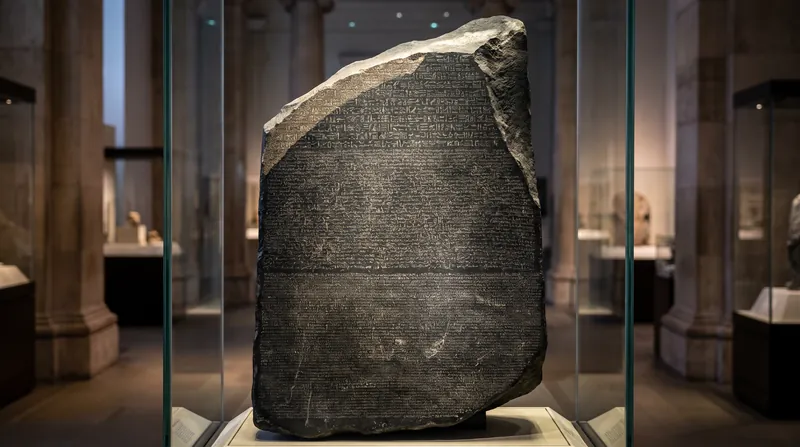
The Three Scripts and Two Languages: How the Rosetta Stone Provided the Key to Egyptian Hieroglyphs
7 sources
Music Theory
The 12-Step Cycle: How the Circle of Fifths Organizes All Tonal Relationships in Western Music
8 sources

Historical Ecology
Tasmanian Tiger's Reputation as a Livestock Killer Debunked by New Skull Analysis
3 sources

Comments
Every angle. Every day.
Get Culture stories with full source coverage and perspective breakdowns, free every day.