
The Anatomy of Forever Furniture: How to Spot Quality Wood and Why Modular Design is Replacing Fast Furniture
As the environmental toll of disposable decor mounts, consumers are shifting toward sustainable, modular furniture designed to last generations. Here is how to identify high-quality joinery, real wood, and repairable designs.

Share this story
In short
- Fast furniture contributes to 12 million tons of annual waste in the US alone.
- Consumers are shifting toward modular furniture, which allows for the replacement of individual parts rather than the whole piece.
- Right to Repair legislation is expanding globally to include homewares and furniture.
For decades, the home decor industry has been dominated by a "buy, break, and bin" philosophy. Fast furniture—trendy, inexpensive pieces designed to last only a few years—has filled living rooms and, inevitably, landfills. But a quiet revolution is reshaping how we furnish our homes. Driven by environmental concerns and a growing demand for longevity, consumers are abandoning disposable decor in favor of sustainable, modular, and repairable designs.[1]
The environmental toll of fast furniture is staggering. In the United States alone, consumers discard more than 12 million tons of furniture annually, a figure that has grown by 450% since 1960. Approximately 80% of this waste ends up in landfills. Beyond the sheer volume of trash, the industry is a primary driver of global deforestation, responsible for 70% of the worldwide demand for tropical wood.
The hidden cost of cheap furniture extends to the chemicals used in its construction. To keep prices low, manufacturers rely heavily on composite materials like particleboard and medium-density fiberboard (MDF). These materials are often bound together with adhesives containing formaldehyde and finished with paints that release volatile organic compounds (VOCs) into indoor air. When these synthetic materials eventually break down in landfills, they release methane, a potent greenhouse gas.
However, market data from 2025 and early 2026 indicates a massive shift in consumer behavior. Environmentally conscious buyers now represent 46% of global furniture purchases. This demographic is driving a surge in demand for modular furniture—systems designed with interchangeable components that can be expanded, reconfigured, or repaired over time.[2]
The core philosophy of modular design is longevity through adaptability. If a single cushion on a modular sofa is stained or a wooden leg is damaged, the owner can replace just that specific part rather than discarding the entire piece. This drastically reduces waste and lowers the long-term cost of ownership, transforming furniture from a disposable commodity into a long-term investment.[1][2]
This shift is being bolstered by the expanding "Right to Repair" movement. Originally focused on consumer electronics and agricultural equipment, repairability legislation is now targeting the homewares sector. In the European Union, recent directives are pushing manufacturers to design products that are easier to disassemble and to guarantee the availability of spare parts for up to a decade.
Similar legislative momentum is building globally. In Australia, industry groups and the federal government are actively discussing expanding Right to Repair protections to include furniture. The goal is to enforce eco-design regulations that support independent repairers and ensure consumers are not forced to throw away a perfectly good chair just because a proprietary hinge broke.[3]
As the market pivots back to quality, consumers need the skills to distinguish heirloom-quality pieces from cleverly disguised fast furniture. You do not need to be a master carpenter to assess a piece's durability; a few simple tests can reveal the truth about its construction. The first and most reliable indicator is the wood grain pattern.[1]
Genuine solid wood features an inconsistent, non-repeating grain that wraps naturally around the edges and corners of the piece. If you spot a knot on the top surface, the grain should continue logically onto the adjoining side. In contrast, engineered wood covered in a synthetic veneer often looks too perfect, with identical, repeating patterns that abruptly stop at the edges.
Inspecting those edges closely can also give away a piece's true composition. Solid wood maintains a uniform appearance even where it has been cut. If you look at the edge of a table or a drawer front and notice a layered, "sandwich" effect, you are likely looking at a veneer glued over a composite core like MDF or plywood.
The weight of the furniture is another dead giveaway. Hardwoods such as oak, walnut, mango, and acacia are incredibly dense. A genuine solid wood table or wardrobe should be heavy, often requiring two people to lift it comfortably. If a substantial-looking piece feels disproportionately light or sounds hollow when tapped, it is almost certainly made of particleboard.
Finally, the true mark of quality lies in the joinery—the techniques used to connect the pieces of wood. High-quality furniture relies on traditional woodworking methods that interlock the wood itself, rather than depending on cheap metal fasteners or chemical glues. The two gold standards of joinery are the dovetail joint and the mortise-and-tenon joint.
Dovetail joints, commonly found in high-end drawers, feature interlocking, wedge-shaped "teeth" that hold the wood together with immense strength, preventing the drawer front from pulling away over time. Mortise-and-tenon joints involve a protruding piece of wood (the tenon) fitting snugly into a corresponding slot (the mortise), providing exceptional structural integrity for frames and legs.
In contrast, fast furniture is typically held together by staples, basic screws, visible plastic caps, and heavy glues. These construction methods are prone to loosening and failing, especially if the furniture is disassembled and reassembled during a move. Once the particleboard around a screw hole crumbles, the piece is often beyond repair.
While solid, modular furniture requires a higher initial investment, the cost-per-use heavily favors quality. A well-crafted piece with traditional joinery is designed to last 15 to 20 years—or even generations—whereas fast furniture often requires replacement every three to five years. By shifting from trend-based buying to value-based investing, consumers are not only saving money in the long run but also playing a vital role in building a circular, sustainable economy.[1]
Definitions
- Fast Furniture
- Inexpensive, mass-produced furniture designed for short-term use, heavily contributing to landfill waste.
- Modular Furniture
- Furniture designed in separate, interchangeable sections that can be reconfigured, expanded, or individually replaced.
- Dovetail Joint
- A strong woodworking joint featuring interlocking, wedge-shaped teeth, typically used to construct high-quality drawers.
- Mortise and Tenon
- A traditional joint where a protruding piece of wood (tenon) fits exactly into a corresponding hole (mortise) for structural strength.
- Veneer
- A very thin layer of real wood glued over a cheaper core material, such as particleboard or MDF, to simulate the look of solid wood.
- Volatile Organic Compounds (VOCs)
- Harmful chemicals emitted as gases from certain solids or liquids, commonly found in the glues and paints used in cheap furniture.
Questions & answers
What is fast furniture?
Fast furniture refers to mass-produced, inexpensive pieces designed to follow short-term trends. They are typically made from cheap composite materials and are not built to last, often ending up in landfills within a few years.
Why is MDF considered unsustainable?
Medium-density fiberboard (MDF) is difficult to recycle, prone to water damage, and often manufactured using adhesives that contain formaldehyde, which can release harmful VOCs into indoor air.
What is a dovetail joint?
A dovetail joint is a traditional woodworking technique used to connect two pieces of wood, commonly in drawers. It uses interlocking, wedge-shaped cuts that hold the wood together securely without relying on nails or screws.
Does the Right to Repair apply to furniture?
Yes, legislation is expanding globally. The EU has introduced directives to make products easier to repair, and countries like Australia are exploring regulations to ensure furniture manufacturers provide spare parts and repair instructions.
Analysis by camp
Circular Economy Advocates
Argue that the furniture industry must fundamentally redesign its products to eliminate waste.
Advocates for a circular economy view the current "buy, break, and bin" model as an environmental crisis. They point to the 12 million tons of furniture entering US landfills annually and the toxic chemicals leaching from decomposing MDF. This camp argues that sustainability cannot be achieved simply by recycling; products must be designed from the ground up to be modular, repairable, and durable. They strongly support Right to Repair legislation that forces manufacturers to provide spare parts and end the practice of planned obsolescence.
Quality Craftsmanship Proponents
Emphasize the long-term value and structural superiority of traditional woodworking.
This perspective, often championed by artisan builders and high-end retailers, focuses on the mechanics of longevity. They argue that true sustainability comes from building pieces that never need to be thrown away. By utilizing solid hardwoods and time-tested joinery techniques like dovetails and mortise-and-tenon connections, they create furniture that withstands decades of use. They view fast furniture as a false economy, noting that while solid wood requires a higher upfront investment, its cost-per-use over 20 years is significantly lower than replacing cheap particleboard every few years.
Furniture Manufacturers
Focus on balancing consumer demand for sustainability with the economic realities of mass production.
Large-scale manufacturers acknowledge the shift in consumer sentiment, noting that nearly half of global buyers now prioritize eco-friendly options. However, they face the challenge of pivoting massive, globalized supply chains away from cheap composite materials while keeping prices accessible for the average consumer. This camp is increasingly investing in modular designs and engineered woods that offer a middle ground—improving repairability and reducing waste without the premium price tag of solid hardwood craftsmanship.
- Circular Economy Advocates
- Argue that furniture must be designed for repairability, modularity, and longevity to eliminate the massive waste generated by the fast furniture industry.
- Quality Craftsmanship Proponents
- Emphasize the importance of traditional joinery, solid hardwoods, and long-term value over cheap, trend-driven composite materials.
- Furniture Manufacturers
- Focus on balancing the rising consumer demand for eco-friendly, modular designs with the economic realities of production and global supply chains.
Perspectives this story doesn't cover
- Low-income consumers who rely on the affordability of fast furniture
- Independent furniture repair technicians
Sources
Source coverage
3 outlets
3 viewpoints surfaced



- [1]Factlen Editorial Team
Synthesis by Factlen editorial team
Read on Factlen Editorial Team → - [2]Business Research InsightsFurniture Manufacturers
Modular Furniture Market Overview 2026-2035
Read on Business Research Insights → - [3]Australian Furniture AssociationFurniture Manufacturers
Future-Proofing Furniture Manufacturing—Why Right to Repair Legislation Matters Now
Read on Australian Furniture Association →
More in Shopping & Reviews
See all →Chemical Retardants
UK Overhauls Decades-Old Furniture Fire Safety Rules to Reduce Chemical Flame Retardant Exposure
4 sources

Tool-Free Joinery
The End of the Allen Wrench: How Tool-Free Joinery is Revolutionizing Flat-Pack Furniture
4 sources

Engineered Wood
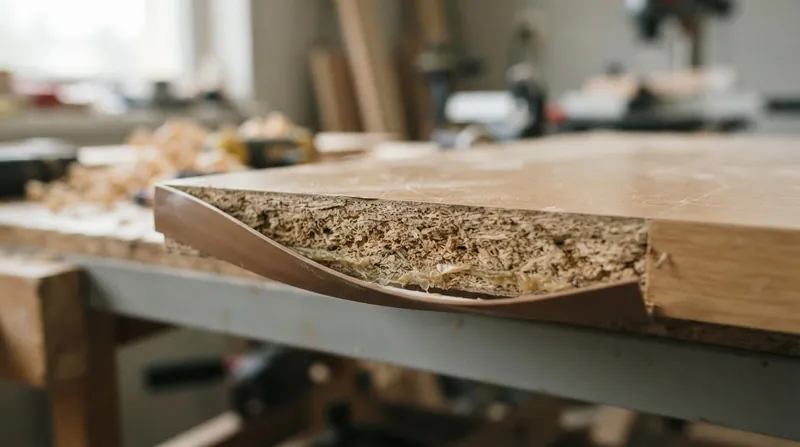
How Core-Veneer Density Mismatches Cause Particleboard Edges to Peel
5 sources
Mattress Durability
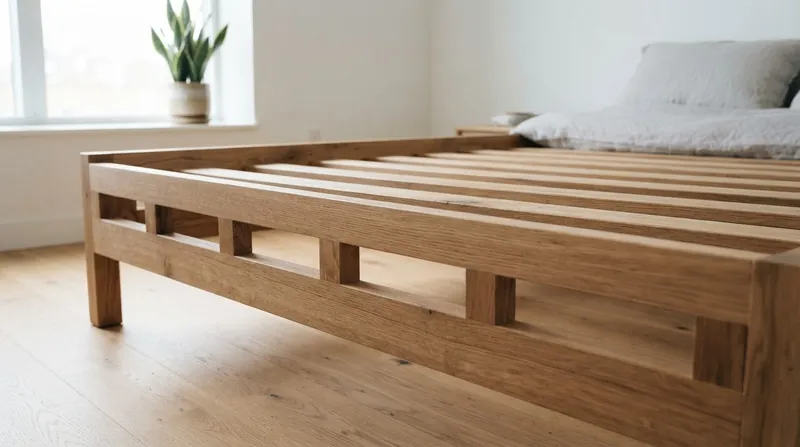
Why Slat Spacing Over 7.5 Centimeters Causes Irreversible Pocket-Coil Mattress Sagging
2 sources
Comments
Every angle. Every day.
Get Shopping & Reviews stories with full source coverage and perspective breakdowns, free every day.