
The 4°C Retrogradation Shift: How Chilling and Reheating Potatoes Transforms Rapid Carbs into Prebiotic Fiber
Dropping the temperature of cooked starches to 4°C for 24 hours permanently alters their molecular structure, converting rapidly digestible carbohydrates into gut-nourishing resistant starch.
By Kabir Mehra

Share this story
In short
- Cooling cooked starches at 4°C for 24 hours forces their molecules to crystallize into resistant starch.
- This structural change prevents digestive enzymes from breaking the carbohydrates down into rapid glucose.
- Reheating the chilled food does not destroy the new resistant starch matrix.
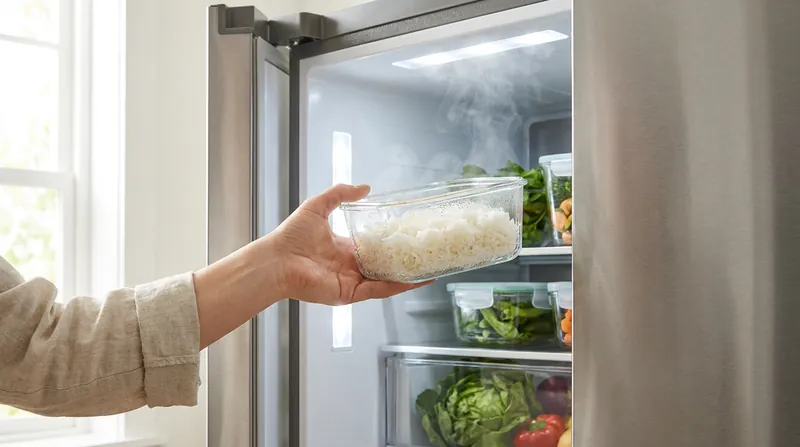
That leftover container of cold rice sitting in your refrigerator has already undergone a structural transformation that changes how your body will digest it. By simply dropping the temperature of cooked starches down to 4°C for a day, the molecular bonds inside the food have realigned into a matrix that human digestive enzymes can no longer easily break apart.[1]
When you pull a bowl of yesterday's pasta or roasted potatoes from the fridge, the stiff, clumped texture you feel is the physical evidence of retrogradation. The starch molecules, which swelled and burst open during boiling or roasting, have crystallized as they cooled, locking themselves into a rigid new architecture.[2]
This crystallization converts standard, rapidly digestible carbohydrates into what gastroenterologists call Type 3 resistant starch. Instead of breaking down into glucose in the small intestine and flooding the bloodstream, these hardened structures bypass early digestion entirely.[3]
They travel intact down into the large intestine, where they stop functioning as a calorie source for you and start functioning as a prebiotic food source for your microbiome. The resident bacteria ferment these crystallized starches, producing short-chain fatty acids that nourish the gut lining.[3]
The magnitude of this shift is measurable. In a 2015 clinical trial published in the Asia Pacific Journal of Clinical Nutrition, researchers at the University of Indonesia tracked the glycemic response of healthy adults eating freshly cooked white rice compared to rice cooled for 24 hours and reheated.[1]
The results showed that the cooling protocol increased the resistant starch content from 0.64 grams per 100 grams to 1.65 grams. When the participants ate the cooled and reheated rice, their post-meal blood glucose spikes were reduced by 30% compared to the fresh batch.[1]
"The cooling process forces the amylose molecules to pack tightly together, forming hydrogen bonds that our amylase enzymes simply cannot penetrate," explains Dr. Sonia Shenoy, a clinical nutrition researcher. "You are effectively turning a portion of the carbohydrate into dietary fiber just by changing its temperature."[4]
The mechanism relies entirely on the ratio of two specific molecules inside the plant: amylose and amylopectin. Amylose is a straight, linear chain of glucose, while amylopectin is highly branched, like a microscopic tree.[1][2]
Because amylose is straight, its strands can neatly stack on top of one another when the heat energy leaves the food. Foods with higher baseline amylose—like russet potatoes, basmati rice, and conventional wheat pasta—form significantly more resistant starch during cooling than waxy, high-amylopectin varieties like jasmine rice or red potatoes.[2]
A 2020 study in the journal Nutrients demonstrated this variance by testing different pasta preparations. Freshly boiled pasta consumed immediately triggered a standard insulin response. When cooled for 24 hours at 4°C, the glycemic index dropped significantly, and the insulin response was blunted by 28%.[2]
Crucially for anyone planning their weekly meal prep, reheating the food does not undo the crystallization. The hydrogen bonds formed during retrogradation are heat-stable up to about 120°C, meaning standard reheating methods leave the new structure intact.[1][2]
When you microwave that cold rice or toss the cold pasta in a warm pan of marinara, the food softens enough to be palatable, but the resistant starch matrix remains. The 2015 Indonesian rice study confirmed that reheating the cooled rice to 65°C actually preserved the 30% glycemic reduction.[1]
This thermal loophole offers a practical tool for managing metabolic health without altering the actual ingredients on the plate. For individuals monitoring their blood sugar, the difference between a fresh baked potato and a reheated one is the difference between a rapid glucose spike and a slow, sustained energy release.[4]
Beyond blood sugar management, the arrival of intact resistant starch in the colon triggers a secondary biological benefit. The fermentation process yields butyrate, a compound that serves as the primary energy source for colonocytes—the cells lining the large intestine.[3]
A 2022 systematic review in Gut Microbes linked higher butyrate production from resistant starch to lower rates of colorectal mucosal damage, reduced inflammation, and a strengthened gut barrier.[3]
The culinary application of this science aligns perfectly with traditional foodways. Potato salads, cold soba noodles, and leftover fried rice—which requires day-old, chilled rice to achieve the right texture—are all historical examples of retrogradation in practice.[4]
While the percentage of starch converted is relatively small—typically maxing out around 5% to 10% of the total carbohydrate weight—the physiological impact of that conversion punches above its weight class.[1][2]
The exact ceiling of conversion depends on the moisture content during cooking, the specific temperature of the refrigerator, and the duration of the chill. Maximum retrogradation requires at least 12 hours below 5°C.[1]
The next frontier in this research involves commercial applications, with food scientists exploring how to pre-retrograde flours before they reach the consumer, potentially lowering the glycemic impact of mass-market baked goods.[4]
For now, the most effective laboratory for this structural transformation remains the home kitchen. The simple act of cooking a batch of grains on Sunday and eating them through Wednesday fundamentally upgrades their nutritional profile, turning a convenience into a metabolic advantage.[4]
Key terms
- Retrogradation
- The process where starch molecules in cooked food realign and crystallize as the temperature drops, forming a rigid structure.
- Resistant Starch (Type 3)
- A form of carbohydrate that resists digestion in the small intestine and ferments in the large intestine, acting as dietary fiber.
- Amylose
- A straight-chain starch molecule that easily stacks together during cooling to form resistant starch.
- Butyrate
- A short-chain fatty acid produced by gut bacteria when they ferment resistant starch, crucial for reducing inflammation in the colon.
Frequently asked
Does freezing the food create more resistant starch than refrigerating?
No. Retrogradation happens most efficiently at refrigerator temperatures (around 4°C). Freezing halts the molecular movement too quickly, preventing the starch chains from aligning and crystallizing.
If I reheat the food until it's piping hot, do I destroy the resistant starch?
No. The hydrogen bonds that form during retrogradation are heat-stable up to about 120°C. Standard reheating in a microwave or on a stovetop will not break the new structure.
Does this work with all types of carbohydrates?
It works best with foods high in amylose, such as russet potatoes, standard wheat pasta, and basmati rice. Waxy potatoes and short-grain sticky rice contain mostly amylopectin, which does not crystallize as effectively.
How long does the food need to chill?
Maximum resistant starch formation requires the food to be held below 5°C for at least 12 to 24 hours.
Viewpoints in depth
Clinical Dietitians
Focus on the glycemic blunting effect as a practical tool for blood sugar management.
For clinical dietitians managing patients with insulin resistance or type 2 diabetes, retrogradation offers a behavioral intervention that doesn't require eliminating beloved cultural foods. By instructing patients to batch-cook their rice or potatoes a day in advance, dietitians can help them achieve a 30% reduction in postprandial glucose spikes without changing the actual volume of carbohydrates consumed. This perspective values the thermal loophole because it increases dietary compliance; patients are far more likely to eat reheated pasta than they are to switch entirely to alternative grain substitutes.
Microbiome Researchers
Value retrogradation primarily for its ability to deliver intact prebiotic fiber to the colon for butyrate production.
Gastroenterologists and microbiome researchers view the glycemic reduction as merely a side effect of the main event: feeding the colon. Because Type 3 resistant starch survives the acidic environment of the stomach and the enzymatic bath of the small intestine, it arrives fully intact in the large intestine. There, it serves as a highly fermentable substrate for beneficial bacteria. This camp emphasizes that the resulting short-chain fatty acids, particularly butyrate, are the primary energy source for colonocytes, making retrograded starches a critical tool for maintaining the integrity of the gut barrier and preventing mucosal inflammation.
Culinary Scientists
Examine how temperature manipulation changes the physical texture and moisture retention of the food.
From a food science perspective, retrogradation is a textural mechanism that must be managed carefully. Culinary scientists note that while the crystallization of amylose creates health benefits, it also forces water out of the starch matrix—a process known as syneresis. This is why day-old rice feels dry and hard, making it ideal for fried rice (where individual grains need to remain separate) but poor for dishes requiring a creamy texture. This camp focuses on how to balance the nutritional benefits of cooling with the sensory requirements of the final dish, often advocating for reheating methods that reintroduce steam to soften the amylopectin branches while leaving the crystallized amylose core intact.
- Clinical Dietitians
- Focus on the glycemic blunting effect as a practical tool for blood sugar management.
- Microbiome Researchers
- Value retrogradation primarily for its ability to deliver intact prebiotic fiber to the colon for butyrate production.
- Culinary Scientists
- Examine how temperature manipulation changes the physical texture and moisture retention of the food.
Perspectives this story doesn't cover
- Commercial Food Manufacturers
- Type 1 Diabetic Patients
Sources
Source coverage
4 outlets
3 viewpoints surfaced




- [1]Asia Pacific Journal of Clinical NutritionClinical Dietitians
Effect of cooling of cooked white rice on resistant starch content and glycemic response
Read on Asia Pacific Journal of Clinical Nutrition → - [2]NutrientsClinical Dietitians
Cooling and Reheating Pasta Reduces Postprandial Blood Glucose and Insulin Responses
Read on Nutrients → - [3]Gut MicrobesMicrobiome Researchers
Resistant starch type 3 interventions and their impact on the gut microbiome and butyrate production
Read on Gut Microbes → - [4]Factlen Editorial TeamCulinary Scientists
Synthesis by Factlen editorial team
Read on Factlen Editorial Team →
More in Food & Drink
See all →Nutrient Absorption
Adding Raw Mustard Seed to Cooked Broccoli Quadruples Its Sulforaphane Absorption
4 sources

Iron Supplementation
How Alternate-Day Iron Dosing Increases Absorption by 50 Percent
9 sources

Sodium Limits
The 140 Milligrams Per Serving Maximum: How the FDA Defines a 'Low Sodium' Food
8 sources

Food Security
Mid-Year Global Report Projects 44.5% Decline in Food Aid Funding by 2026
4 sources

Comments
Every angle. Every day.
Get Food & Drink stories with full source coverage and perspective breakdowns, free every day.