
Summer 2026 Snow Sports Injury Report: Sharpe, Milton, and Wendler Headline Off-Season Recoveries
As the 2026 Olympic cycle concludes, winter athletes are utilizing the summer months to rehabilitate major injuries. From Cassie Sharpe's concussion recovery to Michael Milton's miraculous post-surgery Paralympic start, here is the latest on who is returning to snow.
By Jackson Reed

Share this story
While the snow has largely melted across the Northern Hemisphere, the real work for many of the world's top winter athletes is just beginning. Following a grueling 2025–26 season that culminated in the Milano-Cortina Olympics and Paralympics, several high-profile skiers and snowboarders are utilizing the summer months to rehabilitate from severe crashes.
Unlike the mid-season scramble to tape up joints and push through pain, the off-season offers a critical window for comprehensive structural healing. For athletes across freeskiing, moguls, and para-alpine disciplines, the current injury report is defined not by season-ending despair, but by resilience, successful surgical interventions, and a steadfast determination to return to snow.[1]
One of the most closely monitored recoveries belongs to Canadian halfpipe star Cassie Sharpe. The two-time Olympic medalist suffered a terrifying crash during her second qualifying run at the 2026 Winter Games in February. After laying motionless in the superpipe, Sharpe was secured in a cervical collar and stretchered off the mountain.
She spent the next two days in an Italian hospital undergoing extensive MRIs and CT scans, later revealing that she had absolutely no memory of the competition day. Despite the severity of the fall, her initial qualifying score of 88.25 was actually high enough to advance her to the finals, though medical staff rightfully ruled her out of the medal round due to a severe concussion and facial contusions.[1]
Months removed from the trauma in Italy, Sharpe's off-season rehabilitation is progressing positively. Her camp reports that her primary concussion symptoms have steadily subsided, though she spent the spring managing lingering bouts of vertigo. To combat the dizziness, the 33-year-old mother has been working intensively with a dedicated team of physiotherapists and chiropractors.
Sharpe has been emphatic that she refuses to let her decorated career end on a stretcher, telling reporters that she fully intends to return to the superpipe. Her sights are now set on the 2026–27 winter campaign, utilizing the summer to regain her equilibrium and physical strength.[1]
In the para-alpine world, Australian legend Michael Milton provided one of the most astonishing injury recovery timelines of the entire Olympic cycle. The six-time Paralympian, who had his left leg amputated at age nine due to bone cancer, suffered a devastating setback while training at Winter Park, Colorado, in February.
Milton hit a slick patch of snow and fell hard onto his left side, fracturing the femur bone on his amputated stump. The timing could not have been worse, as the accident occurred just weeks before he was scheduled to compete in his seventh Paralympic Games in Milano-Cortina.
Milton was immediately transferred to Denver Health, where orthopedic trauma surgeons took on the complex case. Dr. Justin Hellwinkel performed emergency surgery to stabilize the fractured femur, fully aware of the ticking Paralympic clock. Remarkably, the procedure was so successful that when Milton returned to the clinic for a follow-up appointment just a couple of weeks later, he reported experiencing zero pain.
Astounded by his rapid healing and baseline strength, the medical team officially cleared him to ski. Milton boarded a flight to Italy that exact same night, successfully reaching the start gate for his seventh Games—a testament to both modern orthopedic trauma care and his own ironclad willpower.
While Milton and Sharpe dealt with acute trauma, other athletes spent the 2026 season managing chronic instability. On the U.S. Moguls team, Landon Wendler is finally utilizing the summer to address a ruptured anterior cruciate ligament. Wendler tore his ACL during a training run in Sweden back in December 2024.
Rather than undergoing immediate reconstructive surgery—which typically requires six to nine months of rehabilitation—Wendler opted to ski through the instability. By relying on rigorous physical therapy and building massive quadriceps strength to manually stabilize his knee joint, he managed to compete in the Milano-Cortina Olympics without an intact ACL.[2]
Wendler’s ability to navigate the punishing, high-impact bumps of an Olympic moguls course on a torn ligament highlights the extreme physical conditioning of elite winter athletes. However, medical experts note that skiing without an ACL is a temporary, high-risk calculus that places immense rotational stress on the meniscus and surrounding cartilage.
With the Olympic cycle now in the rearview mirror, athletes who deferred surgery are finally going under the knife. The summer months provide the necessary runway to graft new ligaments, rebuild atrophied leg muscles, and slowly reintroduce dynamic load-bearing exercises before the snow returns.[2]
As these athletes transition from the operating table to the gym, national federations are increasingly recognizing that physical healing is only half the battle. U.S. Ski & Snowboard has recently overhauled its return-to-snow protocols to place a massive emphasis on mental fitness. Sports psychologists are now integrated into the rehabilitation process long before an athlete ever clicks back into their bindings. The psychological hurdle of returning to the exact environment where a traumatic crash occurred can trigger intense nervous system responses, making mental conditioning just as vital as physical therapy.
To combat this trauma, recovery programs now utilize visualization and mindfulness techniques to help athletes reframe their fear. Injured skiers are guided through mental exercises where they visualize the features that caused their crash, learning to regulate their breathing and heart rate in a controlled clinical setting.
By building a psychological tolerance to fear, athletes can prevent their brains from defaulting to primitive panic responses when they finally return to the snow. Coaches are also trained to stagger the return process, ensuring that athletes do not feel rushed by peer pressure or upcoming competition deadlines.
For athletes currently in the thick of their summer rehab, Austrian snowboarder Anna Gasser serves as the ultimate blueprint for a successful off-season turnaround. The two-time Olympic big air gold medalist dislocated her shoulder while surfing in Germany last summer, an injury that required immediate surgery and extensive rehabilitation. By staying disciplined through the fall, Gasser was back on snow by November and successfully returned to the podium at the Laax Open in January. Her trajectory proves that a methodical, well-supported off-season recovery can seamlessly translate into winter hardware.[3]
For athletes currently in the thick of their summer rehab, Austrian snowboarder Anna Gasser serves as the ultimate blueprint for a successful off-season turnaround.
As July progresses, athletes who have cleared their final medical hurdles will begin migrating to the Southern Hemisphere. Glaciers and winter resorts in New Zealand, Australia, and South America serve as the ultimate testing grounds for surgically repaired knees and concussed heads. For Sharpe, Milton, and Wendler, the objective is clear: execute the grueling physical therapy now, trust the medical process, and ensure that their bodies and minds are fully synchronized when the World Cup circuit officially resumes this fall.[1][2]
Key points
- Cassie Sharpe is targeting a 2026-27 return after suffering a severe concussion at the Milano-Cortina Olympics.
- Michael Milton successfully competed in his seventh Paralympics just weeks after fracturing his femur.
- Landon Wendler is utilizing the off-season to repair an ACL he tore back in December 2024.
- U.S. Ski & Snowboard is increasingly utilizing sports psychologists to help athletes overcome the trauma of severe crashes.
How we got here
Dec 2024
Landon Wendler tears his ACL but opts to delay reconstructive surgery to compete.
Feb 2026
Cassie Sharpe suffers a severe concussion during the Milano-Cortina Olympic halfpipe qualifiers.
Feb 2026
Michael Milton fractures his femur at Winter Park just weeks before the Paralympics.
Mar 2026
Milton is medically cleared and successfully competes in his seventh Paralympic Games.
Jul 2026
Athletes utilize the summer off-season to finalize rehab before Southern Hemisphere training camps.
- Medical & Rehabilitation Teams
- Advocates for conservative, holistic return-to-snow protocols prioritizing long-term health and mental fitness.
- Athlete Resilience
- Focuses on the drive to overcome trauma and compete at the highest level despite severe injuries.
Perspectives this story doesn't cover
- Equipment manufacturers designing advanced helmets and airbags to mitigate these specific crash impacts.
Sources
Source coverage
3 outlets
2 viewpoints surfaced



- [1]FreeskierAthlete Resilience
Down But Not Out: Cassie Sharpe's Olympic Injury Update
Read on Freeskier → - [2]KFGOAthlete Resilience
Skiing with a torn ACL painful but possible, say teammates
Read on KFGO → - [3]NBC OlympicsAthlete Resilience
Women's snowboard big air could produce history-making moments
Read on NBC Olympics →
More in Sports
See all →Injury
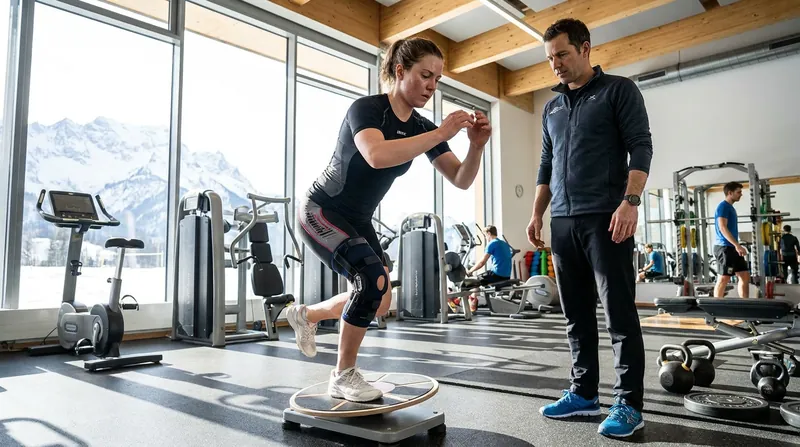
Beyond Medical Clearance: How New 'Return to Snow' Protocols Are Revolutionizing Injury Recovery in Snow Sports
3 sources
Injury
Alpine Prodigy Lara Colturi Adds Super-G Back to World Cup Schedule in Final Phase of Injury Comeback
5 sources
Injury
Alpine Skiing Injury Report: Vonn Returns to the Gym as Kilde and Schwarz Eye 2026-27 Season
4 sources
Injury
U.S. Ski Star Lauren Macuga Nears Return to Snow Following Olympic-Ending ACL Injury
2 sources
Comments
Every angle. Every day.
Get Sports stories with full source coverage and perspective breakdowns, free every day.