
Beyond Medical Clearance: How New 'Return to Snow' Protocols Are Revolutionizing Injury Recovery in Snow Sports
A groundbreaking FIS consensus statement and new mental-fitness curriculums are transforming how injured skiers and snowboarders safely return to the mountain.
By Jackson Reed

Share this story
The moment of a high-speed crash in alpine skiing or snowboarding is visceral, often resulting in torn ligaments, complex fractures, or severe concussions. The immediate aftermath is a blur of medical tents, MRI machines, and surgical consultations.
But for elite snow sports athletes, the most daunting hurdle isn't the operation itself—it is the psychological and physical mountain they must climb to reach their first day back on the snow. The journey from a hospital bed to the starting gate of a World Cup downhill race is fraught with setbacks, demanding a level of resilience that goes far beyond basic physical therapy.
Historically, the timeline for an athlete's return to competition was dictated almost entirely by physical healing and the immense pressure of the racing calendar. Once an orthopedic surgeon provided basic medical clearance, the athlete was often expected to click back into their bindings and immediately perform at the highest level.
However, national federations and sports medicine experts are now recognizing a crucial distinction: "medical clearance" does not equal "ski-ready." Rushing an athlete back onto the mountain before they have fully regained their dynamic motor control and mental confidence has historically led to devastating secondary injuries.[2]
To bridge this dangerous gap and protect the long-term health of competitors, the International Ski and Snowboard Federation (FIS) recently commissioned its first-ever international consensus statement on "Return-to-Performance" (RTP) for competitive alpine, freestyle, and snowboard athletes. This landmark document represents a massive paradigm shift in how the sport handles trauma, moving away from arbitrary, calendar-based timelines and toward a strictly criteria-based progression.
Drafted by an elite panel of 23 international experts—including sports physicians, physical therapists, psychologists, and veteran coaches—the FIS protocol establishes a standardized, phased approach to recovery. The consensus statement explicitly warns that returning to the snow too early not only increases the risk of a secondary crash but can also cause permanent, long-term health impairments that affect the athlete long after their competitive career ends.[1]
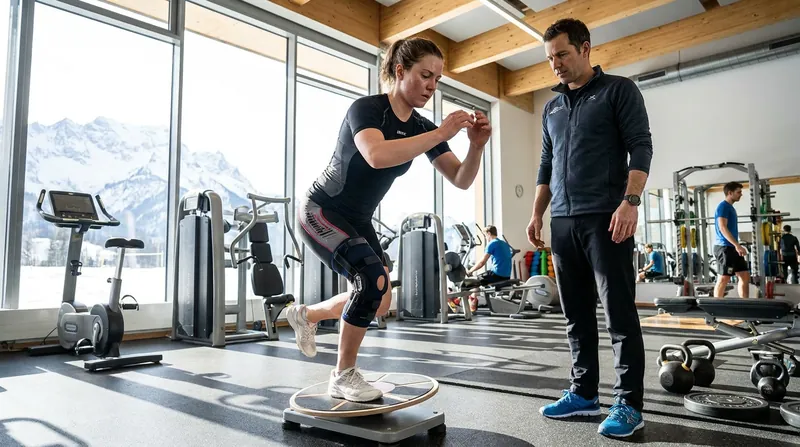
The new framework breaks the grueling recovery journey into distinct, manageable phases. It begins with intensive off-snow physical rehabilitation, where the primary goal is to restore symmetrical strength, joint stability, and full range of motion in a controlled gym environment. Only after passing rigorous functional tests do athletes enter the "mid-rehab" phase.
This critical transition involves restricted, highly supervised free-skiing on gentle terrain, allowing the athlete to reacquaint themselves with the snow before they are ever allowed to rejoin unrestricted team training. By isolating these steps, the protocol prevents athletes from shocking their systems with the immense G-forces of a race course before their stabilizing muscles are fully prepared to handle the load.[1]
But perhaps the most revolutionary shift in the industry's approach is the newfound emphasis on psychological recovery. High-speed crashes often leave athletes with lingering fear, anxiety, and post-traumatic stress that can severely inhibit their mechanics on the mountain.
An athlete might be physically healed, but if their brain is still bracing for an impact, their muscles will involuntarily guard, throwing off the precise balance required to navigate an icy slope at eighty miles per hour. Acknowledging this reality, the new protocols treat mental rehabilitation with the exact same rigor as physical therapy, ensuring the mind is as ready as the body.[2]
"Prolonged stress increases cortisol levels, which can slow tissue repair, lead to poor sleep and reduced motivation," notes Dr. Sandler, a sports psychology expert specializing in ski injury recovery. To combat this invisible barrier, physical therapists and psychologists are now integrating Cognitive Behavioral Therapy (CBT), positive affirmations, and vivid visualization techniques long before the athlete is cleared to touch the snow.
By mentally rehearsing successful runs, athletes can begin to rewire their neural pathways and replace fear with constructive confidence. This mental rehearsal keeps the athlete connected to the sport even when they are confined to a brace or a hospital bed.
National federations are aggressively adopting these holistic models to protect their rosters. U.S. Ski & Snowboard, for example, has implemented a pioneering eight-week mental performance curriculum designed specifically to build resilience in the nervous system of injured competitors. This program acknowledges that returning to snow is often the most psychologically demanding phase of an athlete's entire life. Instead of leaving athletes to process their trauma in isolation, the federation provides a structured psychological roadmap that runs parallel to their physical weightlifting and mobility routines.[2]
Led by dedicated sports psychologists, the U.S. program utilizes daily journaling, mindfulness practices, and body-awareness exercises to help athletes process the trauma of their injuries. Gillian Bower, Vice President of High Performance at U.S. Ski & Snowboard, emphasizes that modern recovery is about building a comprehensive "culture of care" that surrounds the athlete at every step. The goal is to create an environment where admitting to fear or hesitation is viewed as a necessary part of the healing process, rather than a sign of competitive weakness.[2]
"Even our best-prepared athletes can sustain injuries," Bower explains, highlighting the inherent risks of a sport where athletes push the limits of gravity. "It's not just about strength or conditioning—it's about the system of support around them." This modernized system requires centralized, transparent communication between the athlete, medical staff, strength coaches, and family members to ensure no one is pushed past their physical or psychological limits. If an athlete is having a bad mental day, the entire support team adjusts the physical workload accordingly.[2]
These advanced protocols are currently being put to the ultimate test by some of the sport's biggest stars as they prepare for the upcoming FIS World Cup season. Two-time Olympic snowboard champion Chloe Kim is meticulously rehabbing a torn labrum, while Canadian halfpipe skier Cassie Sharpe is recovering from a terrifying crash sustained at the Milano-Cortina 2026 Winter Games.
Under the new guidelines, their returns will be dictated by objective readiness rather than the pressure of the impending competition schedule. By adhering to the consensus statement, these elite competitors are modeling healthy recovery behaviors for the next generation of winter athletes.[1][3]
For athletes navigating these grueling, lonely comebacks, the structured RTP guidelines offer a clear, objective roadmap out of the darkness. Instead of relying on guesswork, hope, or external pressure to compete, progression is strictly based on passing specific clinical and functional criteria. If an athlete needs more time to trust their surgically repaired knee or their reconstructed shoulder, the protocol explicitly protects their right to take that time without fear of losing their roster spot or funding.[1]
The ultimate goal of the FIS Athlete Health Unit and national federations is to ensure that when an athlete finally pushes out of the start gate, they do so with absolute physical capability and zero mental hesitation. By treating the mind and the body as equal partners in the rehabilitation process, the snow sports world is ensuring its athletes can safely chase podiums without sacrificing their long-term well-being. The era of "toughing it out" is officially over, replaced by a scientifically backed era of comprehensive, compassionate performance care.[1][2]
Key points
- The FIS has published its first international consensus statement on Return-to-Performance protocols for snow sports.
- The new guidelines shift the focus from calendar-based timelines to objective, criteria-based physical and mental benchmarks.
- Psychological recovery is now treated with the same rigor as physical therapy to combat post-traumatic stress and muscle guarding.
- Federations like U.S. Ski & Snowboard have implemented eight-week mental fitness curriculums to build nervous system resilience.
- The phased approach begins with off-snow rehab, progresses to restricted free-skiing, and ends with unrestricted team training.
How we got here
January 2024
Several high-profile athletes suffer season-ending knee injuries, sparking industry-wide discussions on standardizing recovery.
February 2026
The International Ski and Snowboard Federation (FIS) publishes its landmark consensus statement on Return-to-Performance protocols.
Spring 2026
U.S. Ski & Snowboard and other national federations formally integrate eight-week mental fitness curriculums into their injury recovery pipelines.
July 2026
Injured athletes enter the critical 'mid-rehab' on-snow phases as they prepare for the upcoming World Cup season.
- Medical Experts & Physiotherapists
- Focus on structured, phased physical recovery, symmetrical strength, and preventing long-term joint damage.
- Sports Psychologists
- Emphasize that mental trauma and fear of re-injury are just as debilitating as physical damage, advocating for visualization and nervous system regulation.
- National Federations & Coaches
- Prioritize building a 'culture of care' and a system of support that protects athletes from the pressure of rushing back to competition.
- Athletes
- Experience the grueling reality of rehabilitation, balancing the intense desire to compete with the need for patience and trust in the recovery process.
Perspectives this story doesn't cover
- Youth and amateur athletes who lack access to elite sports psychology resources
- Independent athletes competing without national federation funding
Sources
Source coverage
3 outlets
4 viewpoints surfaced



- [1]BMJ Open Sport & Exercise MedicineMedical Experts & Physiotherapists
International Ski and Snowboard Federation (FIS) consensus statement on return-to-performance
Read on BMJ Open Sport & Exercise Medicine → - [2]Ski Racing MediaNational Federations & Coaches
Injury Prevention and Return to Snow in Ski Racing: Building a Culture of Care
Read on Ski Racing Media → - [3]Olympics.comAthletes
Chloe Kim, Cassie Sharpe and the Road to Recovery
Read on Olympics.com →
More in Sports
See all →Injury
Alpine Prodigy Lara Colturi Adds Super-G Back to World Cup Schedule in Final Phase of Injury Comeback
5 sources
Injury
Alpine Skiing Injury Report: Vonn Returns to the Gym as Kilde and Schwarz Eye 2026-27 Season
4 sources

Injury
Summer 2026 Snow Sports Injury Report: Sharpe, Milton, and Wendler Headline Off-Season Recoveries
3 sources
Injury
U.S. Ski Star Lauren Macuga Nears Return to Snow Following Olympic-Ending ACL Injury
2 sources
Comments
Every angle. Every day.
Get Sports stories with full source coverage and perspective breakdowns, free every day.