
Spain Sweeps the Top Spots in the New World Aquatics Water Polo Rankings
World Aquatics has launched a comprehensive, points-based global ranking system for water polo, replacing informal seeding with a transparent mathematical race. Spain currently holds the No. 1 position in both the men's and women's elite standings.
By Xia Wu

Share this story
The era of informal seeding and subjective continental rotation in international water polo is officially over. World Aquatics has rolled out a comprehensive, points-based World Rankings system, bringing a transparent, data-driven structure to the sport's global hierarchy. The new standings track the performance of senior and junior national teams across both the men's and women's games, rewarding consistent performance across top-level competitions.[1]
As the 2026 season heats up, one nation has established an absolute monopoly at the summit: Spain. The Spanish national program currently holds the No. 1 spot in both the men's and women's elite rankings, a testament to a decade of meticulous development and recent triumphs on the Olympic and World Championship stages.[2]
In the women's standings, Spain leads the pack with 1,621.80 points. Their position was cemented by a historic first-ever Olympic gold medal at Paris 2024, followed by consistent podium finishes at subsequent World Aquatics Championships. The Netherlands remain Spain's closest challengers in second place, bolstered by their successful defense of the European title. The United States, Greece, and Hungary round out the highly competitive top five.[2]
The men's rankings feature an equally fierce battle at the top. Spain recently surged to the No. 1 position with 1,655.40 points, narrowly overtaking Croatia, who had claimed the inaugural top spot following their 2024 World Championship gold. Hungary, Greece, and Serbia complete the men's top five, while the United States sits in sixth place, looking to climb the ladder ahead of the 2028 Los Angeles Olympics.[1][3]
The introduction of the ranking system is designed to give structure to international water polo like never before. According to World Aquatics, the standings will directly influence qualification and seeding for major events, including the 2027 World Championships and future Olympic Games. This creates a massive incentive for national federations to participate in more matches and field their strongest rosters year-round.[1]
The mathematics behind the rankings are rigorous. A team's Total Points for a given match are calculated by multiplying their "Rating Points" (RP) by the "Match Weight" (MW). Rating Points are determined by the match result, the goal margin, and the venue location. Crucially, the system includes Opposition Ranking Points (ORP)—meaning a team earns significantly more points for defeating a top-tier opponent than they do for routing a lower-ranked squad.[1]
Match Weight ensures that not all tournaments are treated equally. The Olympic Games carry the maximum multiplier of 3.0, while the World Aquatics Championships carry a 2.0 weight. Regional and continental events scale down from 1.0 to 0.2. Furthermore, a sliding scale rewards deep tournament runs, with finals and medal matches carrying a heavier multiplier than early group-stage games.[1]
To ensure the rankings reflect current form rather than ancient history, World Aquatics implemented an eight-year time decay cycle. Points depreciate linearly over the eight-year window and reset every two years following a World Championships cycle. This prevents legacy teams from resting on past laurels and forces every nation to continuously prove their elite status.[1]
For the athletes, the new system adds a tangible layer of prestige to their daily grind. Spanish water polo star Bea Ortiz, who was named the World Aquatics Athlete of the Year after leading her country to Olympic gold, welcomed the top ranking as validation of her team's long journey. "Women's water polo is developing rapidly around the world, and there are so many strong teams in competition, so to be ranked above all of them is a great honor," Ortiz noted.[2]
Nona Pérez, the reigning European Women's Water Polo Player of the Year, echoed that sentiment, acknowledging the target now painted on Spain's back. "Retaining the No. 1 ranking is something we are incredibly proud of as a group," Pérez said. "We will not take anything for granted. We are focused on improving and competing at our very best whenever we step into the water."
The rankings also extend to the developmental pipeline, tracking U20 Men's and Women's teams. Spain's dominance is evident here as well, taking the top spot in the first-ever Women's U20 World Ranking list, followed by Hungary and Greece. This junior-level tracking provides federations with clear metrics on the health of their youth programs and future senior-team prospects.[1][2]
As the 2026 World Cup Division 1 and Division 2 matches unfold across the globe, the standings have fundamentally changed the viewing experience for fans. Every goal, every defensive stop, and every penalty shootout now feeds directly into a live mathematical race. With the road to the 2028 Olympics coming into focus, the battle for the No. 1 spot has never been more transparent—or more fiercely contested.[1][3]
Key points
- World Aquatics has replaced informal seeding with a strict, points-based global ranking system for international water polo.
- Spain currently holds the No. 1 position in both the men's and women's elite standings.
- The Netherlands and the United States follow Spain closely in the women's rankings.
- Croatia and Hungary are Spain's nearest challengers in the men's global standings.
- The mathematical formula multiplies match results by tournament prestige, heavily weighting the Olympics and World Championships.
- An eight-year time decay ensures the rankings prioritize recent success over historical dominance.
How we got here
August 2024
The Spanish women's national team wins its first-ever Olympic gold medal in Paris, cementing their elite status.
June 2025
World Aquatics officially launches the inaugural points-based Water Polo World Rankings.
July 2025
The World Aquatics Championships in Singapore trigger a major points reshuffle across the global standings.
Summer 2026
Spain overtakes Croatia in the men's standings, achieving a rare dual-monopoly as the No. 1 ranked nation in both men's and women's water polo.
- Spanish National Program
- Views the dual No. 1 rankings as the ultimate validation of their long-term developmental pipeline and recent championship successes.
- Chasing Nations
- Highly motivated by the transparent mathematical target, aiming to optimize their schedules and rosters to reclaim the top spot.
- World Aquatics Officials
- Focused on how the structured ranking system will drive commercial growth, fan engagement, and fair qualification pathways.
Perspectives this story doesn't cover
- Lower-ranked developing nations navigating the new qualification math
- Tournament organizers adjusting to the new seeding requirements
Sources
Source coverage
3 outlets
3 viewpoints surfaced



- [1]Waterpolo 360Chasing Nations
World Aquatics Launches First-Ever Water Polo World Rankings – Croatia and Spain Lead the Way
Read on Waterpolo 360 → - [2]SwimSwamSpanish National Program
Spain Take Top Spot In First World Aquatics Women's Water Polo Rankings
Read on SwimSwam → - [3]Factlen Editorial TeamWorld Aquatics Officials
Synthesis by Factlen editorial team
Read on Factlen Editorial Team →
More in Sports
See all →Recap
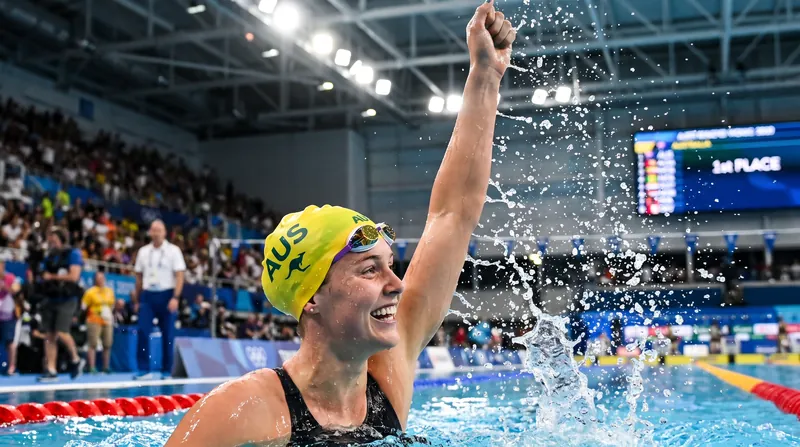
Indiana Dominates Inaugural College Swimming League Match 1 Behind Alex Shackell's MVP Performance
3 sources
Power ranking
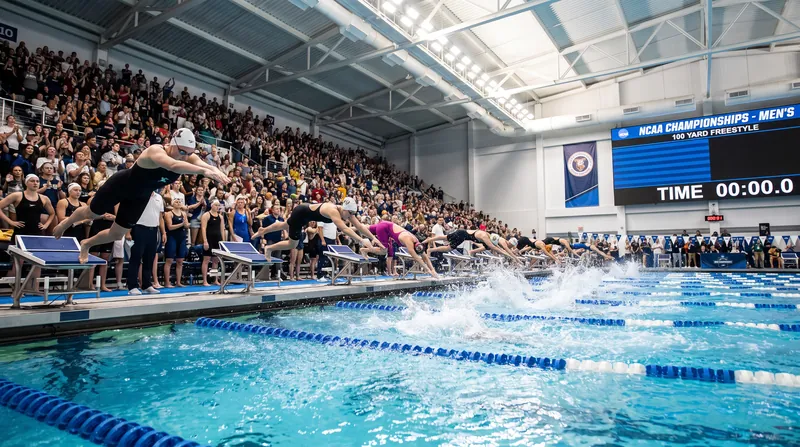
Global Men's 200 Freestyle Power Rankings: Zhang Zhanshuo Resets the Board With Historic 1:43.49
2 sources
Storyline
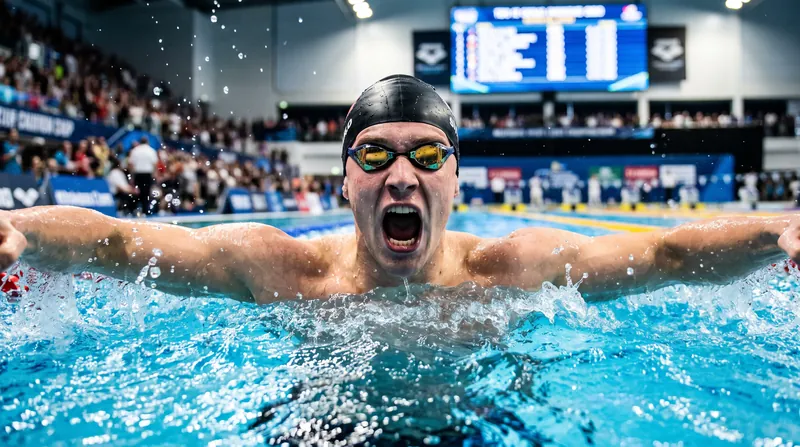
British Relay Team Smashes English Channel Record, Falls Three Minutes Short of 1990 World Mark
2 sources
Fluid Dynamics
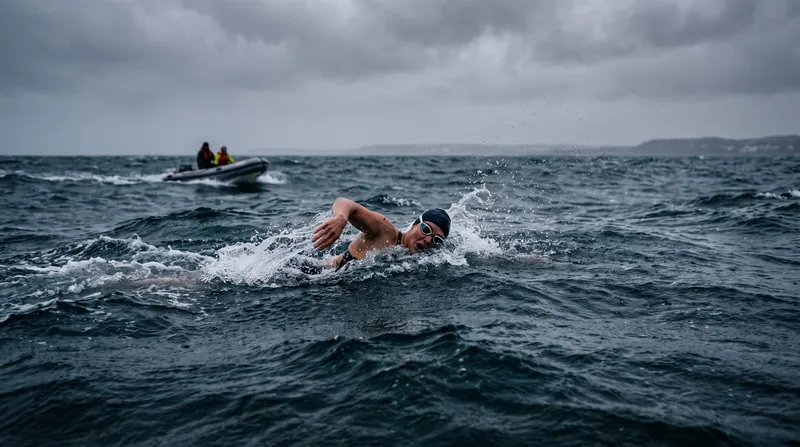
The 3-8mm Spacing: How Invisible Water Vortices Maximize Hand Propulsion in Swimming
7 sources
Comments
Every angle. Every day.
Get Sports stories with full source coverage and perspective breakdowns, free every day.