
President Trump Issues Executive Order Restricting Foreign-Made Bulk-Power System Equipment
A new executive order declares a national emergency regarding the U.S. bulk-power system, prohibiting the acquisition or installation of grid equipment supplied by foreign adversaries.
By Hao Li

Share this story
On Thursday, the White House invoked the International Emergency Economic Powers Act to declare a national emergency over the security of the United States electrical grid. The executive order explicitly prohibits federal agencies and private utilities from acquiring, importing, or installing bulk-power system (BPS) equipment that has been designed, manufactured, or supplied by entities under the jurisdiction of designated foreign adversaries.[1][2][3]
The directive targets a specific vulnerability in the nation's critical infrastructure: the heavy reliance on imported transformers, capacitors, and control systems that manage the flow of electricity across the high-voltage transmission network. By restricting these components, the administration aims to eliminate the risk of embedded malicious hardware or software that could be triggered remotely to disrupt power distribution across wide geographic areas.[4]
Under the new framework, the Secretary of Energy is granted sweeping authority to identify and block transactions involving BPS equipment that poses an undue risk of sabotage or espionage. This authority extends retroactively, allowing the Department of Energy to mandate the removal or isolation of existing equipment that meets the risk criteria, though the immediate focus remains on halting new installations and securing future procurement pipelines.[1][3]
For the utility sector, the order triggers an immediate supply chain pivot. Power companies and grid operators must now audit their procurement networks to ensure compliance, a process that legal analysts warn could delay ongoing grid modernization and capacity expansion projects. To ease the transition, the order establishes a pre-qualification program, tasking the Department of Energy with publishing a list of approved vendors and safe equipment to streamline future acquisitions.[3]
The restriction arrives amid escalating concerns over cyber intrusions targeting critical infrastructure. While the text of the executive order does not single out specific nations by name, the definition of "foreign adversary" broadly aligns with ongoing trade and security postures concerning China and Russia, both of which are major global suppliers of industrial control systems and heavy electrical machinery.[2][4]
The Department of Energy has been directed to issue formal rules implementing the order within 150 days. During this interim period, a newly formed interagency task force will begin identifying specific categories of equipment and foreign entities that fall under the ban, while also developing strategies to boost domestic manufacturing capacity for large-scale grid components.[1]
The push to secure the supply chain is simultaneously being framed as an industrial policy initiative. By cutting off access to cheap, state-subsidized foreign equipment, the administration anticipates a surge in demand for American-made transformers and switchgear. However, domestic manufacturers currently face significant capacity constraints and multi-year backlogs, raising questions about how quickly the U.S. industrial base can scale to meet the utility sector's needs.[4]
As the 150-day rulemaking window opens, utility trade associations and grid operators are expected to lobby for clear exemptions and a phased implementation schedule to prevent disruptions to power delivery. The ultimate success of the order will depend on the Department of Energy's ability to balance national security imperatives with the practical realities of maintaining a reliable, heavily interconnected electrical grid during a period of surging electricity demand.[1][3][4]
Viewpoints in depth
National Security Advocates
Prioritize the elimination of cyber vulnerabilities in critical infrastructure.
Proponents of the executive order argue that the U.S. electrical grid is unacceptably vulnerable to foreign interference. They point to the increasing digitization of grid components, where embedded malware or hardware backdoors could allow a hostile state to remotely disable transformers or manipulate power flows during a geopolitical crisis. For this camp, the national security imperative outweighs the short-term financial costs of re-shoring the supply chain, as a successful attack on the bulk-power system could cause catastrophic economic and physical damage.
Utility Operators
Focus on the practical challenges of maintaining grid reliability amid supply chain disruptions.
While utility companies generally support the goal of a secure grid, they caution that the immediate implementation of broad equipment bans could paralyze ongoing infrastructure projects. The industry is already facing severe shortages and multi-year lead times for large power transformers. Operators argue that without a phased transition and clear exemptions for equipment already in the procurement pipeline, the order could inadvertently harm grid reliability by preventing utilities from replacing aging infrastructure or expanding capacity to meet rising electricity demand.
Key points
- The executive order declares a national emergency over the security of the U.S. bulk-power system.
- It prohibits the acquisition and installation of grid equipment supplied by designated foreign adversaries.
- The Secretary of Energy is granted authority to block transactions and mandate the removal of existing high-risk equipment.
- The Department of Energy has 150 days to issue formal rules and establish a pre-qualification program for safe vendors.
- National Security Advocates
- Argue that the risk of remote sabotage by foreign adversaries necessitates immediate and strict supply chain controls, regardless of cost.
- Utility Operators
- Emphasize the need for a phased approach, warning that abrupt bans on foreign equipment could exacerbate existing supply chain bottlenecks.
- Trade & Legal Analysts
- Focus on the compliance burden and the broad authority granted to the Department of Energy to intervene in private contracts.
Perspectives this story doesn't cover
- Domestic Equipment Manufacturers
- Consumer Ratepayer Advocates
Sources
Source coverage
4 outlets
3 viewpoints surfaced




- [1]White & CaseTrade & Legal Analysts
President Trump orders potential restrictions on certain foreign electric power equipment
Read on White & Case → - [2]Al JazeeraNational Security Advocates
Trump executive order bans some foreign equipment in US energy grid
Read on Al Jazeera → - [3]Barclay DamonTrade & Legal Analysts
President Trump Declares National Emergency to Secure the Nation's Bulk Power System
Read on Barclay Damon → - [4]Factlen Editorial TeamNational Security Advocates
Synthesis by Factlen editorial team
Read on Factlen Editorial Team →
More in Energy
See all →Grid Resilience
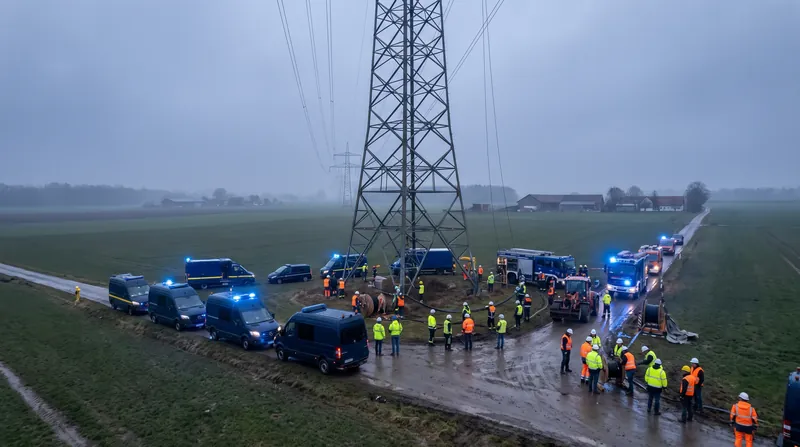
PJM Proposes New Reliability Rules After 3.8 GW Data Center Load Trip
5 sources
Grid Infrastructure
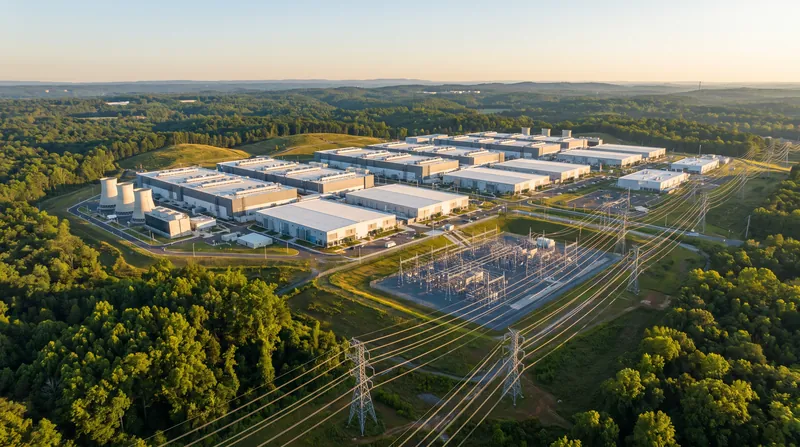
US Utilities Plan Massive Fossil Fuel Expansion to Meet AI Data Center Demand, Sierra Club Finds
4 sources
Grid Stability
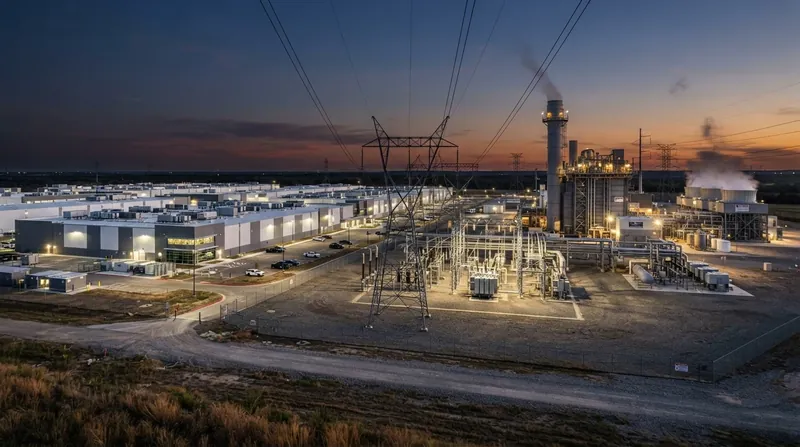
The Sub-Second Services That Stabilize the Electric Grid
5 sources
Distributed Generation
Chinese Solar Panels Fall to 12 Cents Per Watt, Accelerating Global Energy Transition
6 sources
Comments
Every angle. Every day.
Get Energy stories with full source coverage and perspective breakdowns, free every day.