
Netflix Secures Global Exclusive Streaming Rights to Sony's Theatrical Slate in $7 Billion Deal
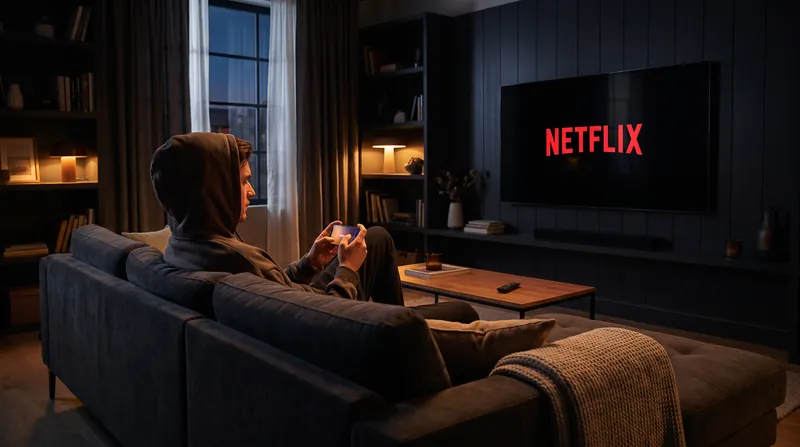
Netflix and Sony Pictures have signed a landmark $7 billion agreement, making Netflix the exclusive worldwide streaming home for all Sony theatrical films. The deal ends regional fragmentation for the studio's output while preserving the traditional exclusive cinema window.
By Joao Marques

Share this story
For years, the modern streaming era has been defined by a uniquely frustrating geographic lottery. A subscriber in the United States might log on to find a major blockbuster film readily available on their home screen, while a user in the United Kingdom or Germany searching for the exact same title is met with a blank page.
This regional fragmentation—a direct byproduct of Hollywood studios selling their distribution rights piecemeal across different international borders—has long been the primary friction point of global entertainment. Viewers have been forced to navigate a maze of different subscriptions, regional locks, and shifting availability dates just to watch the same cultural moments unfold.
On January 15, 2026, Netflix and Sony Pictures Entertainment moved to permanently eliminate that friction for a massive chunk of Hollywood's theatrical output. The two entertainment giants announced a landmark global "Pay-1" licensing agreement, officially securing Netflix as the exclusive worldwide streaming home for all of Sony's feature films.
The multi-year pact ensures that once a Sony movie completes its traditional run in cinemas and finishes its window on digital rental platforms, it will stream on a single, unified service globally, ending the patchwork approach that has defined the industry for a decade.[1][2]
The sheer financial scale of the agreement underscores the immense premium placed on unified global distribution in today's market. While official financial terms were not publicly disclosed by either studio in their press releases, industry analysts value the expanded pact at more than $7 billion.
This represents a staggering financial leap from the estimated $2.5 billion domestic-only deal the two companies previously signed in 2021. Rate cards for Sony titles are reportedly rising by roughly 40 percent under the new structure, a massive premium that Netflix is willing to pay to account for the unprecedented international reach and the simplification of its global content pipeline.[3][5]
Viewers will not see the entire Sony catalog shift overnight, as the rollout is designed as a carefully phased transition rather than an immediate flip of a switch. Because Sony still has active, legally binding licensing contracts with various regional television networks and competing streaming platforms around the world, the new global arrangement will take effect territory by territory as those legacy deals naturally expire.
Netflix executives expect the transition to be fully complete, achieving total global availability for the studio's output, by early 2029, at which point the geographic lottery will officially end for Sony's slate.[1][2]
The pipeline of content secured by this multi-billion-dollar deal includes some of the film industry's most highly anticipated upcoming releases. Animated tentpoles with massive built-in audiences, such as Spider-Man: Beyond the Spider-Verse and the mysterious Sony Pictures Animation project Buds, are slated to debut in the new global window. They will be joined by major live-action adaptations, including Nintendo's highly anticipated The Legend of Zelda. Furthermore, the agreement grants Netflix expanded, worldwide access to select titles from Sony's vast historical film and television library, deepening the platform's back-catalog offerings.[1][2][5]
For Sony Pictures, the mega-deal serves as a resounding vindication of its highly unique corporate strategy during the streaming wars. Unlike its primary legacy rivals—Disney, Warner Bros., Paramount, and Universal—Sony deliberately chose not to launch its own proprietary streaming service during the platform gold rush of the late 2010s. By remaining an independent "arms dealer," the studio successfully avoided the billions of dollars in operational losses associated with building and maintaining a direct-to-consumer infrastructure from scratch.
Instead, Sony has been able to spark bidding wars and auction its premium content to the highest bidder, a strategy that is clearly paying off.[3]
Netflix, meanwhile, is strategically trading higher upfront international licensing fees for long-term pricing certainty and a heavily fortified content moat. As the platform caters to an unprecedented audience of over 300 million global users, securing a steady, predictable stream of major theatrical releases is absolutely vital for subscriber retention and engagement. The deal gives Netflix an "everywhere edge" over its competitors, drastically simplifying its global marketing efforts since executives no longer have to explain why a hit movie is only available to half of the platform's user base.[3][5]
Crucially for the wider entertainment ecosystem, the agreement strictly preserves the traditional Hollywood release model rather than attempting to bypass it. Sony will continue to debut its major feature films exclusively in movie theaters, followed by a standard home entertainment and premium video-on-demand window, before the titles eventually land on Netflix's servers. This sequential, windowed approach allows Sony to maximize its box office revenue and digital rental sales while still cashing a massive, guaranteed streaming check on the back end of a film's lifecycle.[1][4]
The preservation of the theatrical window comes at a particularly sensitive moment for the broader film industry. Netflix is currently navigating a highly scrutinized, $83 billion proposed acquisition of Warner Bros. Discovery—a monumental consolidation move that has sparked intense anxiety among theater owners, unions, and filmmakers who fear the streaming giant might eventually bypass cinemas altogether.
By locking in a long-term deal that explicitly respects and relies upon Sony's theatrical exclusivity, Netflix is signaling to the market that it remains willing to support the traditional box office ecosystem when it aligns with its global ambitions.[4]
Key points
- Netflix and Sony Pictures have signed a $7 billion agreement for global streaming rights to Sony's theatrical films.
- The deal marks the first time a major studio has unified its post-theatrical streaming rights worldwide under a single buyer.
- Rollout will begin gradually as legacy regional contracts expire, with full global availability expected by early 2029.
- The agreement preserves the traditional theatrical window, meaning films will still debut exclusively in cinemas.
How we got here
April 2021
Netflix and Sony sign a $2.5 billion domestic Pay-1 agreement for the US market.
January 2026
The companies announce a $7 billion expansion, unifying Sony's post-theatrical rights globally.
Late 2026
The new global arrangement begins rolling out in select international territories.
Early 2029
The transition is expected to be complete, granting Netflix full worldwide exclusivity for Sony's slate.
- Independent Studios
- Values the 'arms dealer' model of auctioning content to the highest bidder without the overhead of running a streaming platform.
- Global Streamers
- Prioritizes unified worldwide rights to simplify marketing and reduce subscriber churn, even at a premium cost.
- Theatrical Advocates
- Focuses on preserving the exclusive cinema window before movies become available for at-home streaming.
Perspectives this story doesn't cover
- Independent filmmakers who rely on regional distributors
- Consumers in emerging markets facing potential subscription price hikes
Sources
Source coverage
5 outlets
3 viewpoints surfaced





- [1]NetflixGlobal Streamers
Netflix to be the exclusive Pay-1 streaming home of Sony Pictures' feature films following full theatrical and home entertainment runs
Read on Netflix → - [2]Cartoon BrewIndependent Studios
All Of Sony's Films Will Head to Netflix After Their Theatrical, Home Entertainment Windows Under New Pay-1 Deal
Read on Cartoon Brew → - [3]DesignRushIndependent Studios
Netflix and Sony's $7+ Billion Global Pay-1 Rights Deal Reshapes Brand Reach
Read on DesignRush → - [4]StreamTV InsiderTheatrical Advocates
Netflix strikes separate deal with Sony to stream box office films after theatrical window
Read on StreamTV Insider → - [5]KidscreenGlobal Streamers
Netflix and Sony go global with a new pact
Read on Kidscreen →
More in Entertainment
See all →Audio Engineering
DCI Calibration Fixes Cinema Audio at 85 dBC Leq, Making Home Releases Sound Too Quiet on TV Speakers
4 sources

Cinema Technology
The 5 Percent Void: How Perforated Cinema Screens Anchor Dialogue Without Leaking Light
6 sources

Aspect Ratios
The 0.015-Inch Cut: How Hiding Film Splices Shifted Widescreen Cinema From 2.35:1 to 2.39:1
2 sources

Film Classification
The BBFC, the MPAA, and the FSK: How Film Classification Systems Actually Work
7 sources
Comments
Every angle. Every day.
Get Entertainment stories with full source coverage and perspective breakdowns, free every day.