
Kaylee McKeown Vows to Reclaim Backstroke World Records Following Glandular Fever and Broken Wrist
After missing major 2026 international meets due to glandular fever and a broken wrist, five-time Olympic champion Kaylee McKeown is targeting a return for the 2028 and 2032 Games. The Australian swimmer says watching rivals break her world records has 'lit a fire' as she transitions from the chased to the chaser.
By Omar Haddad
Share this story
The scoreboard waits for no one, and right now, Kaylee McKeown is forced to watch it from the deck. Australia's five-time Olympic champion and the undisputed queen of women's backstroke has officially pulled the plug on her 2026 international campaign.
Sidelined by a brutal one-two punch of a broken wrist and a severe bout of glandular fever, the 25-year-old had to withdraw from both the Commonwealth Games and the Pan Pacific Championships. For a swimmer who has defined the global standard in her discipline, stepping away from the blocks is the ultimate test of patience.[3]
The physical toll of glandular fever—also known as mononucleosis—is notoriously unforgiving for elite athletes. The viral infection brings crushing fatigue and the risk of an enlarged spleen, turning high-intensity aerobic work into a dangerous gamble. Forced to listen to her body, McKeown has slashed her grueling regimen of nine weekly sessions down to just three. It is a stark, necessary deceleration for an athlete wired to push limits, prioritizing long-term recovery over the immediate gratification of international hardware.[1][3]
But while McKeown rested, the sport's elite wasted no time rewriting the record books. At the European Championships in Paris this August, Italian teenager Sara Curtis unleashed a massive swim to shatter McKeown's three-year-old 50m backstroke world record, lowering the mark to a blistering 26.56 seconds. That blow came on the heels of American rival Regan Smith claiming McKeown's 100m backstroke world record earlier in the year. The landscape of women's backstroke has fundamentally shifted in her absence.[1][2]
If her rivals expected the lost records to break her spirit, they miscalculated. Rather than expressing bitterness, McKeown has embraced the new reality with a veteran's perspective. She acknowledged that the records were bound to fall, especially with 50m stroke events officially added to the Los Angeles 2028 Olympic program. "I can hold onto my medals, but world records are meant to be broken," she stated plainly, revealing that watching the times drop has only "lit a fire in my belly."[1][4]
For years, McKeown has carried the heavy crown of being the chased—the benchmark every other backstroker in the world woke up trying to beat. Now, she says she genuinely relishes the opportunity to be the hunter once again. The forced hiatus has provided a rare psychological reset, stripping away the relentless pressure of defending her dominance and replacing it with a singular, clear objective: reclaiming her territory on her own terms.[2]
The comeback blueprint is already taking shape, and it is built for distance, not a sprint. Drawing inspiration from the legendary longevity of Swedish sprint icon Sarah Sjostrom, McKeown is mapping out a multi-year campaign. Her immediate horizon is the 2027 World Aquatic Championships, which will serve as the crucial proving ground ahead of a massive "three-peat" attempt at the 2028 Los Angeles Olympics.[1][5]
The ultimate stakes, however, stretch even further down the timeline. Beyond Los Angeles, McKeown has firmly anchored her sights on the 2032 Olympic Games in her home city of Brisbane. Competing in front of a home crowd at age 31 would be a monumental feat of endurance. By sacrificing the battles of 2026, McKeown is betting everything on winning the war of the next decade—ensuring that when she finally steps back onto the blocks, the rest of the world will know exactly who is in the water.[1][2]
The decision to pull out of the Commonwealth Games was not made lightly. The Australian Dolphins squad relies heavily on McKeown’s guaranteed points in the medley relays and individual sweeps. Watching her teammates compete from her living room was a bitter pill. She admitted to feeling intense "FOMO" while tracking the results, but the reality of her physical condition left her no choice. Pushing through the fatigue of glandular fever could have jeopardized not just her season, but her entire career.[2][3]
This isn't just about resting a tired muscle; it's about systemic recovery. Glandular fever attacks the body's energy reserves at a cellular level. For a swimmer whose events demand explosive power combined with agonizing aerobic endurance, the virus is kryptonite. Medical experts consistently warn that returning to maximal heart rates too soon can trigger chronic fatigue syndrome, a career-ending scenario that McKeown and her coaching staff are meticulously avoiding.[3]
The timing of the broken wrist earlier in the year only compounded the frustration. Just as she was building her base fitness for the grueling 2026 calendar, the bone fracture forced her out of the water for six critical weeks. By the time she regained her rhythm and posted strong times at the Australian Trials, the viral infection struck. It has been a relentless sequence of setbacks that would have derailed a less resilient athlete.[5]
Yet, the silver lining of this enforced break is the strategic clarity it has provided. Australian swimming has a history of burning out its brightest stars early. By stepping off the treadmill of constant international competition, McKeown is rewriting the traditional script. She is actively prioritizing her life outside the pool, balancing her recovery with a broader perspective that many athletes only find after retirement.[2]
The global backstroke scene is now officially on notice. The records may belong to Curtis and Smith today, but they were set in the absence of the reigning Olympic champion. When McKeown returns to full training capacity, she will bring with her the tactical knowledge of a veteran and the hunger of a challenger. The road to Los Angeles 2028 just got significantly faster, and the showdowns awaiting the swimming world will be nothing short of historic.[4]
- The Athlete's Camp
- Prioritizes long-term health and a gradual return over immediate competition.
- International Rivals
- Focuses on pushing the sport's boundaries and claiming records in the champion's absence.
- Australian Swimming Community
- Balances short-term disappointment with excitement for her 2032 home-Games target.
Sources
Source coverage
5 outlets
3 viewpoints surfaced





- [1]The Straits TimesThe Athlete's Camp
Australia's Kaylee McKeown vows to reclaim backstroke world records
Read on The Straits Times → - [2]Oz Arab MediaInternational Rivals
McKeown Targets Backstroke Records After Recovery
Read on Oz Arab Media → - [3]SwimSwamThe Athlete's Camp
Kaylee McKeown Confirms She Will Not Race Internationally For Remainder Of 2026
Read on SwimSwam → - [4]Ground NewsAustralian Swimming Community
Australia's McKeown Vows to Reclaim Backstroke World Records
Read on Ground News → - [5]9News PerthAustralian Swimming Community
She missed the Commonwealth Games, but superstar swimmer Kaylee McKeown is eyeing more Olympic medals
Read on 9News Perth →
More in Sports
See all →Storyline
British Relay Team Smashes English Channel Record, Falls Three Minutes Short of 1990 World Mark
2 sources
Fluid Dynamics
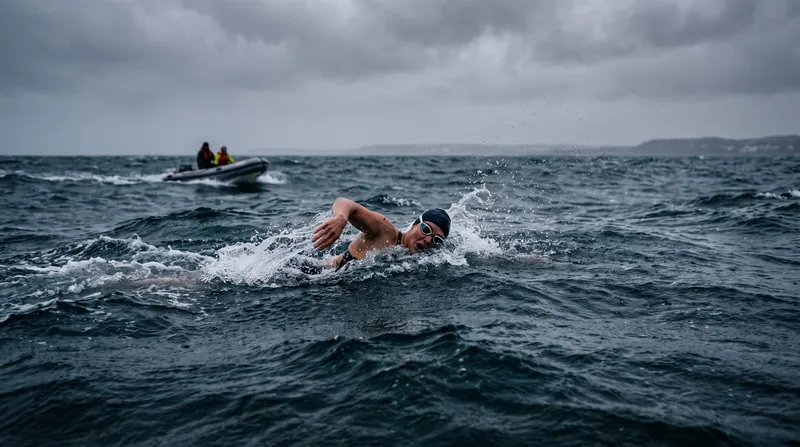
The 3-8mm Spacing: How Invisible Water Vortices Maximize Hand Propulsion in Swimming
7 sources
Swimming Milestones
Japanese Teen Shin Ohashi Shatters 200m Breaststroke World Record, Becoming First Man Under 2:05
4 sources
Trade
College Swimming League Debuts With Ruthless 14-Athlete Roster Cuts
4 sources
Comments
Every angle. Every day.
Get Sports stories with full source coverage and perspective breakdowns, free every day.