
Kate Douglass Shatters Women's 50m Freestyle World Record by Historic Margin
American swimmer Kate Douglass broke the 50-meter freestyle world record twice in one day at the Pan Pacific Championships, dropping the mark to an unprecedented 23.19 seconds.

Share this story
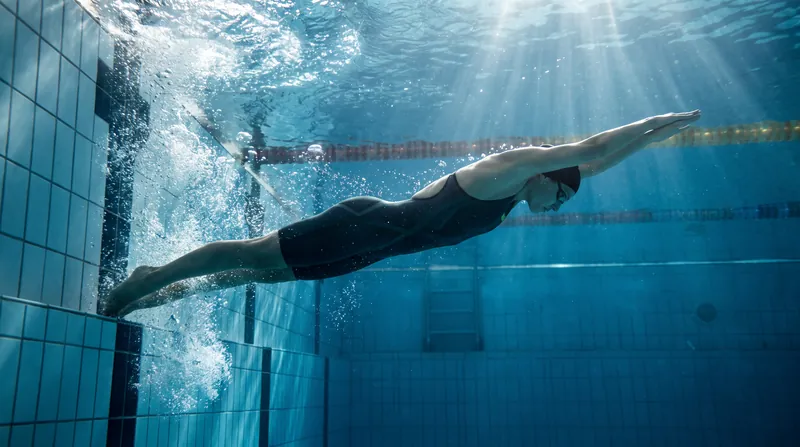
Everyone assumes the 50-meter freestyle is purely about raw, explosive power—a chaotic thrash from wall to wall where the strongest athlete wins. But on Saturday at the 2026 Pan Pacific Championships in Irvine, California, Kate Douglass proved that the ultimate sprint is actually a masterclass in biomechanical efficiency.
In a single day, the 24-year-old American shattered the world record not once, but twice, finalizing the mark at an unthinkable 23.19 seconds. The margin of victory in a 50-meter race is typically measured in hundredths of a second; Douglass dropped the record by three full tenths, a leap that has left the swimming world scrambling to recalculate the limits of human speed.[2]
The progression of the record over the past summer has been a relentless back-and-forth. For nearly nine years, Swedish legend Sarah Sjostrom held the mark at 23.61 seconds. In June, Douglass edged it down to 23.59, only for her University of Virginia training partner Gretchen Walsh to clock 23.55 just nine days later in Rome.[4]
Entering Saturday's preliminary heats, the expectation was another incremental shave. Douglass delivered a 23.49, reclaiming the record and setting up a highly anticipated evening duel with Walsh. But the final was not a duel; it was a solo flight. Douglass touched the wall in 23.19, leaving Walsh to take silver in 23.74.[4]
To understand the magnitude of this swim, you have to look at the math. A 0.30-second drop in a 23-second race represents a 1.28 percent improvement—the largest percentage jump in the event's history since 1988. Furthermore, Douglass's time is now 1.53 percent faster than the second-fastest performer in history, an unprecedented gap in modern sprinting.
For everyday athletes and fitness swimmers, the takeaway is profound: speed is not just effort; it is the absence of drag. Douglass's ability to maintain her stroke rate without sacrificing her catch or body alignment demonstrates that true velocity comes from minimizing resistance, not just maximizing propulsion.
What makes the feat even more staggering is the physical toll of her schedule. Just 25 minutes after her historic 23.19 sprint, Douglass was back on the blocks for the 200-meter breaststroke—a grueling, lactic-acid-inducing event where she still managed to win silver behind Canada's Alexanne Lepage.[2][4]
She then capped off the evening by anchoring the U.S. women's 4x100-meter medley relay to a gold medal. Competing in three high-stakes finals within a two-hour window requires a metabolic engine and recovery capacity that defies conventional training wisdom.[2]
Equipment manufacturers are also noting the role of next-generation gear. Douglass swam all her events in Arena's new Powerskin Veloce suit, which has now been worn in eight of the nine women's world records set in 2026. While the engine is entirely human, the reduction in surface friction is a critical variable at these unprecedented speeds.[3]
Ultimately, Douglass's 23.19 has fundamentally rewritten the blueprint for the 50-meter freestyle. It is a stark reminder that in the pursuit of peak fitness and performance, the ceiling is often much higher than we believe—provided we have the technique to reach it.
Viewpoints in depth
Biomechanical Analysts
Focuses on the unprecedented mathematical margin of the new record.
For statisticians and biomechanics experts, the 23.19-second mark is a statistical anomaly. A 0.30-second drop in a 50-meter sprint represents a 1.28 percent improvement—the largest percentage jump in the event since 1988. Analysts note that Douglass is now 1.53 percent faster than the second-fastest performer in history, a gap that suggests a fundamental leap in how the water is displaced rather than just a marginal increase in physical strength.
Competitive Swimmers & Coaches
Highlights the physical and mental resilience required to execute such a grueling schedule.
Coaches point out that breaking a sprint record is usually the sole focus of an athlete's day, requiring complete neurological freshness. Douglass, however, followed her historic 23.19 sprint by racing the grueling 200-meter breaststroke just 25 minutes later, and then anchored a medley relay. This capacity to clear lactic acid and reset the central nervous system within minutes rewrites conventional expectations for elite meet management.
Sports Technology Developers
Emphasizes the role of next-generation swimwear in reducing surface friction.
Equipment manufacturers highlight that human physiology is only part of the equation at these speeds. Douglass raced in Arena's new Powerskin Veloce suit, which has been worn in eight of the nine women's world records set in 2026. Developers argue that as athletes approach the absolute limits of human power output, the final hundredths of a second are unlocked by advanced hydrophobic fabrics that minimize drag.
Key points
- Kate Douglass broke the women's 50m freestyle world record twice in one day at the 2026 Pan Pacific Championships.
- She lowered the mark to 23.19 seconds, dropping a massive 0.30 seconds off her own preliminary time.
- The new record is 1.53 percent faster than the second-fastest performer in history, an unprecedented gap in modern sprinting.
- Just 25 minutes after her record-breaking sprint, Douglass won silver in the grueling 200m breaststroke.
How we got here
2017–2023
Sweden's Sarah Sjostrom sets and holds the 50m freestyle world record at 23.61 seconds.
June 19, 2026
Kate Douglass breaks the long-standing record with a time of 23.59 seconds in Indianapolis.
June 28, 2026
Gretchen Walsh lowers the record to 23.55 seconds at the Sette Colli Trophy in Rome.
August 15, 2026 (Morning)
Douglass reclaims the record in the Pan Pacific Championship preliminaries with a 23.49.
August 15, 2026 (Evening)
Douglass shatters her own hours-old record, winning the final in 23.19 seconds.
- Biomechanical Analysts
- Focuses on the unprecedented mathematical margin of the new record.
- Competitive Swimmers & Coaches
- Highlights the physical and mental resilience required to execute such a grueling schedule.
- Sports Technology Developers
- Emphasizes the role of next-generation swimwear in reducing surface friction.
Perspectives this story doesn't cover
- International Competitors
- Sports Physiologists
Sources
Source coverage
4 outlets
3 viewpoints surfaced




- [1]Virginia SportsCompetitive Swimmers & Coaches
Kate Douglass Breaks 50m Free World Record Twice on Saturday
Read on Virginia Sports → - [2]NBC SportsCompetitive Swimmers & Coaches
Kate Douglass breaks 50m freestyle world record twice in one day, three medals in 2-hour span
Read on NBC Sports → - [3]Business WireSports Technology Developers
Kate Douglass breaks the world record in the women's 50-freestyle twice in a single day
Read on Business Wire → - [4]The GuardianCompetitive Swimmers & Coaches
Kate Douglass lowered her own world record in the women's 50m freestyle for the second time in one day
Read on The Guardian →
More in Fitness
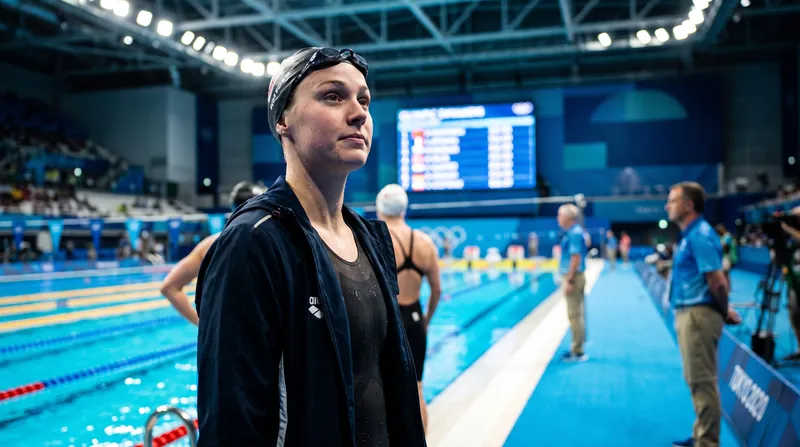
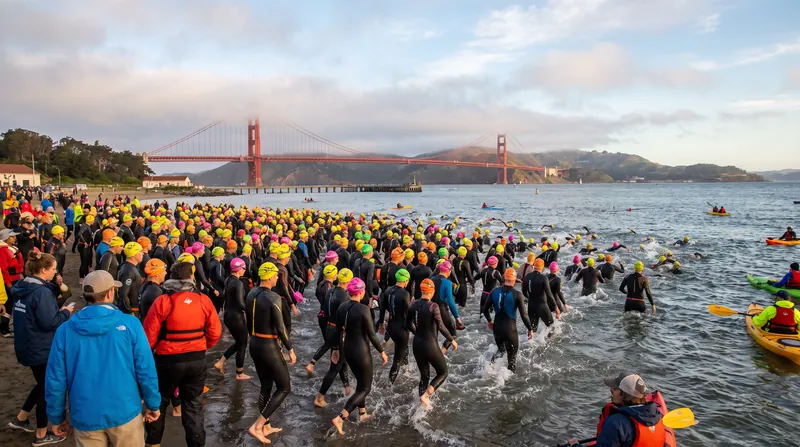
See all →Pediatric Cancer
Swim Across America's San Francisco Event Raises $7 Million for Pediatric Cancer Research
5 sources
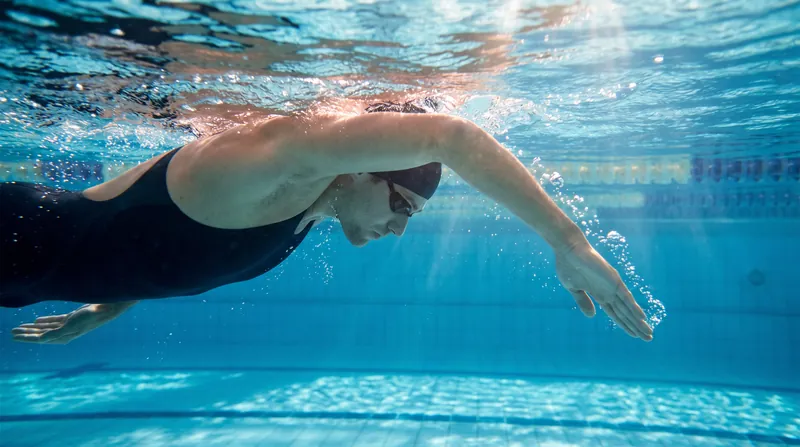
Swimming Biomechanics
The Hydrodynamic Catch: How Lift Forces and Vortex Shedding Propel Elite Freestyle Swimmers
5 sources
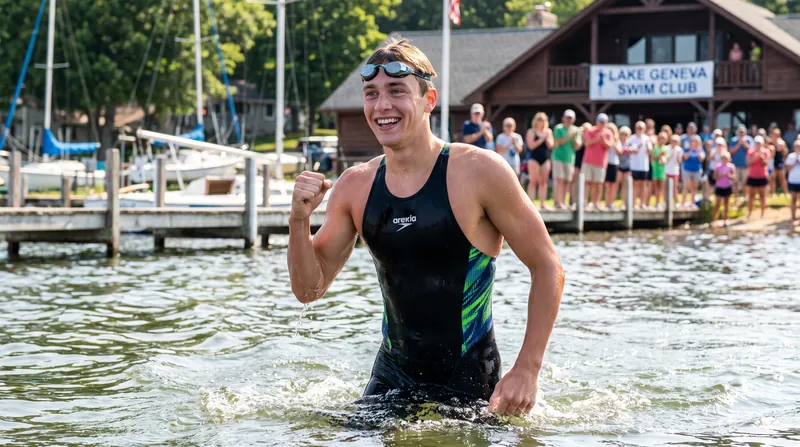
Junior Open Water
Russia Sweeps 5km Events as Junior Open Water World Championships Conclude in Santa Fe
4 sources
Fluid Dynamics
Water Resistance vs. Propulsion: Why Posture Outperforms Power in the Pool
10 sources
Comments
Every angle. Every day.
Get Fitness stories with full source coverage and perspective breakdowns, free every day.