
How Flour Bleaching Lowers Dough pH to Inhibit Maillard Browning in Baked Goods
Chlorine gas treatments drop the natural pH of flour from 6.0 to a highly acidic 4.5, fundamentally stalling the chemical cascade that creates a dark, caramelized crust. Unbleached flour maintains a higher baseline pH, allowing the Maillard reaction to proceed unhindered.
By Irina Belova

Share this story
In short
- Chlorine gas treatment lowers the natural pH of flour from approximately 6.0 down to a highly acidic 4.5.
- The Maillard browning reaction stalls in acidic environments because low pH protonates amino groups, blocking glycosylamine production.
- Unbleached flour maintains a higher baseline pH, allowing reducing sugars and amino acids to rapidly form the melanoidins that create a dark crust.
Commercial pastry chefs argue that heavily chlorinated cake flour is essential for a soft, pristine crumb that resists over-browning during long bakes. Artisan bread bakers counter that unbleached flour is the only way to achieve a deeply caramelized, flavorful crust, dismissing bleached flour as chemically neutered.
Both camps are observing the exact same chemical mechanism from opposite ends of the pH scale. The stark difference in crust color does not originate from the oven temperature or the baking time, but rather from the flour's baseline acidity.
The Maillard reaction—the complex cascade of amino acids and reducing sugars that creates golden-brown pigments and roasted flavors—is highly sensitive to its chemical environment. It accelerates rapidly in alkaline conditions and stalls almost completely in acidic ones.
Unbleached flour naturally hovers around a pH of 6.0, providing a relatively neutral baseline that allows browning to proceed unhindered. When flour is chemically bleached, that baseline plummets, fundamentally altering how the dough reacts to thermal energy.
The Acidic Bleaching Threshold
To produce the stark white color and fine texture demanded by high-ratio cakes, commercial mills treat flour with chlorine gas. This process oxidizes the starches and weakens the glutenin proteins, but it also acts as a severe acidifying modifier.
"Chlorine lowers the pH of the flour from roughly 6.0 down to 4.5," notes a 2026 technical brief from Corporate Wire Press. This controlled acidification damages the proteins while simultaneously allowing the starch granules to absorb moisture and liquid fat more rapidly.[1]
That steep drop to a pH of 4.5 crosses a critical chemical boundary. In this highly acidic environment, the amino groups within the flour's proteins become protonated, which effectively blocks the initial stages of glycosylamine production.[4]
Without that crucial first step, the entire Maillard cascade stalls. The dough can sit in a hot oven for an extended period, yet it will emerge with a pale, anemic crust because the acidic bleaching threshold has shut down the browning engine.[1][4]
Buffering the Browning Reaction
Unbleached flour, by contrast, retains its natural pH of approximately 6.0. While this is still slightly acidic, it remains far above the restrictive 4.5 threshold created by chlorine gas treatment, preserving the chemical potential for caramelization.
Because alkaline circumstances in food favor the Maillard reaction, a pH in the range of 7.8 to 9.2 is ideal for the process to take place at maximum efficiency. Unbleached flour's higher baseline keeps the dough much closer to this optimal window.[4]
This buffering capacity means that as the dough heats up, the available reducing sugars and free amino acids can freely condense and polymerize. The reaction pathways are synergistically regulated by this higher pH, allowing dark melanoidins to form rapidly.[5]
"The lower pH [of bleached flour] inhibits Maillard browning reactions, preventing the cake from getting too crusty and keeping the flavors subtle," explains a 2017 food science analysis from Kosher.com. Unbleached flour does the exact opposite, actively encouraging crust development.[3]
Heat, Hydration, and Caramelization
The Maillard reaction typically requires temperatures above 140 degrees Celsius (285 degrees Fahrenheit) to initiate in earnest. However, the rate of this reaction is entirely dependent on the dough's internal chemistry at the moment the intense heat is applied.[2]
Higher temperatures significantly speed up the Maillard reaction, with every 10-degree Celsius increase possessing the potential to double or triple the reaction rate. Yet, if the flour is heavily chlorinated, even a blistering oven will struggle to force a dark crust.[2]
Moisture content also plays a pivotal role in this thermal equation. Bleached flour's oxidized starches absorb water rapidly, which can dilute the reactants and keep the surface temperature artificially low as the moisture evaporates.[1][2]
Unbleached flour absorbs water less aggressively, allowing the surface of the dough to dry out just enough to exceed the boiling point of water. Once the surface moisture is gone, the temperature spikes, and the unhindered Maillard reaction takes over.[2]
Choosing the Right Chemical Profile
Understanding this pH dynamic allows bakers to manipulate their ingredients for specific structural outcomes. When baking a delicate chiffon or angel food cake, the retardation of browning provided by bleached flour is a deliberate, necessary choice.[3]
The acidic environment slows the rate of starch gelatinization, giving the cake batter more time to rise without the fragile air bubbles bursting. The resulting pale crust is a functional trade-off for achieving a towering, feather-light crumb.[3]
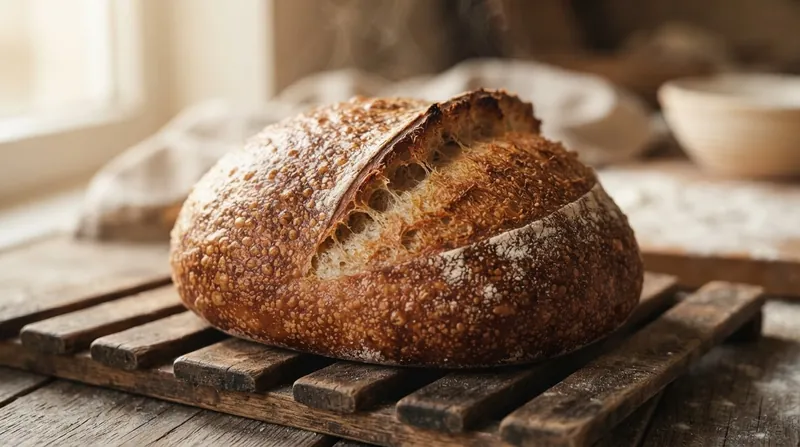
Conversely, artisan bread relies entirely on the robust browning enabled by unbleached flour. The complex flavors of a rustic sourdough loaf—which already battles a low pH from lactic acid fermentation—would be impossible to achieve if the flour itself were chemically acidified.
"Alkaline conditions speed up the Maillard reaction, while acidic conditions slow it down," summarizes Bake With Yen's 2025 technical guide. This fundamental rule dictates why pretzel dough is dipped in alkaline lye, and why bleached flour is banished from the bread bakery.[2]
Moving Beyond Chlorine Gas
The stark functional differences between these flours have prompted a shift in commercial milling. With chlorine gas facing regulatory scrutiny in several global markets, mills are searching for alternative treatments that can replicate the pH drop without the chemical baggage.
Agents like acetone peroxide and benzoyl peroxide are increasingly utilized to whiten flour, but they do not replicate the severe acidification of chlorine gas. Consequently, they do not inhibit Maillard browning to the same extreme degree as traditional chlorination.[6][7]
As the industry evolves, the choice between bleached and unbleached flour remains a choice between chemical environments. By understanding how pH governs the Maillard reaction, bakers can stop fighting their ingredients and start leveraging them for precise results.
The color of the crust is written into the flour long before the dough ever meets the oven. Whether a pastry chef is aiming for a pristine white cake or a baker wants a deeply roasted loaf, the acidic bleaching threshold remains the invisible hand guiding the bake.
How we did this
- Method
- Comparing the pH levels of chlorinated bleached flour against unbleached flour to derive the chemical mechanism that governs crust browning rates.
- What we found
- Because the Maillard reaction requires alkaline conditions to accelerate, the 1.5-point pH drop caused by chlorine bleaching actively inhibits browning, meaning unbleached flour's higher natural pH is what allows baked goods to achieve a dark crust.
- What we worked from
- Unbleached flour baseline pH: 6.0 — Corporate Wire Press
- Chlorinated cake flour pH: 4.5 — Corporate Wire Press
- Maillard reaction optimal pH range: 7.8 to 9.2 — Kattu Food Tech
- Limits of this analysis
- This analysis isolates pH as the primary variable, though protein content and available reducing sugars also influence browning rates.
Definitions
- Maillard Reaction
- A heat-driven chemical cascade between amino acids and reducing sugars that produces brown pigments and complex roasted flavors.
- Acidic Bleaching Threshold
- The specific pH level (around 4.5) reached during chlorine gas treatment where flour becomes too acidic to support robust browning.
- Protonation
- The addition of a proton to an amino group in an acidic environment, which chemically blocks it from participating in the browning process.
- Melanoidins
- The complex, dark-colored polymeric compounds formed during the final stages of the Maillard reaction that give baked goods their crust color.
- Starch Gelatinization
- The process where starch granules absorb water and swell when heated, which is slowed down by the acidic pH of bleached flour.
Questions & answers
Can I substitute unbleached flour for bleached flour in a cake recipe?
Substituting unbleached flour will raise the batter's pH, which accelerates browning and speeds up starch gelatinization. This often results in a darker, denser cake that may collapse during baking.
Why do pretzels get so dark in the oven compared to normal bread?
Pretzel dough is dipped in an alkaline lye solution before baking, which drastically raises the surface pH. This highly alkaline environment hyper-accelerates the Maillard reaction.
Do other bleaching agents like benzoyl peroxide lower the pH as much as chlorine?
No, alternative bleaching agents primarily target color pigments without causing the severe acidification associated with chlorine gas. They do not inhibit browning to the same extreme degree.
Does the oven temperature matter if the flour is heavily bleached?
While higher temperatures generally speed up browning, the severe acidity of chlorinated flour fundamentally blocks the chemical pathways. Even a very hot oven will struggle to produce a dark crust on a highly acidic dough.
Analysis by camp
Commercial Pastry Chefs
Advocates for the structural and aesthetic control provided by chemically acidified flour.
For high-volume cake production, the retardation of the Maillard reaction is a feature, not a bug. Commercial bakers rely on the 4.5 pH of chlorinated flour to slow starch gelatinization, which allows delicate batters to achieve maximum volume without the air structure collapsing. The acidic environment also prevents the exterior from browning before the interior is fully baked, ensuring the pristine, uniform appearance expected in wedding cakes and high-ratio sponges.
Artisan Bread Bakers
Champions of unbleached flour for its ability to maximize flavor development and crust caramelization.
The artisan bread community views the Maillard reaction as the primary engine of flavor. Because traditional sourdough fermentation already introduces lactic and acetic acids that lower the dough's pH, starting with a chemically acidified flour would completely stall crust development. These bakers rely on the natural 6.0 pH of unbleached flour to buffer the dough, ensuring that enough alkaline potential remains to produce a deeply roasted, mahogany crust.
Food Scientists
Researchers focused on the precise chemical mechanisms that govern thermal reactions in baking.
From a biochemical perspective, the debate is entirely about protonation. Food scientists note that the amino groups required for the Maillard reaction become protonated and unreactive in highly acidic environments. They view flour bleaching not just as a color treatment, but as a fundamental alteration of the ingredient's thermal kinetics, shifting the dough out of the 7.8 to 9.2 pH window where browning thrives.
- Commercial Pastry Chefs
- Advocates for the structural and aesthetic control provided by chemically acidified flour.
- Artisan Bread Bakers
- Champions of unbleached flour for its ability to maximize flavor development and crust caramelization.
- Food Scientists
- Researchers focused on the precise chemical mechanisms that govern thermal reactions in baking.
Perspectives this story doesn't cover
- Home bakers who unknowingly substitute bleached for unbleached flour and experience recipe failures.
- Regulatory bodies evaluating the safety and necessity of chlorine gas treatments in food production.
Sources
Source coverage
8 outlets
3 viewpoints surfaced








- [1]Corporate Wire PressCommercial Pastry Chefs
Culinary Decision Guide: When to Choose Bleached vs. Unbleached
Read on Corporate Wire Press → - [2]Bake With YenArtisan Bread Bakers
What Is the Maillard Reaction?
Read on Bake With Yen → - [3]Kosher.comCommercial Pastry Chefs
Recipe Testing and Food Science
Read on Kosher.com → - [4]Kattu Food TechFood Scientists
Food Science: Maillard Browning Reaction
Read on Kattu Food Tech → - [5]NIHFood Scientists
Maillard Reaction Process and Influencing Factors in Flour Product Processing
Read on NIH → - [6]ASBEFood Scientists
Commercial Baking Ingredients: Flour Bleaching
Read on ASBE → - [7]Agriculture InstituteFood Scientists
Comparing the three agents: which does what best
Read on Agriculture Institute → - [8]Factlen Editorial Team
Synthesis by Factlen editorial team
Read on Factlen Editorial Team →
More in Food & Drink
See all →Food Science
Why Pastry Lamination Requires a Strict 14°C to 18°C Window to Prevent Butter Shattering
3 sources
Baking Science
Why Rye Bread Requires Sourdough to Prevent a Gummy Crumb
3 sources
Baking Science
The Physics of Creaming: Why Baking Powder Cannot Create New Bubbles
6 sources
Baking Science
Steam Condensation Delays Crust Setting to Maximize Oven Spring and Gelatinize Starches
6 sources
Comments
Every angle. Every day.
Get Food & Drink stories with full source coverage and perspective breakdowns, free every day.