
Historic European Wildfires Generate Rare Pyrocumulonimbus Storms Over Spain and France
Massive wildfires in southwestern Europe have forced the evacuation of over 375,000 people and generated rare fire-driven thunderstorms that complicate containment efforts.
By Layla Zaher

Share this story
In the Gironde department of southwestern France, a single wildfire has consumed 42,000 hectares of intensively managed maritime pine forest, generating a towering pyrocumulonimbus cloud that pushed ash and volatile gases into the upper troposphere. The blaze, which originated near the Atlantic coast before spreading rapidly inland, marks the first time such a fire-driven thunderstorm has been officially recorded in France.
Across the border in Spain, a concurrent fire in the province of Ávila has scorched 50,000 hectares, becoming the largest single wildfire in the country's observational history. Together, these extreme fire events have forced the evacuation of more than 375,000 residents and tourists across the two nations, overwhelming local emergency services and requiring the deployment of thousands of firefighters and military personnel.[1][2][3][4]
The emergence of pyrocumulonimbus clouds—often referred to as pyroCbs—represents a critical escalation in fire behavior. When a wildfire releases massive amounts of thermal energy, the air near the ground heats up and rises rapidly in a strong convective current.
If the fire is sufficiently large, this smoke plume can reach altitudes of 10 to 15 kilometers, where low atmospheric pressure causes the air to cool and moisture to condense into a gigantic storm cloud. These systems effectively create their own localized weather, generating erratic wind gusts that fan the flames and dry lightning strikes that can ignite secondary fires miles ahead of the main front.[4][5]
For emergency responders, the formation of a fire cloud transforms a manageable blaze into a highly unpredictable system. The powerful updrafts inhale huge volumes of fresh air from the surrounding environment, oxygenating the fire and accelerating its spread through the forest canopy.
In Gironde, the dense plantations of maritime pine provided a continuous fuel structure of needle-leaf litter and volatile oils, allowing the fire to propagate at exceptional speeds. French officials described the resulting firestorm as a phenomenon that pushed the crisis into a new dimension, rendering traditional containment strategies temporarily ineffective and forcing crews to adopt defensive postures to protect civilian life.[1][2][5]
The underlying conditions that enabled these catastrophic fires were established months before the first ignition. According to researchers tracking the events, the region experienced a sequence of compounding weather anomalies. An unusually wet winter and spring fostered thick vegetation growth across grasslands and forest understories.
This period of rapid biomass accumulation was immediately followed by successive summer heatwaves and a severe, prolonged drought that baked the vegetation dry, turning the landscape into explosive fuel. When sustained winds reaching 65 kilometers per hour swept through the region in mid-July, the environment was primed for rapid fire expansion.[1][4]
The downstream consequences of the fires extend far beyond the immediate burn zones. The massive release of particulate matter and toxic gases has triggered air pollution emergencies across southwestern Europe. In Bordeaux, located just kilometers from the Gironde fire, particulate concentrations exceeded acceptable air quality levels by a factor of 20, forcing residents to remain indoors.
The smoke plumes, visible from space, have drifted hundreds of kilometers across regional borders, carrying formaldehyde and soot into neighboring municipalities. Critical infrastructure has also been compromised, with major rail links between Madrid and Galicia facing disruptions due to encroaching flames and intense heat.[1][7]
Political leaders have explicitly linked the severity of the current fire season to broader systemic shifts in the global climate. Speaking from an advance firefighters' command post west of Madrid, Spanish Prime Minister Pedro Sánchez warned that the entire Iberian Peninsula is suffering the direct effects of the climate emergency.
He noted that the scientific forecasts regarding extreme weather are being surpassed year after year, necessitating a fundamental reassessment of national preparedness. In response, Spain has introduced a new Forest Fire Danger Index that integrates real-time weather data with satellite observations of soil moisture and land use to better predict ignition risks.[2][3][7]
Scientific analyses support the political assessments. The World Weather Attribution initiative, which models the impact of global warming on extreme weather events, concluded that human-caused climate change has significantly increased the likelihood of the hot and dry antecedent conditions that fueled the blazes. Their data indicates that the extreme fire weather observed in France and Spain is becoming increasingly common as global temperatures rise. The combination of expanding wildland-urban interfaces and shifting climate baselines means that European nations are facing a structural increase in wildfire exposure.[1][6]
While shifting winds and intensive aerial water drops have allowed firefighters to establish control lines around the perimeters of the Ávila and Gironde blazes, the broader threat remains acute. Authorities have begun lifting some evacuation orders, permitting residents to return to areas where the immediate danger has passed.
However, meteorological agencies warn that persistent high temperatures and a lack of significant rainfall will keep the landscape highly combustible through the remainder of the summer. As emergency services transition from active suppression to monitoring and recovery, forestry engineers are calling for systemic changes in land management and vegetation clearance to mitigate the risk of future pyrocumulonimbus events.[1][2][3]
Key points
- A massive wildfire in France's Gironde region generated a rare pyrocumulonimbus cloud, the first ever recorded in the country.
- In Spain, the Ávila fire scorched 50,000 hectares, becoming the largest single wildfire in the nation's observational history.
- The extreme fire behavior forced the evacuation of over 375,000 people across both countries.
- The blazes were fueled by a sequence of a wet winter that spurred vegetation growth, followed by severe summer drought.
Timeline
Winter 2025–2026
Unusually high rainfall across southwestern Europe spurs dense vegetation growth in forests and grasslands.
June–July 2026
Successive severe heatwaves and a prolonged drought bake the accumulated vegetation, turning it into explosive fuel.
Mid-July 2026
Fires ignite across France and Spain, rapidly expanding under 65 km/h winds and generating rare pyrocumulonimbus clouds.
- Climate Scientists & Meteorologists
- Argue that the extreme fire behavior is a direct consequence of human-caused climate change altering baseline weather patterns.
- Emergency Responders
- Focus on the immediate tactical challenges posed by fire-generated weather systems and the need for advanced predictive tools.
- National Leadership
- Emphasize the need for systemic adaptation, updated land management policies, and national resilience in the face of a climate emergency.
Perspectives this story doesn't cover
- Local residents and displaced evacuees facing property loss
- Forestry and timber industry representatives managing the pine plantations
Sources
Source coverage
7 outlets
3 viewpoints surfaced







- [1]World Weather AttributionClimate Scientists & Meteorologists
Climate change increases likelihood of compounding drivers of severe wildfire conditions in France and Spain
Read on World Weather Attribution → - [2]TIMEEmergency Responders
Ferocious wildfires in France and Spain have prompted the evacuation of hundreds of thousands
Read on TIME → - [3]The GuardianNational Leadership
Pedro Sánchez says Spain is suffering effects of climate crisis as firefighters battle wildfires in France
Read on The Guardian → - [4]ScienceDailyClimate Scientists & Meteorologists
Europe's wildfires became so intense they created their own storm
Read on ScienceDaily → - [5]South China Morning PostEmergency Responders
France firestorm phenomenon: monster clouds spawn lightning and new blazes
Read on South China Morning Post → - [6]The EcologistNational Leadership
Europe's extreme fires will only worsen unless we act with force
Read on The Ecologist → - [7]Irish ExaminerNational Leadership
Pedro Sánchez says Spain is suffering effects of climate crisis as firefighters battle wildfires in France
Read on Irish Examiner →
More in Environment
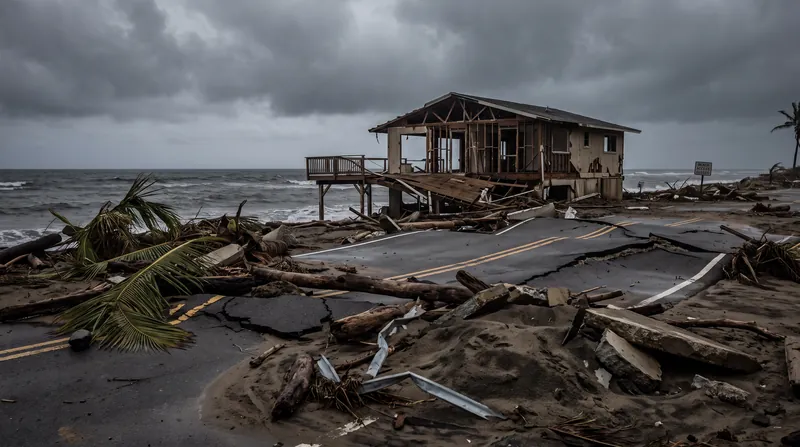
See all →Hurricane Watch
Atlantic Hurricane Season Sets Modern Record for Latest First Hurricane
2 sources
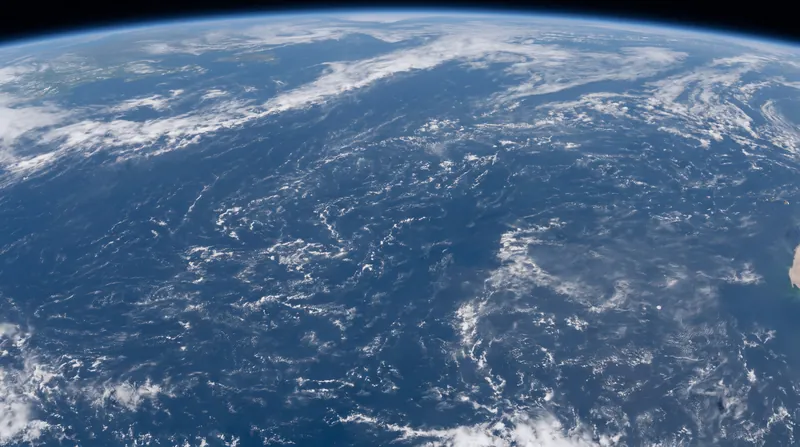
Volcanic Alert
Mount Semeru Erupts Three Times as Heavy Rains Trigger Dangerous Lahar Threats in East Java
5 sources
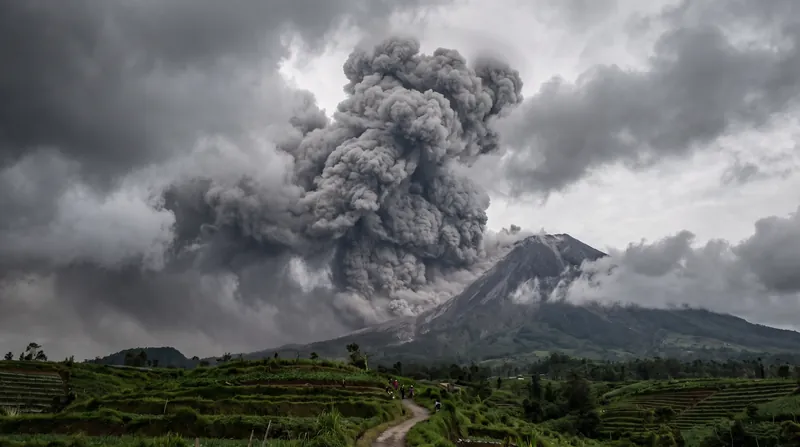
Adriatic Wildfires
Brac Island Wildfire Burns 5,600 Hectares, Forces 700 Evacuations in Croatia
5 sources
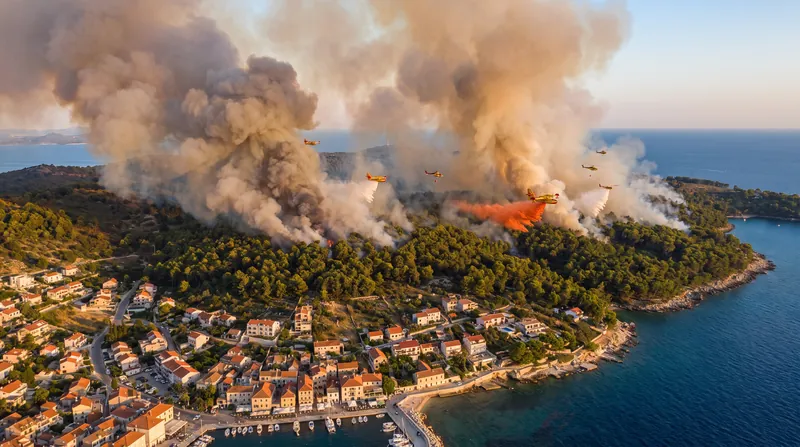
Maritime Safety
Over 130 Missing After Indonesian Ferry Capsizes in Java Sea Storm
4 sources
Comments
Every angle. Every day.
Get Environment stories with full source coverage and perspective breakdowns, free every day.