
Harvard Study Finds Exercise Variety, Not Just Volume, Is Key to Significant Longevity Gains
A 30-year study of over 111,000 adults reveals that mixing up your workouts with five or more distinct activities lowers mortality risk by 19%, independent of total exercise time.

Share this story
For decades, the gold standard of public health messaging has been anchored to a simple, rigid mathematical equation: accumulate exactly 150 minutes of moderate-intensity exercise each week. Fitness trackers, smartwatches, and smartphone health apps have gamified this pursuit, effectively reducing the complex spectrum of human movement to a daily tally of steps, closing rings, and active minutes.
This volume-centric approach successfully motivated millions to get off the couch, but it inadvertently created a culture of single-modality exercisers—people who find one activity they tolerate, like jogging or cycling, and repeat it endlessly to hit their weekly quota.
But a growing body of evidence suggests that treating exercise purely as a volume-based quota misses a critical dimension of human physiology and longevity. A landmark study from the Harvard T.H. Chan School of Public Health reveals that the variety of your physical activities may be just as important as the total duration of your workouts for extending your lifespan. The findings suggest that the human body thrives not just on the amount of stress it endures, but on the diversity of the physical challenges it encounters.[1][2]
Published in the journal BMJ Medicine, the research fundamentally challenges the conventional wisdom that finding one workout you love and sticking to it is the optimal path to long-term health. Instead, the data indicates that individuals who spread their physical energy across multiple different types of movement—from weightlifting and walking to yoga and tennis—reap profound longevity benefits that single-modality exercisers completely miss. This paradigm shift moves the fitness conversation from simply asking "how much did you move?" to the equally important question of "how many different ways did you move?"[2]
To reach these conclusions, researchers leveraged two of the most comprehensive and respected longitudinal health databases in the world: the Nurses' Health Study and the Health Professionals Follow-Up Study. The team analyzed detailed health and lifestyle data from more than 111,000 adult men and women, meticulously tracking their exercise habits, medical histories, and health outcomes over a span of more than 30 years. This massive, decades-long observation window allowed scientists to filter out short-term fitness fads and isolate the lifelong habits that genuinely move the needle on human mortality.[1][2]
Throughout the three-decade study, participants routinely completed detailed surveys detailing the exact amount of time they spent on various physical activities. The researchers cast a wide net, tracking a broad spectrum of movement that went far beyond traditional gym workouts.
The tracked activities included jogging, bicycling, lap swimming, racquet sports, and weight training, but also encompassed lower-intensity practices like yoga and stretching, as well as functional, everyday tasks like heavy gardening, yard work, and climbing stairs. By capturing this wide array of movements, the study acknowledged that fitness is built in the garden and on the yoga mat just as much as it is on the treadmill.
The core finding of the data analysis was striking: participants who engaged in the highest variety of exercises—defined by the researchers as participating in five or more distinct activities per week—demonstrated a 19 percent lower risk of premature death compared to those who stuck to just one or two activities. This dose-dependent relationship showed a clear trend: as the variety of movement increased, the risk of all-cause mortality steadily dropped, painting a compelling picture of the protective power of diverse physical exertion.[1][2]
Crucially, this longevity benefit was found to be entirely independent of the total time spent exercising. The 19 percent reduction in all-cause mortality held true across every single level of physical activity measured in the cohort.
In practical terms, this means that someone who splits four hours of weekly exercise across walking, lifting weights, practicing yoga, and playing tennis will likely outlive someone who spends those exact same four hours exclusively grinding away on an elliptical machine. Variety is not a substitute for volume, but a powerful multiplier of its benefits.[1]
When the research team broke down the mortality data by specific underlying causes, the protective effects of exercise variety became even more pronounced and specific. The highest-variety group saw a 17 percent lower risk of cardiovascular mortality and a 13 percent reduction in cancer-related deaths. Most surprisingly, the data revealed a staggering 41 percent drop in respiratory disease mortality among those who mixed up their routines the most, suggesting that varied movement patterns may uniquely condition the lungs and respiratory muscles against age-related decline.[3]
The physiological mechanisms behind these impressive numbers are deeply rooted in how the human body adapts to physical stress. Exercise physiologists note that engaging in a diverse range of activities exposes the body to entirely different metabolic and neuromuscular demands. When you perform the same exercise every day, your body becomes highly efficient at that specific movement, eventually burning fewer calories and triggering fewer adaptive responses. Cross-training forces the nervous system to constantly learn and adapt, keeping the brain-muscle connection sharp and responsive.
"Habitually doing a mix of different activities may provide physical and mental benefits through multiple pathways," explains Han Han, the study's lead author and a postdoctoral research fellow at the Harvard T.H. Chan School of Public Health.
A single type of exercise, no matter how intense or grueling, only trains specific energy systems and muscle groups while leaving others completely dormant and vulnerable to atrophy over time. By varying the stimulus, individuals ensure that their cardiovascular system, fast-twitch muscle fibers, and slow-twitch muscle fibers all receive adequate conditioning, creating a more robust and globally capable physical foundation.
For example, a dedicated marathon runner may build exceptional cardiovascular endurance and lower-body stamina, but completely neglect the upper-body strength and lateral agility required for long-term functional independence. Conversely, a pure weightlifter might develop profound muscular strength and bone density, but lack the aerobic capacity necessary for optimal heart health and cellular respiration. The Harvard data suggests that the body penalizes these extreme specializations as we age, rewarding generalists who maintain a baseline of competence across multiple physical domains.[3]
This realization is driving the emergence of what experts call the "fitness portfolio." Just as financial advisors strongly recommend diversifying investments to mitigate risk and capture broad market gains, fitness experts now advocate for diversifying movement to build comprehensive physical resilience.
A properly balanced fitness portfolio includes aerobic work to strengthen the heart, resistance training to prevent age-related muscle loss (known as sarcopenia), and flexibility work to maintain joint health and range of motion. Treating exercise as a portfolio ensures that if an injury or lifestyle change temporarily removes one activity from your routine, your overall physical health does not immediately crash, because other movement habits are already firmly established.[3]
Within this portfolio, the inclusion of lower-intensity, mobility-focused practices like yoga and stretching proved to be particularly complementary to higher-intensity work. While heavy lifting and vigorous cardio inherently break down muscle tissue and stress the central nervous system to stimulate growth, yoga and mobility work serve to enhance joint range of motion, improve proprioception, and down-regulate the nervous system. This active recovery reduces the risk of the chronic overuse injuries that frequently sideline single-modality athletes, allowing for greater consistency over a lifespan.
Specific activities also demonstrated unique protective profiles within the broader context of the fitness portfolio. Walking emerged as a universal, highly accessible foundation, linked to a 17 percent lower all-cause mortality risk when performed consistently.
Meanwhile, racquet sports like tennis and squash offered a 15 percent reduction in mortality, a benefit researchers attribute to the unique combination of high-intensity cardiovascular intervals, complex lateral agility, and the cognitive and social engagement required to play against an opponent. Weight training, while offering slightly lower cardiovascular benefits, provided a crucial 13 percent reduction in mortality by preserving the lean muscle mass that prevents frailty and falls in later decades.[1]
"It's probably better to spread the limited energy on multiple physical activities instead of sticking to a single high-intensity one," notes Yang Hu, a research scientist at Harvard's department of nutrition and a co-author of the study.
This diversified approach actively prevents the "single-track lock-in" that can lead to physical plateaus, repetitive strain injuries, and the mental burnout that causes so many adults to abandon their fitness routines entirely. By keeping workouts fresh and varied, individuals are far more likely to sustain their exercise habits across the decades, which is the ultimate prerequisite for longevity.[4]
Despite the robust sample size and the impressive three-decade tracking period, the researchers acknowledge certain limitations to their findings. Because the longitudinal data relies heavily on self-reported surveys administered every two years, it is entirely possible that participants overestimated their weekly exercise volume or inaccurately categorized the variety of their activities. Human memory is notoriously optimistic when it comes to recalling healthy behaviors. Additionally, the specific intensity of each reported activity could vary wildly between individuals, adding a layer of subjectivity to the raw data.
Furthermore, because this is an observational cohort study rather than a randomized controlled trial, the research can identify incredibly strong correlations but cannot definitively prove that exercise variety directly causes the reduction in mortality.
It is highly plausible that individuals who have the time, resources, and physical ability to engage in a wide variety of exercises—like tennis, swimming, and yoga—also possess other unmeasured health advantages, better diets, or higher socioeconomic status that contribute to their extended lifespans. "The findings should be interpreted cautiously," warns Duck-chul Lee, an exercise researcher, noting that clinical trials would be required to establish a pure causal link.
Nevertheless, the sheer scale of the data and the dose-dependent nature of the findings—where more variety consistently and reliably correlated with better health outcomes—make a compelling case for fundamentally rethinking how we move. The findings strongly suggest that global public health guidelines should evolve beyond simple minute-counting to explicitly emphasize movement diversity.
Telling the public to simply "move more" is no longer sufficient; the message must evolve to "move in more ways." This shift could democratize fitness, validating the efforts of people who prefer a mix of gardening, walking, and light stretching over grueling gym sessions.[1][2]
For the average person looking to optimize their health, the takeaway from Harvard is highly actionable and deeply encouraging. You do not need to become an elite decathlete or spend hours in a specialized gym to reap these longevity benefits.
For the average person looking to optimize their health, the takeaway from Harvard is highly actionable and deeply encouraging.
Simply adding a weekly yoga class to an existing running routine, or swapping one day of neighborhood walking for a session of resistance band training in your living room, can fundamentally alter your body's aging trajectory. The goal is simply to introduce novel stimuli to the body, forcing the muscles and nervous system to adapt to new angles, loads, and speeds.
Ultimately, the Harvard study reframes exercise not as a monotonous, mathematical chore to be endured, but as a diverse menu of physical experiences to be sampled and enjoyed.
By treating movement like a varied, nutrient-dense diet—rich in different stresses, speeds, and ranges of motion—we can build bodies that are not just fit for a specific sport, but broadly resilient enough to handle the unpredictable physical demands of a long, active life. Variety, it turns out, is not just the spice of life; it is a fundamental biological requirement for extending it.[3]
Key points
- A 30-year Harvard study of 111,000 adults found that engaging in a wide variety of exercises significantly extends lifespan.
- Participants who performed five or more distinct activities per week had a 19% lower risk of premature death.
- The longevity benefits of variety hold true regardless of the total amount of time spent exercising.
- Mixing activities exposes the body to different metabolic demands, preventing overuse injuries and building comprehensive resilience.
What we don’t know
- Because the study relied on self-reported surveys, it is unclear if participants accurately estimated the exact duration and intensity of their varied activities.
- Researchers have not yet determined the precise, optimal ratio of different exercise types (e.g., exactly how much yoga versus weightlifting) to maximize the longevity benefit.
- It remains to be seen if the longevity benefits of exercise variety apply equally to individuals with pre-existing chronic conditions, as the baseline cohort consisted of healthy adults.
How we got here
1986
The Nurses' Health Study and Health Professionals Follow-Up Study begin collecting long-term lifestyle data from over 111,000 adults.
2008
The US government issues formal physical activity guidelines, heavily emphasizing the volume metric of 150 minutes of moderate aerobic exercise per week.
2018
Updated federal guidelines begin to place stronger emphasis on adding muscle-strengthening activities at least twice a week.
Jan 2026
Harvard researchers publish findings in BMJ Medicine revealing that the variety of exercise types is an independent predictor of longevity.
- Public Health Researchers
- Advocating for a shift in public health messaging from purely volume-based metrics to movement diversity.
- Fitness & Performance Experts
- Focusing on the biomechanical and metabolic advantages of cross-training.
- Healthy Aging Advocates
- Highlighting the accessibility and joint-preserving benefits of varied movement for older adults.
Perspectives this story doesn't cover
- Individuals with physical disabilities or mobility limitations who may struggle to achieve high exercise variety.
- Low-income populations who lack access to the facilities or equipment required for diverse activities like racquet sports or swimming.
Sources
Source coverage
4 outlets
3 viewpoints surfaced




- [1]Harvard T.H. Chan School of Public HealthPublic Health Researchers
Exercise variety—not just amount—linked to lower risk of premature mortality
Read on Harvard T.H. Chan School of Public Health → - [2]BMJ MedicinePublic Health Researchers
Physical activity types, variety, and mortality: results from two prospective cohort studies
Read on BMJ Medicine → - [3]Fitt InsiderFitness & Performance Experts
Exercise Variety Predicts Longevity
Read on Fitt Insider → - [4]MedicalResearch.comPublic Health Researchers
Harvard T.H. Chan School Finds Varying Physical Activities Better for Longevity
Read on MedicalResearch.com →

More in Fitness
See all →Yoga Biomechanics
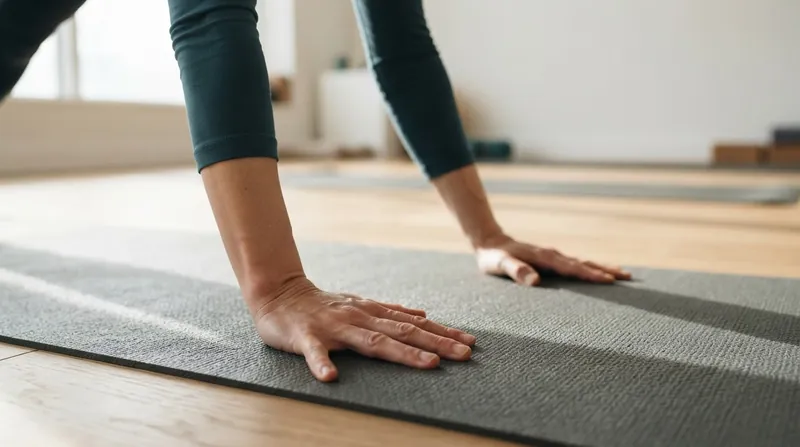
Axial Loading at 90 Degrees of Wrist Extension Drives Dorsal Radiocarpal Impingement in Downward Dog
2 sources
Shoulder Biomechanics
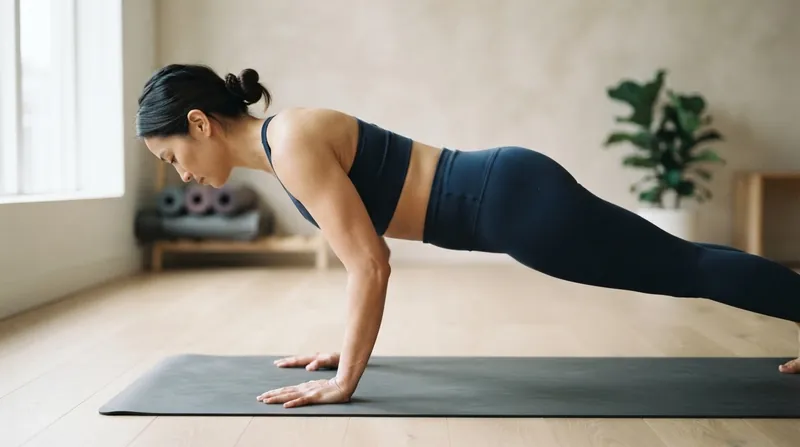
How Dropping Shoulders Below Elbows in Chaturanga Drives Scapular Tipping and Capsule Shear
4 sources
Biomechanics
Inadequate Hip External Rotation Levers the Tibia to Shear the Medial Meniscus in Lotus Pose
5 sources

Biomechanics
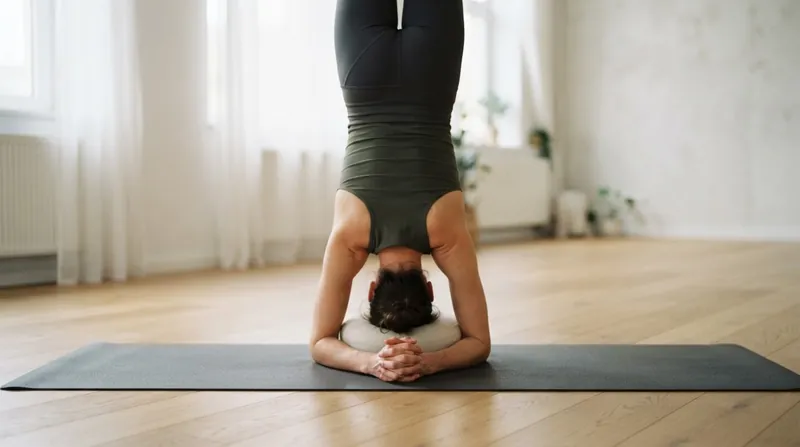
Shoulder Muscles Cannot Prevent 48% of Body Weight From Compressing the Neck in Yoga Headstands
4 sources
Comments
Every angle. Every day.
Get Fitness stories with full source coverage and perspective breakdowns, free every day.