
Handball Medical Update: Palicka’s Unorthodox Rehab and Zehnder’s Triumphant Return Set the Stage for 2026
As the European handball off-season progresses, elite players like Manuel Zehnder and Andreas Palicka are utilizing innovative sports psychology and intensive rehab to return from severe injuries.

Share this story
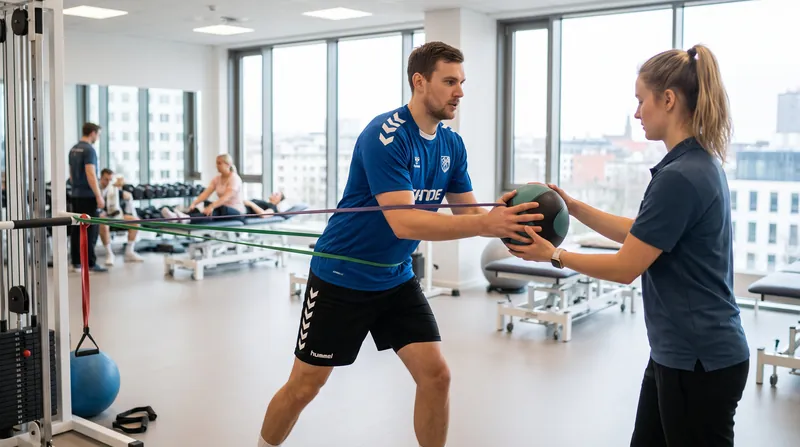
The grueling 2025-2026 handball season exacted a heavy physical toll on Europe's elite, leaving several top-tier stars facing the daunting prospect of long-term rehabilitation. Yet, as the summer off-season progresses, the medical wards are emptying out, replaced by inspiring stories of resilience and medical innovation.[1]
Across the continent, players are defying career-ending prognoses, utilizing everything from intensive specialized physiotherapy to cutting-edge sports psychology to reclaim their spots on the court. For clubs preparing for the expanded 2026-27 EHF Champions League, the return of these key figures provides an emotional and tactical boost that rivals any major summer signing.
The most remarkable comeback of the summer belongs to Swiss national team director and SC Magdeburg playmaker Manuel Zehnder. A year ago, a devastating cruciate ligament tear in his left knee left his career hanging in the balance, abruptly halting his momentum on the European stage.[1]
Zehnder’s recovery was not merely a physical battle; it was a deeply psychological one. After spending his initial rehab in Switzerland and the subsequent months doing individual work in Magdeburg, the 26-year-old took an unorthodox approach to overcoming the mental trauma of his injury.[1]
Working closely with a sports psychologist, Zehnder incorporated hypnosis therapy into his regimen. The goal was to train his subconscious mind to react instinctively in high-pressure game situations, eliminating the lingering fear of reinjury that often plagues athletes returning from severe ACL tears.[1]
The psychological conditioning paid off. Zehnder recently received full medical clearance after a routine final check-up, paving the way for his triumphant return to the Swiss national team and SC Magdeburg. "I had time to work on construction sites and develop in other areas," Zehnder noted, reflecting on the hidden benefits of his arduous 12-month hiatus.[1]
A similarly miraculous recovery unfolded in Sweden, where 39-year-old Kolstad goalkeeper Andreas Palicka won a desperate race against time. Sidelined with a severe elbow injury, the legendary shot-stopper was presented with a grim ultimatum: undergo surgery that would require six months of rehab, or attempt an accelerated, highly intensive physical therapy program.
Choosing the latter to keep his European Championship hopes alive, Palicka embarked on a grueling 10-week rehabilitation sprint. He partnered with Swedish goalkeeping icon and TV expert Claes Hellgren, who guided him through seven punishing sessions designed to rebuild both the structural integrity of his elbow and his mental confidence in the net.
"I chose the last option and it became the driving force for me to get fit," Palicka explained, keeping the exact medical details of the injury guarded but confirming its severity. His successful return stands as a testament to the evolving science of joint rehabilitation and veteran willpower.
The emotional lift of a returning player was vividly displayed in the French Liqui Moly StarLigue, where Emil Mellegård recently capped off his own long-term ACL recovery. Returning to the Paris Saint-Germain lineup, Mellegård scored a crucial equalizer in the 38th minute of their season finale against Tremblay, helping PSG secure an unprecedented unbeaten domestic campaign.
However, the unforgiving nature of the sport means that not every rehab journey follows a linear path to success. French national team star Nedim Remili recently suffered a heartbreaking setback during his recovery from a left thigh injury.[2]
While progressing through his rehabilitation, Remili began experiencing localized pain in the calf of the same leg. Urgent medical examinations revealed an acute lesion, a compensatory injury that abruptly halted his return timeline and ruled him out of major international competition.[2]
"During the rehabilitation process following an injury to his left thigh, Nedim complained of pain in the calf... unfortunately, the examination revealed an acute injury," confirmed French team doctor Emmanuel Bide, highlighting the delicate biomechanical balance required when recovering from major muscle tears.[2]
The women's game also witnessed a high-profile casualty during the climax of the season. CSM Bucuresti goalkeeper Gabriela Moreschi suffered a knee injury in the 42nd minute of the EHF FINAL4 placement match in Budapest.
Despite her early exit, Moreschi had already recorded 10 crucial saves, laying the foundation for her team's eventual bronze-medal victory. As she awaits further medical updates this summer, her teammate Evelina Eriksson stepped up flawlessly, demonstrating the critical importance of depth when injuries strike at the highest level.
As the 2026-27 season approaches, these diverging medical narratives underscore a fundamental truth of modern handball: staying on the court is as much a scientific achievement as it is a physical one. With the EHF increasingly focusing on injury prevention, the sport is actively working to ensure that the triumphs of players like Zehnder and Palicka become the rule rather than the exception.[1]
Key points
- Swiss playmaker Manuel Zehnder has returned to the court after a 12-month ACL rehab that included sports psychology and hypnosis.
- Veteran goalkeeper Andreas Palicka avoided season-ending elbow surgery by completing a punishing 10-week physical therapy program.
- Emil Mellegård's recent return from an ACL tear helped PSG secure an unprecedented unbeaten season in the French league.
- French star Nedim Remili suffered a tragic compensatory calf injury while rehabbing a thigh strain, extending his absence.
- CSM Bucuresti's Gabriela Moreschi is awaiting medical updates after suffering a knee injury during the EHF FINAL4.
How we got here
Summer 2025
Manuel Zehnder suffers a devastating cruciate ligament tear in his left knee.
Fall 2025
Andreas Palicka sustains a severe elbow injury but opts for a 10-week intensive rehab over surgery.
January 2026
Nedim Remili suffers an acute calf lesion during his thigh rehabilitation.
June 2026
Emil Mellegård returns from an ACL tear to help PSG seal an unbeaten domestic season.
June 2026
Gabriela Moreschi suffers a knee injury in the 42nd minute of the EHF FINAL4 placement match.
July 2026
Manuel Zehnder receives full medical clearance to return to SC Magdeburg and the Swiss national team.
- Sports Medicine Professionals
- Emphasizes the psychological hurdles of ACL recovery and the biomechanical risks of compensatory injuries during rehab.
- Players and Coaches
- Focuses on the sheer willpower required to endure grueling rehabs and the emotional momentum a returning star brings to the locker room.
- Handball Analysts
- Analyzes how these successful returns and unfortunate setbacks alter the power dynamics for the upcoming EHF Champions League season.
Perspectives this story doesn't cover
- Club Physiotherapists
- Sports Psychologists
Sources
Source coverage
2 outlets
3 viewpoints surfaced


- [1]BluewinSports Medicine Professionals
Swiss director Manuel Zehnder is about to make his comeback after a serious knee injury
Read on Bluewin → - [2]Handball PlanetSports Medicine Professionals
Huge shock for France ahead of EHF EURO 2026: Nedim Remili ruled out with injury
Read on Handball Planet →
More in Sports
See all →Injury
Summer Handball Injury Desk: Kukic, Munk, and Wiede Navigate Critical Recoveries Ahead of 2026–27 Season
2 sources
Injury
International Handball Injury Update: High-Profile Casualties and the 35% ACL Reinjury Crisis
3 sources
Injury
Global Handball Injury Desk: Simić’s Triumphant Return and Gilme’s Non-Surgical Comeback Highlight a Summer of Resilience
6 sources
Injury
Global Handball Injury Desk: Wiede Nears Return as Sports Science Reshapes ACL Rehab
6 sources
Comments
Every angle. Every day.
Get Sports stories with full source coverage and perspective breakdowns, free every day.