
Global Sprint Freestyle Rankings Tighten to Historic Margins Ahead of Summer Championships
The women's 50m freestyle world rankings have compressed to an unprecedented 0.19-second gap between first and tenth place. With Kate Douglass leading a crowded field, the era of single-swimmer dominance in the splash-and-dash appears to be over.

Share this story
For years, the women's sprint freestyle was defined by a handful of transcendent stars separating themselves from the rest of the pack. Fans grew accustomed to seeing one or two dominant figures touch the wall half a body length ahead of the field.
But as the global swimming community heads into the major summer championship meets of 2026, the world rankings reveal a seismic shift in the sport's landscape. The gap between the absolute best in the world and the rest of the elite tier has all but vanished, creating the most competitive environment the splash-and-dash has ever seen.
The current 50m freestyle standings are a bottleneck of unprecedented talent, where a poorly timed breath can drop an athlete from first to tenth. American standout Kate Douglass currently holds the world number one spot with a blistering time of 24.20 seconds. However, sitting in tenth place is her compatriot Gretchen Walsh at 24.39 seconds.
That means the top ten sprinters on the planet are separated by a mere 0.19 seconds. To put that into perspective, human reaction time to a visual stimulus is roughly 0.25 seconds, meaning the entire top tier is finishing within a margin faster than a blink.[1]
To understand exactly how historically tight this race has become, data analysts point to the progression over the previous two seasons. In May 2024, the gap between first and tenth in the 50m freestyle was a relatively comfortable 0.60 seconds, largely due to Swedish icon Sarah Sjostrom's dominant 23.69. By 2025, as global training methods caught up, that margin had shrunk to 0.39 seconds. Now, sitting at less than two-tenths of a second, the compression at the top indicates that the baseline for reaching an international final has fundamentally shifted.
This surge in speed is coming from all corners of the globe, dismantling the traditional duopoly of American and Australian sprinters. China's Wu Qingfeng and Cheng Yujie are currently sitting in second and third place globally with times of 24.21 and 24.23, respectively. Their rapid ascent signals a major breakthrough for the Asian Swimming Federation's sprint program, which has heavily invested in power-based training methodologies and biomechanical analysis over the last Olympic cycle. They are now legitimate threats to sweep the podium at any given international meet.[3]
Meanwhile, the 100m freestyle standings show a similar, albeit slightly wider, compression at the top of the leaderboard. The Netherlands' Marrit Steenbergen leads the world with a spectacular 51.86, followed closely by American rising star Anna Moesch at 51.94. They are the only two women to break under the elusive 52-second barrier so far this season. However, Hong Kong's Siobhan Haughey (52.36) and Australia's Meg Harris (52.56) are well within striking distance, setting up a brutal four-way battle for the crown as the summer progresses.[1]
Despite the influx of new talent, the veteran presence remains a crucial and compelling storyline in the 2026 standings. Swedish world record holder Sarah Sjostrom, who has defined the 50m event for a decade, currently sits in ninth place at 24.36. Poland's Katarzyna Wasick, competing at 34 years old, is tied for fifth at 24.29. Their continued presence in the top ten proves that decades of experience, refined race execution, and flawless technique can still hold off the raw power of the younger challengers entering their physical primes.[2]
European sprinters are particularly focused on peaking right now, adding immediate, tangible stakes to these rankings. With the 2026 European Aquatics Championships set to kick off in Paris later this month, athletes like Italy's Sara Curtis (24.29) and the Netherlands' Milou van Wijk (24.33) are fine-tuning their tapers to convert these times into medals. The continental championships will serve as a massive points-grab for world ranking positioning and a vital psychological battleground, establishing the true pecking order in Europe before the global field reunites for the World Championships next year.[2][3]
Across the Pacific, the stakes are equally high for the upcoming Pan Pacific Swimming Championships in Irvine, California, this August. The meet will pit the surging Americans against the top Australian and Japanese sprinters in a direct clash of titans. With three US women currently in the global top ten (Douglass, Moesch, and Walsh), the domestic race just to secure a spot on the coveted 4x100m freestyle relay has become as fierce as the international finals themselves, pushing the athletes to swim faster earlier in the season.[3]
Coaches and biomechanists attribute this rapidly shrinking gap to the democratization of elite training data and sports technology. The widespread global adoption of Ultra-Short Race-Pace Training (USRPT) and advanced underwater dolphin kick analytics means that athletes worldwide are now maximizing their velocity off the blocks and out of the turns. The highly guarded 'secrets' of sprint dominance from previous eras are now standard curriculum in high-performance centers from Beijing to Bologna, effectively leveling the playing field and raising the global floor for what constitutes an elite time.
This unprecedented density of talent has massive implications for the highly anticipated 4x100m freestyle relays. With so many nations now boasting multiple 24-low and 53-low sprinters, the traditional dominance of the United States and Australia is facing legitimate, mathematical threats from China, the Netherlands, and a resurgent Italian squad. Because the flat speed across the anchor legs is so evenly matched, relay exchanges, start reaction times, and underwater breakouts will become the ultimate deciders of who stands atop the podium, leaving zero margin for technical errors.[3]
As the 2026 season reaches its climax, the standings dictate a thrilling new reality for the sport: the era of the untouchable sprint queen is officially on pause. In a field where 0.01 seconds can mean the difference between securing gold and missing the podium entirely, every start, every breath, and every finish will be magnified under the lights. The race for the ultimate sprint crown has never been more crowded, promising fans the most dramatic and unpredictable championship season in recent memory.
Key points
- The top ten women in the 50m freestyle world rankings are separated by just 0.19 seconds.
- American Kate Douglass holds the world number one spot with a time of 24.20 seconds.
- The time gap between first and tenth place has shrunk from 0.60 seconds in 2024 to 0.19 seconds in 2026.
- Marrit Steenbergen leads the 100m freestyle standings, breaking the 52-second barrier alongside Anna Moesch.
- Advancements in underwater biomechanics and global training methodologies have leveled the international playing field.
How we got here
May 2024
The gap between the 1st and 10th fastest 50m sprinters was 0.60 seconds.
May 2025
The top 10 margin shrank to 0.39 seconds as global depth improved.
May 2026
The gap collapsed to a historic 0.19 seconds, with Kate Douglass taking the world number one spot.
July 2026
European sprinters prepare to clash at the European Aquatics Championships in Paris.
August 2026
The Pan Pacific Championships in Irvine will test the American and Australian sprint depth.
- US Swimming Analysts
- Focus on the depth of the American roster and the fierce domestic competition for relay spots.
- European Sprint Advocates
- Emphasize the strong positioning of European veterans and rising stars ahead of the continental championships.
- Data Analysts
- Highlight the statistical anomaly of a 0.19-second spread and the biomechanical trends leveling the field.
Perspectives this story doesn't cover
- Athletes ranked just outside the top 10 pushing to break into the elite tier
- National team coaches adjusting their relay strategies for tighter margins
Sources
Source coverage
3 outlets
3 viewpoints surfaced



- [1]World AquaticsData Analysts
World Aquatics Rankings: Women's 50m Freestyle 2026
Read on World Aquatics → - [2]European AquaticsEuropean Sprint Advocates
European Sprinters Surge in Global Rankings Ahead of Paris Championships
Read on European Aquatics → - [3]ReutersEuropean Sprint Advocates
Swimming: Global sprint field tightens ahead of 2026 Pan Pacific and European Championships
Read on Reuters →
More in Sports
See all →Recap
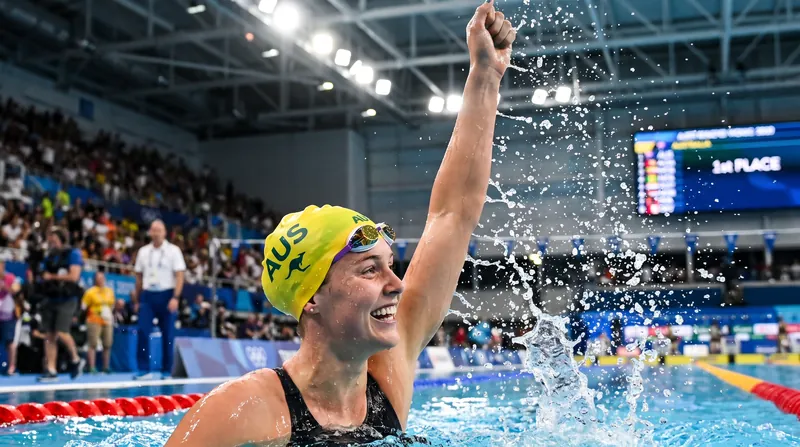
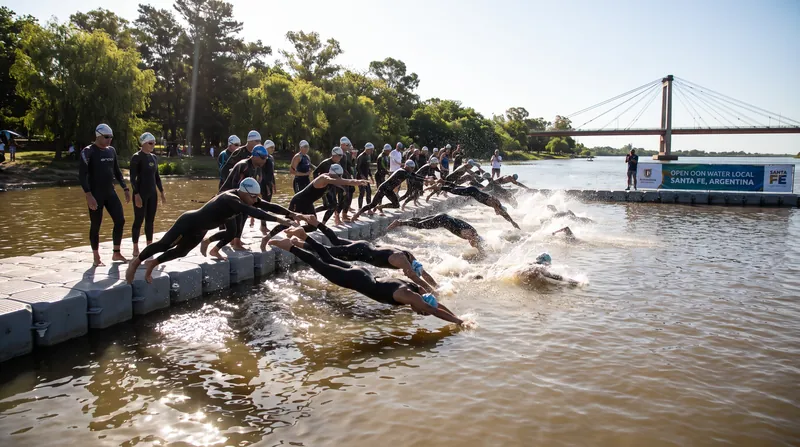
Ludovica Terlizzi and Mate Karpati Capture 10km Titles at Junior Open Water World Championships
7 sources
Power ranking
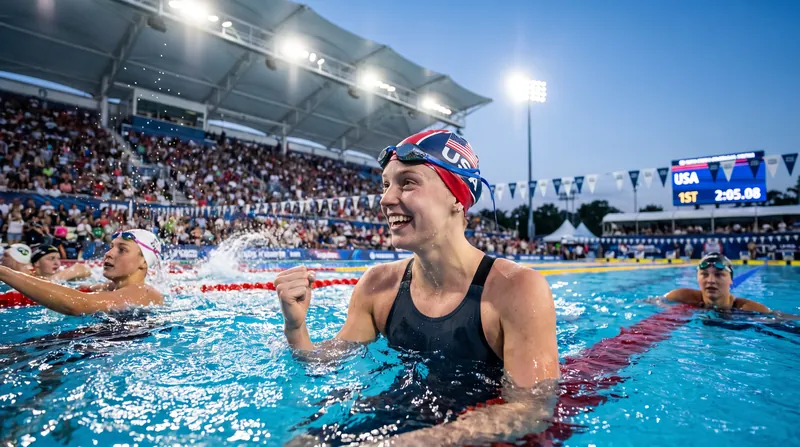
Global Women's Backstroke Power Rankings: Berkoff and Smith Set the Standard as Short Course Season Looms
5 sources
Power ranking
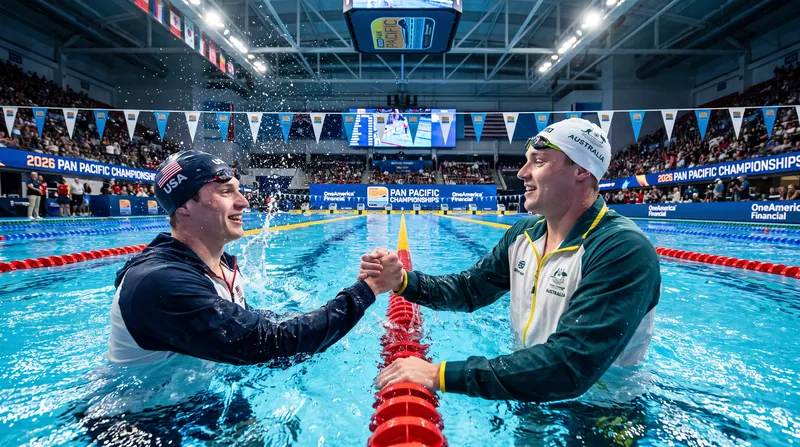
Global Men's Sprint Freestyle Power Rankings: Alexy and Jack Ignite a New US-Australia Rivalry
3 sources
Standings
Global Distance Freestyle Standings Upended: Liebmann Demolishes 1500m World Record as Short Dominates Pan Pacs
5 sources
Comments
Every angle. Every day.
Get Sports stories with full source coverage and perspective breakdowns, free every day.