
Global Aquatics Injury Report: Williamson, Heslop, and McAninch Complete Triumphant Comebacks
Across swimming, high diving, and water polo, elite aquatic athletes are proving that catastrophic injuries do not have to be career-ending. From Sam Williamson's 278-day patella rehab to Meghan McAninch's NCAA championship return, recent weeks have seen a wave of inspiring returns to the water.
By Jackson Reed

Share this story
As the global aquatics calendar pivots toward the late-summer championships, the most compelling storylines are not just about world records—they are about the athletes who fought their way back to the blocks. Across swimming, high diving, and water polo, the 2026 season has been defined by a wave of triumphant returns from catastrophic injuries.[1][2]
The narrative of aquatic sports often focuses on the clock and the scoreboard, but the hardest battles happen in the rehab room. For elite competitors, a severe injury means not only physical pain but the mental anguish of watching rivals train while they are confined to a hospital bed or physical therapy clinic.
Australian breaststroker Sam Williamson knows this isolation intimately. Following a stellar start to his career, Williamson suffered a devastating setback when he completely ruptured his patella tendon, tearing it entirely off the vastus medialis oblique (VMO) muscle. The injury required immediate surgery and a grueling 278-day rehabilitation process.[1][3]
Williamson's recovery was a masterclass in patience. He had to relearn how to walk, conquer a single flight of stairs, and eventually execute his first tentative breaststroke kick. His perseverance paid off at the 2026 Victorian Open Long Course Championships, where he returned to the pool and dominated the men's 200-meter breaststroke.[1][3]
Stopping the clock to claim gold, Williamson proved he had not lost his elite speed. The victory served as a massive confidence boost as he prepares for the upcoming Commonwealth Games and Pan Pacific Championships trials, signaling to the world that his Olympic dreams for Los Angeles 2028 remain very much alive.[1]
The physical toll of aquatics extends far beyond the swimming lanes. In the extreme discipline of high diving, Great Britain's Aidan Heslop faced his own daunting recovery. The 2024 world champion was sidelined for an entire year following a complex back surgery in May 2025, an eternity in a sport that requires absolute spatial awareness and core strength.[2]
Compounding his recovery was a recent minor groin strain, which forced Heslop to alter his dive list. Despite being unable to throw his signature 6.6 degree-of-difficulty dive, Heslop made a stunning return at the World Aquatics High Diving 2026 Cup in Fort Lauderdale, seizing the lead after the first two rounds and proving his foundational technique remains unparalleled.[2]
In the highly physical arena of water polo, USC's Meghan McAninch authored one of the year's most inspiring collegiate comebacks. Following a stint with Team USA in Brazil, McAninch suffered a cascading series of injuries: a torn medial collateral ligament (MCL), a ruptured eardrum, and eventually a fully dislocated left knee.
Confined to the training room for hours each day, McAninch refused to drift away from her squad. She transformed her rehabilitation into a leadership role, mentoring younger players from the pool deck and earning their absolute trust. When she finally returned to the water, her presence galvanized the Trojans.
The ultimate payoff arrived at the 2026 NCAA Women's Water Polo Championship. With McAninch back in the rotation, USC mounted a late stand to defeat the University of California 10-9. As the final horn sounded, McAninch celebrated not just a national title, but the culmination of months of hidden agony and relentless determination.
For some athletes, the water itself is the ultimate healer. Reigning Ironman World Champion and former elite swimmer Lucy Charles-Barclay underwent surgery to remove an irritated plantaris tendon early in the 2026 season. Rather than staying entirely dry, she used swimming to accelerate her tissue recovery.
Just four weeks post-surgery, Charles-Barclay entered the Essex County Championships and won the 1500-meter freestyle in 17:29.40. She credited the low-impact, hydrostatic pressure of the pool for fast-tracking her return, demonstrating that the very environment that demands so much from aquatic athletes can also be their greatest source of restoration.
Recovery is not always purely physical. Canadian backstroke star Kylie Masse stepped away from the pool for six months to combat severe burnout. After moving back home to reset her mental health, the five-time Olympic medalist returned to the Canadian Swimming Trials this summer, fully committed to a 2028 Olympic push and proving that prioritizing mental recovery is just as vital as healing a torn tendon.
Key points
- Australian breaststroker Sam Williamson returned to win the 200m breaststroke at the Victorian Open after a 278-day patella tendon rehab.
- British high diver Aidan Heslop seized the lead at the Fort Lauderdale World Cup after missing a year due to back surgery.
- USC's Meghan McAninch overcame a torn MCL and dislocated knee to help her team win the 2026 NCAA Women's Water Polo Championship.
- Triathlete Lucy Charles-Barclay won a 1500m freestyle race just four weeks after plantaris tendon surgery.
- Canadian backstroker Kylie Masse returned to the pool fully committed to the 2028 Olympics following a six-month mental health reset.
How we got here
May 2025
British high diver Aidan Heslop undergoes complex back surgery, sidelining him for a full year.
Late 2025
USC's Meghan McAninch suffers a dislocated knee just as she was recovering from a torn MCL and ruptured eardrum.
February 2026
Sam Williamson wins the 200m breaststroke at the Victorian Open, completing a 278-day comeback from a ruptured patella.
March 2026
Lucy Charles-Barclay returns to the pool just four weeks after plantaris tendon surgery to win the 1500m freestyle.
May 2026
Meghan McAninch helps lead USC to a 10-9 victory over Cal in the NCAA Women's Water Polo Championship.
July 2026
Kylie Masse returns to the Canadian Swimming Trials after a six-month mental health reset, committing to the 2028 Olympics.
- The Athletes
- Focuses on the mental toll of being sidelined and the personal satisfaction of returning to elite competition.
- Coaches & Teammates
- Emphasizes the leadership, tactical knowledge, and emotional boost that returning veterans bring to their squads.
- Medical & Rehab Staff
- Highlights the grueling physical timelines, the mechanics of surgery, and the role of water therapy in accelerating recovery.
Perspectives this story doesn't cover
- Athletes whose careers were permanently ended by similar injuries
- Sports psychologists specializing in aquatic athlete burnout
Sources
Source coverage
3 outlets
3 viewpoints surfaced



- [1]SwimSwamThe Athletes
Sam Williamson Wins Again In Post-Knee Injury Comeback At 2026 Vic Open
Read on SwimSwam → - [2]World AquaticsMedical & Rehab Staff
The first day of the World Aquatics High Diving 2026 Cup in Fort Lauderdale, Florida, was full of surprises
Read on World Aquatics → - [3]Australian SwimmingMedical & Rehab Staff
Sam Williamson on the comeback trail from injury
More in Sports
See all →Standings
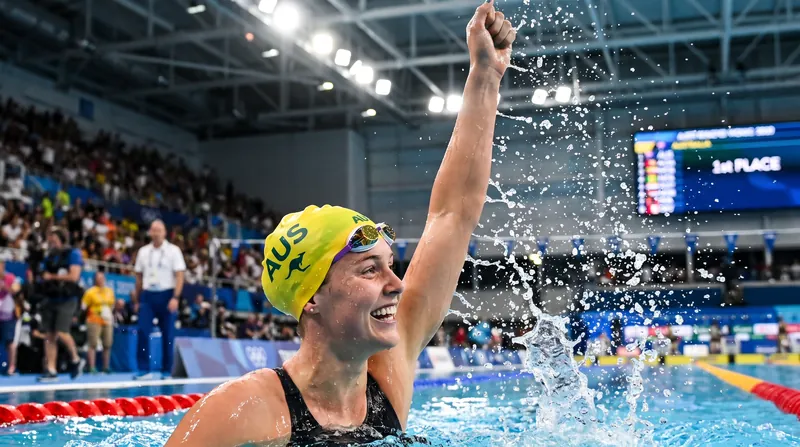
Lani Pallister Dethrones Katie Ledecky Atop 2026 World Rankings in Historic 800m Freestyle Shift
6 sources
Recap
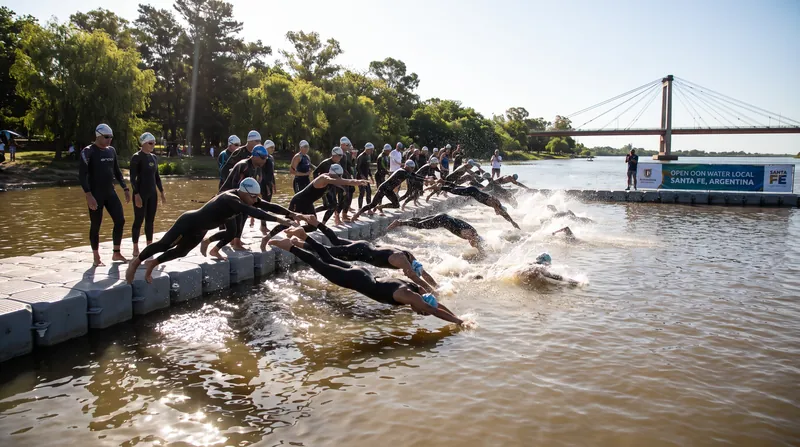
Ludovica Terlizzi and Mate Karpati Capture 10km Titles at Junior Open Water World Championships
7 sources
Power ranking
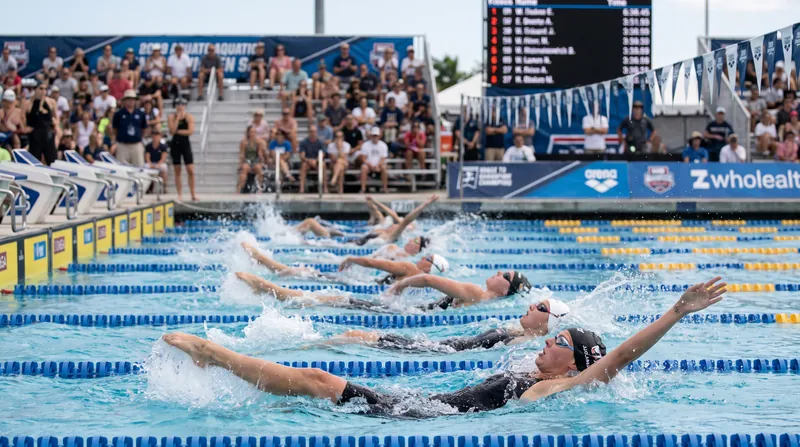
Global Women's Backstroke Power Rankings: Berkoff and Smith Set the Standard as Short Course Season Looms
5 sources
Power ranking
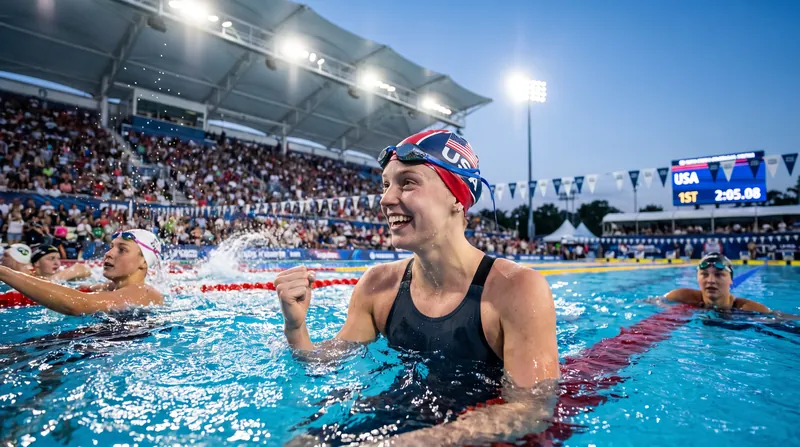
Global Men's Sprint Freestyle Power Rankings: Alexy and Jack Ignite a New US-Australia Rivalry
3 sources
Comments
Every angle. Every day.
Get Sports stories with full source coverage and perspective breakdowns, free every day.