
Germany Denies Reports of Planned Financial Support for UK Trident Nuclear Deterrent
The German government has formally dismissed claims that it is exploring options to co-finance or conventionally protect the United Kingdom's submarine-based nuclear weapons program.
By Marina Lopez

Share this story
On August 28, 2026, German Deputy Cabinet spokesperson Steffen Meyer formally dismissed reports that Chancellor Friedrich Merz's administration is negotiating financial support for the United Kingdom's Trident nuclear deterrent. The explicit denial addresses a highly sensitive geopolitical nerve, arriving just days after defense analysts and British media suggested Berlin was preparing to underwrite British strategic weapons. The prospect of German capital flowing directly into a foreign nuclear program had immediately triggered debate over the future architecture of European security and the continent's reliance on the United States.[2][3][4]
The denial followed a series of claims originating in the British press on August 26, which outlined a framework where Berlin would examine options to directly subsidize and conventionally shield the Royal Navy's nuclear infrastructure. The reported proposals suggested a system where Germany would contribute capital and industrial resources without acquiring sovereign nuclear command, targeting access, or launch authority. This arrangement was framed as a mechanism to strengthen the European pillar of NATO while respecting Germany's post-reunification commitments to non-proliferation.[1]
Meyer addressed the claims directly during a government briefing in Berlin, leaving little room for ambiguity regarding the administration's current posture. "No negotiations are underway regarding German funding for this Trident program," Meyer stated. He emphasized that the country's existing nuclear cooperation, particularly its deepening defense ties with France, is managed strictly within established alliance structures. "The nature of our cooperation in NATO nuclear deterrence is purely complementary," Meyer added, attempting to close the door on speculation about bilateral nuclear financing.[2][4]
The reported proposals centered heavily on the immense financial strain of the United Kingdom's ongoing nuclear modernization effort. In July 2026, the British government allocated £63.6 billion over a four-year period to the Nuclear Defence Enterprise. This budget covers the procurement of four new Dreadnought-class ballistic missile submarines, which are scheduled to replace the aging Vanguard-class vessels by the mid-2030s. It also funds warhead life-extension programs, nuclear propulsion research, and deep maintenance facility upgrades, placing a massive, long-term burden on the Ministry of Defence.[1]
That £15.9 billion annual expenditure represents roughly six percent of the total UK defense budget, a proportion that limits London's ability to fund conventional forces. The nuclear enterprise currently supports 47,000 jobs across the country, a figure projected to rise to 65,000 by the year 2030 as construction accelerates.
According to the initial reports, German capital could have theoretically offset these escalating costs, with potential investments directed toward future submarine construction, missile support systems, or uranium-enrichment capacity for next-generation warheads, effectively pooling the financial risk of maintaining a continuous at-sea deterrent.[1]
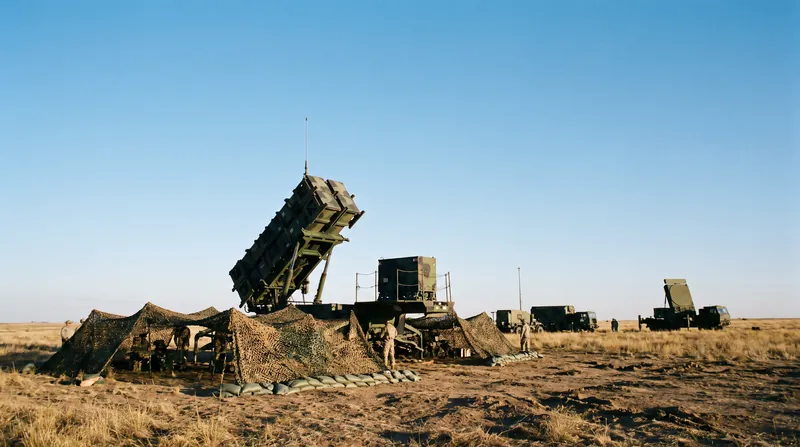
Beyond financial capital, the discussions reportedly included the deployment of German conventional military assets to protect British nuclear sites. Specifically, the framework suggested stationing German-operated Patriot ground-based air-defense batteries at HMNB Clyde at Faslane in Scotland, the primary base for the Trident submarine fleet. Placing German conventional forces alongside one of Europe's most strategically sensitive nuclear facilities would have marked a profound shift in military integration, signaling a level of trust and shared destiny rarely seen outside of direct U.S. deployments.[1]
The underlying driver for such a bilateral arrangement—and the reason the reports gained immediate traction—is growing European anxiety over the durability of United States security guarantees. The U.S. has stationed nuclear weapons in Germany since 1955, currently maintaining an estimated arsenal of 10 to 15 tactical devices on German soil. However, shifting political currents in Washington and repeated demands for European nations to assume a larger share of the defense burden have prompted continental planners to evaluate alternative deterrence models.[2]
One diplomatic source in Germany, quoted extensively prior to the official denial, captured the prevailing mood among European defense officials navigating this uncertainty. "Policymakers are waking up each morning and asking themselves what the hell the Americans are going to do tomorrow," the source noted. The sentiment reflects a broader push within European capitals to build an independent strategic umbrella, ensuring that the continent is not left exposed if a future U.S. administration decides to draw down its military footprint or conditionalize its nuclear umbrella.[2]
Despite the strategic logic of pooling European resources, practical and political barriers to a joint UK-German nuclear enterprise remain exceptionally high. Within the UK, defense officials have expressed skepticism regarding whether the German industrial base possesses the highly specialized expertise required to service nuclear-powered submarines. Furthermore, the British deterrent is already deeply intertwined with U.S. infrastructure, relying on Trident II D5 missiles leased from the United States and maintenance facilities located in King's Bay, Georgia, complicating any attempt to insert a third party into the supply chain.[1]
For Germany, direct involvement in a foreign nuclear weapons program carries significant domestic political risk. Following reunification, the country committed to renounce the manufacture, possession, and control of nuclear weapons. While Chancellor Merz has deepened defense cooperation with France—including planned participation in French-organized nuclear deterrence exercises—the government maintains that these actions do not violate its non-proliferation commitments.
Viewpoints in depth
German Federal Government
Berlin maintains that its nuclear deterrence strategy relies strictly on established NATO frameworks and complementary cooperation with France.
Official spokespeople explicitly deny any ongoing negotiations to finance the British Trident program. The Chancellery emphasizes that while Germany is deepening defense ties with Paris—including planned participation in French-organized nuclear exercises—these moves do not involve direct financial subsidies for foreign strategic weapons or a departure from Germany's non-nuclear commitments under international law.
European Strategic Autonomy Advocates
Defense planners pushing for a European nuclear umbrella argue that the continent must hedge against an unpredictable United States.
Driven by fears that future U.S. administrations might reduce their military footprint or conditionalize security guarantees, this camp advocates for pooling European resources. They argue that attaching German financial capital and conventional military assets to existing British and French nuclear infrastructure is the most viable intermediate step to secure the continent without violating non-proliferation treaties.
UK Defense Establishment
British officials face a massive funding requirement for the nuclear enterprise but remain cautious about foreign industrial integration.
While the £63.6 billion cost of the Nuclear Defence Enterprise places immense strain on the UK budget, defense insiders express skepticism about German industrial participation. The British submarine fleet requires highly specialized engineering that German firms may lack, and the Trident system's deep integration with U.S. technology—including leased missiles and shared targeting software—complicates any bilateral European funding arrangement.
Key points
- German officials formally denied reports that Berlin is negotiating financial support for the UK's Trident nuclear deterrent.
- Initial reports suggested Germany could subsidize submarine construction and deploy Patriot air-defense batteries to protect the Scottish naval base at Faslane.
- The UK is currently executing a £63.6 billion, four-year modernization of its Nuclear Defence Enterprise to field new Dreadnought-class submarines.
- The debate highlights growing European anxiety over the long-term reliability of United States security guarantees.
How we got here
1955
The United States begins stationing tactical nuclear weapons in West Germany.
July 2026
The UK allocates £63.6 billion over four years to its Nuclear Defence Enterprise to modernize its submarine fleet.
August 26, 2026
British media reports that Germany is exploring options to financially support and conventionally protect the UK Trident program.
August 28, 2026
The German Cabinet officially denies any ongoing negotiations regarding Trident funding.
- Official Berlin
- Rejects claims of bilateral Trident funding, emphasizing strict adherence to established NATO structures.
- European Deterrence Proponents
- Explores financial and conventional integration to secure a European nuclear umbrella independent of the U.S.
- UK Defense Planners
- Focused on funding the Dreadnought transition while managing complex technological dependencies on the United States.
Perspectives this story doesn't cover
- United States Strategic Command
- German Domestic Non-Proliferation Advocates
Sources
Source coverage
4 outlets
3 viewpoints surfaced




- [1]UK Defence JournalEuropean Deterrence Proponents
Germany reportedly considers helping fund UK nukes
Read on UK Defence Journal → - [2]Al Mayadeen EnglishOfficial Berlin
Germany denies plans to fund UK's Trident nuclear program
Read on Al Mayadeen English → - [3]Daily FinlandOfficial Berlin
Berlin dismisses report on plans to fund nuclear weapons
Read on Daily Finland → - [4]The Eastern HeraldOfficial Berlin
German Cabinet Rejects Reports About Berlin's Plans to Finance UK Nuclear Weapons Program
Read on The Eastern Herald →

More in Defense & Security
See all →UNSC Reform
Russia Threatens UN Security Council Veto on Permanent Seats for Germany and Japan
5 sources
Defense Budget
Japan Denies Plan to Triple Defense Spending to 3.5% of GDP Following Bond Market Shock
5 sources

Air Defense
US Approves License for Ukraine to Produce Patriot Air Defense Missiles Domestically
5 sources
Undersea Warfare
China Building World's First Mothership for Giant Submarine Drones
4 sources
Comments
Every angle. Every day.
Get Defense & Security stories with full source coverage and perspective breakdowns, free every day.