
Fusion Energy Crosses Commercial Threshold as Commonwealth Files First Grid Interconnection Request
Commonwealth Fusion Systems has become the first developer to apply for grid interconnection with a major regional transmission organization, moving fusion power from a physics experiment toward commercial infrastructure.
By Wei Zhang

Share this story
For over half a century, nuclear fusion has been a scientific story, playing out in national laboratories, government budgets, and peer-reviewed journals. It has been the ultimate energy holy grail: harnessing the exact same reaction that powers the sun and stars to provide limitless, carbon-free electricity on Earth.
But today, the narrative is definitively shifting from theoretical physics to hard infrastructure. In a landmark move for the global energy sector, Commonwealth Fusion Systems (CFS) has officially filed a generation interconnection request with PJM Interconnection, the largest competitive wholesale electricity market in the United States.
The filing marks the first time in history that a developer of a grid-scale fusion power plant has formally requested to plug into a major regional transmission organization. By entering the PJM queue, the Massachusetts Institute of Technology spinout is signaling that its technology is ready to transition from a laboratory experiment to a commercial utility. The request centers on the company's planned ARC facility, a 400-megawatt commercial fusion power plant slated for construction in Chesterfield County, Virginia, which represents a massive leap forward for the industry.[1][2]
The proposed facility, recently christened the Fall Line Fusion Power Station, is designed to generate enough electricity to power approximately 150,000 homes or sustain large industrial data centers. PJM Interconnection, the grid operator receiving the application, coordinates the movement of wholesale electricity across 13 states and the District of Columbia, serving more than 65 million customers. Integrating a completely novel form of power generation into a system of this immense scale requires unprecedented engineering validation, careful regulatory oversight, and years of meticulous planning to ensure grid stability.[1][2]
To understand the significance of the filing, one must look at the bureaucratic reality of the American power grid. An interconnection application is not a mere formality; it is the initiation of a grueling, multi-year regulatory and engineering gauntlet.
When a new power plant wants to join the grid, operators like PJM must conduct a series of deep engineering studies and grid simulation models to stress-test the system. They must ensure that the existing transmission infrastructure can safely and reliably handle the sudden influx of 400 megawatts of new baseload capacity without destabilizing the network or causing localized blackouts.
This rigorous study process typically takes between four and six years to complete, making it one of the most significant bottlenecks in modern energy development. Therefore, submitting the paperwork now is a mandatory long-lead action if CFS intends to meet its ambitious target of delivering commercial electricity in the early 2030s. 'When you're serious about building a power plant in the early 2030s, you act now,' noted CFS CEO Bob Mumgaard, framing the interconnection request as a definitive pivot toward execution rather than mere research.
The underlying technology driving the ARC plant is a compact, high-field tokamak, a design that has become the frontrunner in the commercial fusion race. Unlike traditional nuclear fission—which powers all existing nuclear plants by splitting heavy atomic nuclei in a controlled chain reaction—fusion works by forcing light nuclei, such as hydrogen isotopes, to combine into heavier elements. This process releases an enormous amount of energy, but it requires creating and containing a volatile plasma that is significantly hotter than the core of the sun.[1]
To achieve this extreme environment, a tokamak uses massive electromagnets to suspend and squeeze the superheated plasma in a donut-shaped vacuum chamber, preventing it from touching the physical walls of the machine. Historically, the primary challenge has been that fusion reactors consume far more energy to sustain the magnetic fields and heat the plasma than they generate from the fusion reaction itself. CFS aims to overcome this barrier using high-temperature superconducting (HTS) magnets, which allow for a much stronger magnetic field in a smaller, more commercially viable footprint.[1]
Before the commercial ARC plant can be built, CFS must first prove the physics with a smaller demonstration reactor called SPARC, currently under construction in Devens, Massachusetts. SPARC is designed to achieve 'net energy'—producing more power than it consumes—and is expected to generate its first plasma in 2026. The data, thermal dynamics, and operational experience gleaned from the SPARC demonstration will directly inform the final engineering and construction phases of the ARC facility in Virginia, ensuring that the commercial plant is built on proven operational metrics.[1]
The commercial viability of the ARC plant is already being validated by major institutional players who are eager to secure next-generation power sources. Last year, technology giant Google signed a power purchase agreement to off-take 200 megawatts of electricity from the future Virginia plant, securing a zero-carbon energy source for its rapidly expanding, AI-driven data centers. Similarly, Italian energy major Eni, a strategic investor in CFS, has committed to a massive offtake agreement worth over $1 billion, demonstrating immense corporate appetite for firm clean energy.[1]
Furthermore, CFS is not navigating the complex utility landscape alone, having partnered with established players in the energy sector. Dominion Energy, the incumbent utility in Virginia, is actively advising the fusion startup on best practices for the PJM interconnection process under a joint development agreement. Dominion currently owns the James River Industrial Park site where the Fall Line station will be built, aligning the ambitious fusion developer with established utility expertise and smoothing the path for local zoning and regulatory approvals.
The choice of Virginia for the first commercial plant is highly strategic and reflects the shifting dynamics of American energy consumption. The region is currently experiencing the highest forecasted electrical load growth in the United States, driven largely by a massive concentration of hyperscale data centers. As artificial intelligence accelerates, the demand for continuous, high-density, carbon-free baseload power is surging, making the area an ideal proving ground for a technology that promises to swap seamlessly into existing grid infrastructure without the geographic constraints of wind or solar.[1]
Unlike wind and solar, which are inherently intermittent and require extensive battery storage to provide continuous power, a fusion plant operates much like a traditional thermal power plant. It generates intense heat, which is used to boil water, create steam, and spin a conventional electrical turbine. This means that ARC plants could theoretically serve as direct, drop-in replacements for decommissioned coal or natural gas plants, utilizing the exact same transmission lines, cooling towers, and substations that already exist on the grid today.
Despite the immense commercial momentum, significant scientific and engineering uncertainties remain before fusion can power the grid. The fundamental physics of net-positive fusion energy generation have yet to be demonstrated at a sustained, commercial scale by any private company. While laboratory breakthroughs have occurred, translating those fleeting moments of net energy into a continuous, reliable power source that operates 24/7 is a monumental engineering challenge. The industry has a long history of missed deadlines and over-optimistic timelines, leading some energy analysts to remain highly cautious about the 2030s target.
Additionally, the PJM interconnection process itself poses a substantial logistical risk to the project's timeline and overall financial model. The grid operator's stress tests may reveal that the local transmission network requires extensive and costly upgrades to accommodate the ARC plant's 400-megawatt output safely. If significant new transmission lines, high-voltage transformers, or substations need to be built, the associated environmental permitting, community pushback, and construction delays could easily push the project's timeline well past the early 2030s, regardless of how quickly the underlying fusion technology matures.[2]
Regulatory frameworks for fusion energy are also still evolving, adding another layer of complexity to the commercialization effort. Because fusion does not involve fissile materials like uranium or plutonium, it cannot melt down and does not produce long-lived, high-level radioactive waste. Consequently, regulators in the U.S. and abroad are working to establish distinct oversight rules that treat fusion differently from traditional fission reactors, but the final shape of these regulations—and how local municipalities will interpret them—could still impact deployment schedules.
If CFS successfully navigates the PJM queue and brings the Fall Line station online, it will establish a critical template for the entire advanced energy industry. It would prove that fusion is not just a perpetual science experiment, but a bankable, scalable asset class capable of participating in the world's largest wholesale power markets. For an energy grid desperate for clean, firm power to support the next generation of technological growth, the successful interconnection of a fusion reactor would mark the definitive beginning of a new era in human infrastructure.
Key points
- Commonwealth Fusion Systems (CFS) filed the first-ever grid interconnection request for a commercial fusion power plant.
- The application to PJM Interconnection initiates a 4-to-6-year engineering study to ensure the grid can handle the new power source.
- CFS plans to build its 400-megawatt ARC facility in Chesterfield County, Virginia, targeting power delivery in the early 2030s.
- The move signals a major shift for fusion energy, moving it from a laboratory physics experiment to a deployable commercial asset.
What we don’t know
- Whether the SPARC demonstration reactor will successfully achieve and sustain net-positive energy generation on its current timeline.
- How much the required transmission network upgrades will cost, and whether those costs will impact the commercial viability of the ARC plant.
- How federal and local regulators will ultimately classify and permit commercial fusion plants compared to traditional fission reactors.
How we got here
2018
Commonwealth Fusion Systems spins out of the Massachusetts Institute of Technology to commercialize fusion.
2025
CFS raises $863 million in Series B2 funding to accelerate development.
July 2025
Google signs a 200-megawatt power purchase agreement for electricity from the future ARC plant.
April 2026
CFS files a generation interconnection request with PJM Interconnection, a first for the fusion industry.
2026 (Expected)
The SPARC demonstration reactor in Massachusetts is scheduled to achieve its first plasma.
Early 2030s (Target)
The commercial ARC plant in Virginia is slated to begin delivering power to the grid.
- Fusion Developers
- Argue that fusion technology is ready to transition from laboratory science to commercial execution, emphasizing the need to begin grid integration now to meet 2030s deployment goals.
- Grid Operators & Utilities
- Focus on the rigorous engineering and safety validations required to ensure that introducing a novel 400-megawatt baseload source will not destabilize the existing electrical network.
- Energy Market Analysts
- Maintain cautious optimism, noting that while the commercial momentum is unprecedented, the industry still must prove sustained net-positive energy generation and overcome potential grid upgrade costs.
Perspectives this story doesn't cover
- Local Chesterfield County residents
- Fossil fuel industry executives
Sources
Source coverage
2 outlets
3 viewpoints surfaced


- [1]Nuclear Engineering InternationalGrid Operators & Utilities
CFS applies for grid connection for planned nuclear fusion plant in Virginia
Read on Nuclear Engineering International → - [2]American Nuclear SocietyGrid Operators & Utilities
CFS submits application for ARC fusion power plant
Read on American Nuclear Society →
More in Technology
See all →Future of Work
AI Was Supposed to Kill Engineering Jobs. New Data Shows They Are the Most Resilient.
3 sources

Agri-Tech
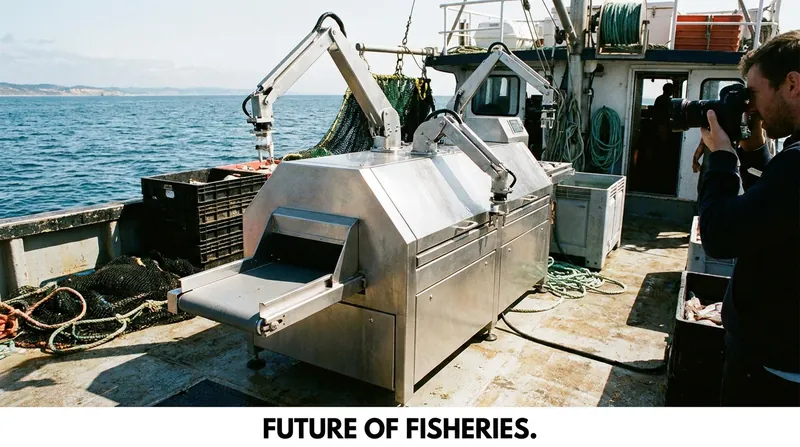
How an AI-Powered Robot is Bringing Humane, Michelin-Grade Fish to the Masses
3 sources
Mars Exploration
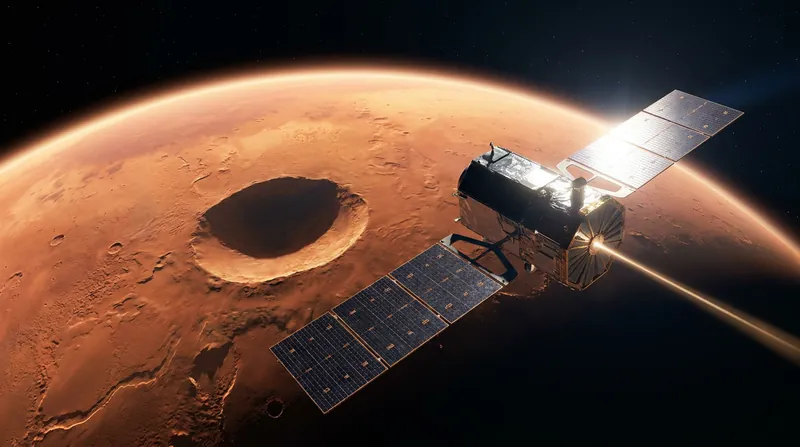
NASA Taps Eric Schmidt's Relativity Space for 2028 Mars Weather Mission
3 sources
Creative AI
Adobe Integrates Context-Aware AI Assistants Across Entire Creative Cloud Suite
6 sources

Comments
Every angle. Every day.
Get Technology stories with full source coverage and perspective breakdowns, free every day.