
Fossilized Red Blood Cells Discovered in 115-Million-Year-Old Dinosaur Bone
Researchers have identified mineralized red blood cells and intact heme molecules inside the leg bone of a Brazilian theropod. The landmark discovery pushes the known fossil record of blood back by 35 million years.

Share this story
A 115-million-year-old theropod bone from Brazil has yielded an unprecedented echo of its original biology. Scientists have identified mineralized red blood cells and the chemical remnants of hemoglobin preserved within the fossil's vascular canals. The discovery pushes the known molecular record of blood back by 35 million years.[1][2][4]
The findings, published in the Proceedings of the National Academy of Sciences, center on the hind limb of Aratasaurus museunacionali. The 3.1-meter-long carnivorous dinosaur died at approximately four years of age during the Cretaceous Period. Its remains were unearthed from a mine in northeastern Brazil in 2008.[1][3]
The fossil originates from the Romualdo Formation, a site globally renowned for its exceptional three-dimensional preservation. While paleontologists have previously reported structures resembling blood cells in dinosaur bones, proving their biological origin has remained notoriously difficult, as labile biomolecules typically degrade rapidly.[3][5]
Microscopic shapes can easily be mistaken for environmental contamination or geological artifacts. To solve this, an international research team led by Curtin University organic geochemist Kliti Grice combined high-resolution imaging with chemical analysis, examining the fine channels inside the bone where blood vessels once ran.[2][4]
Inside these vascular canals, the researchers located a dense concentration of ellipsoidal microstructures. These tiny structures average about 23 micrometers in length and 20 micrometers in width. Rather than relying solely on their visual resemblance to cells, the team subjected the fossilized tissue to mass spectrometry.[3]
A molecular time capsule
The chemical tests revealed the distinct signature of heme B, the iron-bearing porphyrin molecule that allows hemoglobin to transport oxygen through the body. The team also detected a chemically altered derivative, known as 3,8-diethyl heme B, which was roughly 90 times more abundant than the parent molecule.[3][5]
"To detect intact heme-derived molecules in 115-million-year-old red blood cells is astonishing," Grice said in a statement. "This really is a landmark discovery. It not only extends the known fossil record of blood, but also offers a direct molecular window into the physiology of long-extinct animals."[2][5]
The researchers mapped key elemental building blocks—iron, nitrogen, and carbon—directly to the cell-like structures using Raman spectroscopy. To rule out external contamination, they compared the bone's chemical profile to the surrounding rock matrix, which was formed by an ancient microbial mat.[3][4]
The microbial mat contained porphyrin signatures dominated by chlorophyll and bacteriochlorophyll, typical of photosynthetic bacteria. In contrast, the bone extract yielded an essentially pure heme signature, confirming that the blood-related molecules originated from the dinosaur itself rather than the surrounding environment.[3]
The survival of these delicate structures over 115 million years challenges longstanding assumptions about fossilization. The researchers attribute this exceptional preservation to the specific geochemical conditions present when the young Aratasaurus died and was rapidly buried in a low-oxygen aquatic environment.[2][5]
The role of manganese
As the dinosaur's remains were encased in the microbial mat, a manganese oxide mineral called hausmannite permeated the bone. This mineralization process acted as a natural stabilizing agent, replicating the cellular architecture and shielding the organic contents from total degradation.[3][4]
The hausmannite effectively locked the heme molecules and amino acids of collagen into a microscopic vault. Grice clarified that the team did not find a vial of liquid dinosaur blood, but rather a mineralized molecular echo that provides a chemical snapshot of the animal's biology.[1][5]
Martin Van Kranendonk, head of Curtin's School of Earth and Planetary Sciences, noted that understanding how molecular structures survive in such hostile conditions could inform astrobiology. The mechanisms that preserve ancient biology on Earth provide a template for detecting signs of past life on other planets.[5]
Despite the robust chemical evidence, the visual identification of the red blood cells has drawn scrutiny from some experts. Mary Schweitzer, a paleontologist at North Carolina State University known for her pioneering work on dinosaur soft tissue, expressed skepticism about the morphology of the structures.[1]
Scientific debate and next steps
Schweitzer noted that avian and reptilian red blood cells typically feature a "nuclear bulge," giving them a dome-like appearance on both sides. The microstructures identified in the Aratasaurus bone are concave, leading her to question whether they might represent a different biological or geological feature.[1]
However, Schweitzer told reporters she was persuaded by the team's chemical detection of heme and collagen amino acids within the bone. The debate highlights the ongoing tension in paleontology between morphological interpretation and the increasingly precise data provided by molecular geochemistry.[1]
The ability to detect specific proteins and blood derivatives could eventually allow researchers to track how dinosaur metabolisms evolved over millions of years. Comparing the heme signatures of small, agile theropods like Aratasaurus to massive sauropods might reveal fundamental differences in how they processed oxygen.[5]
The Aratasaurus specimen has been housed at the National Museum of Brazil since 2008, demonstrating that groundbreaking molecular data can hide in plain sight. The researchers suggest that existing museum collections worldwide likely contain similar chemical echoes waiting to be analyzed.[1]
As analytical techniques become more sensitive, the focus will shift toward re-examining well-preserved fossils from distinct geological settings. The next verifiable checkpoint will be whether independent teams can detect similar heme signatures in other Cretaceous theropods, establishing just how common this molecular preservation truly is.[2][4]
Key points
- An international research team detected mineralized red blood cells and intact heme molecules inside a 115-million-year-old dinosaur bone from Brazil.
- The discovery pushes the known fossil record of blood back by 35 million years, challenging assumptions about how quickly biomolecules degrade.
- Chemical analysis confirmed the heme originated from the dinosaur, distinguishing it from the chlorophyll signatures of the surrounding fossilized microbial mat.
- A manganese oxide mineral called hausmannite acted as a stabilizing agent, locking the cellular architecture and organic contents into a microscopic time capsule.
Open questions
- Whether the concave shape of the microstructures reflects the dinosaur's original cell morphology or is an artifact of the fossilization process.
- How common this level of molecular preservation is across other dinosaur species and geological formations.
- Whether enough intact protein fragments can be recovered to reconstruct the full metabolic pathways of Aratasaurus.
- Molecular Paleontologists
- Argue that chemical signatures provide definitive proof of ancient biology even when physical structures degrade.
- Morphological Skeptics
- Question the visual identification of the microstructures due to inconsistencies with expected cell shapes.
Perspectives this story doesn't cover
- Independent geochemists analyzing other Cretaceous formations
Sources
Source coverage
5 outlets
2 viewpoints surfaced





- [1]The GuardianMorphological Skeptics
Fossilised red blood cells found in 115m-year-old dinosaur's bone, say scientists
Read on The Guardian → - [2]ScienceAlertMolecular Paleontologists
Dinosaur Blood Cells Detected in 115-Million-Year-Old Fossil
Read on ScienceAlert → - [3]Proceedings of the National Academy of SciencesMolecular Paleontologists
Heme signatures in mineralized red blood cells within vascular canals of a 115-million-year-old dinosaur bone
Read on Proceedings of the National Academy of Sciences → - [4]Discover MagazineMolecular Paleontologists
Mineralized Red Blood Cells Found for the First Time in a 115-Million-Year-Old Dinosaur Fossil
Read on Discover Magazine → - [5]EurekAlertMolecular Paleontologists
Dinosaur blood – oldest discovery rewrites what fossils can reveal about the past
Read on EurekAlert →

More in Science
See all →Evolutionary Biology
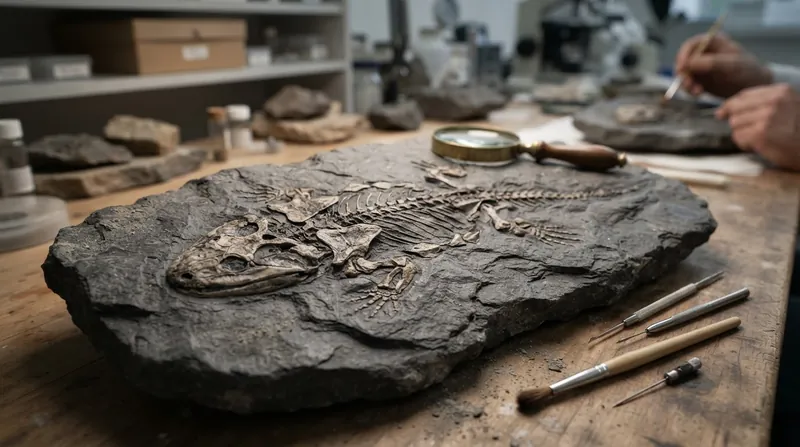
Fossil Evidence Reveals Armored Amphibian Lived Exclusively in Ancient Oceans 237 Million Years Ago
5 sources
Dinosaur Evolution
Museum Drawer Fossil Unveils Europe's First Long-Clawed Predatory Dinosaur
9 sources
Pharmacology
How Antihistamines Penetrate the Blood-Brain Barrier to Induce Drowsiness via Central H1 Receptor Blockade
7 sources

Maritime Archaeology
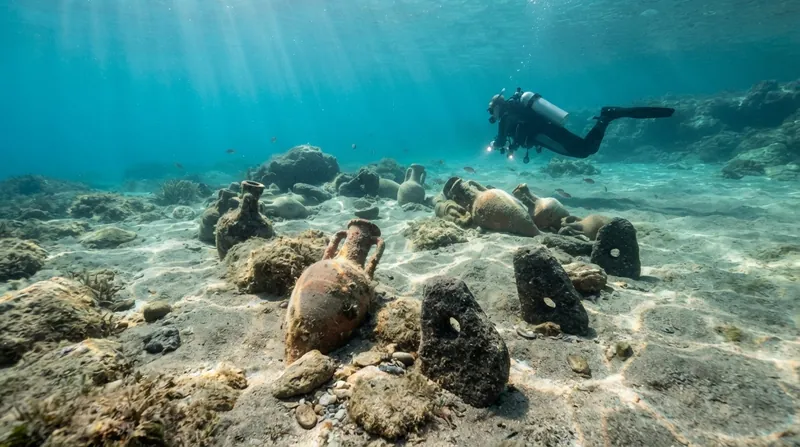
Archaeologists Discover World's Oldest Shipwreck off Turkish Coast
8 sources
Comments
Every angle. Every day.
Get Science stories with full source coverage and perspective breakdowns, free every day.