
Former Rugby Pro Sam Blythe Completes Remarkable Comeback From Spinal Surgery to Claim Silver at British Rowing Indoor Championships
Elite indoor rower Sam Blythe returned to the podium at the 2025 British Rowing Indoor Championships after overcoming severe cervical compression and spinal surgery. His 6:10 finish in the 2000m event marks a milestone in a grueling rehabilitation journey that required completely rebuilding his training approach.
By Omar Haddad

Share this story
When Sam Blythe strapped his feet into the ergometer at the 2025 British Rowing Indoor Championships (BRIC), the stakes were vastly different from his previous appearances. Competing in the highly contested Men's 40-49 2000m event, Blythe stopped the clock at a blistering 6:10.0 to secure the silver medal. The time itself was elite, but the true victory lay in the fact that he was pulling on the handle at all.[1]
The podium finish marked the culmination of a grueling, years-long battle against a debilitating spinal condition that had threatened to end his athletic career permanently. For an athlete whose identity and livelihood were deeply intertwined with physical performance, the journey back to the competition floor required a complete deconstruction and rebuilding of his training philosophy.
Blythe's athletic background laid the foundation for both his success and his eventual physical breakdown. A former professional rugby player, he transitioned to elite indoor rowing, bringing with him a massive aerobic engine, explosive power, and a notoriously high tolerance for pain. He reached his peak around 2016, setting records and establishing himself as a relentless force on the Concept2 machine.
However, the bill for years of high-impact collisions on the rugby pitch, combined with the extreme repetitive loading of elite rowing and heavy weight training, eventually came due. Blythe began experiencing a cascade of compounding back and arm injuries. Initially, he attempted to push through, relying on his historic ability to recover to 70-80% health and grind out training blocks.[2]
The breaking point arrived with a severe and specific diagnosis: cervical compression. This condition involved both myelopathy—dangerous pressure on the spinal cord itself—and radiculopathy, which compressed the nerve roots. The mechanical impingement led to persistent, radiating neck pain and an alarming numbness that traveled down into his hand, compromising his grip and power output.
During one particularly brutal interval session, the neurological symptoms reached a threshold where Blythe physically could not complete the rowing stroke. His body simply shut down the movement pattern to protect the spine. Forced into extended, doctor-mandated rest, he had to confront the reality that sheer willpower could not override structural spinal failure.[2]
While lumbar (lower back) issues are the most frequently cited complaint among rowers—often stemming from poor posture at the catch or excessive volume—cervical spine injuries present a more complex neurological threat. Sports biomechanists note that cervical compression in rowers is frequently the result of a "perfect storm": a history of contact sports, heavy overhead lifting, and the repetitive traction of the rowing stroke.[3][4]
Conservative management and physical therapy were no longer sufficient to reverse the nerve damage. Blythe underwent spinal surgery to decompress the affected nerves and stabilize his cervical spine. The procedure was successful, but it marked a hard reset on his athletic life, stripping away his fitness base and leaving him with a fragile, healing spine.
The psychological toll of the surgery was immense. For a prominent coach and competitor who led by example, being sidelined created a profound sense of frustration. Blythe openly documented his struggles with false dawns—brief periods of feeling healthy followed by sharp setbacks—which left him with more questions than answers about his future in the sport.[2]
Entering the early stages of rehabilitation, recovery required an agonizing amount of patience. Blythe had to abandon the rowing machine entirely, shifting his focus to alternative modalities that protected his healing spine while slowly reawakening his muscular system. The goal was no longer setting personal bests, but simply moving without triggering nerve pain.[4]
To maintain his massive cardiovascular base without subjecting his back to the compressive forces of the rowing catch, Blythe poured his efforts into indoor cycling. He utilized the Wattbike as his primary engine-builder, allowing him to push his heart rate into the red zone while keeping his spine in a static, unloaded position.[2]
When the time came to reintroduce the rowing motion, experts emphasize that a 1:1 timeline is critical—spending as much time gradually rebuilding on the ergometer as the athlete spent away from it. Rushing this progression is the primary cause of reinjury for rowers recovering from disc or nerve issues.[4]
Rebuilding the stroke meant prioritizing flawless biomechanics over split times. Blythe had to ensure his posterior chain—the glutes and hamstrings—was absorbing the initial shock of the drive, keeping his cervical and lumbar spine in safe, neutral alignment. Every session was a test of discipline, stopping immediately if his form began to degrade under fatigue.[3][4]
This physical rebuild necessitated a profound shift in mindset. Speaking on "The Indoor Rower" podcast, Blythe discussed how his perspective evolved from a relentless, win-at-all-costs pursuit of peak performance to a more nuanced appreciation for health, longevity, and sustainable training.
As his body responded positively to the gradual loading, Blythe began to test his top-end speed again in preparation for the 2025 BRIC. The training blocks were meticulously monitored, balancing the need for high-intensity intervals with the absolute necessity of preventing flare-ups in his surgically repaired neck.
As his body responded positively to the gradual loading, Blythe began to test his top-end speed again in preparation for the 2025 BRIC.
Stepping onto the competition floor at the British Rowing Indoor Championships, Blythe faced a dual challenge. He had to endure the agonizing physical pain of a 2000m maximal test while overcoming the psychological hurdle of trusting his spine under extreme, race-day torque.[1]
Executing a brilliantly paced piece, he crossed the virtual finish line in 6:10.0. Securing the silver medal in a deeply competitive masters category proved that his physiological capacity remained largely intact, unlocked by the success of his meticulous rehabilitation protocol.[1]
Blythe's journey serves as a critical case study for masters athletes across all endurance sports. It demonstrates that severe orthopedic setbacks do not automatically dictate retirement, provided the athlete is willing to completely deconstruct their ego, respect the healing process, and adapt their mechanics.[4]
Through his platform at Fitness Matters, Blythe now applies these hard-learned lessons to his own clients. He emphasizes that training for longevity requires a fundamentally different blueprint than training for immediate gains, advocating for cross-training, mobility work, and strict load management.
The silver medal at BRIC 2025 stands as more than just a piece of hardware for the former rugby professional. It is a physical manifestation of resilience, the triumph of sports science, and a refusal to let a broken body write the final chapter of an athletic career.[1]
Key points
- Sam Blythe secured second place in the Men's 40-49 2000m event at the 2025 British Rowing Indoor Championships with a time of 6:10.0.
- The achievement followed a severe diagnosis of cervical compression, myelopathy, and radiculopathy that required spinal surgery.
- Blythe's rehabilitation involved extended time away from the rowing machine, utilizing indoor cycling to maintain his cardiovascular base.
- His recovery highlights the importance of a gradual, 1:1 timeline for returning to high-impact training after major orthopedic interventions.
How we got here
Pre-2016
Sam Blythe transitions from professional rugby to elite indoor rowing, achieving peak performances and setting records.
2017–2019
Blythe experiences a decline in performance due to compounding back and arm injuries, forcing extended periods of rest.
Pre-2025
Diagnosed with severe cervical compression, Blythe undergoes spinal surgery to relieve pressure on his spinal cord and nerve roots.
2025
Following extensive rehabilitation, Blythe returns to the British Rowing Indoor Championships, securing silver in the 40-49 category.
February 2026
Blythe shares his comprehensive recovery journey on 'The Indoor Rower' podcast to help guide other injured masters athletes.
- Elite Masters Athletes
- Focus on the psychological challenge of accepting physical limitations and adapting training to extend competitive longevity.
- Rehabilitation Specialists
- Advocate for strict load management, technique modification, and alternative cardio like cycling to protect the spine during recovery.
- Sports Biomechanists
- Highlight how prior impact sports compound with the repetitive stress of rowing, necessitating highly individualized recovery programs.
Perspectives this story doesn't cover
- Spinal Surgeons
- Post-Surgical Neurologists
Sources
Source coverage
4 outlets
3 viewpoints surfaced




- [1]British RowingSports Biomechanists
British Rowing Indoor Championships Records
Read on British Rowing → - [2]FM RowingElite Masters Athletes
Training and Injury: Sam's Journey
Read on FM Rowing → - [3]Tech Fitness LabRehabilitation Specialists
Is a Rowing Machine Bad for Your Back - What the Evidence Reveals
Read on Tech Fitness Lab → - [4]Rowing StrongerSports Biomechanists
Rowing Injuries: Understanding, Preventing, and Managing
Read on Rowing Stronger →
More in Sports
See all →Storyline
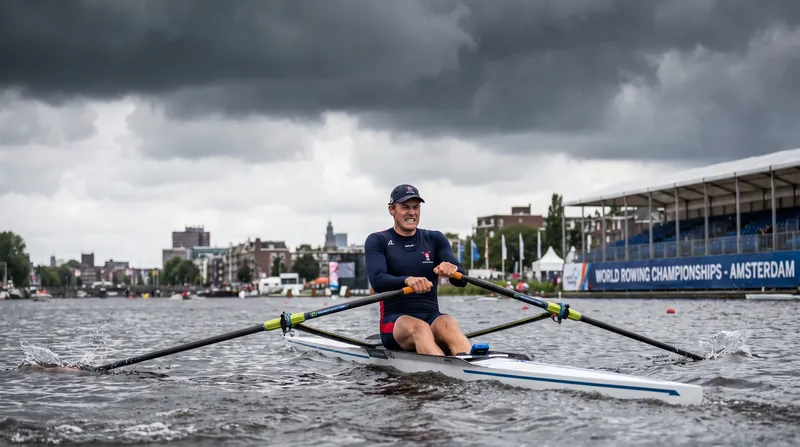
Single Scullers Set the Pace as Favourites Cruise at Amsterdam World Championships
6 sources
Standings
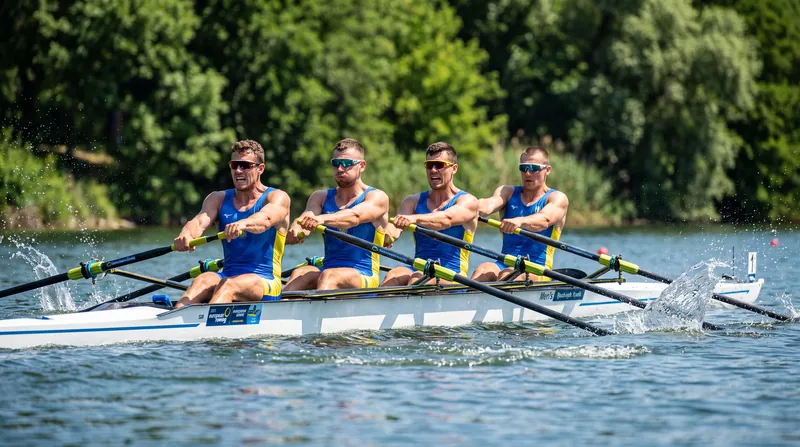
The Men's Quadruple Sculls Championship Picture: Italy's Reign Faces Global Challenge in Amsterdam
6 sources
Standings
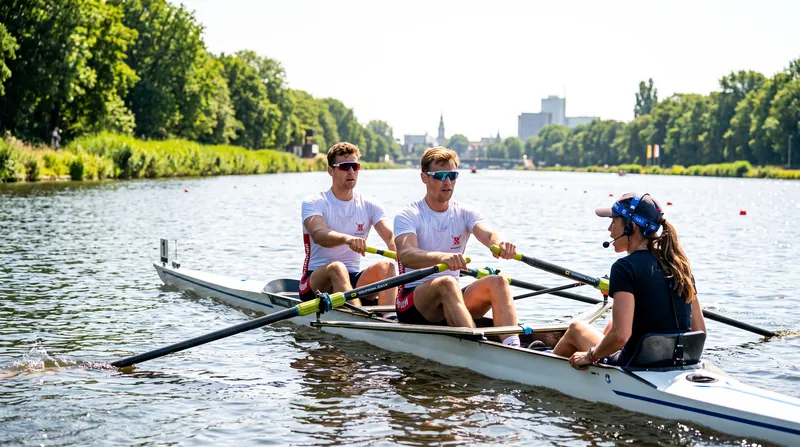
The Men's Pair Championship Picture: New Zealand's Welch and Taylor Face Surging Turkish Challengers in Amsterdam
4 sources
Trade
NCAA Rowing Coaching Carousel: The Late-August Hires Reshaping the 2026-27 Season
5 sources
Comments
Every angle. Every day.
Get Sports stories with full source coverage and perspective breakdowns, free every day.