
Former NOAA Employees Revive Shuttered Federal Climate Data Website
One year after the administration dismantled the primary federal climate portal, an independent team of former government scientists has resurrected the database to restore public access to global warming research.
By Harper Lane

Share this story
In short
- Former NOAA employees have launched an independent website to restore access to federal global warming research.
- The revival comes one year after the administration shut down Climate.gov and fired its 10-person content team.
- At least 14 critical datasets, including the Billion Dollar Weather Disasters product, were decommissioned in early 2025.
A group of former federal scientists has successfully resurrected a comprehensive database of U.S. global warming research, launching an independent portal to replace the shuttered Climate.gov. The revival comes exactly one year after the administration dismantled the National Oceanic and Atmospheric Administration’s (NOAA) primary public-facing climate website, firing its content team and decommissioning dozens of public datasets.[1][2]
The new platform, operating entirely outside federal jurisdiction, aims to restore access to decades of taxpayer-funded meteorological data, weather model forecasts, and climate impact assessments. For researchers, urban planners, and agricultural sectors, this data is not merely academic; it forms the baseline for infrastructure planning, disaster preparedness, and economic forecasting.[1]
The controversy began in early 2025 when the administration initiated a broad retreat from federal climate science. Under the banner of executive directives aimed at "Restoring Gold Standard Science," the government mandated the relocation of research products from Climate.gov to the centralized NOAA.gov domain. However, rather than a simple migration, the directive resulted in the termination of the 10-person contract team responsible for maintaining the portal.[1][6]
The evidence of a targeted reduction in public data access is substantial. According to internal communications and budget passbacks, the administration explicitly demanded that the NOAA contract remove funding for the Climate.gov team. Furthermore, the proposed federal budget for that cycle called for zero funding for specific climate research initiatives and the elimination of regional climate data efforts.[3]
The impact on scientific infrastructure was immediate. By May 2025, NOAA had quietly decommissioned at least 14 datasets, products, and catalogs related to marine, coastal, and estuary science. Among the most heavily utilized tools slated for retirement was the "Billion Dollar Weather and Climate Disasters" product, a critical resource for insurance markets and emergency management agencies.[3]
While NOAA historically evaluates and merges data products—retiring seven in 2024 and six in 2023—the sheer volume and specific climate focus of the 2025 removals alarmed the scientific community. Researchers noted that the purge disproportionately targeted public-facing educational content and accessible data portals, while sparing backend developers, raising concerns about the potential for future misinformation.[2][3]
In response to the sudden loss of access, a decentralized "data rescue" movement emerged. Scientists across academic institutions and non-governmental organizations rushed to scrape and download vulnerable datasets before they could be permanently taken offline. The newly revived website is the culmination of these efforts, painstakingly reconstructing the lost archives from mirrored servers and independent backups.[1][3]
The legal framework surrounding the removal of this data remains highly contested. Environmental groups, including the Union of Concerned Scientists, have filed lawsuits against the administration, arguing that the public has a statutory right to access taxpayer-funded environmental justice and climate information. Legal scholars at the Sabin Center for Climate Change Law have documented these access blockages as part of a broader pattern of scientific censorship.[3][4]
The administration's stated rationale centers on efficiency and scientific rigor. Proponents of the reorganization argue that consolidating research under the primary NOAA.gov domain eliminates redundant contractor overhead and ensures that only peer-reviewed data is presented to the public. They maintain that raw data remains available to specialized researchers through direct agency requests, even if the consumer-friendly portals are offline.[5][6]
However, the evidence supporting the "efficiency" claim is weak, given that the centralized NOAA.gov site has failed to host the vast majority of the decommissioned Climate.gov content over the past year. The redirection pages frequently cite a "lapse in appropriation" or simply state that the resources are being consolidated, leaving users without functional access to historical climate models.[1][4]
The uncertainty surrounding the newly revived independent site lies in its long-term sustainability and completeness. While the former NOAA employees have successfully restored the most prominent datasets, it remains unclear exactly how much raw, unarchived data was permanently lost during the 2025 server migrations. Furthermore, without the continuous feed of real-time federal satellite and sensor data, the independent portal functions more as a historical archive than a live monitoring tool.[1][6]
The mechanism of federal data suppression highlights a critical vulnerability in global climate science: the world's reliance on U.S. infrastructure. NOAA's satellites and data processing centers provide the backbone for international climate models. When the U.S. restricts public access to these pipelines, European and Asian meteorological agencies face significant blind spots in their own forecasting and climate attribution studies.[6]
Moving forward, the scientific community is pushing for legislative safeguards to protect federal data repositories from executive interference. Proposals include establishing independent data trusts and mandating that all non-classified taxpayer-funded research be permanently mirrored on decentralized, non-governmental servers.
Ultimately, the revival of the climate website serves as both a technical triumph and a stark warning. It demonstrates the resilience of the scientific community in preserving the evidentiary record, while exposing the fragility of public knowledge when scientific data becomes entangled in political mandates.[1][2][6]
Definitions
- Data Rescue
- The decentralized effort by scientists and archivists to scrape, download, and mirror vulnerable government datasets before they are taken offline.
- Executive Order 14303
- A presidential directive aimed at reorganizing federal science outputs, which mandated the relocation of research products to centralized domains.
- Billion Dollar Weather Disasters Product
- A key NOAA dataset tracking the frequency and cost of extreme weather events, heavily used by insurance and emergency management sectors.
Questions & answers
Why was the NOAA climate website shut down?
The administration cited a need to centralize resources and ensure 'Gold Standard Science,' terminating the contract for the site's content team in 2025.
What kind of data was lost?
Decommissioned datasets included marine and coastal science catalogs, as well as the heavily utilized 'Billion Dollar Weather and Climate Disasters' product.
Is the new website officially affiliated with the government?
No. It is an independent portal created by former NOAA employees operating entirely outside federal jurisdiction.
Analysis by camp
Data Rescue Advocates
Argue that independent mirroring is necessary to protect scientific integrity.
Scientists and environmental advocates argue that centralizing taxpayer-funded data under political appointees creates an unacceptable bottleneck for public knowledge. They maintain that the removal of consumer-friendly portals like Climate.gov disproportionately harms local municipalities, urban planners, and educators who rely on accessible data visualizations to make informed decisions about climate resilience. For this camp, the independent mirroring of federal data is a necessary safeguard against political interference.
Administration Officials
Argue that the consolidation eliminates redundancy and ensures data quality.
Proponents of the 2025 executive directives argue that the previous system of sprawling, contractor-maintained websites was inefficient and prone to publishing non-standardized research. By mandating that all products be centralized under NOAA.gov, officials argue they are enforcing 'Gold Standard Science' and saving taxpayer money. They emphasize that raw, peer-reviewed data remains accessible to credentialed researchers through formal agency requests, even if public-facing educational portals are retired.
Legal and Policy Watchdogs
Focus on the statutory obligations of federal agencies to maintain public data access.
Legal experts and environmental lawyers view the data removals through the lens of statutory compliance and the Freedom of Information Act. Organizations like the Union of Concerned Scientists have filed lawsuits arguing that the government has a legal mandate to provide public access to environmental justice and climate information. This camp is primarily concerned with the precedent set when an administration can unilaterally decommission public datasets without congressional oversight or public comment periods.
- Data Rescue Advocates
- Argue that taxpayer-funded climate data must remain publicly accessible for research and local resilience.
- Legal and Policy Watchdogs
- Focus on the statutory legality of removing public access to environmental data and the implications for transparency.
- Administration Officials
- Argue that climate research products should be centralized to ensure quality control and eliminate redundant contracts.
Perspectives this story doesn't cover
- Local emergency managers who rely on federal climate data for disaster preparedness
- International meteorological agencies dependent on U.S. satellite data pipelines
Sources
Source coverage
6 outlets
3 viewpoints surfaced






- [1]The New York TimesData Rescue Advocates
Former NOAA Employees Revive Climate Web Site
Read on The New York Times → - [2]The GuardianData Rescue Advocates
Probation hostels in England and Wales forced to shut after staffing crisis
Read on The Guardian → - [3]EosData Rescue Advocates
NOAA's Climate Website May Soon Shut Down
Read on Eos → - [4]Sabin Center for Climate Change LawLegal and Policy Watchdogs
Access to NOAA Climate Change Website Blocked
Read on Sabin Center for Climate Change Law → - [5]National Oceanic and Atmospheric AdministrationAdministration Officials
Climate Data and Research Archive
- [6]Factlen Editorial TeamLegal and Policy Watchdogs
Synthesis by Factlen editorial team
Read on Factlen Editorial Team →

More in Science
See all →Tipping Point
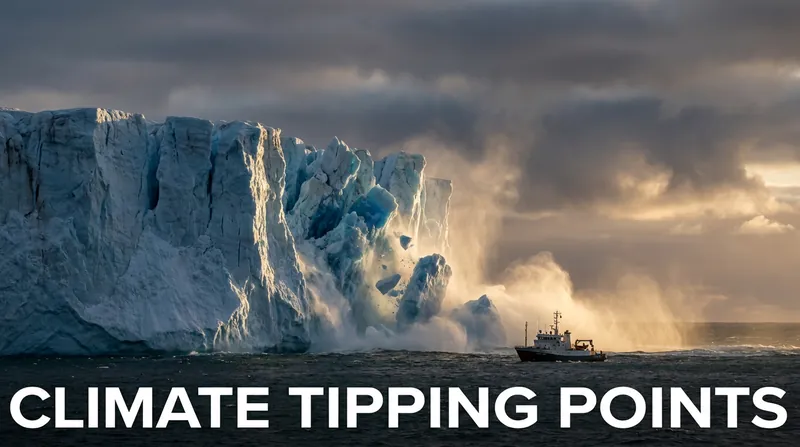
Modeling Study Quantifies Escalating Risk of Major Climate Tipping Points Past 1.5°C Threshold
7 sources
Antarctic Glaciology
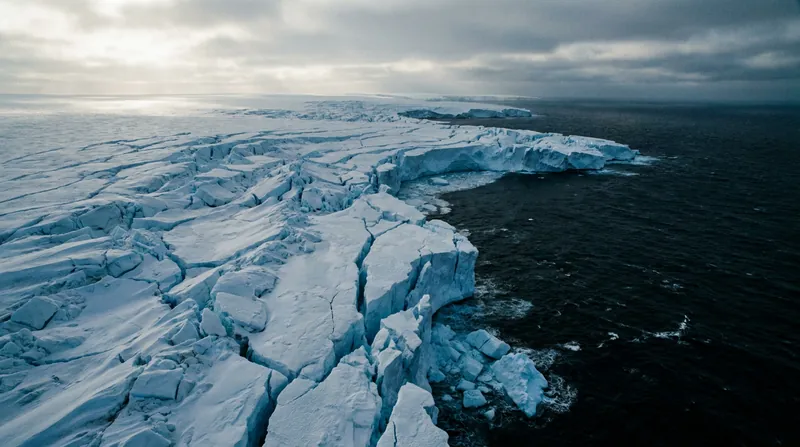
Basal Channels Beneath Antarctic Ice Shelves Funnel Warm Water and Speed Melting
4 sources
Global Warming
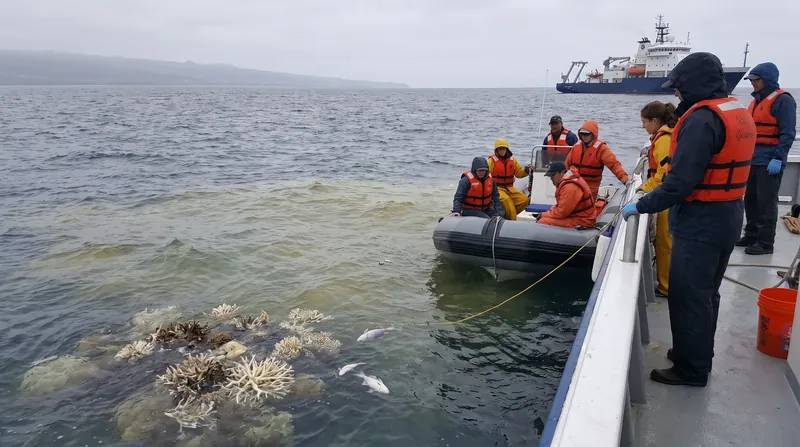
Intensifying El Niño and Record Ocean Temperatures Put 2026 on Track to Become Hottest Year Ever
3 sources
Tropical Biomes
Tropical Warming Could Compress 3 Million Years of Ecosystem Change Into Decades
4 sources

Comments
Every angle. Every day.
Get Science stories with full source coverage and perspective breakdowns, free every day.