
Blizzard Pivots to Ultra-Long-Term Roadmaps With Diablo 5 and StarCraft Reveals
Blizzard Entertainment has unveiled a multi-year development pipeline at BlizzCon 2026, confirming Diablo 5 for 2029 and a new StarCraft title for 2030. The strategy trades immediate expansion revenue for long-term franchise visibility, ending major Diablo 4 updates to focus on the next generation.
By Omar Haddad

- Core Playerbase
- Divided between frustration over Diablo 4's truncated lifespan and excitement for Diablo 5's mechanical promises.
- Industry Analysts
- Focus on the financial risk of abandoning short-term expansion revenue for long-term bets.
- Development Advocates
- View the long-term roadmap as a healthy shift away from secretive, crunch-inducing development cycles.
Perspectives this story doesn't cover
- Current Diablo 4 seasonal developers tasked with maintaining the game until 2029
- Esports organizers waiting for a new StarCraft title to revitalize the RTS competitive scene
The short answer
- Blizzard confirmed Diablo 5 will launch in 2029 and a new StarCraft game in 2030.
- Diablo 4 will receive no further major expansions, shifting entirely to seasonal updates.
- Diablo 5 will feature procedurally-generated dungeons, Diablo 2-style loot, and the new Plague Knight class.
- The ultra-long-term roadmap is designed to convey confidence and secure player mindshare years in advance.
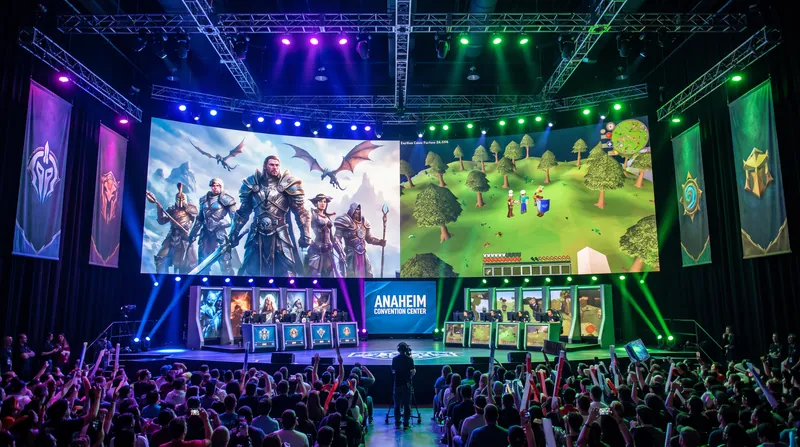
The binding constraint of a four-year public development cycle is player patience: a studio can only sell a distant future if the current live-service ecosystem generates enough revenue and goodwill to fund the wait. For Blizzard Entertainment, that ecosystem is currently holding steady, allowing the developer to make a massive structural pivot at BlizzCon 2026. Instead of teasing immediate content drops for the next fiscal quarter, the studio laid out a multi-year roadmap that stretches to the end of the decade, anchoring its presentation on two distant pillars: Diablo 5 in 2029 and a brand-new StarCraft title in 2030. The announcement marks a sharp departure from the industry standard of secretive, highly compressed marketing cycles, signaling a new era of transparency for a company that has historically guarded its release calendar closely.[1][2][3]
The most immediate casualty of this long-term visibility is the current iteration of Sanctuary. Blizzard confirmed that Diablo 4 will receive no further major expansions, effectively capping the game's premium content cycle far earlier than industry analysts expected. The development team is now entirely focused on seasonal updates and the massive production pipeline required for Diablo 5. It is a high-stakes financial trade-off: sacrificing the guaranteed revenue of annual $40 expansions to ensure the 2029 sequel launches with a feature set that redefines the action RPG genre. By cutting the expansion cord now, Blizzard is betting that the core player base will accept a maintenance-mode cadence for the next 36 months in exchange for a generational leap at the end of the tunnel.[5]
Despite the three-year runway, Blizzard brought concrete mechanical details to the BlizzCon stage, outlining exactly how the 2029 title will differ from its predecessor. Diablo 5 will feature procedurally-generated dungeons designed to eliminate the static, repetitive farming routes that plagued the endgame of Diablo 4, alongside a return to the highly granular, stat-driven loot systems that defined Diablo 2. The studio also revealed the Plague Knight, a brand-new class that utilizes area-of-effect biochemical attacks and represents the first of what Blizzard claims will be "more classes than ever before" at launch. Furthermore, developers teased that the narrative will feature the Lord of Terror prominently, noting that "Diablo himself is coming back twice" during the campaign.[2][4][6]
If Diablo 5 represents a mechanical pivot, the 2030 StarCraft project represents a franchise resurrection. The real-time strategy series has been largely dormant since the final StarCraft 2 expansions over a decade ago, but developers took the stage to promise a definitive 2030 release window. The timeline sounds like a date pulled from a science fiction novel, but studio leadership insists the early announcement is a deliberate strategy to "convey confidence in some of our biggest bets coming forward." While the team stopped short of confirming whether the game will be a traditional base-building RTS or a genre spin-off, they did tease several potential gameplay elements that suggest a massive scale increase over previous iterations.[1][3]
If Diablo 5 represents a mechanical pivot, the 2030 StarCraft project represents a franchise resurrection.
The mechanism driving these distant reveals is a fundamental shift in how AAA studios manage community expectations and developer retention. In an era where live-service games live or die by their perceived momentum, silence is often interpreted as abandonment. By planting flags in 2029 and 2030, Blizzard is attempting to secure mindshare years before a marketing campaign would traditionally begin. It gives the player base a reason to stay invested in the broader Blizzard ecosystem, even as active development on current titles winds down. Internally, it also provides the development teams with a clear, publicly mandated runway, theoretically reducing the crunch associated with shifting internal deadlines.[1][2]
However, the strategy carries immense execution risk. Announcing a game four years early locks the studio into a public timeline in an industry notorious for delays, engine reboots, and shifting consumer tastes. If the procedural generation tech for Diablo 5 fails to scale across millions of concurrent users, or if the new StarCraft engine struggles with modern pathfinding algorithms, Blizzard will be forced to walk back promises made on its biggest stage. The studio is betting that the transparency buys them the goodwill necessary to weather any potential development turbulence, a gamble that relies heavily on the community's willingness to forgive shifting dates in exchange for early visibility.[3][4]
To bridge the gap between today and 2029, Blizzard is relying on a skeleton crew approach to narrative delivery. While Diablo 4 will not see another boxed expansion, developers promised "a lot of room" for ongoing storytelling through seasonal updates. These seasons must now do the heavy lifting of maintaining player engagement and bridging the lore gap to the sequel, a demanding task for a live-service model that has historically relied on massive, paid content injections to reset the player economy. The success of this bridging strategy will dictate whether Diablo 5 launches to a hungry, engaged audience or a fractured community that moved on years prior.[5]
The BlizzCon 2026 presentation fundamentally rewired the timeline of PC gaming's most storied developer. Blizzard is no longer selling the immediate future; it is selling the end of the decade. The success of this strategy hinges entirely on the studio's ability to execute against a public clock, turning a 2029 launch target and a 2030 real-time strategy revival into shipped code while keeping the current player base engaged enough to fund the journey. If the studio can deliver on the mechanical promises of procedurally generated dungeons and a revitalized RTS ecosystem, the four-year wait will be validated; if they stumble, the early announcements will serve only as a monument to overreach.
Jargon, explained
- Live-Service Game
- A game designed to keep players engaged for years through continuous updates, seasons, and new content drops rather than a single release.
- Procedural Generation
- A method of creating game content algorithmically rather than manually, ensuring a different layout or experience every time a player enters an area.
- Mindshare
- The amount of consumer awareness and anticipation a brand or product holds in the public consciousness.
- Action RPG
- A subgenre of role-playing games that emphasizes real-time combat and reflex-based gameplay over turn-based mechanics.
Sources
Source coverage
6 outlets
3 viewpoints surfaced




- [1]PC GamerIndustry Analysts
Why is Blizzard still announcing games years ahead of release? 'We want to convey confidence in some of our biggest bets coming forward'
Read on PC Gamer → - [2]Dot EsportsCore Playerbase
Diablo V is coming in 2029 as Blizzard reveals Diablo’s next few years at BlizzCon
Read on Dot Esports → - [3]IGNDevelopment Advocates
StarCraft Devs Promise New Game Will Definitely Release in 2030
Read on IGN → - [4]PC GamerIndustry Analysts
Diablo 5 gameplay details from BlizzCon: More classes than ever before, procedurally-generated dungeons, and Diablo 2-style loot
Read on PC Gamer → - [5]PC GamerIndustry Analysts
No more Diablo 4 expansions are planned, but there's 'a lot of room' for more storytelling in the leadup to Diablo 5
Read on PC Gamer → - [6]PolygonCore Playerbase
Diablo 5 Shows Off Its Brand New Plague Knight Class
Read on Polygon →
Comments

More in Gaming & Esports
See all →MMO Design
Blizzard Splits World of Warcraft's Future Between 'The Last Titan' and 'Forever' Classic Reboot
6 sources
App Store Economics
The 30% Platform Fee: How the Apple and Google App Store Commission Structure Dictates Mobile Game Economics
8 sources

Esports Economics
How Publishers Are Rewiring In-Game Revenue for Esports Prize Pools
5 sources

Game Mechanics
The Operant Conditioning Chamber: How Positive Reinforcement and Extinction Shape Game Design
7 sources

Every angle. Every day.
Get Gaming & Esports stories with full source coverage and perspective breakdowns delivered to your inbox.