
Barça and Györi Top EHF's New Club Rankings as Men's Champions League Expands to 24 Teams
The European Handball Federation has introduced a comprehensive new club ranking system to determine Champions League seeding, with Barça and Györi Audi ETO KC taking the top spots. The rankings arrive just as the Men's Champions League prepares for a historic expansion to 24 teams for the 2026/27 season.

Share this story
The European Handball Federation (EHF) has officially reset the continent's club hierarchy, unveiling a brand-new ranking system that will dictate seeding for the upcoming 2026/27 season. The comprehensive standings calculate points based on each club's performance across the three most recent European cup seasons—2023/24, 2024/25, and 2025/26—rewarding sustained excellence rather than single-season flashes.[1]
In the men's division, Spanish powerhouse Barça sits comfortably at the summit with 650 points. Their commanding lead is fueled by their recent dominance in the EHF Champions League, including lifting their 12th trophy in Cologne. They are followed by a strong German contingent: SC Magdeburg ranks second with 551 points, while Füchse Berlin claims third with 509 points. Denmark's Aalborg Håndbold and Germany's SG Flensburg-Handewitt round out the top five.[1]
The women's rankings are headlined by Hungarian juggernaut Györi Audi ETO KC, who amassed an impressive 694 points following their recent Champions League triumphs. France's Metz Handball trails in second place with 564 points, while Denmark's Team Esbjerg secured third with 430 points. The new system ensures that domestic league strength no longer artificially inflates a club's European standing; points are strictly earned through wins, draws, and advancement in EHF competitions.[1]
These standings are not merely ceremonial. The EHF immediately utilized the new rankings to determine the seeding pots for the 2026/27 EHF Champions League group phase draw, which took place in Vienna. By strictly tying draw placement to the three-year performance metric, the federation aims to create more balanced groups and reward clubs that consistently invest in deep European runs.[1][4]
The release of the rankings coincides with a historic structural shift in the sport. Starting with the 2026/27 campaign, the Men's EHF Champions League is expanding from 16 to 24 teams. The new format divides the two dozen elite clubs into six groups of four, a departure from the previous two-group system. The top two teams from each group will advance to the main round, while the third- and fourth-placed teams will drop into the EHF European League.[4]
EHF President Michael Wiederer noted during the draw ceremony that the expansion reflects the growing commercial and competitive interest in European club handball. By increasing the field to 24 teams, the federation is providing more clubs from emerging handball markets the opportunity to compete for a spot in the prestigious Final4, while strengthening the secondary European League with high-quality teams that narrowly miss the Champions League main round.[4]
The women's Champions League format remains unchanged for the 2026/27 season, retaining its highly competitive 16-team structure divided into two groups of eight. Defending champions Metz Handball and top-ranked Györi Audi ETO KC have both been drawn into Group B, setting the stage for a highly anticipated rematch of last season's Final4 clash.[1][4]
For clubs outside the traditional elite, the new ranking system offers a clear roadmap to the top. Teams like Spain's Bidasoa Irun, who secured a top-30 placement thanks to deep runs in the EHF European League, can now tangibly track how their secondary-competition victories improve their overall continental standing. As the 2026/27 season approaches, the expanded format and transparent rankings promise one of the most dynamic and inclusive eras in European handball history.[2][3]
The essentials
- The EHF introduced a new club ranking system based on the last three seasons of European competition.
- Barça (650 points) and Györi Audi ETO KC (694 points) secured the top spots in the men's and women's rankings.
- The rankings were immediately used to determine seeding for the 2026/27 Champions League group phase draw.
- The Men's Champions League is officially expanding from 16 to 24 teams for the upcoming season.
- The women's competition will remain at 16 teams, featuring two groups of eight.
Timeline
April 2026
The EHF Executive Committee confirms the motion to introduce a new, three-year club ranking system.
June 25, 2026
The EHF officially publishes the new men's and women's club rankings.
June 26, 2026
The group phase draw for the 2026/27 EHF Champions League takes place in Vienna, utilizing the new rankings for seeding.
September 2026
The newly expanded 24-team Men's Champions League and the 16-team Women's Champions League will throw off.
- EHF Administration
- Views the new ranking system and expansion as necessary steps to commercialize the sport and reward consistent performance.
- Top-Tier Clubs
- Focuses on maintaining their elite status and navigating the logistical challenges of a 24-team Champions League format.
- Emerging European Clubs
- Sees the expanded format and transparent point system as a vital opportunity to break into the sport's upper echelon.
Perspectives this story doesn't cover
- Domestic league executives concerned about calendar congestion
- Players' unions monitoring workload in the expanded format
Sources
Source coverage
4 outlets
3 viewpoints surfaced




- [1]European Handball FederationEHF Administration
EHF releases new club ranking
Read on European Handball Federation → - [2]TNT SportsEmerging European Clubs
European Championship 2026 Table & Standings - Handball Rankings
- [3]FlashscoreTop-Tier Clubs
EHF Euro standings - overall, home/away standings
- [4]Home of HandballEHF Administration
Group Phase | Draw event | EHF Champions League Men & Women 2026/27
More in Sports
See all →Injury
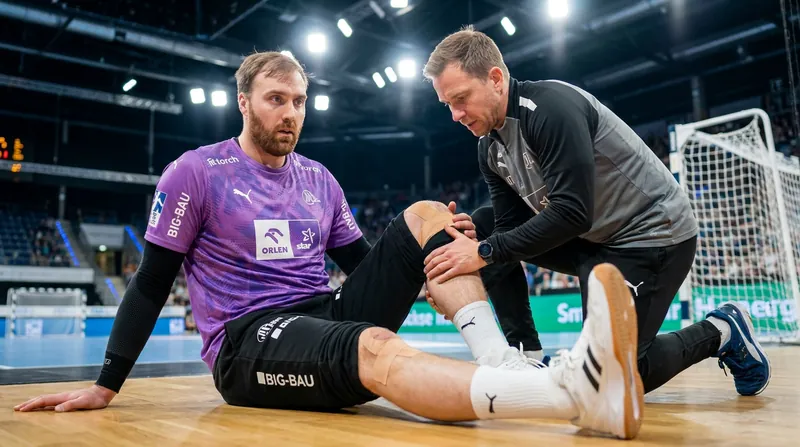
Global Handball Medical Desk: PSG Pivots After Grébille Achilles Tear as Perez de Vargas and Reinkind Eye Returns
3 sources
Standings
Sporting CP, Kielce, and Nantes Set Blistering Pace in Expanded EHF Champions League
6 sources

Injury
Aalborg Playmaker Sander Sagosen Sidelined Up to 14 Weeks With Pelvic Stress Injury
5 sources

Preview
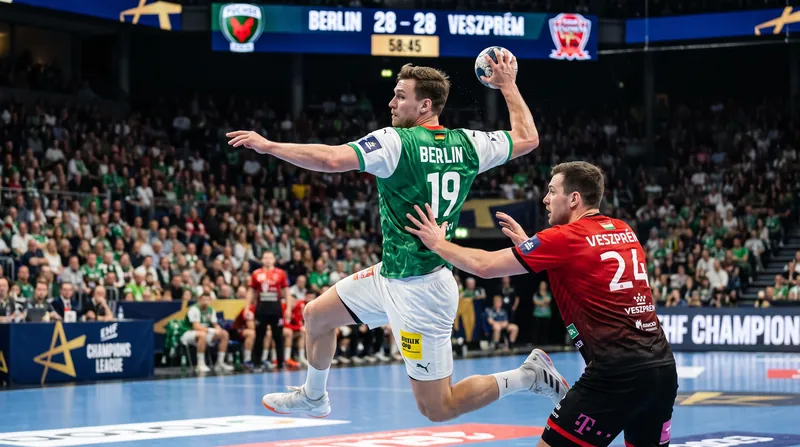
Füchse Berlin and Veszprém Renew Rivalry in Early Champions League Clash
4 sources
Comments
Every angle. Every day.
Get Sports stories with full source coverage and perspective breakdowns, free every day.