
European Handball Injury Report: How Elite Players Are Defying Career-Ending Injuries Ahead of the 2026-27 Season
As European clubs enter the summer off-season, medical staffs are celebrating major rehab milestones. Players like Barça's Domen Makuc and Füchse Berlin's Valter Chrintz are proving that modern sports medicine can successfully conquer historically devastating joint injuries.

Share this story
The conclusion of the grueling 2025-26 European handball season marks the beginning of what is arguably the most critical phase of the year for athletes recovering from severe physical setbacks: the off-season rehabilitation window. As arenas across the continent go quiet and the majority of rosters disperse for brief summer holidays, a dedicated subset of players remains behind in club training facilities. For these athletes, the summer is not a period of rest, but a vital stretch of uninterrupted physical therapy and strength conditioning.
The European Handball Federation has increasingly highlighted this period as the foundation for the upcoming season, noting that the uninterrupted weeks of July and August allow medical staffs to implement aggressive, highly controlled recovery protocols without the pressure of an impending weekend match. This shift in focus has transformed the off-season from a quiet period into a bustling hub of sports science, where the groundwork for triumphant returns is painstakingly laid down.
The inherent physical demands of elite handball make it one of the most punishing sports in the world, placing extraordinary stress on the lower extremities. The game requires constant, explosive jumping, abrupt lateral cutting, and high-impact physical collisions with heavily muscled defenders, all executed on a hard indoor surface. According to sports medicine researchers, these biomechanical forces create a perfect storm for joint trauma, particularly affecting the anterior cruciate ligament (ACL) and the Achilles tendon.
When a player plants their foot to change direction or lands awkwardly after absorbing contact in mid-air, the sheer torque generated can easily exceed the tensile strength of human ligaments. Consequently, knee and ankle reconstructions have long been an unavoidable reality of the sport, casting a shadow over the careers of some of the game's brightest stars and forcing clubs to constantly adapt their roster strategies to account for sudden, catastrophic absences.[1]
Historically, suffering an ACL tear or an Achilles rupture in professional handball was widely viewed as a career-altering, if not career-ending, event. Even if a player managed to physically return to the court, the loss of lateral explosiveness, vertical leap, and psychological confidence often permanently diminished their effectiveness. Players would frequently alter their throwing mechanics or avoid driving into the defense to protect the surgically repaired joint, fundamentally changing their style of play.
The narrative surrounding these injuries was overwhelmingly negative, framed as a tragic loss of potential. However, the landscape of sports medicine has undergone a radical transformation over the last decade. What was once considered a devastating final chapter is now increasingly viewed as a highly structured, albeit grueling, detour. The focus has shifted from mere functional recovery to complete athletic restoration.[3]
Today, modern biomechanical protocols and advanced surgical techniques are dramatically improving the success rates of complex joint recoveries in elite handball. Surgeons now utilize advanced grafting methods that provide greater immediate stability, while physical therapists employ blood flow restriction training and anti-gravity treadmills to begin the strengthening process weeks earlier than previously possible. Research indicates that the elite return-to-play rate for knee reconstructions has climbed significantly, with athletes not only returning to the court but frequently matching their pre-injury performance metrics.
This scientific evolution means that an injury report is no longer just a list of casualties; it is a roadmap of highly engineered comebacks. Medical staffs are leveraging every available technological advantage to ensure that when a player steps back onto the 40x20 meter court, their repaired joint is often stronger and more resilient than it was before the initial trauma occurred.[1]
A premier example of this modern medical triumph is Domen Makuc, FC Barcelona’s dynamic Slovenian playmaker. In August 2023, during a preseason tournament, Makuc suffered a catastrophic left knee injury that sent shockwaves through the European handball community. The diagnosis was devastating: a complete tear of the anterior cruciate ligament, combined with severe damage to the lateral collateral ligament (LCL) and the meniscus.
For a center back whose entire game is predicated on sudden acceleration, sharp changes of direction, and explosive penetration through narrow defensive gaps, a multi-ligament injury of this magnitude was an existential threat to his career. The initial prognosis was incredibly daunting, requiring a complex, multi-stage surgical intervention just to stabilize the joint, followed by a projected recovery timeline that stretched well past a calendar year.[2]
Rather than rushing the process, Barça's medical staff implemented a phased, biomechanically driven recovery protocol designed to rebuild Makuc's knee from the ground up. The club's official medical updates detailed a meticulous approach that prioritized long-term joint health over a hasty return to the roster. The early months were dedicated entirely to reducing inflammation and restoring basic range of motion, utilizing hydrotherapy and localized cryotherapy.
As the healing progressed, the focus shifted to isolated muscle hypertrophy, ensuring that the quadriceps and hamstrings surrounding the knee were strong enough to absorb the immense forces of elite play. This deliberate, science-first approach meant that Makuc spent the entirety of the subsequent season working in the shadows, far removed from the bright lights of the EHF Champions League, focusing solely on the microscopic gains achieved in the physical therapy room.[2]
The patience and precision of this protocol yielded spectacular results. By the conclusion of the 2025-26 campaign, Makuc had not only successfully returned to the court but had emphatically demonstrated the lateral explosiveness and fearless attacking style that originally made him one of the most coveted center backs in Europe.
Observers and analysts noted that he showed no hesitation when driving into the teeth of opposing defenses, absorbing contact and pivoting with the same fluidity he possessed prior to the injury. His seamless reintegration into Barcelona's high-octane offensive system is a testament to the efficacy of modern sports rehabilitation. It proves that even the most devastating multi-ligament traumas can be fully overcome when elite surgical intervention is paired with uncompromising, data-driven physical therapy.
Crucially, Makuc's successful load management throughout his return season serves as a vital blueprint for other clubs handling similar multi-ligament recoveries. Barcelona's staff did not simply clear him to play and walk away; they meticulously monitored his minutes, restricting his court time during lower-stakes domestic matches to ensure his knee was not subjected to cumulative fatigue.
This proactive load management prevented the secondary soft-tissue injuries—such as hamstring strains or calf tears—that frequently plague athletes returning from long-term absences. By treating his return as an ongoing, closely monitored process rather than a definitive finish line, the club ensured his availability for the most critical matches of the season, proving that strategic patience yields long-term roster stability.[2][3]
Similarly, Füchse Berlin's Valter Chrintz has navigated a marathon recovery journey that underscores the sheer resilience required to survive modern handball's injury landscape. The talented Swedish winger suffered a severe ACL tear in November 2022, an injury that derailed a highly promising trajectory.
Unlike textbook recoveries that progress linearly, Chrintz's path was fraught with agonizing setbacks, requiring subsequent medical interventions and extended periods of rest that continually pushed back his return date. His prolonged absence from the court tested the limits of his physical endurance and forced the Berlin medical staff to constantly recalibrate their rehabilitation strategies, adapting to the unpredictable nature of complex joint healing.
Chrintz’s arduous journey vividly highlights the profound psychological toll of long-term rehabilitation. The physical pain of surgery and physical therapy is often eclipsed by the mental anguish of isolation. While the rest of the squad travels across Europe competing in high-stakes Champions League and Bundesliga fixtures, the injured player is left behind in an empty training facility, repeating monotonous, painful exercises.
This stark separation from the team environment, combined with the constant fear of re-injury and the uncertainty of their career trajectory, can lead to severe bouts of depression and anxiety. The mental marathon of recovery is widely considered by athletes to be the most difficult aspect of a major injury, requiring a level of psychological fortitude that is rarely visible to the fans in the stands.[3]
Recognizing this immense mental burden, elite clubs and national federations have fundamentally changed their approach to player care. Sports psychologists are now standard, indispensable members of handball medical teams, working in tandem with physical therapists to ensure players maintain their mental resilience during the 9-to-12 month isolation of recovery. These professionals help athletes set micro-goals, process the frustration of physical setbacks, and visualize their eventual return to the court.
By treating the mind and the body simultaneously, medical staffs are dramatically reducing the burnout and loss of motivation that previously derailed long-term rehabs. This holistic approach acknowledges that a surgically repaired knee is useless if the athlete does not possess the psychological confidence to trust it in the heat of competition.
The on-field impact of these successful, scientifically driven returns is massive for the clubs involved. For FC Barcelona, having a fully healthy and confident Domen Makuc heading into the grueling 2026-27 season fundamentally alters their tactical possibilities.
The on-field impact of these successful, scientifically driven returns is massive for the clubs involved.
His presence on the court significantly reduces the playmaking burden on their other star backs, allowing the coaching staff to rotate their squad more effectively and keep their primary scorers fresh for the decisive moments of the Champions League knockout stages. A successful rehab does not just save a player's career; it acts as the equivalent of a major off-season signing, injecting proven, elite talent back into the roster without the need for complex transfer negotiations.[2]
For Füchse Berlin, the resilient return of Valter Chrintz provides crucial depth and elite experience on the wing as they prepare to navigate the punishing demands of both the German Bundesliga and European competition. In a sport where the margins between victory and defeat are razor-thin, having reliable, battle-tested players available for rotation can be the difference between a championship run and an early exit.
Chrintz's return not only bolsters the team's tactical flexibility but also serves as a powerful emotional catalyst for the locker room, providing a tangible example of perseverance and dedication that resonates deeply with his teammates.
Furthermore, the integration of advanced load-tracking technology is revolutionizing how clubs manage players both during and after their rehabilitation. Teams are increasingly utilizing wearable GPS and biometric sensors during training sessions to monitor a vast array of physical data, including acceleration, deceleration forces, jump height, and heart rate variability.
This real-time data allows medical staffs to quantify the exact amount of stress being placed on a player's joints, enabling them to intervene and pull an athlete from practice before cumulative fatigue leads to structural failure. By transitioning from subjective assessments of tiredness to objective, data-driven load management, clubs are actively preventing the re-injuries that historically plagued returning players.[1]
As European handball continues to evolve—becoming faster, more physical, and more demanding with expanded competition formats—the ability of a club's medical staff to return players to peak performance is becoming just as competitive as the tactical battles waged by the head coaches. The 2026 off-season injury report is ultimately a profound testament to resilience and scientific advancement.
It serves as a powerful reminder to fans that behind every dazzling jump shot, every explosive fast break, and every trophy lifted, there is a mountain of unseen, unglamorous rehabilitation. The players returning to the court this fall are not just surviving the sport's brutal physical toll; thanks to modern medicine, they are actively conquering it.[3]
Key points
- Modern biomechanical protocols are dramatically improving the success rates of ACL and Achilles recoveries in elite handball.
- Barça's Domen Makuc has successfully navigated a multi-ligament knee reconstruction, serving as a blueprint for load management.
- Füchse Berlin's Valter Chrintz continues his resilient return from a complex 2022 ACL tear.
- Clubs are increasingly relying on wearable biometric sensors to monitor player fatigue and prevent re-injury.
- Sports psychologists are now standard members of recovery teams, addressing the mental toll of long-term rehab.
How we got here
Nov 2022
Valter Chrintz suffers a severe ACL tear, beginning a marathon multi-year recovery process.
Aug 2023
Domen Makuc sustains a catastrophic multi-ligament knee injury during preseason.
Early 2024
Makuc and Chrintz begin integrating back into non-contact court work.
May 2026
The 2025-26 club season concludes, shifting focus entirely to off-season load management and final rehab milestones.
July 2026
European clubs open training camps for the 2026-27 season, integrating recovered players into full-contact drills.
- Sports Medicine Experts
- Advocating for data-driven rehab and strict load management.
- Club Management
- Balancing player health with the competitive demands of the season.
- Handball Analysts
- Evaluating how returning players impact roster depth and tactical setups.
Perspectives this story doesn't cover
- Lower-tier clubs that lack the financial resources for state-of-the-art biometric tracking and dedicated sports psychologists.
- Youth academy players whose development is stalled by early-career injuries.
Sources
Source coverage
3 outlets
3 viewpoints surfaced



- [1]British Journal of Sports MedicineSports Medicine Experts
Return to Play Following Anterior Cruciate Ligament Reconstruction in Elite Handball
Read on British Journal of Sports Medicine → - [2]FC Barcelona OfficialClub Management
Medical Update: Domen Makuc and First Team Load Management
Read on FC Barcelona Official → - [3]Factlen Editorial TeamHandball Analysts
Synthesis by Factlen editorial team
Read on Factlen Editorial Team →
More in Sports
See all →Injury
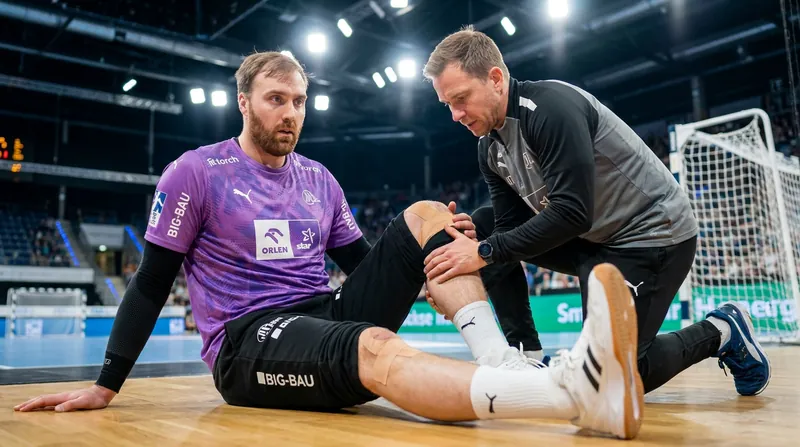
Global Handball Medical Desk: PSG Pivots After Grébille Achilles Tear as Perez de Vargas and Reinkind Eye Returns
3 sources
Standings
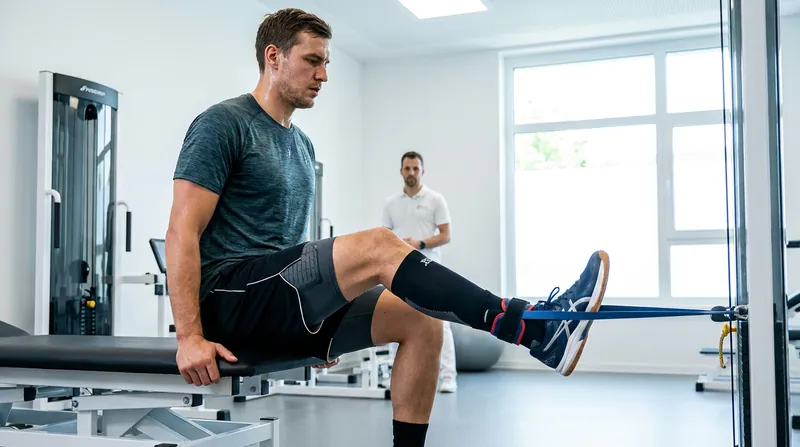
Barça and Györi Top EHF's New Club Rankings as Men's Champions League Expands to 24 Teams
4 sources
Standings
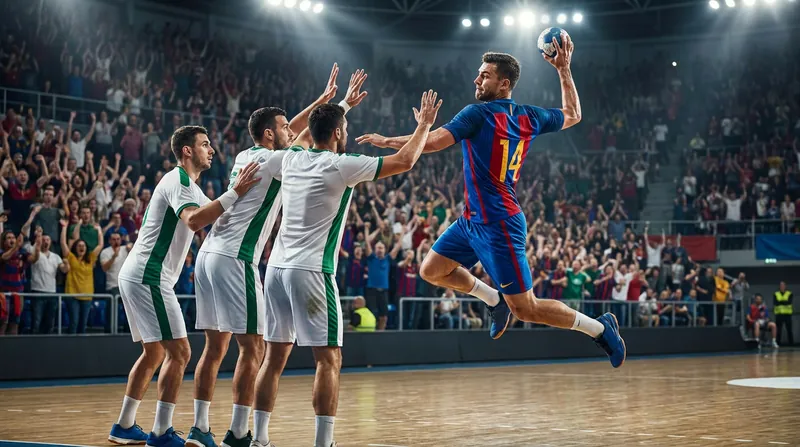
Sporting CP, Kielce, and Nantes Set Blistering Pace in Expanded EHF Champions League
6 sources
Injury
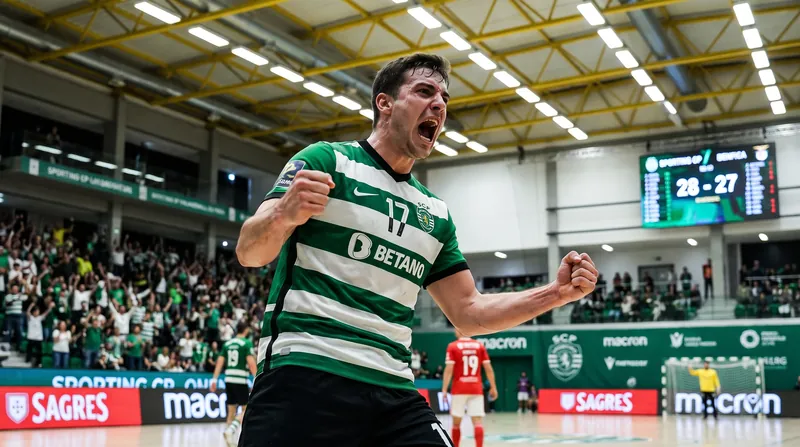
Aalborg Playmaker Sander Sagosen Sidelined Up to 14 Weeks With Pelvic Stress Injury
5 sources

Comments
Every angle. Every day.
Get Sports stories with full source coverage and perspective breakdowns, free every day.