
Aroldis Chapman Breaks Hoyt Wilhelm's 54-Year-Old Relief Strikeout Record
Boston Red Sox closer Aroldis Chapman recorded his 1,364th career strikeout as a reliever, surpassing Hall of Famer Hoyt Wilhelm's long-standing MLB record.

Share this story
The pitch that rewrote a half-century of baseball history was not the 105.8 mph thunderbolt that defined Aroldis Chapman’s youth, nor was it the unhittable rising fastball that made him the most feared closer of the 2010s. Instead, on a Friday night in Anaheim, the 38-year-old left-hander reached back for a 98.6 mph fastball.
It crossed the upper quadrant of the strike zone, blazing past the swinging bat of Los Angeles Angels prospect Denzer Guzman. While it lacked the triple-digit shock value of his prime, the pitch possessed more than enough life to secure a swinging strike three, etching Chapman's name into the sport's ultimate record book.[1]
With that single swing and miss in the bottom of the ninth inning, Chapman recorded the 1,364th strikeout of his career as a relief pitcher. The milestone officially broke the all-time Major League Baseball record previously held by Hall of Famer Hoyt Wilhelm, whose mark of 1,363 had stood completely untouched since his retirement in 1972.
For more than five decades, Wilhelm’s total was viewed by many baseball historians as an unbreakable anomaly, a relic of an era when relief pitchers were utilized in vastly different ways than they are today. Chapman’s ascent to the top of this list represents a monumental achievement in modern athletics.
Chapman took only a brief moment to soak in the monumental achievement. Standing on the mound at Angel Stadium, surrounded by the roar of the crowd and the sudden realization of what he had just accomplished, he paused, acknowledged the weight of the moment, and immediately returned to work.
He still had two crucial outs to get in the ninth inning to secure a 5-2 victory for the Boston Red Sox. The veteran closer knew that while individual records are historic, his primary job was to protect the lead for his rookie teammate, Jake Bennett, who had pitched brilliantly earlier in the game.
The stark contrast between the two men who now sit atop the relief strikeout leaderboard perfectly encapsulates the dramatic evolution of professional baseball over the last sixty years. Wilhelm, a World War II veteran who began his major league career at age 29, was a pioneer of the modern bullpen.
He relied almost exclusively on a fluttering, unpredictable knuckleball—a pitch that minimizes the spin of the baseball and dances erratically toward the plate. Because the knuckleball puts virtually no stress on the elbow or shoulder, Wilhelm was able to pitch until he was nearly 50 years old, baffling generations of hitters with his slow, deceptive approach.[2]
Because the concept of a one-inning closer did not yet exist during Wilhelm's prime, he was frequently deployed as a fireman, entering games in the middle innings and pitching until the final out. To reach his 1,363 strikeouts, Wilhelm logged an astonishing 2,254 career innings.
He accumulated his record through sheer volume and endurance, pitching multiple innings per outing and appearing in over a thousand games. His strikeout totals were a byproduct of his incredible longevity rather than raw, overpowering stuff, making his record a testament to durability in an era before pitch counts and specialized bullpen roles.[2]
Chapman, conversely, is the ultimate manifestation of the modern power game, representing the hyper-specialized era of the one-inning closer. Nicknamed the Cuban Missile after defecting from Cuba in 2009, he built his entire career on sheer, overpowering velocity that terrified opposing hitters.
He reached his 1,364th strikeout in just his 889th career appearance, having pitched fewer than 800 total innings. Achieving the same strikeout total as Wilhelm in roughly a third of the innings highlights the fundamental shift in how the sport is played, prioritizing maximum effort and explosive velocity over short, concentrated bursts.[1][2]
This staggering efficiency is best understood through the advanced metric of strikeouts per nine innings, which calculates a pitcher's rate of missing bats regardless of how many innings they actually throw. While Wilhelm was a master of inducing weak contact and ground balls, Chapman is arguably the greatest bat-misser in the sport's long history.
During his absolute prime, Chapman frequently posted strikeout rates above 14.0 or even 15.0 per nine innings, meaning he was striking out more than half of the batters he faced. This unprecedented rate of dominance allowed him to rapidly close the gap on Wilhelm’s seemingly insurmountable volume-based record.[2]
I feel very happy, very proud of what I've been able to accomplish, Chapman told reporters through an interpreter during his postgame press conference. I just feel very satisfied right now. The soft-spoken veteran rarely shows immense emotion on the field, but the significance of surpassing a 54-year-old record clearly resonated with him.
He acknowledged the long journey from his early days throwing 105 mph in Cincinnati to his current role as a seasoned veteran in Boston, expressing gratitude for the health and opportunity that allowed him to reach this historic summit.[1]
The milestone did not come without a brief moment of late-inning drama. Immediately after striking out Guzman to claim the record, Chapman surrendered back-to-back singles, suddenly bringing the tying run to the plate and threatening Boston's lead. Relying on his veteran composure and years of high-leverage experience, he refused to panic.
Chapman quickly recalibrated, executing a perfect pitch to induce a game-ending double play from Jo Adell. The sequence sealed his 383rd career save and secured a hard-fought win for Red Sox rookie Jake Bennett, perfectly illustrating Chapman's ability to navigate trouble even when he doesn't strike everyone out.
Inside the visiting clubhouse at Angel Stadium, the Red Sox celebrated their veteran closer with a heartfelt video tribute spanning his remarkable 17-year career. The montage traced his nomadic but highly successful journey from a raw, flame-throwing rookie with the Cincinnati Reds in 2010 to a two-time World Series champion who secured rings with the Chicago Cubs in 2016 and the Texas Rangers in 2023.
Younger teammates, many of whom grew up watching Chapman dominate on television, gathered around to honor a player who has defined the closer role for an entire generation of baseball fans.
Boston interim manager Chad Tracy noted the surreal nature of watching Chapman's physical evolution unfold on the clubhouse television screen. The cool thing is watching the video, and you're seeing him at a young age throwing 102, and he's still doing it, Tracy said. It's just incredible. Tracy emphasized that while the raw velocity has naturally dipped a few ticks as Chapman approaches his fortieth birthday, the intimidation factor and the elite mechanics remain largely unchanged, allowing him to continue competing at the highest level of the sport.
Boston interim manager Chad Tracy noted the surreal nature of watching Chapman's physical evolution unfold on the clubhouse television screen.
Chapman’s longevity is perhaps the most surprising and impressive element of his newly minted record. Pitchers who throw at maximum velocity frequently succumb to devastating elbow and shoulder injuries, with many requiring multiple reconstructive surgeries just to stay in the league. The human arm is simply not designed to repeatedly throw a baseball over 100 mph. Yet Chapman has largely avoided catastrophic, career-ending injury, adapting his off-season training, recovery protocols, and pitching mechanics to survive nearly two decades in the sport's most physically demanding and high-leverage roles.
While his legendary fastball no longer routinely hits 103 mph, his ability to adapt has allowed him to age gracefully in a young man's game. To compensate for the slight dip in velocity, Chapman developed a devastating slider and learned to precisely locate a 98 mph sinker. By proving that he could still miss bats with secondary pitches, he kept hitters off-balance and prevented them from simply sitting on his fastball. Even during seasons where his control wavered, his foundational ability to strike batters out remained completely intact.
The pressing question now is how long Chapman’s new record will stand in the modern baseball landscape. Today's game heavily restricts reliever workloads to protect player health, meaning modern closers rarely pitch more than 60 innings in a single season.
Accumulating 1,364 strikeouts at that restricted pace requires a level of durability, consistency, and sustained dominance that very few human beings possess. With active strikeout leaders like Craig Kimbrel and Kenley Jansen also in the twilight of their careers, there is no obvious young successor poised to challenge Chapman's mark anytime soon.[2]
For now, Aroldis Chapman stands entirely alone at the pinnacle of relief pitching history. He has successfully bridged the gap between the endurance-heavy firemen of the 1970s and the hyper-specialized, maximum-effort strikeout artists of the 2020s. By combining the longevity of a bygone era with the overpowering stuff of the modern game, Chapman has etched his name into a record book that may not be rewritten for another 50 years, cementing his legacy as one of the most dominant forces to ever step onto a major league mound.
The essentials
- Aroldis Chapman recorded his 1,364th career strikeout as a reliever, breaking Hoyt Wilhelm's MLB record.
- The 38-year-old left-hander achieved the milestone by striking out Denzer Guzman of the Los Angeles Angels.
- Wilhelm's previous record of 1,363 strikeouts had stood untouched since his retirement in 1972.
- Chapman reached the milestone in significantly fewer innings than Wilhelm, highlighting the modern era's emphasis on high-velocity, one-inning closers.
- The Red Sox secured a 5-2 victory in the game, with Chapman earning his 383rd career save.
Timeline
1972
Hall of Fame knuckleballer Hoyt Wilhelm retires with 1,363 career relief strikeouts, setting a record that would stand for 54 years.
August 2010
Aroldis Chapman makes his MLB debut for the Cincinnati Reds, quickly establishing himself as the hardest-throwing pitcher in baseball history.
2016
Chapman wins his first World Series championship with the Chicago Cubs, cementing his status as an elite high-leverage closer.
June 28, 2026
Chapman ties Wilhelm's all-time record by recording his 1,363rd strikeout against Max Schuemann.
July 3, 2026
Chapman strikes out Denzer Guzman of the Los Angeles Angels to reach 1,364, officially becoming the all-time relief strikeout leader.
- Baseball Historians
- Emphasize the contrast between Wilhelm's endurance-based era and Chapman's modern power-pitching era.
- Modern Analytics Advocates
- Focus on the sheer efficiency of Chapman's strikeout rate and the biomechanical marvel of his longevity.
- Player Development Coaches
- Highlight Chapman's evolution from a pure thrower to a veteran pitcher who can still dominate with diminished velocity.
Perspectives this story doesn't cover
- Current MLB Hitters
- Hoyt Wilhelm's Family
Sources
Source coverage
2 outlets
3 viewpoints surfaced


- [1]The Washington PostBaseball Historians
Boston's Aroldis Chapman sets MLB record for strikeouts as a reliever with his 1,364th K
Read on The Washington Post → - [2]Baseball-ReferenceModern Analytics Advocates
Aroldis Chapman Stats, Height, Weight, Position, Rookie Status & More
Read on Baseball-Reference →

More in Sports
See all →Power ranking
October Threat Tracker: The Five Hottest Baseball Teams on the Planet
6 sources
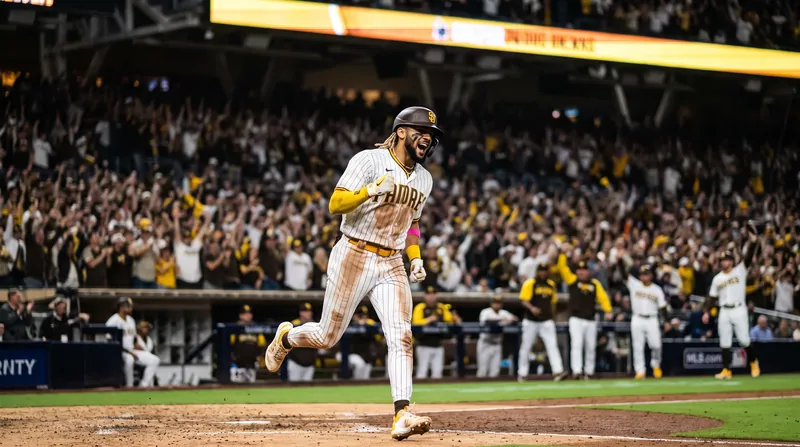
Trade
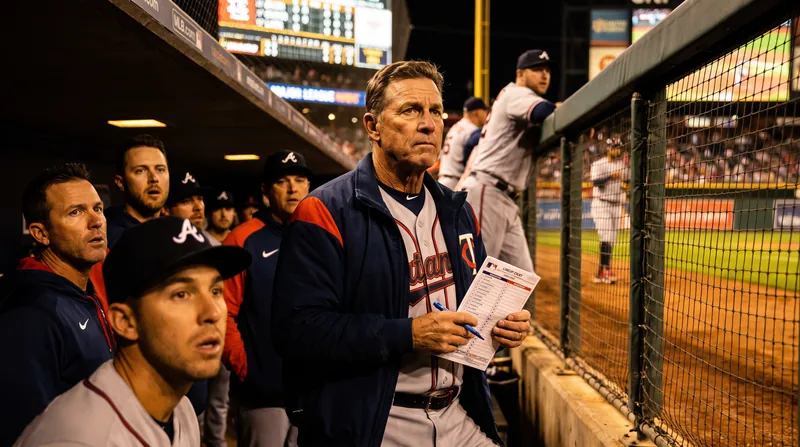
MLB Final Weekend Roster Moves: Rangers Recall Logan O'Hoppe as Giants Lose Bryce Eldridge
6 sources
Injury
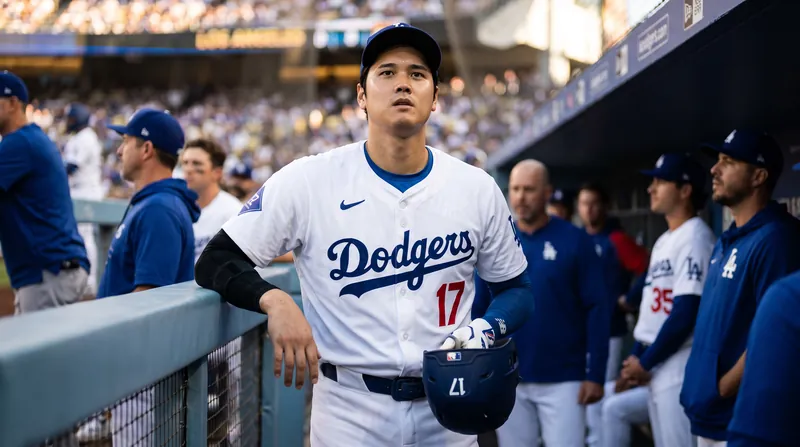
MLB Injury Report: Ohtani Returns for Dodgers as Diamondbacks and Rangers Lose Key Stars in Final Weekend
5 sources
Standings
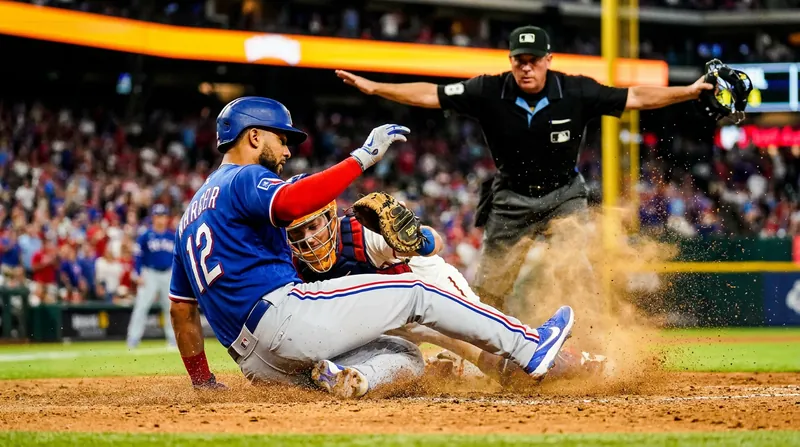
MLB Playoff Picture: AL West Deadlocked and NL Wild Card Chaos Define Final Weekend
7 sources
Comments
Every angle. Every day.
Get Sports stories with full source coverage and perspective breakdowns, free every day.