
Advanced Aerial Surveys Reveal Landfill Methane Emissions Are Vastly Underestimated
A comprehensive multi-year study utilizing advanced remote sensing has found that solid waste landfills emit significantly more methane than official models suggest. The discovery provides a crucial new roadmap for targeted climate interventions, allowing regulators to pinpoint and seal major leaks.

- Empirical Researchers
- Argue that direct atmospheric observation must replace theoretical models to accurately track and mitigate greenhouse gases.
- Regulatory Bodies
- Focus on integrating new empirical data into national carbon accounting frameworks and international climate pledges.
- Analytical Synthesizers
- Highlight the economic and practical optimism of the findings, noting that point-source leaks are highly fixable.
For decades, the global accounting of greenhouse gases has relied heavily on mathematical models rather than direct observation. When it came to municipal solid waste—the sprawling landfills that absorb the detritus of modern life—regulators used formulas based on the amount of trash buried and assumed rates of decomposition.[2][5]
A landmark multi-year research effort has now upended those assumptions, revealing that landfills are emitting methane at rates far exceeding official estimates. By deploying advanced imaging spectrometers on aircraft to directly measure the air above waste sites, scientists have captured the invisible plumes of gas escaping into the atmosphere.[1]
The findings are stark: observed methane emissions from surveyed landfills are, on average, 1.4 to 2.7 times higher than the figures reported to environmental protection agencies. This discrepancy fundamentally alters the math of national climate targets and exposes a massive blind spot in global carbon accounting.[1][2]
Methane is a uniquely potent greenhouse gas. While it degrades in the atmosphere much faster than carbon dioxide, it traps roughly 80 times more heat over a 20-year period. This short-term potency means that curbing methane is widely considered the fastest way to slow the rate of global warming.[3][5]
The waste sector is responsible for an estimated 20 percent of human-caused methane emissions globally. Inside a landfill, organic matter like food scraps and paper breaks down in an oxygen-free environment, a process called anaerobic digestion that produces a steady stream of methane-rich biogas.[3][4]
To prevent this gas from escaping, modern landfills are engineered with complex capture systems. Networks of perforated pipes are buried within the waste to vacuum out the gas, while thick layers of clay and synthetic liners cap the surface to keep the environment sealed.[2][5]
However, the new aerial surveys reveal that these containment systems are highly prone to localized failures. The researchers discovered that the vast majority of the uncounted emissions are not seeping out evenly across the surface of the landfills, but are instead blasting from specific, highly concentrated point sources.[1][4]
These "super-emitter" events often occur when a single pipe cracks, a valve malfunctions, or a section of the protective cover settles and ruptures. Because these leaks are invisible to the naked eye and odorless, facility operators are frequently unaware that a massive breach has occurred.[5]
These "super-emitter" events often occur when a single pipe cracks, a valve malfunctions, or a section of the protective cover settles and ruptures.
The technological leap that made this discovery possible is the imaging spectrometer. Originally developed for planetary exploration, these sensors measure the exact wavelengths of light absorbed by different gases, allowing scientists to "see" methane plumes in real-time and trace them back to their exact source.[4]
Organizations like Carbon Mapper and NASA's Jet Propulsion Laboratory have pioneered the use of this technology, flying specialized aircraft over hundreds of active landfills across North America. Their data provides a high-resolution map of emissions that ground-based sensors simply cannot match.[4]
The traditional method of estimating emissions relies on a "first-order decay model." This formula calculates expected methane based on the tonnage of waste and assumes a standard efficiency rate for the gas capture systems. The new empirical data proves that assuming a capture system is working perfectly is a critical flaw in the modeling.[1][2]
While the discovery of higher-than-expected emissions sounds like purely bad news for the climate, researchers emphasize a highly optimistic counter-narrative. Because the excess methane is coming from concentrated super-emitters rather than diffuse seepage, it is an eminently fixable problem.[4][5]
Identifying the exact location of a leak allows landfill operators to dispatch crews to patch a torn liner or repair a broken valve, often resolving a massive emissions source in a matter of days. In several instances during the study, researchers notified facility managers of leaks, which were promptly fixed.[1][4]
There is also a strong economic incentive to capture this escaping gas. Landfill methane can be purified and sold as renewable natural gas, or burned on-site to generate electricity. Every ton of methane that leaks into the atmosphere represents lost revenue for the waste management facility.[5]
The implications for environmental regulators are profound. Agencies are now facing mounting pressure to transition away from purely model-based reporting and incorporate empirical, observational data into their regulatory frameworks to ensure compliance.[2][5]
This shift aligns with the goals of the Global Methane Pledge, an international agreement launched in 2021 to reduce global methane emissions by 30 percent by 2030. Achieving that target will be impossible without accurate baselines and the ability to verify that mitigation efforts are actually working.[3][5]
The next phase of this atmospheric accountability involves moving from aircraft to orbit. New satellites equipped with methane-detecting spectrometers are currently being deployed, promising to provide continuous, global monitoring of waste sites, oil and gas fields, and agricultural centers.[4]
Ultimately, this breakthrough in atmospheric science transforms a daunting climate variable into a manageable infrastructure challenge. By making the invisible visible, scientists have provided policymakers and industry leaders with the exact coordinates needed to close one of the world's most significant greenhouse gas loopholes.[1][5]
Analysis by camp
Climate Scientists' View
Emphasize the urgency of updating emission models and the short-term warming impact of methane.
For atmospheric researchers, the discrepancy between modeled and observed emissions represents a critical flaw in global climate strategy. They argue that relying on theoretical decay formulas creates a false sense of security regarding national carbon footprints. By shifting to empirical observation, scientists believe we can finally target the most aggressive drivers of near-term warming, noting that cutting methane is the fastest way to lower the global temperature curve.
Waste Management Industry's View
Focus on the operational challenges of maintaining perfect seals and the potential for renewable natural gas capture.
Facility operators point out that landfills are dynamic, settling environments where maintaining a perfect seal over hundreds of acres is practically impossible. However, the industry increasingly views advanced monitoring not as a regulatory burden, but as an operational asset. Because escaping methane represents lost revenue that could otherwise be captured and sold as renewable natural gas, companies are beginning to partner with aerial survey firms to identify and patch leaks quickly.
Environmental Regulators' View
Highlight the transition from formula-based estimates to empirical enforcement.
Agencies like the EPA are navigating a complex transition from legacy accounting methods to modern, data-driven enforcement. Regulators acknowledge that the old models are insufficient, but integrating real-time satellite and aircraft data into legal compliance frameworks requires new standards and protocols. Their goal is to create a system where super-emitters can be identified and penalized or remediated within days, rather than remaining hidden in annual paperwork estimates.
Limits of the evidence
- How accurately the findings from North American landfills extrapolate to waste management facilities in developing nations with different infrastructure.
- The long-term durability of the physical repairs made to landfill liners and pipes after a super-emitter leak is identified.
- Exactly how quickly regulatory agencies will mandate continuous empirical monitoring over traditional formula-based reporting.
Significance
Methane is a potent greenhouse gas, trapping roughly 80 times more heat than carbon dioxide over a 20-year period. By accurately mapping exactly where these massive leaks are occurring, policymakers and waste management companies can deploy targeted fixes that yield immediate, high-impact climate benefits.
Sources
Source coverage
5 outlets
3 viewpoints surfaced





- [1]ScienceEmpirical Researchers
Quantifying methane emissions from United States solid waste disposal sites
Read on Science → - [2]Environmental Protection AgencyRegulatory Bodies
Overview of Greenhouse Gases: Methane Emissions
Read on Environmental Protection Agency → - [3]UN Environment ProgrammeRegulatory Bodies
Global Methane Assessment
Read on UN Environment Programme → - [4]Carbon MapperEmpirical Researchers
Tracking Methane from the Global Waste Sector
Read on Carbon Mapper → - [5]Factlen Editorial TeamAnalytical Synthesizers
Synthesis by Factlen editorial team
Read on Factlen Editorial Team →
Comments

More in Science
See all →Quantum Mechanics
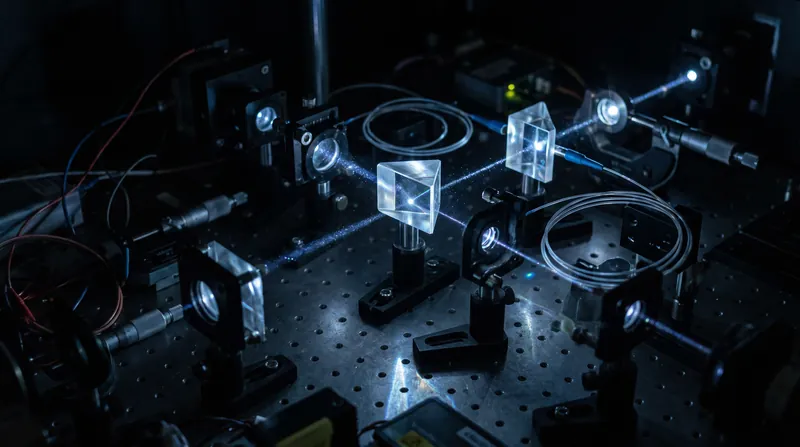
The EPR Paradox and Bell's Theorem: How Non-Local Correlation Exceeds the Limits of Classical Reality
8 sources
Working Memory
The Phonological Loop, Visuospatial Sketchpad, Episodic Buffer, and Central Executive: How Baddeley's Model Organizes Working Memory
5 sources

Geochronology
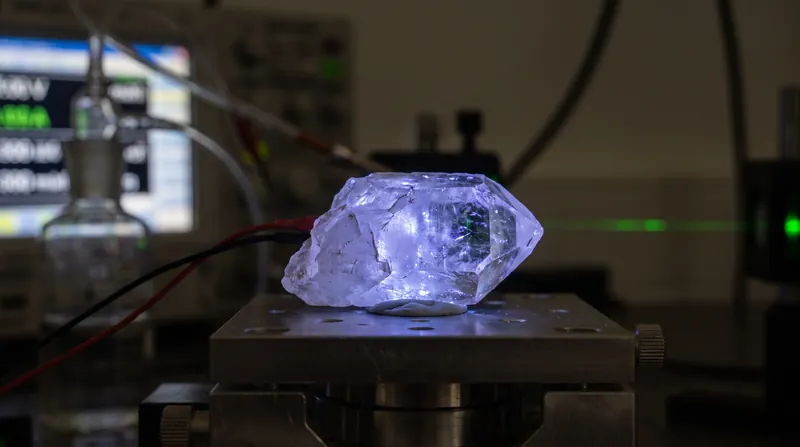
The Blue or Green Light Pulse: How Optically Stimulated Luminescence Measures the Accumulated Radiation Dose in Quartz Grains
8 sources
Buffer Chemistry
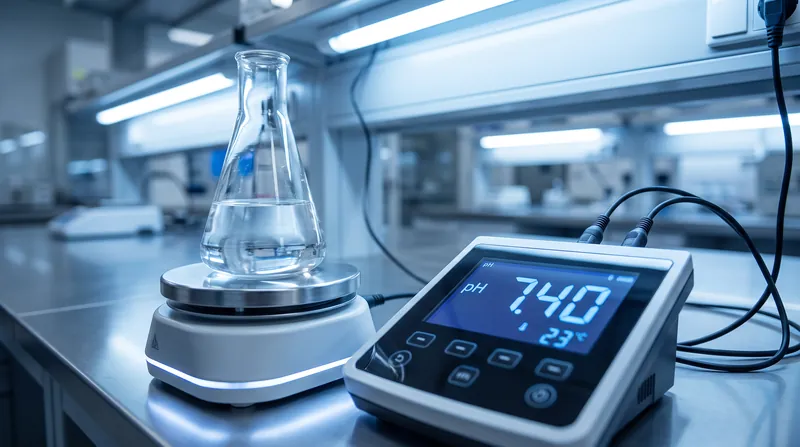
The Henderson-Hasselbalch Equation: How the Ratio of Conjugate Base to Acid Determines Buffer pH
8 sources
Every angle. Every day.
Get Science stories with full source coverage and perspective breakdowns delivered to your inbox.