full timeline
US–South Korea energy negotiations
Follow US–South Korea energy negotiations in the Factlen app and get an alert when there is news. Get the app
Share this story
Latest
By 23:35 UTC on October 4, 2026, U.S. President Donald Trump threatened to double costs for South Korea if Seoul declines to fund a $54 billion natural gas pipeline in Alaska. South Korean officials stated that the 807-mile Alaska LNG project remains under strict commercial review and is not a finalized agreement.
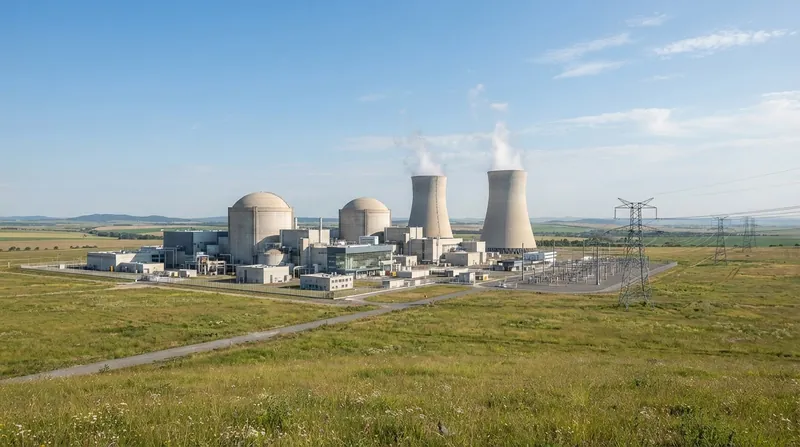
The tariff threat followed an October 3 announcement, outlined by 01:58 UTC, detailing a $120 billion framework known as Project Power to construct eight large-scale nuclear reactors on American soil. The agreement allocates $100 billion for construction and $20 billion for contingency reserves, aiming to build six Westinghouse AP1000 reactors and two South Korean-designed APR1400 units.
The nuclear agreement and the disputed Alaska pipeline are part of a broader $350 billion South Korean investment package. The two countries plan to transfer a $10 billion advance payment by the end of 2026 to secure long-lead manufacturing items for the nuclear reactors.
How the story developed
In October 2025, Washington and Seoul signed a trade framework in which South Korea pledged $350 billion in U.S. investments in exchange for lowered tariffs. The United States had previously threatened to restore 25 percent tariffs on South Korean imports if the promised investments were delayed.
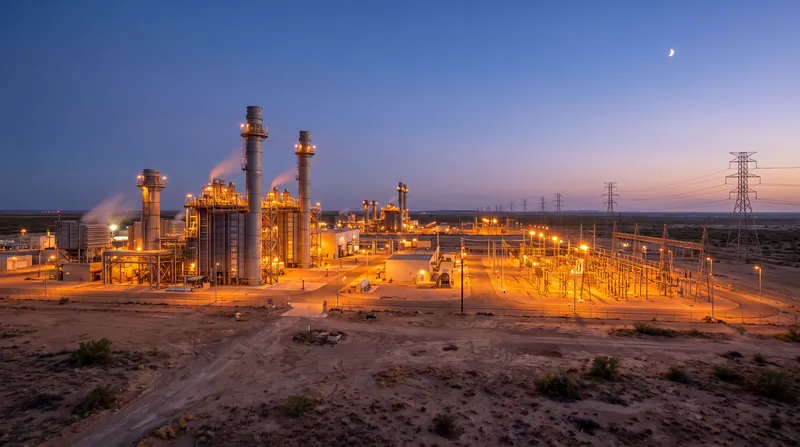
By 19:21 UTC on September 10, 2026, South Korea was preparing to finance a massive energy package to support American artificial intelligence data centers. The proposed investments included up to eight nuclear power plants and a $22.3 billion, 6.3-gigawatt gas facility in Texas.
At the time, South Korea's Industry Ministry cautioned that reports of a finalized agreement were inaccurate and that negotiations continued. However, the $22.3 billion Texas gas plant was later confirmed as part of the broader investment package.
On October 3, 2026, the two nations outlined the Project Power framework, resolving past intellectual property disputes and marking the first domestic deployment of Korean-designed nuclear units in the United States.
Tensions escalated the following day, October 4, when President Trump issued his warning regarding the $54 billion Alaska LNG deal. Analysts warned that leveraging tariffs and security alliances to force infrastructure funding could destabilize broader diplomatic relations between the two countries.
What to watch
- The United States and South Korea plan to transfer a $10 billion advance payment by the end of 2026 to secure long-lead manufacturing items for the nuclear reactors.
- South Korean officials are conducting a commercial review of the $54 billion Alaska LNG pipeline project.
Charts, maps and images
Show 1 moreShow fewer
Timeline
October 2026
Trump Threatens South Korea With Higher Tariffs After Seoul Balks at $54 Billion Alaska LNG Deal
AI-generatedAI-generatedAI-generatedUS and South Korea Outline $120 Billion Deal to Build Eight Large Nuclear Reactors on American Soil
AI-generatedAI-generatedAI-generated

September 2026
South Korea Nears $100 Billion US Energy Investment for AI Infrastructure