
World Cup Winners to Receive Championship Rings for First Time in Tournament History
In a historic departure from tradition, FIFA has announced that the champions of the 2026 World Cup will receive custom-designed championship rings alongside their traditional gold medals. The initiative, heavily influenced by North American sports culture, marks a new era of personalized commemoration for global football's ultimate prize.
By Meera Iyer

Share this story
When the confetti settles at MetLife Stadium this Sunday, the victors of the 2026 FIFA World Cup will walk away with more than just the traditional gold medals. In a historic departure from nearly a century of tournament tradition, FIFA has announced that the winning squad—either Spain or Argentina—will be awarded custom-designed championship rings.
The unprecedented move marks the first time global football's governing body has adopted the quintessential North American sports tradition, blending the heritage of the World Cup with the localized flair of its United States, Canadian, and Mexican hosts. The announcement, made on the eve of the final, has injected an unexpected layer of glitz into the tournament's climax, ensuring that the 2026 champions will carry a permanent, wearable piece of history.[1][5]
The introduction of championship rings represents a fascinating cultural crossover, heavily championed by the North American organizing committee. For decades, the ultimate symbol of team success in the NFL, NBA, and MLB has been the heavy, diamond-encrusted hardware presented to players months after their victory.
By integrating this tradition into the world's most-watched sporting event, FIFA is acknowledging the massive influence of American sports marketing and presentation. Organizers view the rings not as a replacement for the iconic winner's medals, which will still be draped around the players' necks on the podium, but as an elevated, personalized keepsake that players can showcase in their daily lives.[2][3]
The design of the inaugural World Cup rings is a closely guarded secret, but early details released by FIFA indicate a masterclass in symbolic jewelry. Each ring will be forged from 18-karat sustainably sourced gold and will feature exactly 48 diamonds, representing the expanded field of nations that competed in the 2026 tournament.
The face of the ring will prominently display a miniature replica of the FIFA World Cup Trophy, surrounded by the crest of the winning federation. The shanks—the sides of the ring—will be deeply engraved with the player's name, their squad number, and the coordinates of the stadium where the final was won.[4][5]
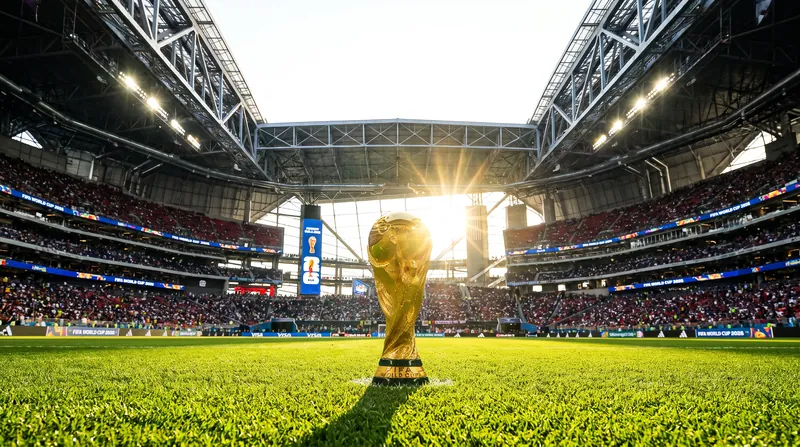
For the players, the appeal of a championship ring solves a long-standing quirk of winning the World Cup. While the victorious team gets to hoist the solid gold FIFA World Cup Trophy on the pitch, the actual trophy is quickly returned to FIFA's headquarters in Zurich, Switzerland.
The winning federation receives a bronze replica, and the players take home their medals. Medals, however, are traditionally framed or stored in trophy cabinets, rarely seeing the light of day. A championship ring offers a wearable, highly visible testament to a player's pinnacle achievement, allowing them to carry their status as world champions into any room they enter.[1][3]
The reaction from the two finalist camps has been overwhelmingly positive, adding a unique motivational wrinkle to Sunday's clash. Spanish and Argentine players, many of whom play their club football in Europe where ring culture is virtually nonexistent, have expressed genuine excitement about the prospect.
Representatives from both federations noted that the rings add a distinct "2026 flavor" to the tournament, serving as a perfect time capsule of a World Cup hosted across the North American continent. The novelty of the hardware has dominated pre-match media availability, with players eagerly discussing the prospect of adding a Super Bowl-style ring to their collections.[4]
Manufacturing these bespoke pieces will require a meticulous, months-long process. Unlike the medals, which are minted in advance and handed out immediately after the final whistle, the rings cannot be finalized until the champion is crowned and the final roster is confirmed.
A premier international jeweler has been contracted to hand-craft the 50 rings allocated to the winning squad and its core coaching staff. The players will be fitted for their rings in the locker room during the post-match celebrations, with the final pieces expected to be delivered in a dedicated ceremony later in the year, likely during the September international break.[4][5]
Beyond the players' joy, the introduction of championship rings opens a lucrative new frontier for sports memorabilia and commercial branding. The rings instantly create a new category of high-end collectibles, with replica versions expected to be made available to the public through FIFA's official retail partners.
This commercial expansion aligns perfectly with the broader financial strategy of the 2026 World Cup, which has already shattered records for attendance and revenue. By adopting a merchandise model that has generated billions for North American sports leagues, FIFA is subtly modernizing its approach to tournament legacy.[2][3]
The lingering question is whether this North American tradition will become a permanent fixture of the global game. While FIFA has framed the rings as a special homage to the 2026 host nations, the overwhelming popularity of the concept suggests it may outlive this specific tournament.
As the sport looks toward the 2030 centennial World Cup spanning three continents, the precedent set in New Jersey could easily become the new standard. For now, either Spain or Argentina will leave American soil not just as champions of the world, but as the first footballers in history to wear their global supremacy on their fingers.[1][5]
Key points
- FIFA will award championship rings to the winners of the 2026 World Cup, marking a historic first for the tournament.
- The rings will feature 18-karat gold, 48 diamonds representing the expanded tournament field, and personalized engravings.
- The initiative was heavily influenced by North American sports culture due to the US, Canada, and Mexico hosting the event.
- Players will be fitted for the rings in the locker room after the final, with delivery scheduled for later in the year.
- The rings provide players with a permanent, wearable keepsake, as the actual World Cup trophy is returned to FIFA.
How we got here
1930
FIFA awards the first World Cup medals to the inaugural champions, Uruguay.
1974
The current FIFA World Cup Trophy is introduced, replacing the Jules Rimet Trophy.
June 2026
The expanded 48-team World Cup kicks off across North America, bringing heavy US sports marketing influence to the tournament.
July 2026
FIFA announces that the 2026 champions will be the first to receive custom championship rings.
- Global Modernists
- Embrace the rings as a brilliant modernization of football tradition that gives players a tangible, wearable reward.
- Football Traditionalists
- View the rings as an unnecessary Americanization of the sport, preferring the historic simplicity of the winner's medal.
- Commercial Analysts
- Analyze the move primarily as a merchandising masterstroke that opens new revenue streams for FIFA and its partners.
Perspectives this story doesn't cover
- Jewelry Manufacturers
- Sports Memorabilia Collectors
Sources
Source coverage
5 outlets
3 viewpoints surfaced





- [1]ESPNGlobal Modernists
FIFA introduces championship rings for 2026 World Cup winners
- [2]Fox SportsCommercial Analysts
World Cup gets Americanized: Winners to receive Super Bowl-style rings
- [3]BBC SportFootball Traditionalists
World Cup 2026: Champions to be awarded rings in historic first
Read on BBC Sport → - [4]The AthleticGlobal Modernists
Inside the design of the 2026 World Cup championship rings
- [5]FIFA
FIFA unveils commemorative championship rings for 2026 victors
More in Sports
See all →History
The Pursuit of Immortality: How the World Cup Golden Boot Evolved Across a Century of Football
4 sources
Looking back
The Qatar Crucible: How the 2022 World Cup Redefined Football's Global Hierarchy
4 sources
History
The Bench Revolution: How Substitutions Transformed from a World Cup Afterthought to the Ultimate Tactical Weapon
4 sources
Storyline
The Wing-Back Evolution: How Defenders Became the World Cup's Primary Playmakers
7 sources

Comments
Every angle. Every day.
Get Sports stories with full source coverage and perspective breakdowns, free every day.