
Wimbledon 2026 Week Two Injury Report: Djokovic Navigates Scare as Alcaraz Eyes Hard-Court Return
As Wimbledon enters its final stages, Novak Djokovic is managing a late-tournament leg issue, while sidelined stars Carlos Alcaraz and Emma Raducanu set their sights on the North American hard-court swing.
By Ryder James
Share this story
As the 2026 Wimbledon Championships enter their decisive final days, the physical toll of the grueling grass-court season has become the tournament's unavoidable subplot. While the world's top players battle for a coveted place in the semifinals, the medical room at the All England Club has been just as active as Centre Court.
For fans, analysts, and fantasy sports participants tracking the draw, the latest injury developments are fundamentally reshaping the competitive landscape. These physical setbacks and recovery timelines will dictate the favorites not only for the remaining matches in London but for the upcoming North American hard-court swing.[2]
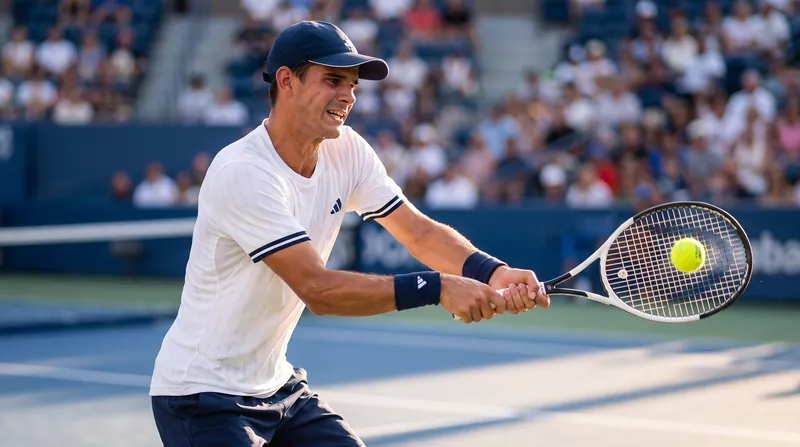
The most pressing storyline of the second week emerged during the men's quarterfinals, where seven-time champion Novak Djokovic sparked immediate concern regarding his physical durability. Facing third-seeded Felix Auger-Aliassime in hot, physically demanding conditions, Djokovic pulled up during a pivotal moment in the first set. After securing the first point of his service game at 4-4, the 39-year-old Serbian took a lengthy, concerning pause at the back of the court to stretch his left leg, visibly grimacing between points as the crowd watched in hushed silence.
Despite managing to hold his serve, Djokovic subsequently called for a medical timeout to receive targeted treatment from the tournament physiotherapist. Broadcasters and former players immediately noted the severity of his reaction to a backhand down the line, which triggered the initial discomfort. Analysts suggested the specific stretching patterns pointed toward an issue with the calf, the Achilles tendon, or potentially the plantar fascia—injuries that require incredibly careful management to avoid catastrophic aggravation during grueling best-of-five-set Grand Slam matches.
Djokovic's ability to play through physical discomfort is legendary, but the sudden onset of the issue highlights the razor-thin margins of elite Grand Slam tennis. The medical staff's on-court stability tests of his ankle and calf underscore the precarious nature of competing at the highest level while managing acute physical distress. For Auger-Aliassime and the rest of the remaining field, Djokovic's compromised mobility introduces a volatile new variable into the championship equation, forcing opponents to adjust their tactical game plans on the fly.
While Djokovic battles to stay in the draw, Hubert Hurkacz's Wimbledon campaign ended in a sudden, deeply frustrating fashion. The Polish star was forced to retire from his fourth-round match against Jan-Lennard Struff despite holding a commanding two-set lead and looking poised for a deep tournament run. Hurkacz, who had been in complete control of the baseline exchanges and serving with his trademark power, experienced a severe physical breakdown that made continuing the match entirely impossible, abruptly ending his hopes at the All England Club.
The issue began late in the third set when Hurkacz felt a twinge in his back, which quickly cascaded into a debilitating abdominal muscle problem on his right side during the fourth set.
'It happened with one movement,' Hurkacz explained to reporters, noting that despite relying on his character and adrenaline to push through, the pain was ultimately insurmountable. The sudden, unfamiliar nature of the muscle injury will require further diagnostic MRI testing, adding a weary familiarity for a player who also suffered a tournament-ending knee injury at the 2024 Championships.
Beyond the meticulously manicured grounds of SW19, the broader tennis world is closely monitoring the rehabilitation of superstar players who were forced to skip the grass-court major entirely. Chief among them is Carlos Alcaraz, whose absence from Wimbledon is part of a broader, highly conservative recovery process orchestrated by his medical team. The world No. 2 has been sidelined since April due to persistent inflammation in his wrist tendons, an injury that prompted him to skip the entire clay and grass seasons to protect his long-term health.[1]
Rather than rushing a premature return or risking surgical intervention that could derail his career, Alcaraz and his medical team have opted for extended rest and immobilization. This cautious approach aims to ensure structural integrity over short-term tournament gains. With his wrist finally healing, the Spaniard's focus has shifted entirely to the North American hard-court swing. Early indications and leaked training footage suggest he may target the Canadian Open in early August as a primary warm-up event before launching a full assault on the US Open.[1]
On the women's tour, Emma Raducanu is navigating her own extended and frustrating recovery timeline. The British star was forced to withdraw from Wimbledon on the eve of her highly anticipated first-round match after a lingering 'niggle' developed into a confirmed stress fracture in her right leg. Spotted on crutches shortly after the devastating announcement, Raducanu's injury appears significantly more severe than initially hoped, requiring absolute off-feet rest to allow the bone to knit back together before she can even begin light on-court movement.
The latest entry lists for the upcoming hard-court tournaments confirm a delayed return for the former US Open champion. Raducanu's name was notably absent from the initial field for the Washington Open, a prestigious WTA 500 event starting on July 27 that traditionally kicks off the North American swing. While she could technically still request a late wildcard entry, her medical team is reportedly unwilling to take any risks on the unforgiving acrylic hard courts until clinical imaging confirms the stress fracture is fully healed.
The psychological burden of these extended absences is often just as challenging as the physical rehabilitation itself. Grigor Dimitrov, who made a triumphant return to the Wimbledon second week this year after his own agonizing injury withdrawal in 2025, recently shed light on the immense mental hurdles of returning to elite competition. Dimitrov admitted that his first practice sessions back on the court were plagued by vivid flashbacks and a deep-seated fear of re-injury that paralyzed his natural swing mechanics.
'I was frightened of the thought of having to come back on the court again and start hitting,' Dimitrov revealed, noting that processing the trauma of a sudden physical breakdown takes months of dedicated mental work. His candid reflections provide crucial context for what players like Alcaraz, Raducanu, and Hurkacz will face when they eventually step back onto the match court. The physical tissue may heal, but trusting the body under extreme athletic duress requires a separate, grueling psychological recovery process.
His candid reflections provide crucial context for what players like Alcaraz, Raducanu, and Hurkacz will face when they eventually step back onto the match court.
Compounding the physical demands at this year's Wimbledon is the extreme heat baking the London courts, turning the tournament into a grueling test of endurance. Temperatures climbing into the low 30s Celsius have tested the stamina of both players and spectators alike. During a fourth-round match between Alex De Minaur and Flavio Cobolli, play was halted when a fan fainted in the stands, prompting Cobolli to rush water to the distressed spectator—a stark reminder of the severe environmental factors exacerbating muscle fatigue and cramping across the draw.
As the 2026 Wimbledon Championships barrel toward their conclusion, the survival of the fittest has never been a more literal concept. For the players still standing, managing micro-tears, muscle fatigue, and joint stress will be just as vital as their first-serve percentages and baseline tactics. Meanwhile, for the stars watching from home, the grueling, invisible work of rehabilitation continues in private gyms and medical clinics, with the blue hard courts of New York looming on the horizon as the ultimate motivation.[2]
Key points
- Novak Djokovic required a medical timeout for a leg issue during his Wimbledon quarterfinal but managed to play on.
- Hubert Hurkacz was forced to retire from his fourth-round match due to a sudden back and abdominal injury.
- Carlos Alcaraz is continuing his conservative recovery from wrist inflammation, targeting the North American hard-court swing.
- Emma Raducanu will miss the start of the hard-court season as she recovers from a stress fracture in her right leg.
How we got here
April 2026
Carlos Alcaraz withdraws from the Barcelona Open, beginning a three-month absence to heal his wrist.
June 28, 2026
Emma Raducanu withdraws from Wimbledon due to a right leg stress fracture.
July 5, 2026
Hubert Hurkacz retires in the fourth round of Wimbledon with an abdominal injury.
July 7, 2026
Novak Djokovic takes a medical timeout for a leg issue during his quarterfinal match.
- Medical & Recovery Staff
- Prioritizes conservative rehabilitation, avoiding premature returns, and ensuring long-term structural healing over immediate tournament participation.
- Players & Competitors
- Focuses on the psychological toll of trusting the body again and the frustration of sudden physical breakdowns during peak form.
- Tournament Officials & Analysts
- Monitors the impact of injuries and extreme environmental conditions on the integrity of the draw and player safety.
Perspectives this story doesn't cover
- Coaching staff adjusting tactical plans for injured players
- Tournament physiotherapists managing acute on-court care
Sources
Source coverage
2 outlets
3 viewpoints surfaced


- [1]Tennis Up To DateMedical & Recovery Staff
Carlos Alcaraz's US Open outfit leaks as Spaniard eyes return from wrist injury
Read on Tennis Up To Date → - [2]RotoWireTournament Officials & Analysts
Tennis Injury Report
Read on RotoWire →
More in Sports
See all →Standings
The Cut-Line Battle: Coco Gauff and Marta Kostyuk Vie for the Final WTA Finals Spot
2 sources

Standings
The Hard-Court Swing Shakes Up Tennis Standings: Sabalenka Edges Ahead as Alex Eala Surges
5 sources
Standings
The ATP's Split Reality: Carlos Alcaraz Reclaims World No. 2, But Alexander Zverev Dominates the Race to Turin
5 sources
Standings
The Teenage Contender: Rafael Jodar's Washington Run Shakes Up the ATP Race to Turin
6 sources
Comments
Every angle. Every day.
Get Sports stories with full source coverage and perspective breakdowns, free every day.