
Why Snooker Cushions Deaden Below 21°C: How Heated Slate Preserves Rebound Energy
Professional snooker tables rely on under-slate heating systems to manipulate the physics of the playing surface. By maintaining a precise temperature, the heat drives moisture from the wool cloth and prevents the vulcanized rubber cushions from stiffening.
By Omar Haddad

Share this story
In short
- Under-slate heating systems drive moisture out of the hygroscopic wool cloth, reducing friction and preventing the balls from slowing down prematurely.
- Vulcanized rubber cushions require a surface temperature of around 21°C to maintain their optimal 0.85–0.90 coefficient of restitution for predictable bank shots.
- The 50°C reading on a table's digital controller reflects the thermal load needed to push heat through the thick slate, not the actual playing temperature.
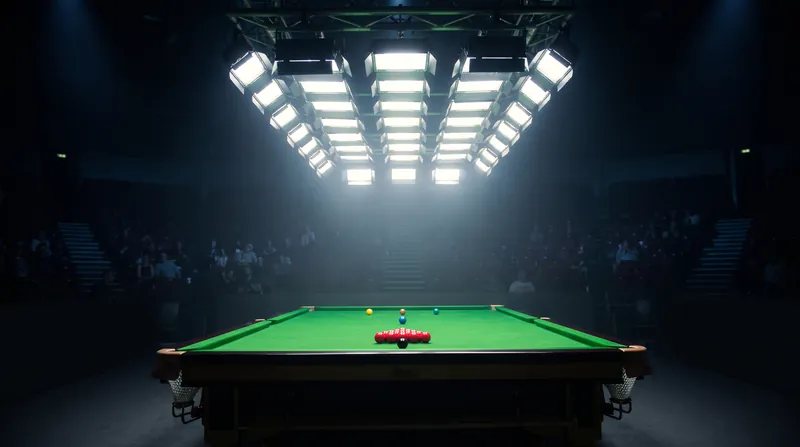
A drop of just two degrees in the arena turns a match-winning five-cushion positional shot into a sluggish miss. Professional snooker relies on absolute predictability, where the kinetic energy of the cue ball must transfer flawlessly across a massive 12-foot by 6-foot playing surface.[2]
When watching a televised tournament, viewers often spot a small digital display at the foot of the table glowing with a reading of 50°C. That intense heat is not meant for the players, nor is it the actual temperature of the green baize cloth.[1]
Instead, that thermal load is the precisely calculated energy required to manipulate the physics of the table itself. By driving heat upward through the dense stone bed, technicians control two critical variables: the moisture content of the wool and the elasticity of the rubber rails.[1]
Without this hidden climate control, the 22 balls on the table would behave erratically as the room cooled or grew humid. The heating system ensures that the vulcanized rubber cushions maintain their peak coefficient of restitution, preserving the speed and angle of every bank shot.[2]
Pushing Heat Through Stone
Modern snooker tables utilize specialized electric heating thermostatic plates or carbon fiber cables installed directly beneath the heavy slate bed. The slate acts as a massive thermal sink, absorbing the intense heat generated by the elements before it can reach the playing surface.
Because the slate is exceptionally thick, a controller set to 50°C only yields a surface temperature of approximately 21°C. This gentle, radiant warmth is enough to condition the materials above it without creating an uncomfortably hot environment for the players leaning over the table.[1]
"Left without under-table heaters, the table would have to adjust to the changing temperatures of the surrounding environment," notes Snooker Shorts. This exposure would cause minor but noticeable contractions in the cloth, fundamentally altering how the table plays over the course of a match.[1]
However, technicians must carefully balance this thermal output to avoid damaging the equipment. Excessive heat can cause the timber frames to warp and the precisely leveled slate joints to shift, which is why systems are designed for continuous, low-level operation rather than rapid spikes.[2]
Drying the Wool Nap
The primary beneficiary of this radiant heat is the iconic green baize that covers the table. Professional snooker cloth is woven from 100 percent wool, a highly hygroscopic material that readily absorbs ambient moisture from the air in the arena.
When the wool fibers absorb dampness, they physically expand and create microscopic drag against the rolling balls. This increased dynamic coefficient of friction slows the table down significantly, forcing players to strike the cue ball harder to achieve the same positional distance.
By maintaining a constant surface temperature of around 21°C, the heating system drives moisture out of the nap, keeping the fibers crisp and dry. This reduces friction, allowing the balls to glide effortlessly and preserving the delicate transfer of spin.[1]
In local clubs without under-slate heating, proprietors often resort to ironing the tables to temporarily smooth and dry the cloth. While this provides a brief improvement in speed, it cannot match the permanent, uniform consistency of a thermostatically controlled slate bed.[1]
Vulcanization and Rebound Energy
The second critical reason for heating the table lies at the edges of the playing surface. Snooker cushions are manufactured from vulcanized natural gum rubber, a material whose elasticity is highly dependent on its internal temperature.[2]
In physics, the "bounciness" of a collision is measured by the coefficient of restitution (COR), a dimensionless number between 0 and 1. A perfectly elastic collision has a COR of 1, while a perfectly inelastic collision, where all kinetic energy is lost, has a COR of 0.
Top-tier billiard cushions are engineered to deliver a COR of approximately 0.85 to 0.90, meaning they retain 85 to 90 percent of the ball's speed upon rebound. This lively response is what allows skilled players to execute complex, multi-rail positional shots with absolute confidence.
However, when the ambient temperature drops below 21°C, the vulcanized rubber begins to stiffen. This physical hardening lowers the coefficient of restitution, deadening the bounce and causing the balls to lose kinetic energy rapidly upon impact with the rail.[2]
The under-slate heating system gently warms the base of the cushions, preventing this temperature-induced stiffening. By keeping the rubber in its optimal thermal window, the table ensures that the angle of incidence truly equals the angle of reflection, frame after frame.
Fires and Hot Water Pans
The battle against cold, dead cushions is as old as the sport itself. During the Victorian era, before the advent of modern chemistry, billiard tables were fitted with pure natural rubber cushions that lacked any temperature stability.[2]
In the cold winter months, these early natural rubber rails became so hard that they played exactly like wooden blocks. The balls would strike the cushion with a dull thud, losing almost all their momentum and making positional play virtually impossible.[2]
To solve this, traveling billiard fitters were frequently hired by wealthy estate owners to remove the cushion rails entirely. They would place the rails in front of a roaring fireplace to soften the natural rubber before a match, or use long metal pans filled with hot water.[2]
The breakthrough came in 1839 when Charles Goodyear discovered vulcanization, a process that uses sulfur and heat to form cross-links between polymer chains. This chemical transformation prevented the rubber from freezing solid in cold weather, creating the first "frost-proof" cushions.[2]
Engineering the Perfect Bounce
Today, the combination of vulcanized rubber and thermostatically heated slate represents the pinnacle of cue sport engineering. The World Snooker Tour relies on these precise tolerances to guarantee that a table in Sheffield plays identically to one in Shanghai.[2]
Players adapt their entire strategic approach based on these thermal conditions. On a properly heated, fast table, finesse and touch become paramount, as even a microscopic overhit can send the cue ball drifting inches out of position.[2]
Conversely, if a heating system fails and the table runs cold, players must strike more firmly and rely heavier on spin-based strategies to overcome the increased friction. The margin for error shrinks dramatically when the physics of the table begin to fight the player.
Key terms
- Coefficient of Restitution (COR)
- A dimensionless number between 0 and 1 that measures the fraction of kinetic energy retained after a collision between two objects.
- Vulcanization
- A chemical process that hardens natural rubber by forming cross-links between polymer chains, typically using sulfur and heat.
- Hygroscopic
- The ability of a material, such as wool, to absorb and retain moisture from the surrounding air.
- Baize
- The coarse woolen cloth used to cover billiards and snooker tables, designed to provide a consistent playing surface.
Frequently asked
Why does the digital controller on a snooker table read 50°C?
The controller displays the temperature of the heating elements beneath the slate, not the playing surface. The thick slate absorbs most of the heat, resulting in a surface temperature of around 21°C.
Can a snooker table be too hot?
Yes. Excessive heat can cause the timber frame to warp and the slate joints to shift, ruining the table's level. Heating systems are designed for low, constant operation rather than high-temperature spikes.
Did players really warm cushions by the fire?
Before the invention of vulcanized rubber, natural rubber cushions became rock-hard in cold weather. Fitters frequently removed the rails to warm them by a fireplace or used hot water pans to restore their bounce.
Viewpoints in depth
Billiards Engineers
Focus on the mechanical tolerances and thermal dynamics of the table.
For table fitters and engineers, the heating system is a delicate balancing act. Pushing 50°C of thermal energy through heavy slate requires precise calibration to avoid warping the timber frame or shifting the slate joints. Their primary concern is maintaining a uniform 21°C at the surface to ensure the coefficient of restitution remains stable without compromising the structural integrity of the table.
Professional Players
Focus on the strategic implications of table speed and friction.
At the elite level, players view the heated table as a baseline for predictability. A fast, dry table demands exceptional finesse, as reduced friction amplifies the effect of spin and makes positional errors more punishing. When a table runs cold or damp, players must entirely recalibrate their stroke, striking the cue ball harder and accepting a smaller margin for error on multi-rail banks.
Materials Scientists
Focus on the chemical properties of vulcanized rubber and wool.
From a materials perspective, the snooker table is a study in polymer elasticity and hygroscopy. Scientists note that vulcanized natural rubber experiences a sharp drop in its coefficient of restitution when ambient temperatures fall below 21°C. Simultaneously, the 100 percent wool baize acts as a sponge for atmospheric moisture, making external thermal regulation the only viable method to stabilize the dynamic coefficient of friction.
- Billiards Engineers
- Focus on the mechanical tolerances and thermal dynamics of the table.
- Materials Scientists
- Focus on the chemical properties of vulcanized rubber and wool.
- Cue Sport Historians
- Focus on the evolution of table technology and its impact on the game.
Perspectives this story doesn't cover
- Amateur club owners managing energy costs
- Referees monitoring table conditions during play
Sources
Source coverage
2 outlets
3 viewpoints surfaced


- [1]Snooker ShortsBilliards Engineers
Why Are Snooker Tables Heated?
Read on Snooker Shorts → - [2]Factlen Editorial TeamCue Sport Historians
Synthesis by Factlen editorial team
Read on Factlen Editorial Team →

More in Sports
See all →Preview
2026 British Open Snooker Preview: Murphy Defends, Zhao Arrives as World No. 1 in Cheltenham
6 sources
Trade
Snooker's Coaching Carousel: Peter Ebdon Splits With Shaun Murphy to Guide Noppon Saengkham's Giant-Killing Run
7 sources

Preview
2026 Wuhan Open Preview: Xiao Guodong Chases Hat-Trick as World No. 1 Race Heats Up
5 sources
Standings
Snooker Standings: Noppon Saengkham and David Gilbert Crash the Top Three in Early One-Year Rankings Race
6 sources

Comments
Every angle. Every day.
Get Sports stories with full source coverage and perspective breakdowns, free every day.