
Valérie Grenier Enters 2026 Olympic Off-Season at Full Strength Following Reconstructive Knee Surgery
Canadian alpine skier Valérie Grenier has officially cleared her final rehabilitation hurdles from a devastating 2024 crash, entering the pivotal Milano-Cortina off-season with her sights set on a multi-discipline Olympic campaign.
By Ryder James

Share this story
As the snow melts across the Northern Hemisphere and the FIS Alpine Skiing circuit pivots to summer training camps, Canadian star Valérie Grenier is celebrating a milestone that once seemed impossible. Entering the critical June off-season ahead of the 2026 Milano-Cortina Winter Olympics, the 29-year-old has officially cleared her final rehabilitation hurdles. After a catastrophic crash in early 2024 threatened to end her career, Grenier is now reporting that she is entirely pain-free and ready to absorb the massive training volume required for an Olympic medal push.
The road to this off-season has been defined by grueling physical therapy and a refusal to accept a premature retirement. Grenier's ordeal began on January 28, 2024, during a World Cup super-G race in Cortina d'Ampezzo, Italy. Flying down the course in full control, she caught an edge with the finish line in sight and was violently thrown from the track.
The resulting impact left her with a fractured left humerus and catastrophic damage to her right knee, requiring reconstructive surgeries to repair a torn anterior cruciate ligament (ACL), a partially torn medial collateral ligament (MCL), and a torn meniscus.
For many athletes, a multi-ligament knee reconstruction combined with a shattered upper arm would signal the end of a high-speed downhill career. The recovery protocol for such compounding trauma demands months of isolated, repetitive joint stabilization before a skier can even consider bearing weight on a moving ski. Yet, Grenier approached her rehabilitation with the same aggressive precision she applies to a giant slalom course, working quietly through the spring and summer of 2024 to rebuild her body from the ground up.[1][2]
Her triumphant return to the World Cup circuit in November 2024 stunned the alpine community. Rather than easing back into competition, Grenier immediately proved she had retained her elite edge, finishing fourth in her second giant slalom race back. That momentum culminated in December 2025, when she captured a bronze medal in the giant slalom on her home snow at Mont-Tremblant, Quebec. The podium finish, achieved in front of a roaring local crowd, served as undeniable proof that her reconstructive surgeries were a complete success.[2]
Now, with the 2025-2026 World Cup season in the rearview mirror, Grenier is utilizing the June training block to fine-tune her mechanics without the looming shadow of injury. "I don't have any pains or any issues, I can just really do all the runs that I want to do," Grenier noted in a recent update. She acknowledged that while her knee occasionally feels tight after heavy training sessions, she is no longer holding back or modifying her approach to protect the joint.[1]
This clean bill of health is a massive strategic boost for Alpine Canada. As the national team finalizes its rosters for the Milano-Cortina Games, Grenier is positioning herself as the undisputed anchor of the women's squad. Unlike the 2022 Beijing Olympics, where a lingering injury restricted her to a single event, she is targeting a massive, multi-discipline workload for 2026.
"In Beijing, I only had the GS. But for 2026, I want everything," Grenier stated, outlining her ambitious plan to compete in the giant slalom, downhill, super-G, and the team combined event. The only discipline she plans to skip is the slalom, which has never been a primary focus of her alpine repertoire. By competing across four distinct events, Grenier maximizes Canada's chances of securing a podium finish in a fiercely competitive international field.
The psychological narrative surrounding Grenier's Olympic bid is just as compelling as the physical one. The women's speed events for the 2026 Winter Games will be held on the exact same Cortina d'Ampezzo track where she suffered her devastating 2024 crash. Returning to the site of such profound trauma is a notorious hurdle for downhill skiers, requiring immense mental fortitude to push past the instinct to brake through the section of the course where the accident occurred.
Grenier, however, insists she has already conquered those demons. Having skied the Cortina track during the recent World Cup season, she described her connection to the venue as a "love-hate relationship" but confirmed she has entirely moved past the fear. "I'm already over it," she explained, noting that her familiarity with the Italian course—and her previous successes there, including a downhill bronze just days before her crash—gives her a distinct advantage over the unfamiliar terrain she faced in Asia during the 2018 and 2022 Games.[1]
Resilience has been the defining theme of Grenier's 11-year career on the World Cup circuit. The Cortina crash was not her first encounter with the operating table. In February 2019, she suffered a season-ending fall during a downhill training run at the World Championships in Are, Sweden, fracturing her right tibia, fibula, and ankle. That injury required multiple surgeries, including the insertion of a rod into her tibia, and forced her to miss the entire 2019-2020 season.[2]
Just as she was re-establishing her rhythm, disaster struck again ahead of the 2022 Beijing Olympics. A severe bone bruise and tibia plateau injury sidelined her during the critical qualifying period. Though she recovered in time to participate in the Winter Games, the lack of preparation severely hampered her performance, resulting in a Did Not Finish (DNF) in the giant slalom.[2]
Rather than breaking her spirit, these compounding injuries have forged an unbreakable mindset. Grenier has frequently stated that surviving her first hard fall in Sweden helped her become a stronger, more tactical skier. It prompted her to shift her primary focus from the sheer danger of the downhill to the highly technical giant slalom—a pivot that ultimately transformed her into one of the most consistent GS racers in the world.
Grenier's journey reflects a broader reality within the FIS Alpine Skiing circuit, where the physical toll of the sport routinely decimates the top ranks. The 2023-2024 season was particularly brutal, claiming not only Grenier but also international stars like Italy's Sofia Goggia and Austria's Marco Schwarz to severe leg and knee injuries. As the 2026 Olympics approach, the podium will likely belong to those who have mastered the grueling art of rehabilitation as much as the art of carving a turn.[4]
For Alpine Canada, having a fully healthy Grenier leading the charge changes the entire calculus for the upcoming season. Her veteran presence and proven ability to perform under pressure provide a stabilizing force for younger athletes on the national team. Coaches are now able to design her summer dryland and on-snow programs around performance optimization rather than injury mitigation.
As she looks toward the future, Grenier has made it clear that she has no intention of slowing down. Dismissing any thoughts of an impending retirement, she plans to keep racing into her mid-30s, provided her body allows it. "As long as my body can keep going, then I want to keep going," she affirmed. For now, that body is stronger than ever, setting the stage for what could be the ultimate Olympic redemption story in Milano-Cortina.[1]
The essentials
- Valérie Grenier has officially cleared her final rehabilitation hurdles and is entering the June off-season pain-free.
- She suffered a fractured humerus and tore her ACL, MCL, and meniscus during a January 2024 crash in Cortina d'Ampezzo.
- Grenier successfully returned to the World Cup podium in December 2025 with a bronze medal in Mont-Tremblant.
- She plans to compete in four events at the 2026 Milano-Cortina Olympics: giant slalom, downhill, super-G, and team combined.
- The 2026 women's speed events will be held on the exact same Cortina track where she suffered her 2024 injuries.
Timeline
February 2019
Grenier fractures her right tibia, fibula, and ankle during a downhill training run at the World Championships in Are, Sweden.
January 2022
Suffers a tibia plateau injury just weeks before the Beijing Olympics, limiting her to a single event.
January 2024
Crashes heavily during a super-G race in Cortina d'Ampezzo, tearing her ACL, MCL, and meniscus, and fracturing her humerus.
November 2024
Returns to World Cup racing after extensive reconstructive surgeries and rehabilitation.
December 2025
Secures a bronze medal in the giant slalom at Mont-Tremblant, confirming her return to elite form.
June 2026
Enters the final Olympic off-season fully cleared and pain-free, targeting four events at Milano-Cortina.
- Canadian Alpine Team
- Focuses on Grenier as their top podium hope and the anchor of their Olympic roster.
- Medical & Rehabilitation Experts
- Emphasizes the physiological triumph of returning to elite downhill speeds after multi-ligament knee reconstruction.
- FIS Circuit Analysts
- Views her recovery in the broader context of a grueling World Cup schedule that has sidelined multiple top-tier athletes.
Perspectives this story doesn't cover
- Other competitors facing increased competition from a fully healthy Grenier
- Sports psychologists specializing in trauma recovery for downhill skiers
Sources
Source coverage
4 outlets
3 viewpoints surfaced




- [1]The Canadian PressCanadian Alpine Team
Canadian alpine skier Valerie Grenier set for third Olympic Games in Italy
- [2]Olympic.caMedical & Rehabilitation Experts
Valérie Grenier - Team Canada
Read on Olympic.ca → - [3]Olympics.comMedical & Rehabilitation Experts
Milano Cortina 2026 | Olympic Winter Games
Read on Olympics.com → - [4]CBC SportsFIS Circuit Analysts
Sofia Goggia takes Austrian downhill, moves to 4th all-time in wins in speed discipline
Read on CBC Sports →
More in Sports
See all →Injury
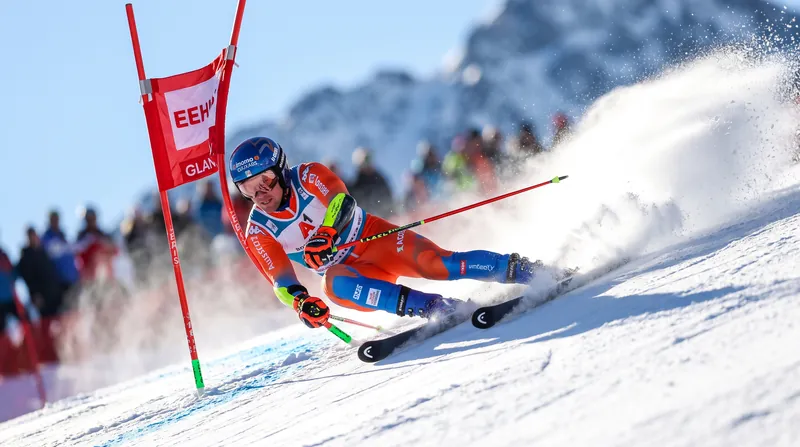
Australian Snow Sports Injury Report: Bolton, Peel, and Thomas Target Comebacks After Olympic Heartbreak
5 sources
Standings
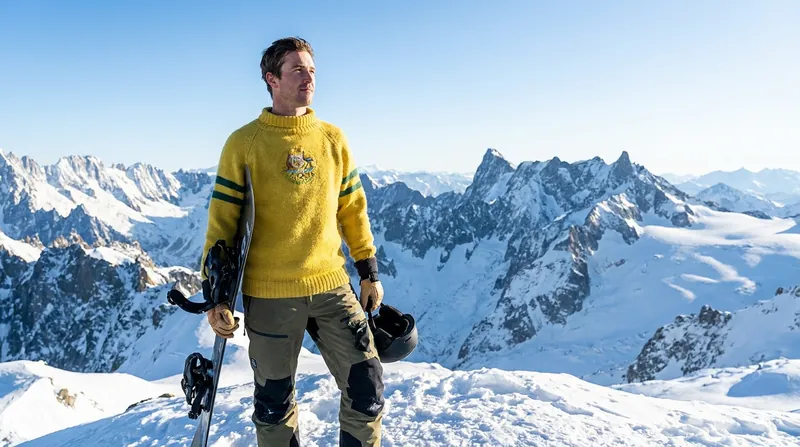
FIS Roller Skiing World Cup Standings: Tanel and Sömskar Take Early Lead as 2026 Circuit Opens in Latvia
4 sources
Injury
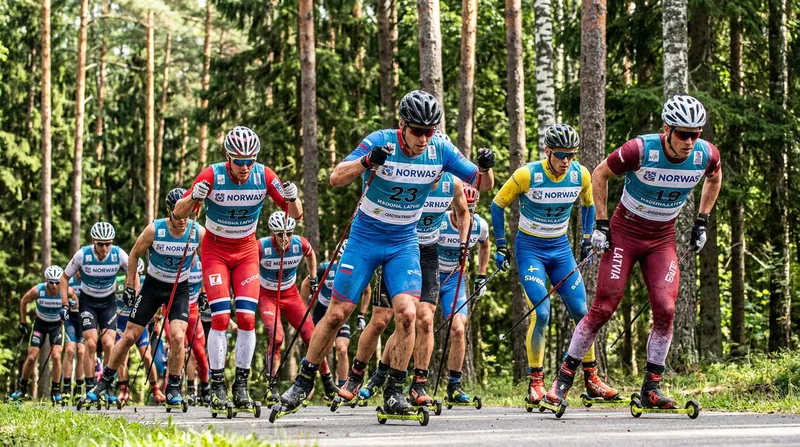
Ester Ledecká Returns to Alpine Skiing Following Complex Collarbone Injury and Snowboard Comeback
4 sources
Standings
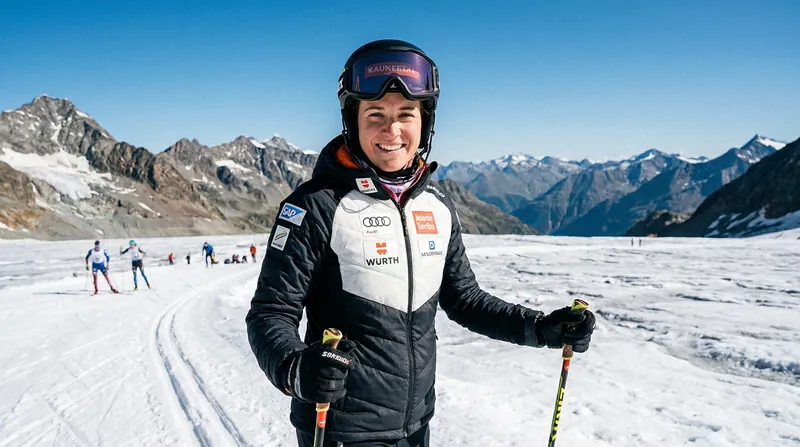
FIS Freeski and Snowboard ANC Standings: Park & Pipe Stars Battle for Early-Season Dominance Down Under
2 sources
Comments
Every angle. Every day.
Get Sports stories with full source coverage and perspective breakdowns, free every day.