
US Regulators Grant First-Ever Approval for Commercial Deployment of Steering-Wheel-Less Robotaxis
The NHTSA has issued a landmark exemption allowing Amazon-owned Zoox to deploy up to 2,500 purpose-built robotaxis annually without traditional manual controls. The ruling establishes a crucial federal precedent for fully autonomous vehicles, though state approvals are still required to collect passenger fares.
By Sergei Orlov

Share this story
The era of the steering wheel is officially optional. In a landmark decision for the autonomous vehicle industry, the National Highway Traffic Safety Administration (NHTSA) has granted Amazon-owned Zoox the first-ever federal exemption to commercially deploy purpose-built robotaxis lacking traditional manual controls.[1][3]
The ruling allows Zoox to deploy up to 2,500 of its specially designed, steering-wheel-free vehicles annually over the next two years. By removing the requirement for human-centric hardware like pedals and mirrors, the federal government has signaled a willingness to adapt safety regulations that were written decades before self-driving technology was conceived.[3][7]
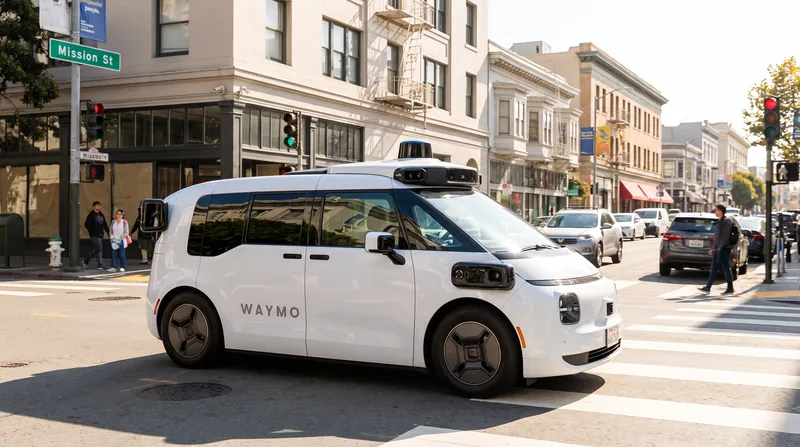
Zoox’s vehicle represents a radical departure from the modified passenger cars currently dominating the robotaxi market. Unlike Alphabet’s Waymo, which retrofits Jaguar I-PACE SUVs with sensors and computers while retaining the driver's seat, Zoox designed its electric pod from the ground up.[4]
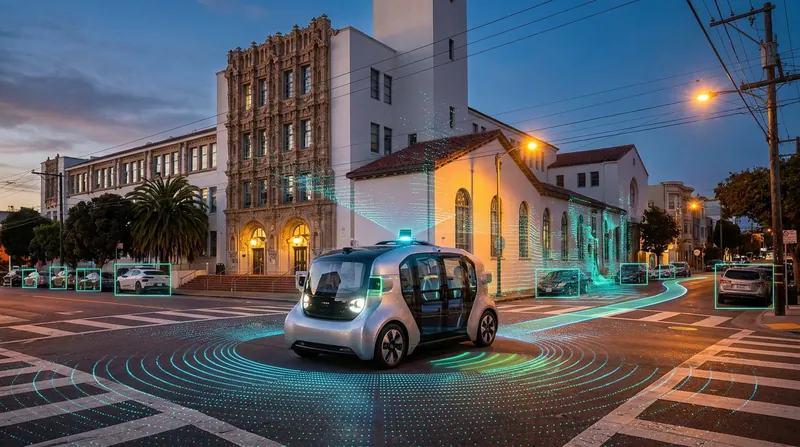
The result is a boxy, carriage-style vehicle that looks more like a futuristic toaster or a single-carriage tram than a traditional automobile. It features four inward-facing seats, allowing passengers to converse face-to-face in a lounge-like environment without a dashboard breaking up the cabin.[1][4][8]
Mechanically, the vehicle is built specifically for dense urban environments. It utilizes four-wheel steering and bidirectional driving capabilities, meaning it never actually has to reverse; it simply changes direction seamlessly. Despite its unconventional appearance, the pod boasts a top speed of 75 miles per hour.[5][8]
Securing this exemption was a multi-year regulatory battle. Zoox initially filed its petition in August 2025, seeking waivers from eight specific Federal Motor Vehicle Safety Standards (FMVSS). These standards dictate everything from windshield wiper placement to the exact positioning of airbags relative to a steering column.[5][8]
Because the Zoox vehicle lacks a steering column entirely, complying with those legacy standards was physically impossible. NHTSA Administrator Jonathan Morrison noted that the systems in place on the Zoox vehicles actually exceed the equivalent performance requirements of a traditionally compliant car, justifying the exemption.[3][8]
However, the federal green light is not a blanket authorization to immediately launch a nationwide taxi empire. The NHTSA's approval functions as a manufacturing and deployment clearance, making the vehicles street-legal at the federal level and validating their fundamental safety architecture.[3][8]
To actually charge passengers for rides—the core of the commercial robotaxi business model—Zoox must still secure separate utility and transportation approvals from individual state and local governments. The company is currently targeting Las Vegas for its initial commercial rollout, working closely with Nevada regulators to clear the final hurdles for fare collection.[1][8]
The NHTSA exemption also comes with stringent oversight mechanisms. Regulators have imposed heavy reporting requirements on Zoox, mandating detailed data sharing regarding any crashes, unexpected stops, or operational anomalies to ensure the technology performs as promised in the real world.[3][7]
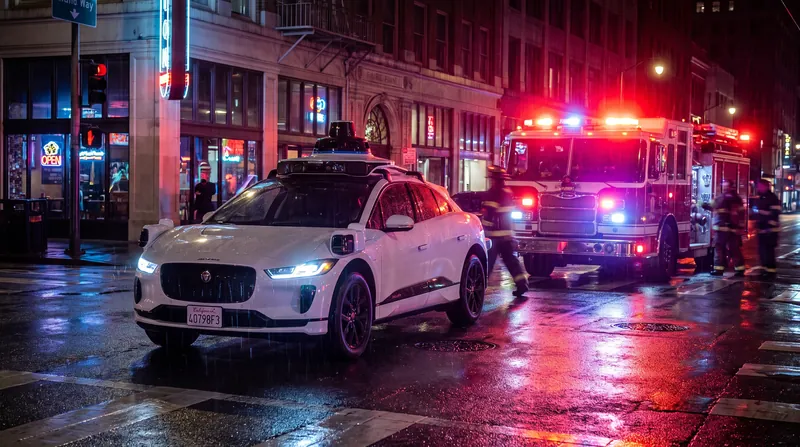
This cautious approach reflects ongoing concerns about the real-world performance of autonomous systems. Just weeks before the exemption was granted, Zoox issued a software recall for 105 of its vehicles. The recall was prompted by an incident in which an unoccupied robotaxi struggled to navigate an active fire scene obscured by heavy smoke, raising flags about how these vehicles interact with first responders.[4]
Highway safety advocates have seized on these incidents to urge regulatory restraint. Organizations like the Advocates for Highway and Auto Safety have publicly criticized the exemption, arguing that companies are relying on glossy promises rather than comprehensive, publicly available safety data.[1][3]
Despite these concerns, the economic momentum behind purpose-built robotaxis is accelerating rapidly. Goldman Sachs Research projects that the US robotaxi fleet could expand from roughly 1,500 commercial vehicles today to 35,000 by 2030, potentially generating $7 billion in annual revenue and capturing a significant slice of the rideshare market.[8]
Zoox is already preparing for this scale, having unveiled a production-intent vehicle design and established a dedicated manufacturing facility in Hayward, California. The company claims it can ramp up production to 100 vehicles per week to meet the 2,500-vehicle annual cap allowed by the NHTSA.[4][8]
The regulatory precedent set by Zoox’s approval extends far beyond Amazon’s ambitions. It provides a clear legal pathway for other automakers developing vehicles without manual controls, signaling to the broader industry that the federal government is open for autonomous business.[6]
Tesla, for instance, has been heavily telegraphing its own purpose-built autonomous vehicle, the Cybercab, which was originally conceived without a steering wheel or pedals. Recent drone footage from Tesla's Texas Gigafactory suggests the company is already manufacturing units without traditional controls, betting heavily that federal regulations would eventually accommodate the design.[6][9]
With the NHTSA now officially opening the door for steering-wheel-less deployment, the competitive landscape of the autonomous vehicle industry is poised for a dramatic shift. The engineering focus will increasingly move from retrofitting legacy cars to designing optimized, passenger-first pods.[4][6]
As these vehicles begin to populate the streets of Las Vegas and eventually other major cities, they will serve as a highly visible test of public trust. The ultimate question is no longer whether the technology is legal, but whether everyday riders are ready to embrace a transportation future where the driver's seat simply does not exist.[1][3]
Key points
- The NHTSA granted Zoox a landmark exemption to deploy up to 2,500 steering-wheel-less robotaxis annually.
- The ruling bypasses eight federal safety standards that were originally written with human drivers in mind.
- Zoox's purpose-built vehicles feature inward-facing seats, bidirectional driving, and a top speed of 75 mph.
- While the federal exemption clears the vehicle design, state-level approvals are still required to collect passenger fares.
What we don’t know
- How quickly state regulators in Nevada and California will grant the final utility approvals needed for Zoox to begin charging fares.
- Whether the NHTSA will extend similar exemptions to other automakers like Tesla for its upcoming Cybercab.
- How the purpose-built robotaxis will handle complex, unpredictable edge cases like active emergency scenes over a sustained period.
How we got here
December 2020
Amazon acquires autonomous vehicle startup Zoox for approximately $1.3 billion.
August 2025
Zoox formally petitions the NHTSA for exemptions from eight federal motor vehicle safety standards.
June 2026
Zoox unveils its production-intent vehicle design and announces a manufacturing facility in California.
July 2026
Zoox issues a software recall for 105 vehicles after a robotaxi struggles to navigate an active fire scene.
July 30, 2026
The NHTSA grants Zoox the first-ever federal exemption to commercially deploy vehicles without manual controls.
- AV Developers
- Advocate for modernizing legacy regulations to allow purpose-built autonomous designs.
- Federal Regulators
- Aim to foster innovation while maintaining strict, data-driven safety oversight.
- Safety Advocates
- Demand more transparent safety data before allowing experimental vehicles on public roads.
Perspectives this story doesn't cover
- Municipal Transit Authorities
- First Responders and Emergency Personnel
- Rideshare and Taxi Drivers
Sources
Source coverage
9 outlets
3 viewpoints surfaced









- [1]Washington PostSafety Advocates
Federal regulators are clearing the way for robotaxis to operate without manual controls
- [2]PBSSafety Advocates
Some robotaxis approved to operate without steering wheels and losing the brake pedal could be next
Read on PBS → - [3]Al JazeeraFederal Regulators
Amazon's Zoox secures US federal approval for steering-wheel-free robotaxis
- [4]GizmodoAV Developers
Amazon's Zoox Shows Off Its New Toaster on Wheels
- [5]Carrier ManagementFederal Regulators
U.S. Safety Agency Seeks Comments on Zoox Petition to Deploy Steering Wheel-less Robotaxis
- [6]CarscoopsAV Developers
The Feds Might Let Robotaxis Skip The Steering Wheel
- [7]The Next WebFederal Regulators
Zoox wins US approval for limited commercial deployment of steering-wheel-free robotaxis
- [8]Startup FortuneSafety Advocates
Zoox has not won US approval for paid, steering-wheel-free robotaxi rides
- [9]BasenorAV Developers
Texas DoT Confirms: Cybercab Has No Steering Wheel or Pedals
More in Technology
See all →Autonomous Vehicles
UN Adopts First Global Regulation for Fully Autonomous Driving Systems, Unifying Standards for US, EU, and China
3 sources
Satellite Internet
Chinese Starlink Rival SpaceSail Secures $1 Billion Funding Round for LEO Constellation
6 sources
AV Regulation
NHTSA Proposes National AV Framework with Preemptive Authority and Emergency Protocols
4 sources
Autonomous Compute
Waymo Reveals Custom 5nm ASIC and 'Data Center on Wheels' Architecture for Autonomous Fleet
7 sources
Comments
Every angle. Every day.
Get Technology stories with full source coverage and perspective breakdowns, free every day.