
UEFA Confirms Allianz Arena and Camp Nou as 2028 and 2029 Champions League Final Hosts
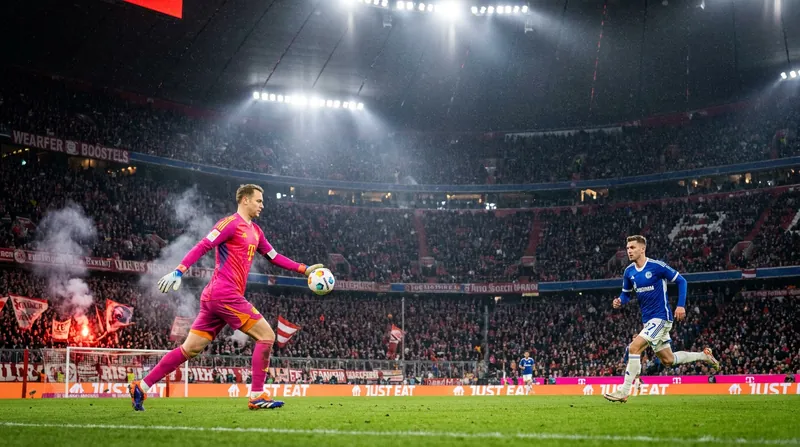
The UEFA Executive Committee has awarded the 2028 Champions League final to Bayern Munich's Allianz Arena and the 2029 final to Barcelona's renovated Camp Nou.
By Jackson Reed

- Host Clubs and Municipalities
- Focuses on the economic boost, international appeal, and the opportunity to showcase renovated stadiums.
- UEFA Leadership
- Prioritizes long-term calendar stability, rewarding infrastructure investments, and moving past recent political disputes.
- Neutral Football Analysts
- Highlights the historical context of the venues and the logistical realities for traveling supporters.
Perspectives this story doesn't cover
- Local residents near the stadiums
- Traveling supporter groups
Why this matters
Securing the Champions League final guarantees a massive economic injection and global media spotlight for the host cities, while providing traveling supporters and local organizers with the long-term clarity needed to plan for Europe's largest annual sporting event.
Key points
- The UEFA Executive Committee has awarded the 2028 Champions League final to Munich's Allianz Arena and the 2029 final to Barcelona's Camp Nou.
- Munich will host the showpiece event for the third time at the Allianz Arena, just three years after staging the 2025 final.
- Barcelona's selection serves as a major endorsement of the ongoing redevelopment of Camp Nou, which will expand capacity to 105,000.
- UEFA also confirmed the Women's Champions League finals will be held in Lyon in 2028 and Cardiff in 2029.
On September 15, 2026, the UEFA Executive Committee convened in Thessaloniki and locked in the immediate future of European club football's biggest stage, awarding the 2028 Champions League final to Bayern Munich's Allianz Arena and the 2029 edition to Barcelona's rebuilt Spotify Camp Nou.[1][5][6]
The dual announcement ends months of bidding speculation and secures two of the continent's most iconic, high-capacity venues for the climax of the tournament. For Munich, the May 27, 2028 date marks a rapid return to the spotlight, coming just three years after the Bavarian capital hosted the 2025 final.[3][4]
Bayern Munich CEO Jan-Christian Dreesen immediately welcomed the decision, framing it as a validation of the city's logistical muscle. “This is fantastic news for us: The Allianz Arena, FC Bayern, and Munich stand for international appeal, genuine hospitality, and the highest organisational quality,” Dreesen stated.[1][3]
He added that the club intends to "offer fans another exceptional experience and showcase Munich as a cosmopolitan, sports-loving, and exceptionally well-prepared host city." The 70,000-seat stadium previously hosted the dramatic 2012 final—where Bayern famously lost to Chelsea on penalties—and the 2025 showpiece.[1][6]
While Munich offers a plug-and-play, match-ready environment, the 2029 selection of Camp Nou represents a massive vote of confidence in Barcelona's ongoing infrastructure overhaul. The Catalan club is currently executing a sweeping redevelopment project launched in 2023, designed to expand the stadium's capacity to 105,000 and modernize its hospitality and connectivity standards.[1][2]
Barcelona president Joan Laporta characterized the assignment as a milestone for the institution. “It's an immense pride for FC Barcelona and for all Barcelona fans,” Laporta noted, emphasizing that UEFA's confidence serves as international recognition for a venue striving to become the premier football stadium in Europe.[1]
Barcelona president Joan Laporta characterized the assignment as a milestone for the institution.
The 2029 final will be the first European showpiece held at Camp Nou since 1999, when Manchester United scored two stoppage-time goals to stun Bayern Munich 2-1. It also arrives one year before Spain is slated to co-host the 2030 FIFA World Cup alongside Portugal and Morocco, effectively serving as a high-stakes dress rehearsal for the country's organizing committee.[1][6]
Beyond the men's premier competition, UEFA's Thessaloniki summit also finalized the broader continental calendar through the end of the decade. The Women's Champions League final will head to Parc Olympique Lyonnais in France in 2028, followed by the National Stadium of Wales in Cardiff in 2029.[1][5]
The secondary men's tournaments similarly secured their roadmaps. The Europa League finals were awarded to Bucharest's National Arena for 2028 and Belgrade's National Stadium for 2029. Meanwhile, the Conference League will conclude at Turin's Juventus Stadium in 2028 and Budapest's Puskas Arena the following year.[2][5]
By locking in these venues simultaneously, UEFA has provided traveling supporters, broadcasters, and municipal planners with a rare degree of long-term clarity. The focus now shifts to the respective local organizing committees, who must prepare to absorb the massive influx of tourism and global media scrutiny that accompanies the modern European finals.[4][6]
Sources
Source coverage
6 outlets
3 viewpoints surfaced






- [1]Al JazeeraNeutral Football Analysts
Champions League final venues revealed: Munich 2028, Barcelona 2029
Read on Al Jazeera → - [2]RediffHost Clubs and Municipalities
Allianz Arena, Camp Nou Secure UEFA Champions League Finals for 2028, 2029
Read on Rediff → - [3]BulinewsHost Clubs and Municipalities
Confirmed: Bayern's Allianz Arena to host 2028 Champions League final
Read on Bulinews → - [4]OneFootballUEFA Leadership
Champions League final venues confirmed for 2028 and 2029
Read on OneFootball → - [5]Türkiye TodayUEFA Leadership
UEFA names venues for 2028 and 2029 club competition finals
Read on Türkiye Today → - [6]Goal.comNeutral Football Analysts
UEFA confirm 2028 and 2029 Champions League final hosts as Barcelona's Camp Nou returns to the big stage
Read on Goal.com →
Comments
More in Sports
See all →Power ranking
Pro Wrestling Power Rankings: Sami Zayn and Will Ospreay Headline the September Standings
6 sources
Injury
Brendan Hansen Reaches Major Rehab Milestone 10 Weeks After Devastating Bilateral Knee Injury
4 sources
Recap
Zouhair Talbi Makes History as First American to Win Great North Run; Brigid Kosgei Dominates Women's Field
3 sources
Storyline
The 11th Outfield Player: How the Sweeper-Keeper Redefined World Cup Tactics
6 sources
Every angle. Every day.
Get Sports stories with full source coverage and perspective breakdowns delivered to your inbox.