
U.S. Military Commanders Warn Defense Secretary That Prolonged Iran Campaign Threatens Global Force Readiness
Senior Pentagon leaders have cautioned Defense Secretary Pete Hegseth that the extended duration of military operations against Iran is degrading the military's capacity to respond to concurrent threats in other theaters.
By Layla Zaher

Share this story
In a series of classified briefings delivered over the past week, senior U.S. military commanders presented Defense Secretary Pete Hegseth with a stark operational assessment: the current tempo of the campaign against Iran is structurally unsustainable. The warnings, detailed in internal Pentagon communications, indicate that the extended deployment of naval strike groups, air defense assets, and logistical nodes to the Middle East is actively degrading the military's global readiness posture. Uniformed leaders are increasingly vocal that the operational demands of the conflict are cannibalizing resources required for other strategic theaters.[1][2]
The core of the military's argument centers on the opportunity cost of prolonged engagement in a single, high-intensity theater. Commanders emphasized that the continuous rotation of high-demand, low-density assets—particularly Patriot and THAAD missile defense batteries, as well as carrier strike groups—leaves critical vulnerabilities in the defense architecture of the Indo-Pacific and European commands. The systemic strain is forcing planners to accept elevated levels of risk in regions where peer competitors are actively monitoring U.S. force projection capabilities.[2][3]
Characterizing the operational burden as "too much, for too long," senior commanders noted that the logistical supply chains supporting the Iran campaign are operating at maximum capacity. This resource drain directly conflicts with the broader strategic mandate established in recent defense strategies, which explicitly prioritized readiness for great power competition. The friction between the uniformed military leadership and the civilian defense establishment underscores a growing debate over the strategic end-state of the current conflict.[4][5]
While the administration has pushed for sustained pressure to dismantle Iranian military infrastructure and neutralize regional proxy networks, military planners are increasingly focused on the systemic degradation of U.S. forces. The continuous deployment of guided-missile destroyers to intercept Iranian ballistic missiles and drones has accelerated maintenance cycles, forcing ships to remain at sea well beyond their scheduled deployment windows and delaying critical shipyard overhauls.[1][6]
Furthermore, the expenditure of advanced munitions, including Standard Missile-6 (SM-6) interceptors and precision-guided air-to-ground weapons, is outpacing the defense industrial base's capacity to replenish stockpiles. This munition depletion represents a severe systemic risk should a concurrent crisis erupt in the Taiwan Strait or along NATO's eastern flank. The industrial bottleneck means that every interceptor fired in the Middle East is one less available for a potential peer-level contingency.[3][4]
The warnings to Hegseth arrive at a critical juncture in the conflict, following recent escalations that have demanded even greater U.S. force projection into the region. As the scope of the campaign expands, the mathematical reality of force generation is forcing difficult conversations inside the Pentagon. Military leaders are reportedly urging the Defense Secretary to define a clear off-ramp or transition to a more sustainable, lower-intensity containment strategy that allows for fleet reconstitution.[2][6]
The debate highlights the inherent tension between achieving localized tactical objectives and maintaining a global deterrence posture. Civilian leadership has maintained that neutralizing the immediate threat posed by Iran is a necessary prerequisite for regional stability, arguing that withdrawing pressure prematurely would invite further aggression. However, the Joint Chiefs are tasked with managing the global force pool, and their models indicate that the current trajectory is mathematically unsustainable.[1][5]
If the current operational tempo is maintained without a commensurate expansion of defense industrial output or a reallocation of global responsibilities, commanders warn that the U.S. risks a localized tactical success at the expense of its broader strategic deterrence architecture. The coming weeks will likely force the administration to reconcile its maximalist objectives in the Middle East with the finite reality of U.S. military resources.[2][3][4]
Where opinion splits
The Force Readiness Argument
Military planners focus on the mathematical reality of deployments, maintenance cycles, and munition expenditures.
For uniformed commanders, the conflict is increasingly viewed through the lens of logistics and asset management. The continuous rotation of carrier strike groups and the heavy reliance on Patriot and THAAD batteries in the Middle East mean those assets are unavailable for training, maintenance, or deployment to other potential flashpoints. Planners argue that the military is currently borrowing against its future readiness, wearing down hulls and airframes at a rate that the defense industrial base cannot support.
The Strategic Pressure Mandate
Civilian leadership emphasizes the necessity of the current campaign to neutralize the Iranian threat and stabilize the region.
From the perspective of the civilian defense establishment, the operational costs, while severe, are a necessary investment to achieve critical geopolitical objectives. This viewpoint argues that prematurely reducing pressure on Iran would allow adversarial networks to reconstitute, ultimately requiring a more costly intervention later. The administration maintains that demonstrating resolve in the Middle East is itself a form of global deterrence, signaling to other adversaries that the U.S. is willing to sustain complex, multi-domain operations.
The Indo-Pacific Opportunity Cost
Strategists warn that the Middle East resource drain actively undermines deterrence against peer adversaries in Asia.
Global strategists and Indo-Pacific commanders view the Iran conflict as a dangerous distraction from the primary theater of great power competition. Every SM-6 interceptor fired in the Red Sea or Persian Gulf is one less available for a potential contingency in the Taiwan Strait. This camp argues that adversaries like China are closely monitoring the depletion of U.S. stockpiles and the fatigue of its naval forces, potentially calculating that Washington's overextension in the Middle East creates a window of opportunity elsewhere.
Key points
- Senior U.S. military commanders warned Defense Secretary Pete Hegseth that the Iran campaign's duration is unsustainable.
- The operational tempo is degrading global force readiness and cannibalizing resources meant for the Indo-Pacific and Europe.
- Continuous deployments are straining naval maintenance cycles and depleting advanced munition stockpiles faster than they can be replaced.
- Military leaders are urging the administration to define a clear off-ramp to allow for force reconstitution.
- Military Planners
- Focus on global force readiness, munition stockpiles, and the systemic risks of overextending high-demand assets in a single theater.
- Civilian Defense Leadership
- Prioritize sustained pressure on Iran to achieve specific geopolitical objectives and dismantle adversarial infrastructure, despite the operational costs.
- Global Strategists
- Express concern that the Middle East resource drain actively undermines deterrence against peer adversaries in the Indo-Pacific and Europe.
Perspectives this story doesn't cover
- Defense Industry Executives
- Allied Indo-Pacific Commands
Sources
Source coverage
6 outlets
3 viewpoints surfaced





- [1]The Times of IsraelGlobal Strategists
US military warns Hegseth that prolonged Iran campaign risking ability to act elsewhere - report
Read on The Times of Israel → - [2]The Jerusalem PostMilitary Planners
US military chiefs warn Hegseth that Iran war is weakening forces needed to counter intl. threats
Read on The Jerusalem Post → - [3]A NewsMilitary Planners
US military leaders warn Iran war duration unsustainable
Read on A News → - [4]ynetMilitary Planners
'Too much, for too long': Senior US military commanders warn against continuing Iran war
Read on ynet → - [5]DAWN.COMCivilian Defense Leadership
Military leaders warn Hegseth against extending Iran war operations
Read on DAWN.COM → - [6]The Times of IndiaCivilian Defense Leadership
Did US military warn Hegseth over Iran war strain before latest escalation? What report claims
Read on The Times of India →

More in Defense & Security
See all →Air Defense
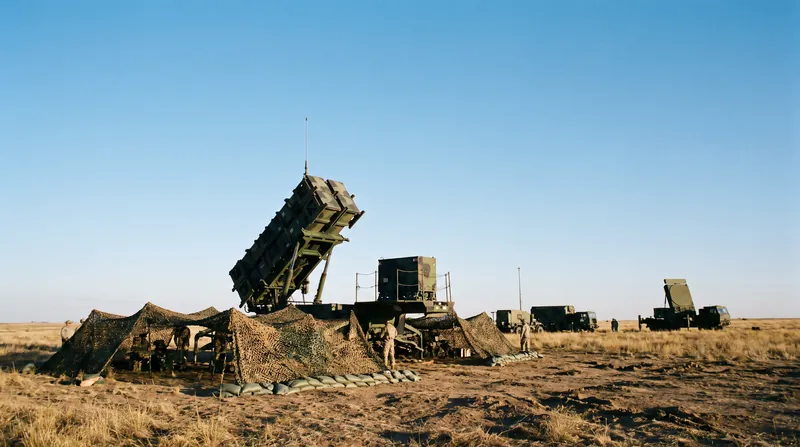
US Approves License for Ukraine to Produce Patriot Air Defense Missiles Domestically
5 sources
Undersea Warfare
China Building World's First Mothership for Giant Submarine Drones
4 sources
Nuclear Arms Control
US Presses China on Alleged Secret Nuclear Test in Confidential Talks
6 sources
Military Strategy
The Anti-Access/Area Denial Strategy: How Layered Defenses Restrict Military Operations
6 sources
Comments
Every angle. Every day.
Get Defense & Security stories with full source coverage and perspective breakdowns, free every day.