
Top Tennis Stars End Wimbledon Media Boycott Following Historic Prize Money Agreement
Leading tennis players have resumed their press obligations at Wimbledon after the All England Club committed to restructuring future prize money distributions. The breakthrough ensures the tournament will proceed with full media participation while addressing long-standing player concerns over revenue sharing.

Share this story
The tense silence that had settled over the Wimbledon media center was finally broken on Tuesday morning, as top-ranked tennis stars returned to the microphones, signaling the end of a historic 48-hour press boycott. The unprecedented standoff, which had seen players refuse all non-mandatory broadcast interviews, concluded after the All England Lawn Tennis Club (AELTC) formally committed to a comprehensive review of its prize money distribution model.
For fans and broadcasters, the resolution brings a collective sigh of relief, ensuring that the narratives and rivalries that define the grass-court major will once again be voiced by the athletes themselves. The return to normalcy allows the focus to shift back to the pristine lawns of SW19, but the underlying victory for player advocacy will likely resonate long after the final trophy is lifted.[1][2]
At the heart of the breakthrough is a binding agreement from tournament organizers to establish a new revenue-sharing framework slated for implementation in 2027. While the exact percentages remain under negotiation, player representatives secured a written guarantee that future prize pools will be directly tethered to the tournament's overall commercial and broadcasting revenue growth.
This marks a significant departure from the traditional model, where the AELTC unilaterally set the annual prize purse. The commitment addresses a long-simmering grievance among professional players, who have argued that their compensation has not kept pace with the exploding valuation of Grand Slam events. By securing a seat at the financial table, the players have fundamentally altered the power dynamic in one of the sport's most traditional institutions.[3][4]
The boycott was initiated just as the main draw commenced, sending shockwaves through the global sports media landscape. Frustrated by months of stalled private negotiations, a unified coalition of both ATP and WTA players opted for the nuclear option: a total blackout of print and digital media obligations, fulfilling only the bare minimum required by their broadcast contracts to avoid severe fines.
The visual of empty press conference rooms and silent mixed zones created an immediate public relations crisis for Wimbledon, an event that prides itself on immaculate presentation and global prestige. The players' unity was particularly striking, with multi-millionaire top seeds standing in solidarity with qualifiers and early-round competitors who rely heavily on Grand Slam paychecks to fund their grueling annual travel.[2][5]
The financial realities of professional tennis heavily informed the players' demands. While the 2026 Wimbledon total prize pool sits at a record high, the distribution remains heavily skewed toward those who reach the second week of the fortnight. For players ranked outside the top 100, the costs of coaching, physiotherapy, and international travel often outstrip their tournament earnings.
The newly proposed framework specifically targets this disparity, with a mandate to significantly boost compensation for first- and second-round exits, as well as the qualifying tournament. Advocates argue that a more equitable distribution is essential for the long-term health of the sport, ensuring that a wider pool of athletes can sustain a professional career without facing financial ruin.
The turning point in the standoff occurred during a marathon late-night negotiating session on Monday, brokered by senior player council members and AELTC executives. Sources close to the discussions revealed that the tournament organizers initially resisted the idea of a fixed revenue percentage, citing the need to maintain flexible capital for ongoing infrastructure projects, including the massive expansion into Wimbledon Park.
However, the unified front presented by the athletes, coupled with mounting pressure from global broadcasters starved of content, forced a compromise. The resulting memorandum of understanding provides the players with the transparency they demanded regarding the tournament's financial ledgers, while allowing the club to phase in the new compensation structure over a multi-year period.[1][4]
The successful resolution of the boycott is being hailed as a watershed moment for player organizing in tennis. Unlike team sports, which operate under collective bargaining agreements and powerful unions, tennis players are independent contractors, making unified labor action notoriously difficult to execute.
The fact that hundreds of athletes from dozens of countries managed to coordinate and sustain a high-profile strike at the sport's most prestigious event speaks to a new era of player empowerment. Leaders within player advocacy groups have publicly praised the solidarity shown across both the men's and women's tours, noting that the collective action achieved in 48 hours what years of polite boardroom requests could not.[2]
For the All England Club, the agreement represents a pragmatic, if reluctant, modernization of its business practices. The AELTC operates as a private members' club that generates hundreds of millions of pounds in surplus revenue during the two-week Championships, the vast majority of which is historically funneled back into British tennis via the Lawn Tennis Association (LTA).
Balancing the demands of the international touring professionals with its domestic mandate to fund grassroots programs in the UK was a central tension in the negotiations. By agreeing to the new framework, the club has signaled a willingness to adapt to the modern sports economy, recognizing that the athletes are the primary drivers of the tournament's immense commercial value.[3][4]
The ripple effects of the Wimbledon agreement are expected to be felt immediately across the rest of the tennis calendar. The US Open, Roland Garros, and the Australian Open will now face immense pressure to match or exceed the revenue-sharing commitments established in London.
Player representatives have already indicated that they will use the Wimbledon framework as a baseline for future negotiations with the other three majors. This domino effect could lead to a fundamental restructuring of tennis economics, potentially ushering in an era where Grand Slam tournaments operate more like joint ventures between the organizers and the athletes, rather than traditional employer-contractor relationships.[2][5]
With the labor dispute resolved, the focus at Wimbledon can finally return to the competition itself. Tuesday's order of play resumed with a palpable sense of relief across the grounds, as players engaged openly with reporters, breaking down their matches and sharing the personal stories that drive fan engagement.
With the labor dispute resolved, the focus at Wimbledon can finally return to the competition itself.
Broadcasters scrambled to fill their programming with the newly available interviews, restoring the vibrant, multi-layered coverage that audiences expect from a Grand Slam. While the financial details will continue to be hammered out in boardrooms over the coming months, the immediate victory is clear: the players have secured their financial future, and the Championships have been saved from a defining controversy.[1]
Key points
- Top tennis players have ended their 48-hour media boycott at Wimbledon.
- The All England Club agreed to a new revenue-sharing framework starting in 2027.
- The agreement guarantees that future prize pools will be tied to the tournament's commercial growth.
- Lower-ranked players and early-round exits are expected to see the most significant financial benefits.
- The resolution allows full media coverage and player interviews to resume for the remainder of the 2026 Championships.
How we got here
June 28, 2026
Players announce a media blackout at the start of the Wimbledon main draw to protest prize money distribution.
June 29, 2026
Late-night emergency negotiations take place between player representatives and AELTC executives.
June 30, 2026
The AELTC formally commits to a new revenue-sharing framework, prompting players to end the boycott.
- Player Advocates
- Argue that athletes deserve a guaranteed percentage of the massive commercial revenues generated by Grand Slams to ensure a living wage for lower-ranked professionals.
- Tournament Organizers
- Emphasize the need to balance player compensation with long-term infrastructure investments and the funding of domestic grassroots tennis programs.
- Media & Broadcasters
- Focus on the necessity of player access to build narratives, engage audiences, and deliver value to global television networks and sponsors.
Perspectives this story doesn't cover
- Lower-ranked qualifiers who missed the main draw
- British grassroots tennis programs reliant on AELTC surplus funding
Sources
Source coverage
5 outlets
3 viewpoints surfaced





- [1]BBC SportTournament Organizers
Are players at Wimbledon already splitting over prize money protests?
Read on BBC Sport → - [2]ESPNPlayer Advocates
Tennis stars lift Wimbledon press blackout after breakthrough in revenue negotiations
Read on ESPN → - [3]The GuardianTournament Organizers
Read a book? Join a club? Stare at a wall? Social media alternatives for under-16s
Read on The Guardian → - [4]ReutersTournament Organizers
Wimbledon players resume media duties after prize money agreement
Read on Reuters → - [5]L'EquipeMedia & Broadcasters
Fin du boycott médiatique à Wimbledon après un accord sur les primes
Read on L'Equipe →
More in Sports
See all →Standings
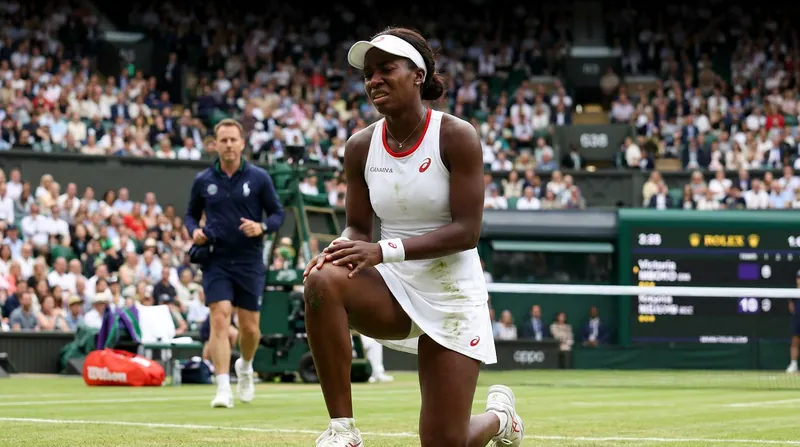
The WTA Race to Indian Wells: Mirra Andreeva Holds No. 1 as Karolina Muchova Surges Into the Top Four
6 sources
Wuhan Open
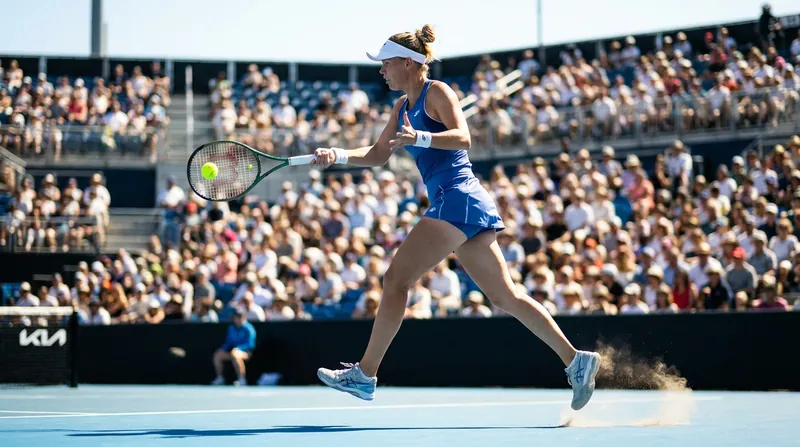
Maja Chwalinska Defeats Sonay Kartal to Claim Maiden WTA Title at Wuhan Open
5 sources
ATP Rankings
Alexander Zverev Clinches 2026 ATP Year-End No. 1 to Become First German at Season Summit
5 sources
Standings
The Math of the WTA Finals Cutoff: How Noskova's Wimbledon Exemption Forces Swiatek Into a High-Stakes Asian Swing Chase
4 sources
Comments
Every angle. Every day.
Get Sports stories with full source coverage and perspective breakdowns, free every day.