
Toddler Tech Breakthrough: Study Finds Digital Devices Offer 'Rich Opportunities' for Early Language Development
A major two-year study challenges the 'zero screen time' rule, revealing that interactive digital devices can actively boost early language and cognitive skills in children under three.
By Kabir Mehra

Share this story
In short
- A major UK study found that interactive digital device use can offer 'rich opportunities' for toddler language development.
- 98% of surveyed families have smartphone and Wi-Fi access, making strict 'zero screen time' policies unrealistic for most.
- 'Joint Media Engagement'—where parents and children use devices together—is the key mechanism that turns screens into learning tools.
For years, the golden rule of modern parenting has been simple, strict, and almost universally broken: no screens before age two. Pediatric guidelines have long warned that digital devices stunt early development, leaving parents to navigate a minefield of guilt every time they hand over a tablet to survive a long car ride or a restaurant meltdown.[7]
But a major new two-year study is fundamentally challenging the "zero screen time" narrative. The research suggests that when used interactively, digital devices actually offer "rich opportunities" for early language acquisition, cognitive growth, and cultural connection in children under three.[1][3]
The project, titled "Toddlers, Tech and Talk," is the first in-depth investigation of its kind. Funded by the UK's Economic and Social Research Council, it was led by Manchester Metropolitan University in collaboration with Lancaster, Swansea, Strathclyde, and Queen's University Belfast.[3][4]
Researchers surveyed over 1,400 parents and conducted 40 intensive in-home case studies to observe exactly how infants and toddlers interact with the digital world. What they found was a stark departure from the image of the "iPad kid" passively staring at a screen.[2][3][4]
Instead, the study revealed that very young children engage in highly active sensory exploration. They touch, listen, move, and think while interacting with devices, seamlessly integrating technology into their physical play and embodied cognition.[1][2]
The reality of modern family life makes digital abstinence nearly impossible. The survey found that 98 percent of participating families had access to a smartphone and Wi-Fi, and 41 percent of children under 36 months technically "owned" their own tablet—often a hand-me-down from a parent.[3]
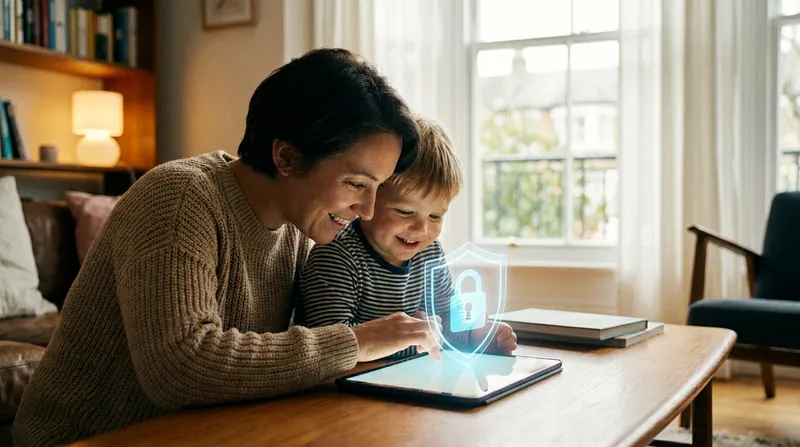
Rather than fighting this tide, the researchers looked at how these devices were actually being used. They found that technology frequently acts as a catalyst for "Joint Media Engagement"—moments where parents and children interact with media together.[8]
This joint engagement is the crucial mechanism that turns a screen from a passive pacifier into a learning tool. When a parent and toddler look at family photos together, or when they co-view a favorite show and discuss the characters, the device facilitates the exact type of "serve and return" communication that builds early vocabulary.[3]
The study highlighted highly creative uses of everyday tech. At Lancaster University, researchers noted parents using smart speakers to practice animal sounds with their babies during diaper changes, turning a routine chore into an interactive language game.[4]
Video calling emerged as a particularly powerful tool, especially in multilingual households. Researchers found that platforms like FaceTime or WhatsApp created rich environments for toddlers to learn words and phrases in multiple languages while forging emotional bonds with relatives overseas.[1][3]
Even independent play showed benefits. The vast majority of parents—83 percent—agreed that technology offered their children opportunities to develop early numeracy skills, while 75 percent saw benefits for reading and creative skills through interactive phonics and drawing apps.[5][6]
However, the traditional pediatric warnings have not been entirely overturned. Institutions like the American Academy of Pediatrics have long cautioned that excessive, passive screen time can displace vital face-to-face interactions, potentially delaying speech and social development.[7]
The new research does not advocate for unlimited, unsupervised access. The researchers acknowledge that simply propping a toddler in front of a television for hours remains detrimental. The distinction lies entirely in the quality of the content and the presence of an engaged caregiver.[4][8]
This nuance captures the modern parental dilemma perfectly. While 81 percent of parents believe digital technology offers opportunities for fun and learning, nearly half still worry that devices could eventually damage their child's physical or mental health.[3]
The findings suggest it is time to retire the blunt metric of "screen time"—which treats an hour of interactive video-calling the same as an hour of passive cartoon-watching—and focus instead on "screen quality."[8]
By shifting the conversation from restriction to active participation, the study offers a more realistic, guilt-free framework for modern families. Digital devices are not inherently toxic to toddlers; when used as tools for connection and exploration, they are just another language-building toy in the modern playroom.[2][8]
Terms to know
- Joint Media Engagement (JME)
- When a child and an adult actively use and discuss digital media together, turning a screen into a shared social experience.
- Embodied Cognition
- The theory that learning and cognitive development are deeply rooted in physical interactions and sensory experiences with the environment.
- Passive Consumption
- Watching screens without any physical, verbal, or cognitive interaction, such as sitting alone in front of a television for extended periods.
Questions readers ask
Should I let my one-year-old watch videos on a tablet?
Passive watching is still discouraged, but co-viewing a video while talking about the characters and singing along can be beneficial for language development.
Does video calling count as screen time?
While it involves a screen, video calling is considered highly interactive and is actively encouraged as a way to build vocabulary and social bonds.
Are educational apps actually helpful for toddlers?
Yes, the study found that interactive apps focusing on phonics, numbers, and drawing can support early learning, especially when a parent is involved.
How much screen time is too much?
Researchers emphasize that the quality of engagement matters more than the exact minutes. If tech use is displacing physical play, sleep, or face-to-face conversation, it should be reduced.
Different angles
Developmental Researchers
Focuses on the reality of modern homes and the active ways toddlers engage with technology.
This perspective, driven by the 'Toddlers, Tech and Talk' consortium, argues that digital devices are seamlessly integrated into modern family life and cannot simply be banned. Researchers emphasize that toddlers do not just stare at screens; they touch, listen, move, and think. By focusing on 'embodied cognition' and sensory exploration, this camp highlights how interactive apps and video calls actively build vocabulary, cultural awareness, and early numeracy.
Traditional Pediatric Guidance
Maintains that excessive screen time poses a risk to foundational social and cognitive development.
Rooted in long-standing guidelines from pediatric associations, this viewpoint cautions against the displacement of real-world interactions. While acknowledging the benefits of video chatting, traditionalists warn that passive media consumption limits a child's ability to replicate oral motor movements and vocal sounds. They argue that face-to-face human connection remains the irreplaceable gold standard for early language acquisition.
Modern Parents
Balances the practical benefits of digital tools with lingering anxieties about long-term impacts.
Parents find themselves caught between strict medical guidelines and the realities of daily life. While the vast majority recognize that technology helps their children learn numbers, reading, and creative skills, nearly half still harbor fears about the impact on physical and mental health. This camp values practical, guilt-free guidance on how to curate high-quality digital experiences rather than blanket bans.
- Developmental Researchers
- Focuses on the reality of modern homes and the active ways toddlers engage with technology.
- Traditional Pediatric Guidance
- Maintains that excessive screen time poses a risk to foundational social and cognitive development.
- General Media & Tech Observers
- Highlights the cultural shift and the relief this research brings to modern parents.
- Editorial Synthesis
- Synthesizes the findings to emphasize 'screen quality' over 'screen time'.
Perspectives this story doesn't cover
- App Developers
- Early Childhood Educators
Sources
Source coverage
8 outlets
4 viewpoints surfaced








- [1]The GuardianGeneral Media & Tech Observers
Digital tech can offer 'rich opportunities' for child development, study finds
Read on The Guardian → - [2]Mastercard NewsroomGeneral Media & Tech Observers
Is infant screen time shaping a generation of savvy digital natives?
Read on Mastercard Newsroom → - [3]Manchester Metropolitan UniversityDevelopmental Researchers
Toddlers, Tech and Talk: groundbreaking study into how children under three use technology
Read on Manchester Metropolitan University → - [4]Lancaster UniversityDevelopmental Researchers
Toddlers, Tech and Talk: groundbreaking study into how children under three use technology
Read on Lancaster University → - [5]Swansea UniversityDevelopmental Researchers
Toddlers, Tech and Talk: groundbreaking study into how children under three use technology
Read on Swansea University → - [6]University of StrathclydeDevelopmental Researchers
Study shows technologies can offer rich learning experiences for babies and toddlers
Read on University of Strathclyde → - [7]Indiana UniversityTraditional Pediatric Guidance
Digital Learning or Digital Delay? How Screen Time Affects Early Literacy
Read on Indiana University → - [8]Factlen Editorial TeamEditorial Synthesis
Synthesis by Factlen editorial team
Read on Factlen Editorial Team →
More in Lifestyle
See all →Parenting Science
Why Parental Rupture and Repair Build Children's Emotional Resilience
4 sources

Education Policy
House Passes Bill Tying Federal School Funds to Parental Consent for Gender Identity Changes
1 sources

Childhood Independence
Why Scaffolding and Childhood Independence Help Combat Youth Anxiety
6 sources

Child Development
Serve and Return: Responsive Interactions Build a Child's Brain Architecture
4 sources

Comments
Every angle. Every day.
Get Lifestyle stories with full source coverage and perspective breakdowns, free every day.